
Sa Bassa Blanca (Fundació Yannick y Ben Jakober): Art Museum near Alcúdia
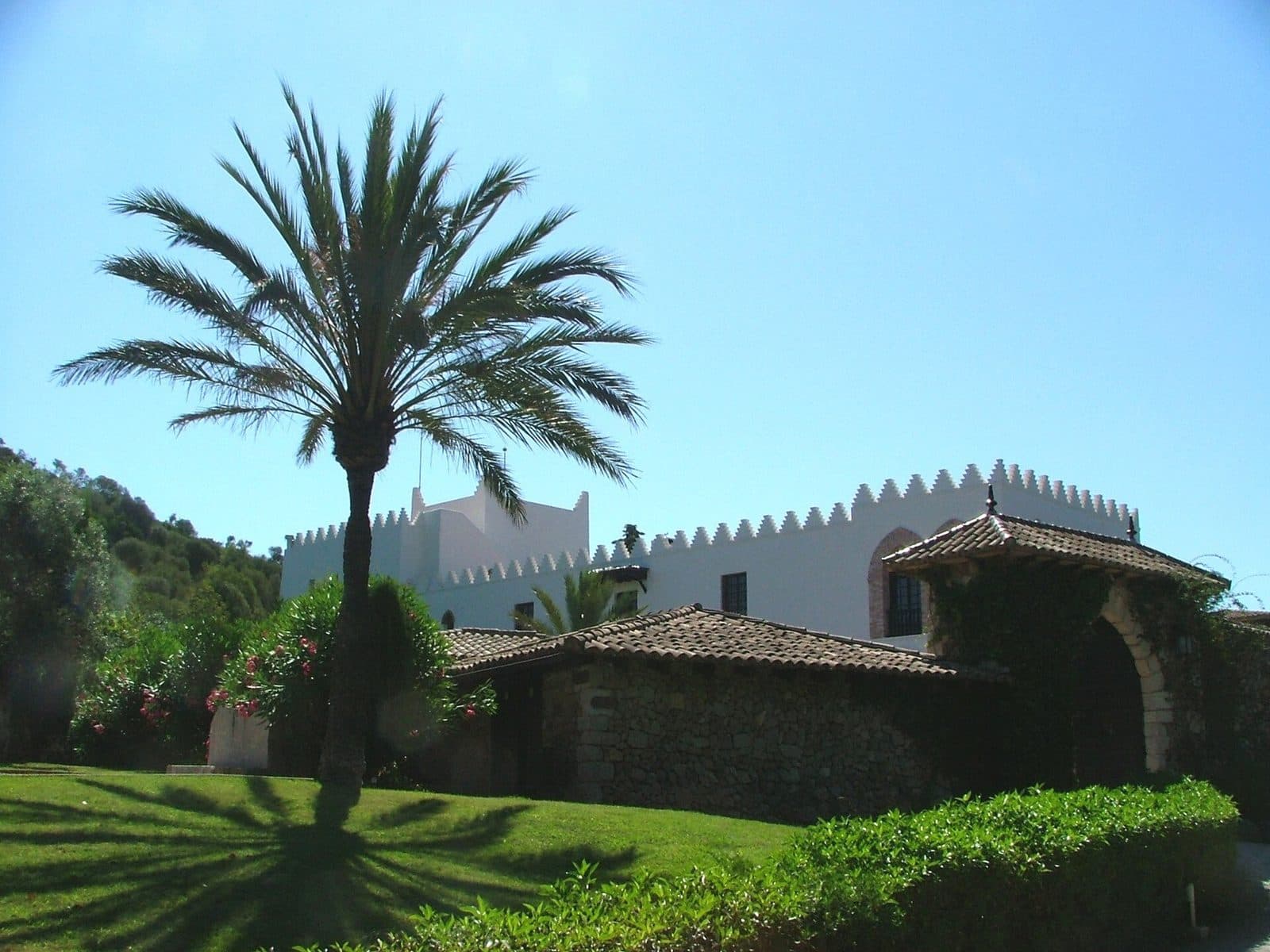

Sa Bassa Blanca (Fundació Yannick y Ben Jakober) lies far from the holiday scenery of Port d’Alcúdia in a protected natural area. The arrival alone makes it clear that this is no ordinary museum: beyond a gate in the forest, architecture, underground exhibition halls, gardens and monumental sculptures are spread across extensive grounds.
The museum was created by the artists and collectors Yannick Vu and Ben Jakober. Their personal view of art brings together children's portraits from several centuries with contemporary works, ethnographic objects and animal figures inspired by ancient cultures. Rather than following an art history textbook, the collection is driven by the pleasure of juxtaposition.
Sa Bassa Blanca is particularly rewarding for visitors who do not want to see art only in neutral galleries. A former water reservoir, a Hispano-Moorish residence, a contemporary cabinet of curiosities and a Mediterranean sculpture park each create a different atmosphere. Families will also find unusually direct ways into the art through the animal figures and historic portraits of children.
History and significance
It began with an underground water reservoir. When Yannick Vu and Ben Jakober founded the foundation with philanthropist Georges Coulon Karlweis in 1993, they had the old cistern at the Sa Bassa Blanca estate converted for an unusual collection: portraits of children from the 16th to the 19th century. A utilitarian structure built to hold water thus became the first museum space in today's ensemble.
From private collection to museum
From 1995, the foundation initially welcomed groups from the arts and cultural sectors before opening permanently to the public in January 2001. Further areas were added over the following years: the outdoor grounds and sculpture park, part of the main building and, in 2007, the underground Sala SoKrates. This evolution can still be traced on site because the exhibitions are not housed in a single new building. Each area has its own history and architectural language.
Yannick Vu, Ben Jakober and Hassan Fathy
The main building was originally a residence rather than a museum. Egyptian architect Hassan Fathy designed it for Yannick Vu and Ben Jakober in 1978, adapting Arab and Hispano-Moorish architectural forms to a Mediterranean landscape in Europe. Part of the house opened as a museum in 2006; in 2012, the building was granted listed cultural heritage status.
Besides exhibiting art, the foundation is also committed to preserving historical heritage. This is particularly evident in the Nins collection, which has been recognized as a listed asset of the historical heritage of the Balearic Islands, and in a precious Mudéjar wooden ceiling protected as a cultural asset. The project as a whole received special recognition in 2009 with a Europa Nostra award for its contribution to landscape conservation and the transitions between the gardens, museum architecture and surroundings.
What to see
The contrasts create the strongest impression: historic portraits of children are followed by a darker cabinet of curiosities, while underground rooms give way to an open park filled with powerful animal forms. Between them stands Hassan Fathy's white building, itself one of the museum's most important exhibits.
The Hassan Fathy building
White crenellated walls conceal a courtyard where arches and two matching fountains enliven the strict geometry. Water, courtyards and pierced wooden screens are as integral to the architecture as vaults and clearly structured façades. Inside, this architecture meets ethnographic, modern and contemporary art. Works by Domenico Gnoli, Rebecca Horn, Meret Oppenheim, Miralda, Takis and Alan Rath are among those represented, along with pieces by Vietnamese artist Vu Cao Dam. Parts of the house are used for temporary exhibitions, so the exact route may change.
One detail rewards looking up: the polychrome Mudéjar coffered ceiling from 1498. It is protected as a cultural asset of Balearic heritage. The contrast between Hassan Fathy's architecture and this historic woodwork creates a tension across time that is typical of Sa Bassa Blanca.
Sala Nins
More than 150 children gaze out from the paintings in the Nins collection. The portraits were created between the 16th and 19th centuries and primarily depict children from the European aristocracy. Their setting heightens their effect: the paintings hang in the converted underground cistern of the estate, whose former function remains palpable in the enclosed, concentrated atmosphere. The collection was not assembled as a complete survey of European portraiture, but according to the founders' personal aesthetic choices. This is precisely why the paintings feel less like a genealogical gallery and more like a long sequence of individual encounters.
Sala SoKrates
The underground Sala SoKrates presents itself as a contemporary cabinet of curiosities. Artworks and objects from different continents and eras are not arranged strictly by origin or date; what matters are visual relationships, unexpected similarities and deliberate contrasts.
Anyone expecting a conventional museum system with comprehensive explanations will need to adjust their perspective. SoKrates does not aim to tell a linear history of art, but to bring cultures into dialogue. Works by modern artists meet objects from Africa, Nepal or Papua New Guinea, while a large crystal curtain forms a striking backdrop. The room rewards slow observation because some connections only emerge after repeatedly shifting your gaze.
Sculpture park and OlivArt
Outdoors, monumental animal figures made from granite and other materials emerge from the landscape. Their forms draw on archaeological models, myths and legends from ancient cultures without simply copying them. What might appear small and remote inside a display case acquires weight and physical presence here.
The route between the sculptures is part of the exhibition: viewing angles, vegetation and changing distances transform the figures. Some initially appear to be part of the terrain and become clearly recognizable only as you approach. The outdoor areas evolved from the former rose garden and sculpture park. Today, OlivArt is also part of the museum's landscape concept.
Observatory and camera obscura
At a former military site, the observatory combines mirror installations with the principle of the camera obscura. Incoming light transforms the outside world into an image while also directing the gaze toward the Bay of Alcúdia. This area demonstrates particularly vividly how Sa Bassa Blanca does not merely use the landscape as a backdrop, but makes it part of the art itself.
Visiting the museum
The pace changes several times during a visit. In Sala Nins, individual faces and details of clothing take center stage; in SoKrates, the eye moves between widely separated cultures. Outdoors, paths, vegetation and distances become important. Sa Bassa Blanca therefore cannot meaningfully be treated as a quick visit to a gallery.
Route and time planning
Allow plenty of time for the independently accessible collection areas, the sculpture park and OlivArt. Visitors who also want to see the Hassan Fathy building should note that the house is explored on a guided tour, which lasts one hour. Because access arrangements and exhibitions may change, check in advance which areas are open on your intended visiting day and which are included in your chosen type of visit.
Natural pauses arise between the indoor spaces and outdoor grounds. It is worth taking time in Sala Nins rather than simply checking it off, and allowing enough time in the sculpture park to experience changing perspectives. The museum is more a sequence of distinct experiences than a compact route with a fixed beginning and end.
Planning before your journey
Current opening days, admission conditions and ticket options should be checked directly with the museum before departure. This is particularly important if the Hassan Fathy building is on your itinerary or you want a guided tour. When planning your time, distinguish between the general museum visit and the guided tour of the house.
There is no reliably documented time of day that is consistently least busy. Anyone who prefers a quiet visit should therefore check the current visitor and tour situation rather than relying solely on a spontaneous arrival. Given the remote location, good preparation makes more sense than simply taking a chance.
Getting there and parking
The final kilometers are part of the transition: beyond Alcúdia, signs lead toward Mal Pas and then to Camí del Coll Baix, also known as Camí de Muntanya. The access road is initially paved, later becoming a compacted track through the forest. Magenta signs reading “Fundació · Museu Sa Bassa Blanca” mark the turns.
From Palma and the airport
The road distance from Palma Airport to Port d’Alcúdia is 60 kilometers; the journey takes around 47 minutes via Ma-30, Ma-13 and Ma-3460. From central Palma, the 57-kilometer route follows Ma-13 and Ma-3460 and takes around 51 minutes. Both figures explicitly apply only as far as Port d’Alcúdia. Additional time must be allowed for the subsequent drive through the Alcúdia area, the turn toward Mal Pas and the approach along the forest track to the museum.
The final turns
According to the museum's directions, the signposted route passes Restaurant La Bodega del Sol. Turn right afterward and continue following the magenta signs. At the entrance, stop the vehicle on the white line in front of the green gate; the gate opens automatically. A separate pedestrian entrance is located immediately to the left.
Free visitor parking is available on the museum grounds. Bus stops in the wider area include Platja d’Alcanada, Cala en Poncet 1 and Cala en Poncet 2. However, there is no built-up urban route from these stops ending directly at the museum: the final section lies beyond the densely settled area and follows the approach toward Camí del Coll Baix. Anyone arriving by bus and continuing on foot should therefore plan the exact onward route carefully in advance.
Bus lines to Sa Bassa Blanca (Fundació Yannick y Ben Jakober) at a glance
| Line | Route | Departures/day | First | Last |
|---|---|---|---|---|
| 323 | Alcanada - Es Mal Pas | 56 | 08:00 | 21:50 |
From the official GTFS feeds (TIB/SFM), no real-time data. The figures cover all stops in the town; weekend and holiday services differ — check with the operator before travelling.
Getting there by bus
Platja d'Alcanada (3066) · 1.2 km as the crow flies
- 323Alcanada - Es Mal Pas · Daily
Cala en Poncet 1 (3024) · 1.8 km as the crow flies
- 323Alcanada - Es Mal Pas · Daily
Cala en Poncet 2 (3067) · 1.8 km as the crow flies
- 323Alcanada - Es Mal Pas · Daily
Timetable data: official GTFS feeds (TIB/EMT), no real-time — check with the operator before travelling.
Practical information for your visit
Sa Bassa Blanca requires different preparation from a museum in the old town. Its collections are spread across underground rooms, a historically influenced residence and outdoor grounds. Anyone expecting only air-conditioned galleries will miss an essential part of the concept.
Clothing and paths
Comfortable shoes with good grip are advisable for the sculpture park and the paths between the museum areas. Although the access road ends on the grounds, the visit itself repeatedly leads outdoors. Sun protection should therefore be part of your planning, along with clothing that makes the transition between outdoor areas and the cooler-feeling underground halls comfortable.
The grounds should not be confused with a compact art museum where all the works are displayed on a single floor. The physical distances between the cistern, park, SoKrates and Hassan Fathy building are central to the experience. Groups should agree on a meeting point and allow enough time for unhurried transitions.
Visiting with children
The monumental animals in the sculpture park offer children a particularly direct introduction. The Nins collection can also work well because it presents them not with abstract themes, but with children from earlier centuries. Clothing, posture and facial expressions can be compared without any prior knowledge of art history.
Sala SoKrates, by contrast, is denser and more associative. It helps to select a few striking objects rather than trying to explain the entire room. Because the visit combines indoor and outdoor areas, Sa Bassa Blanca is better suited to families who want to explore together than to those seeking the quickest possible museum stop.
What not to expect
Sa Bassa Blanca is neither a local history museum about Alcúdia nor an exclusively contemporary gallery. Nor does it offer a chronologically arranged history of art. Its strength lies in personal juxtapositions: aristocratic portraits of children inside a cistern, art from different continents in a cabinet of curiosities, archaic-looking animals outdoors and a house designed by Hassan Fathy above the bay. Visitors who embrace these shifts will understand the place best.
Local insider tips
Look up inside the house
Among the art and Hispano-Moorish forms, the polychrome Mudéjar coffered ceiling is easy to overlook. It dates from 1498 and is itself a protected cultural asset.
View Nins from more than one angle
In the former cistern, it is worth studying the portrayed children closely. The more than 150 paintings were created between the 16th and 19th centuries.
See the landscape as an exhibit
At the observatory, the camera obscura offers a new perspective on the Bay of Alcúdia. The site combines a military past, mirror installations and panoramic views—the surroundings are part of the artwork here.
Look out for magenta
The key turns toward Mal Pas and Camí del Coll Baix are marked by magenta museum signs. Stop on the white line at the green entrance gate; this triggers the automatic opening mechanism.
Look for the animal figures from a distance
From afar, the monumental animals in the sculpture park often appear to be part of the terrain. Only when you change your viewpoint do their archaeological models and deliberate relationship with the landscape become clear.