
Son Marroig – Museum, Marble Temple and Sea Views near Deià
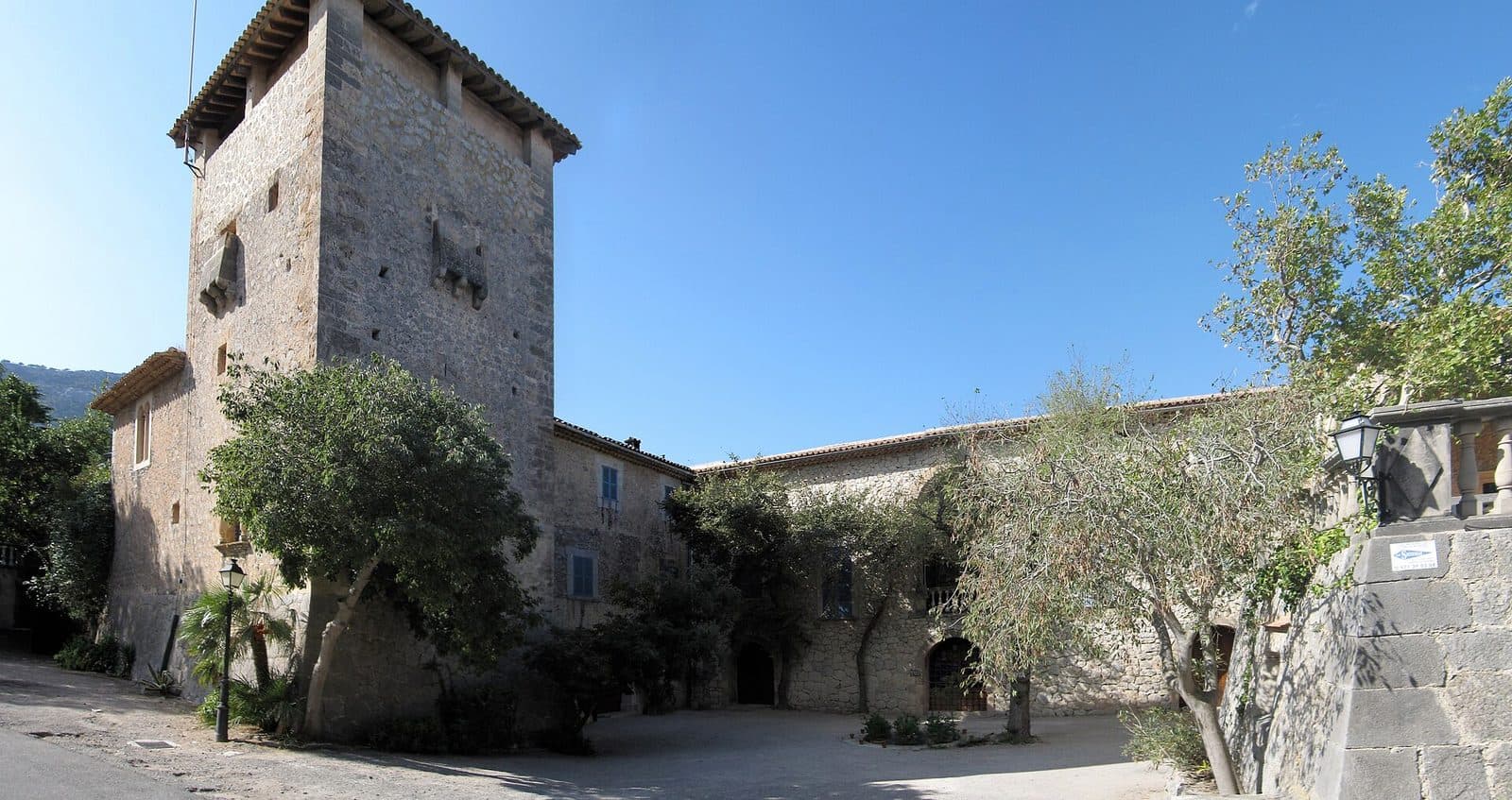

Son Marroig is memorable for the unusual scene that becomes reality here: a small white marble temple stands before the wild rocky coast of the Serra de Tramuntana, with the open Mediterranean beyond and Sa Foradada extending into the water far below. Yet the estate near Deià is more than a beautiful photo backdrop. The historic house preserves the memory of Archduke Ludwig Salvator of Austria and his intensive study of Mallorca and the other Balearic Islands.
The appeal of a visit comes from the interplay between intimacy and vastness. In the museum rooms, furniture, ceramics, paintings and writings tell the story of a scholarly owner and his life on the island. Shortly afterwards, the loggia opens onto the coast, and on the garden terrace it becomes clear why this place held such a strong attraction for Ludwig Salvator. House, collection and landscape are almost impossible to separate here.
Son Marroig is particularly suitable for visitors who want to experience Mallorca’s northwest as more than a scenic drive. Architecture enthusiasts will find an organically developed complex with a defensive tower, chapel, historic portals and traditional interiors. Those interested in island history encounter a figure who explored, described and collected Mallorca. Visitors who come primarily for the sea views are rewarded with Sa Foradada, one of the Tramuntana’s characteristic coastal scenes. The museum is compact enough for a focused visit but calls for an unhurried pace. Anyone who rushes straight to the marble temple will miss the oldest and most compelling part of the house: the defensive tower, whose history reaches back to the threat of corsair raids.
History and significance
The oldest recorded history of Son Marroig is not about an archduke but about agriculture, livestock farming and danger from the sea. Mallorcan country estates of this kind were self-contained economic units. Their buildings had to accommodate living, working and storage, and in exposed coastal locations they also had to provide protection. This need for security gave Son Marroig the fortified character that remains visible today.
The Masroig possessió
At the end of the 15th century, the estate belonged to the Masroig family from Sóller and was known as Foradada dels Masroig. The name Son Masroig de Sa Foradada later became established. The name therefore refers directly to the family and to the striking peninsula below the property. Son Marroig was not an isolated pleasure palace but a Mallorcan possessió whose form grew from the practical demands of rural life.
The sheltered inlet at Sa Foradada was particularly important. What provided ships with an anchorage could also make it easier for corsairs to reach the coast. The square tower from the 15th century was therefore intended to protect the house and its residents. Ludwig Salvator later recorded a local tradition according to which the last woman in the area to be abducted by pirates was taken from this very tower. Whether legend or historical memory, the story vividly illustrates why a country estate above the sea required defensive structures.
Archduke Ludwig Salvator
Archduke Ludwig Salvator of Austria bought the estate and was far more than an aristocratic summer guest. The Habsburg studied the nature, landscape, population and culture of the Balearic Islands in depth and became a defining figure in Mallorcan cultural history. Son Marroig became one of his most important retreats and places of work on the northwest coast.
His relationship with the sea also remained highly practical. He could anchor in the bay below the estate with his steam yacht Nixe. Empress Elisabeth of Austria-Hungary, known as Sisi, also visited him here and arrived on her yacht Miramar. Such episodes give the house a touch of courtly prominence, but the museum primarily reveals another side of the archduke: the collector, author and attentive observer of the island world.
The Casa Museo
The private Casa Museo de Son Marroig was founded to preserve the memory of Ludwig Salvator, publicize his work and communicate his significance for Mallorca. The house thus did not become a generically furnished local museum but a memorial to a specific person and his perspective on the Balearic Islands.
The preserved holdings include historic furniture, ceramics, Mallorcan paintings from the 17th to the 19th century and literary works by the archduke. The collection connects personal possessions with island history. This is precisely why the objects deserve to be viewed as more than decoration: they show how a European aristocrat studied and described Mallorca and made it his adopted home.
What to see
The famous marble temple catches the eye even in photographs. On site, however, the story of Son Marroig begins inside the house. The route leads from low-ceilinged, traditionally styled interiors to increasingly open views. Only at the end does the panorama unfold in full. This progression is one reason why an orderly tour offers more than a quick stop at the viewpoint.
Entrance hall and ground-floor room
From the vestibule, a pointed arch leads into the rectangular ground-floor room. Exposed wooden beams define the space and serve as a reminder that Son Marroig developed from a historic possessió. The house does not have the regular sequence of rooms found in a purpose-built palace. Its character comes from the juxtaposition of different construction periods and functions. Rather than looking only at display cases and furniture, it is therefore worth glancing upwards at the beams and examining the transitions between the rooms. They tell the story of a house that was altered over centuries and adapted to the needs of its successive residents.
The chapel
The chapel lies to the left of the ground-floor room. It adds another function to the complex, as large country estates were not merely places for living and working. Religious life also had its place within the house. The chapel is not a detached monument but part of the organically developed sequence of rooms. Its proximity to the entrance area makes particularly clear how closely everyday life, representation, protection and worship coexisted in a possessió of this kind. Together with the tower and main hall, it presents a more nuanced picture of the estate than the widely known garden view.
The defensive tower
A staircase leads into the tower from the 15th century. Its square floor plan and the protective features at the entrance point to its original defensive purpose. Residents had to be able to withstand attacks from the coast, while Sa Foradada offered intruders a comparatively sheltered landing place.
The windows feature Renaissance-style decoration added in 1922 during the time of Antonio Ribas Prats. The painter was married to Luisa Magdalena Vives Ripoll, an heir of Ludwig Salvator and the owner of Son Marroig at the time. The tower therefore not only displays medieval defensive architecture but also documents how later generations interpreted and continued to embellish the historic building.
Inside is a room with a Portuguese four-poster bed that Ludwig Salvator acquired in Llucmajor. This single piece of furniture says a great deal about his passion for collecting: the house was not furnished in one uniform historical style but instead accommodated objects of different origins that the archduke selected and brought together.
The main hall and loggia
From the tower area, a corridor and a small Baroque portal lead into the main hall. There, a five-arched loggia opens towards the coast. After the more compact rooms of the old house, this transition feels like a deliberately staged shift in perspective: the architecture no longer frames only doors and furniture but the sea, rocks and sky.
Display cases contain literary works by Ludwig Salvator. They are complemented by objects that illustrate his engagement with Mallorca and the Balearic Islands. Historic furniture, ceramics and Mallorcan paintings from the 17th to the 19th century give the room the character of an inhabited collector’s home rather than a neutral exhibition hall.
The arches of the loggia function like individual picture frames. Depending on where you stand, Sa Foradada appears either in full or merely as a rocky fragment between the openings. Visitors who do not immediately move on will discover one of the best places to understand the relationship between the house and the landscape: the coast is not simply a backdrop but the focal point of the entire composition.
The marble temple
The small circular temple of white marble stands on a stone platform in the garden. Its classically inspired, Greek-style form differs markedly from the heavy Mallorcan architecture of the manor house. This contrast is precisely what has made it the symbol of Son Marroig: pale marble and orderly columns before a rugged, irregular coastline.
The temple is impressive less because of its size than because of its placement. The Mediterranean and Sa Foradada are visible between the columns; from positions to the side, the pavilion itself appears as a white accent against the blue. It is worth taking more than just a frontal photograph. From the side, the platform, ring of columns and coastline can be seen more clearly as elements of a unified composition.
Sa Foradada
Below the estate, the Sa Foradada peninsula extends into the sea. Its perforated rock gave the landscape its name and dominates almost every view from the loggia and terrace. From the museum, it appears not as an isolated natural attraction but as part of the house’s history: a landmark, an anchorage below the estate and once a potential point of entry for corsairs.
The view down should not be confused with a hike to the peninsula. A museum visit remains above at the historic estate; the descent to Sa Foradada is a separate and considerably longer undertaking. Anyone planning both should make that decision before parking and allow enough time and energy for the later uphill return.
Visiting Son Marroig
The most enjoyable route begins inside the house and ends outdoors. Anyone who rushes to the terrace first loses some of the suspense, as Son Marroig is particularly interesting as a sequence of fortified old buildings, personal collection pieces, an open loggia and expansive coastal views. Depending on your interests, you can allow up to two hours for the museum and outdoor areas at a relaxed pace.
Tour of the museum house
A slow pace is worthwhile indoors. The exhibition is not an encyclopedic overview of the island but focuses on Ludwig Salvator, his estate and historical objects. The transitions are especially rewarding: the pointed arch at the entrance, the staircase into the defensive tower, the Baroque portal and finally the five-arched loggia. They make the building’s history visible even without an in-depth study of architecture.
Anyone unfamiliar with the archduke should not skip his writings and personal possessions. They are what give the view its historical context. For Ludwig Salvator, looking out to sea was not merely an aesthetic pleasure but part of a landscape that he travelled through, observed and described.
Terrace and views
Outdoors, attention shifts to the marble temple and Sa Foradada. The temple is the most frequently photographed subject, but the loggia also offers a precisely framed view. When visitor numbers are higher, it helps to explore the less noticed side perspectives first and return to the central viewpoint later.
The west coast is known for its evening light and sunsets. This does not, however, mean that the museum grounds are accessible at every desired hour of the evening. As opening hours and admission arrangements are not permanently fixed, both should be checked for current information before visiting. Anyone planning around sunset as the main objective must therefore distinguish it from a regular museum visit.
Planning your time
For a brief overview, the house, loggia and temple are sufficient as focused stops. Anyone wishing to read the labels, examine the collection and enjoy several viewpoints should allow up to two hours. A hike down to Sa Foradada does not fit into this time frame. It is a separate excursion and considerably extends the visit.
Son Marroig is a small museum, but it is not a place for a rushed stopover. The interiors explain the owner, the tower explains the earlier coastal history, and the terrace explains the special choice of this location. Only all three levels together create a complete picture.
Getting there and parking
The Ma-10 runs directly through the coastal landscape between Valldemossa and Deià. Son Marroig lies along this section outside the center of Deià. The road is scenically impressive but requires attention because of its bends and changing visibility. The final stretch should therefore not be planned like a quick drive to an urban museum.
From Palma Airport
The road distance from Palma Airport to Deià is 32 kilometers. The journey takes around 48 minutes and follows the Ma-20, Ma-1110 and Ma-10. This distance and travel time expressly apply as far as Deià. Son Marroig is already located on the Ma-10 between Valldemossa and the village; to reach the museum, remain on this coastal road and watch for the entrance near the estate.
The calculated journey time can only partially reflect the character of the Ma-10. Slow-moving traffic and stops at viewpoints have a greater impact on this route than on a straight main road. Anyone with a fixed admission time or a subsequent appointment should therefore avoid planning down to the minute.
From central Palma
The road distance from central Palma to Deià is 27 kilometers. The journey takes around 52 minutes via the Ma-1110 and Ma-10. Here too, the distance and travel time refer to Deià, not to a precisely measured endpoint at the museum. From Palma and Valldemossa, Son Marroig is reached on the Ma-10 before the center of Deià.
The route initially heads towards Valldemossa before continuing along the coastal road. The transition from the wider approach road to the more winding Ma-10 is also the point at which allowing sufficient extra time becomes advisable. The scenery invites stops along the way.
Parking on the Ma-10
There is a parking area near Mirador Son Marroig that also serves as the starting point for the route to Sa Foradada. The spaces can be narrow; roots and uneven ground require particular caution with low-clearance vehicles. As museum visitors, sightseers and hikers all converge here, the search for a parking space should be included in your travel planning.
Before setting off on foot, it is advisable to park the vehicle carefully within the markings and check exactly which entrance leads to the museum and which leads to the hiking trail. Son Marroig and the descent to Sa Foradada are two different activities, even though both begin along the same stretch of coast.
By bus
Several stops are located along the Ma-10 near the estate, including Son Gallard and Sa Foradada. Es Clot is another stop in the wider area. Check the current direction of travel and the correct side of the road in advance.
Bus lines to Son Marroig at a glance
| Line | Route | Departures/day | First | Last |
|---|---|---|---|---|
| 203 | Valldemossa / Deià | 319 | 06:29 | 22:47 |
From the official GTFS feeds (TIB/SFM), no real-time data. The figures cover all stops in the town; weekend and holiday services differ — check with the operator before travelling.
Getting there by bus
Son Gallard 2 (18007) · 0.5 km as the crow flies
- 203Valldemossa / Deià · Daily
Son Gallard 1 (18008) · 0.6 km as the crow flies
- 203Valldemossa / Deià · Daily
Sa Foradada (18009) · 0.9 km as the crow flies
- 203Valldemossa / Deià · Daily
Es Clot 2 (18001) · 1.3 km as the crow flies
- 203Valldemossa / Deià · Daily
Es Clot 1 (18011) · 1.3 km as the crow flies
- 203Valldemossa / Deià · Daily
Ca Madò Pilla 1 (63005) · 1.5 km as the crow flies
- 203Valldemossa / Deià · Daily
Ca Madò Pilla 2 (63004) · 1.7 km as the crow flies
- 203Valldemossa / Deià · Daily
Deià 1 (18002) · 1.9 km as the crow flies
- 203Valldemossa / Deià · Daily
Deià 2 (18010) · 1.9 km as the crow flies
- 203Valldemossa / Deià · Daily
S'Empeltada 1 (18003) · 2.2 km as the crow flies
- 203Valldemossa / Deià · Daily
S'Empeltada 2 (18004) · 2.2 km as the crow flies
- 203Valldemossa / Deià · Daily
Timetable data: official GTFS feeds (TIB/EMT), no real-time — check with the operator before travelling.
Nearby places
Deià lies between steep mountain slopes and the northwest coast and has long been associated with artists and writers. A visit to the village therefore pairs particularly well with Son Marroig: the museum tells the story of Ludwig Salvator’s scholarly and cultural engagement with Mallorca, while Deià has a more recent history as a retreat for creative figures.
Deià
In the village itself, a walk through the rising lanes is worthwhile. Son Marroig, however, is not in the compact village center but on the Ma-10. The museum and village should therefore be planned as two separate stops. Anyone allowing additional time for Deià can maintain the day’s cultural focus without reducing the museum tour to a quick photo stop.
One of Deià’s best-known cultural associations is the writer Robert Graves. This connection can be combined thematically with Son Marroig: here, the Habsburg scholar and collector with his perspective on the Balearic Islands; there, a writer whose name is closely linked to Deià. In different ways, both connections reveal why this coast attracted people from outside Mallorca.
Valldemossa and Miramar
Valldemossa lies in the other direction. The village is a suitable additional stop along the Ma-10 but should not be treated as a hurried extra. The route between Valldemossa, Son Marroig and Deià already passes through a landscape whose terraces, slopes and coastal views are an essential part of the excursion.
Miramar also belongs within the historical context of Ludwig Salvator. In addition to Son Marroig, the archduke owned other land and estates in this part of the Tramuntana. Anyone interested in him can therefore turn several places into one coherent theme instead of driving between individual viewpoints without historical context.
Sa Foradada
Sa Foradada is constantly visible from the estate, but the route down is a separate hike. At least two additional hours should be allowed for the full descent and return climb. It is essential to check beforehand whether access is open, as the route is not accessible every day.
A sensible decision should therefore be made while planning the day: either enjoy an unhurried museum visit with Deià or Valldemossa, or combine it with the considerably more physically demanding hike. Anyone who squeezes everything into a tight schedule loses the very quality that defines Son Marroig—the time and calm to look.
The place it belongs to
Deià in the place guidePractical visitor information
Son Marroig is neither a large art museum nor merely a freely accessible viewpoint. Visitors can expect a historic museum house with a personal collection, old architectural features, a garden area and an exceptional coastal perspective. Anyone who only wants to photograph Sa Foradada therefore experiences just a small part of the story this place has to tell.
Clothing and footwear
The hike is a separate undertaking and has different requirements from the museum tour. Anyone wishing to add it to the visit should prepare for it separately and check access in advance.
Visiting with children
With children, Son Marroig works best as a varied sequence of short stops: the defensive tower, four-poster bed, loggia, marble temple and the rock with its widely visible hole. The pirate story associated with the tower provides a vivid introduction to the house’s earlier history. However, attentive supervision is required on the terrace, on stairs and around historical exhibits. The appeal lies in the authentic historical setting, the objects and the view. The visit is therefore particularly suitable for families when adults convey the history through short episodes rather than expecting a long, uniform exhibition tour.
Photography and consideration
The classic photograph shows the white circular temple against the sea. The arches of the loggia, the side view of the platform and the contrast between pale marble and dark coastal rock are equally rewarding. Visitors who allow others a little time at the central viewpoint will usually also get a quieter moment for their own photograph.
Son Marroig also serves as a cultural and event venue. A regular museum visit should therefore always be prepared using the latest information. Opening hours, admission and possible restrictions can change; checking before setting out prevents a long journey through the Tramuntana from ending at closed-off areas.
Local insider tips
View the temple from the side
The famous frontal view is not the only good perspective. From the side, the stone platform, ring of columns, sea and rocky coastline can all be seen together—and the marble temple’s special placement becomes easier to appreciate.
Use the loggia as a picture frame
Do not move on immediately in the five-arched loggia: each arch frames a slightly different section of the coast. With just a few steps, Sa Foradada changes from a complete panorama into a carefully framed rocky subject.
Look up inside the tower
The defensive tower is older than the famous garden setting. Alongside the defensive features, the windows decorated later in the Renaissance style deserve attention—a detail easily missed when hurrying towards the sea view.
See the collection before the view
The tour is more rewarding when Ludwig Salvator’s writings, furniture and personal mementos are viewed first. Afterwards, the coast from the terrace appears not only beautiful but also as the island world that the archduke explored and described.
Keep the museum and hike separate
The view of Sa Foradada is part of the museum experience, but the descent to the peninsula is not. The hike requires at least two additional hours; you should also check in advance whether access is open.