
Museu Dionís Bennàssar – Art and an Artist’s Life in Pollença
.jpg)
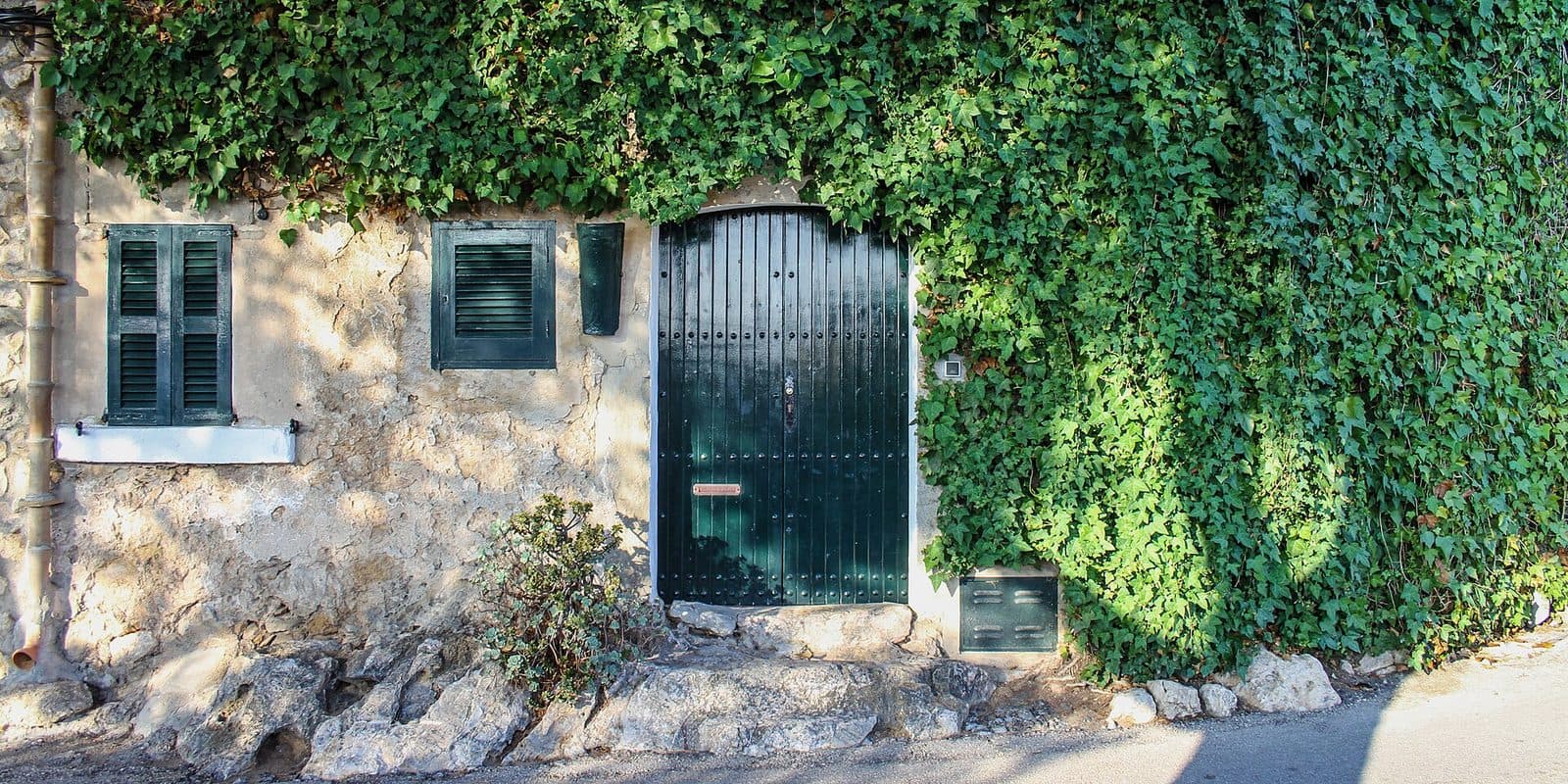
The Museu Dionís Bennàssar is not a neutral exhibition building, but a lived-in artist’s house that became a museum. The painter Dionís Bennàssar spent much of his life in this traditional townhouse in Pollença, working on important pieces and living with his wife Catalina Vicens and their son Toni. His paintings still share the house with furniture, personal belongings and the preserved studio.
It is precisely this intimacy that makes a visit special: the landscapes of Mallorca are not displayed in isolation in white galleries, but appear in the place where Bennàssar observed, remembered and painted them. The bay of Port de Pollença, the Serra de Tramuntana and Formentor become colourful, intensely felt subjects in his work. At the same time, drawings, photographs and documents tell the story of an artist’s life shaped by rural origins, wartime experience and Mallorca’s transition into the age of tourism.
The museum is suitable for art lovers as well as visitors who want to understand Pollença beyond its squares and lanes. No prior knowledge of post-Impressionist painting is required. Anyone who takes time to notice the differences between paintings, sketches and preparatory studies will soon recognise how Bennàssar translated the light and topography of his homeland into a visual language of his own.
The house remains compact and personal throughout. Three exhibition rooms, the preserved studio and the courtyard feel more like an encounter than a tour of a large museum. Admission is free, although the latest visiting hours should still be checked in advance.
History and significance
From the fields to art
Dionís Bennàssar was born in 1904 in Pollença into a modest farming family. He began drawing at an early age, even though his family’s daily life was dominated by agricultural work. His talent took him to Palma, where he studied art while also working as an electrician. However, the academic environment apparently suited him less than directly observing his homeland. He returned to Pollença and continued developing his painting there.
This return was by no means a retreat into cultural isolation. In the 1920s, Pollença attracted artists and intellectuals from various parts of Europe. Painters such as Hermen Anglada-Camarasa, Joaquim Mir and Santiago Rusiñol were fascinated by the landscape and light of the north; the artistic movement known as the School of Pollença emerged from this setting. Bennàssar therefore encountered new trends directly on his doorstep without losing sight of his rural background.
Painting with his left hand
An injury fundamentally changed his path. As a young soldier, Bennàssar took part in the war in Morocco and was shot in the right collarbone. The after-effects impaired his right hand. Rather than giving up painting, he learned to work with his left hand. This episode is more than a biographical curiosity: it demonstrates the determination with which Bennàssar pursued his artistic career despite external obstacles.
In Pollença, he met painters who supported his development. Tito Cittadini became particularly important, and the two formed a close friendship. Cittadini introduced Bennàssar at his first solo exhibition at Galería Costa in Palma. The exhibition took place in 1940 and helped make the artist known beyond his hometown. Among the museum’s reminders of this relationship is a portrait of Bennàssar painted by Cittadini.
Chronicler of a changing Mallorca
Bennàssar died in 1967. Between his birth and death, Mallorca had undergone profound changes: an island that was largely rural and relatively isolated became an internationally renowned travel destination. His paintings do not document this transformation like photographs or chronicles. Instead, they show how landscape, sea and local life remained enduring influences on his perception while a new era began around him.
His vivid colours and free, post-Impressionist brushwork made him known above all as a landscape painter. Bennàssar exhibited not only in Mallorca but also in Madrid and Valencia. Nevertheless, Pollença remained the centre of his work. This is precisely why his former home is the most compelling place in which to understand his art: the depicted landscape, his personal biography and the painter’s actual living environment come together here.
From family home to foundation
The museum opened in 1999. It is also the headquarters of the non-profit Fundació Dionís Bennàssar, which catalogues, conserves and provides public access to the works. Its role extends beyond preserving the estate: temporary exhibitions, lectures, workshops, publications and concerts maintain the house as an active cultural venue.
The museum therefore preserves not only the paintings but also the context in which they were created. The building dates from the 17th century, served as a family home and workplace, and still contains personal belongings and furniture. A private house became part of Pollença’s public memory without entirely losing the character of a lived-in home.
What to see
The 17th-century house
Even the sequence of rooms distinguishes the Museu Dionís Bennàssar from a traditional painting gallery. The building is a traditional Mallorcan townhouse dating from the 17th century. It was not later designed as a museum, but served as a home for Bennàssar and his family. Art and everyday history therefore meet within a compact space.
As a result, the house tells its story on two levels: the architecture and furnishings reveal the environment in which the artist lived, while the exhibited works open views towards the landscapes that occupied him. An immediate relationship emerges between the two. Paintings of the coast and mountains return to a house that is itself part of historic Pollença.
The three exhibition rooms
Three exhibition rooms present a cross-section of Bennàssar’s artistic life. A particular focus is placed on oil paintings from the later part of his career. They are accompanied by watercolours, portraits, drawings and sculptures. The collection reveals that the artist, often regarded primarily as a landscape painter, worked with a range of techniques and genres.
The contrast between completed paintings and works on paper is especially revealing. Drawings and watercolours demonstrate how quickly he captured a subject, while colour and mood become more concentrated in the oil paintings. Anyone who studies several views in succession will see that Bennàssar did not merely reproduce the Mallorcan landscape. He intensified its colours and rhythms until a recognisable place became a personal sensation.
The collection also includes works that other artists gave to Bennàssar. They point to the artistic network in which he moved. The portrait by Tito Cittadini is particularly meaningful: it presents the painter through the eyes of a friend and colleague while also recalling Cittadini’s role in Bennàssar’s early public success.
The permanent exhibition may be supplemented by changing displays of other historical or contemporary artists. Not every visit is therefore identical, as the foundation deliberately uses the house as a living exhibition venue rather than solely as an unchanging memorial.
The preserved studio
The most personal room is the preserved studio. Bennàssar created a substantial part of his work here. Unlike a reconstructed artist’s room, this place has a direct biographical connection: it is the actual workspace within the house where the painter lived.
The studio shifts attention from the finished picture to the process. A painting no longer appears merely as a framed result, but as the culmination of numerous observations, sketches and decisions. Preparatory drawings and notebooks reinforce this impression. They show that the apparently spontaneous application of paint was based on an ongoing engagement with subjects, forms and compositions.
The story of his injured right hand gives the room additional significance. After being wounded, Bennàssar produced his paintings under altered physical conditions. This determination becomes more tangible in the studio than in a simple biographical account, because this was where he continued refining the working method he had relearned with his left hand over many years.
Personal belongings and documents
Furniture, photographs, books and correspondence expand the exhibition beyond the artworks. They tell of Bennàssar as a family man, reader and member of both local and wider artistic circles. He lived here with the pianist Catalina Vicens and their son Toni, so the museum was not only a studio but also a family home.
The documents also help situate the artist between Pollença and the broader Spanish art world. Bennàssar received funding for study trips to major Spanish cities and exhibited outside Mallorca, yet remained closely connected to his birthplace. Letters, photographs and books give this relationship a human dimension that could easily be lost in a purely chronological display of paintings.
Landscapes of Pollença, Formentor and the Tramuntana
In Bennàssar’s paintings, the area surrounding the museum becomes the true principal subject. His artistic interpretations include the bay of Port de Pollença, the Serra de Tramuntana and Formentor. Visitors who already know these places encounter them again in a highly concentrated form; those who visit them later may carry Bennàssar’s colours and compositions into the real landscape.
His post-Impressionist approach does not aim for topographical restraint. Colour conveys mood, outlines may dissolve in favour of the overall impression, and the Mallorcan light becomes a compositional element. The appeal therefore lies less in whether a section of coastline has been reproduced exactly. More compelling is the sensation Bennàssar developed from sea, rocks, vegetation and sky.
The mandarin courtyard
Beyond the exhibition rooms, the courtyard opens into a quieter part of the house. The foundation calls it the mandarin courtyard and also invites visitors to take a coffee break there. After the dense succession of paintings, documents and personal belongings, the courtyard offers an opportunity to reflect on what they have seen.
The courtyard is not merely a pleasant conclusion to the tour. It also recalls that the building was a home for many years. Within the historic walls, the museum visit consequently takes on a domestic rhythm: from the representative paintings and the workspace to a sheltered outdoor area that formed part of the residents’ daily lives.
Visiting the museum
From the family home to the studio
The museum is best explored without rushing. It is worth first taking in the building itself before focusing entirely on the paintings. The three exhibition rooms then lead through different parts of the artist’s work. Finally, the studio and personal mementos provide a tangible biographical background for the paintings viewed earlier.
A rigid sequence is unnecessary. The house is compact enough to revisit individual works and, for example, compare a preparatory drawing with a painting once more. Visitors seeking only a quick overview can include the museum in a walk through Pollença. Art lovers should allow more time, as the real value comes from the relationships between the paintings, documents, living spaces and studio.
Quiet visits and events
The Museu Dionís Bennàssar is both the foundation’s headquarters and a cultural venue. Alongside the collection, it hosts temporary exhibitions, lectures, workshops, discussion groups, concerts and other events. The current programme can therefore significantly change the experience: sometimes Bennàssar’s work is the sole focus, while at other times it enters into dialogue with other artists or with music.
Anyone seeking maximum quiet for the permanent exhibition should check in advance whether an event is scheduled for the intended day. Conversely, a concert, lecture or guided tour can provide an additional way of engaging with the house. The foundation offers private guided tours for groups, and availability should be arranged before the visit.
Admission and current visiting hours
Regular admission is free. This makes it easy to include the museum in a stay in Pollença, even when only a brief initial visit is planned. However, it is often worthwhile to slow down and return to the landscape paintings after seeing the studio.
Specific opening hours should be checked immediately before visiting. This is especially important because a small foundation-run house may have different visiting periods from a large public museum. Its programme of events also makes checking in advance advisable.
Getting there
From Palma Airport to Pollença
From Palma Airport, the route initially follows the Ma-30, then the Ma-13 and finally the Ma-2200 to Pollença. The road distance to Pollença is 57 kilometres, and the journey takes around 45 minutes. These details explicitly refer to the town of Pollença, not the museum’s doorstep.
The final section leads into the historic town centre. The Museu Dionís Bennàssar is located on Carrer de la Roca and, according to the foundation, is only about a four-minute walk from the main square. Because of the traditional narrow streets, it is advisable to complete the final part on foot.
From Palma to Pollença
From central Palma, the route follows the Ma-13 and Ma-2200. The road distance to Pollença is 54 kilometres, with a journey time of around 50 minutes. Here too, the measured route ends in Pollença, followed by the short journey into the historic centre. Once there, no vehicle is needed for the museum visit itself.
By bus and on foot
Pollença is served by public buses. Several stops are located within the town, from where the route continues on foot through the centre. The museum is not on a remote country road, but in the heart of historic Pollença. Travelling by bus can therefore be easily combined with a walk around the town.
For the final section, use the main square and Carrer de la Roca for orientation. The artist’s house can be reached from there within a few minutes, and the narrower streets form part of the historic townscape.
Bus lines to Museu Dionís Bennàssar at a glance
| Line | Route | Departures/day | First | Last |
|---|---|---|---|---|
| 322 | Pollença - Port d'Alcúdia | 753 | 00:06 | 23:40 |
| 301 | Port de Pollença - Palma | 133 | 06:15 | 22:38 |
| 321 | Cala de Sant Vicenç | 102 | 07:49 | 22:08 |
| 231 | Port de Sóller - Alcúdia | 12 | 10:38 | 20:21 |
From the official GTFS feeds (TIB/SFM), no real-time data. The figures cover all stops in the town; weekend and holiday services differ — check with the operator before travelling.
Getting there by bus
Poliesportiu (42004) · 0.5 km as the crow flies
- 301Port de Pollença - Palma · Daily
- 321Cala de Sant Vicenç · Daily
- 322Pollença - Port d'Alcúdia · Daily
CEIP Joan Mas (42005) · 0.5 km as the crow flies
- 301Port de Pollença - Palma · Daily
- 321Cala de Sant Vicenç · Daily
- 322Pollença - Port d'Alcúdia · Daily
Pollença 1 (42001) · 0.5 km as the crow flies
- 301Port de Pollença - Palma · Daily
Pollença 2 (42002) · 0.5 km as the crow flies
- 301Port de Pollença - Palma · Daily
- 321Cala de Sant Vicenç · Daily
- 322Pollença - Port d'Alcúdia · Daily
La Font 1 (42009) · 0.8 km as the crow flies
- 231Port de Sóller - Alcúdia · Daily
- 301Port de Pollença - Palma · Daily
- 321Cala de Sant Vicenç · Daily
- 322Pollença - Port d'Alcúdia · Daily
La Font 2 (42033) · 0.8 km as the crow flies
- 231Port de Sóller - Alcúdia · Daily
- 301Port de Pollença - Palma · Daily
- 321Cala de Sant Vicenç · Daily
- 322Pollença - Port d'Alcúdia · Daily
Polígon de Pollença 1 (42043) · 1.6 km as the crow flies
- 231Port de Sóller - Alcúdia · Daily
- 301Port de Pollença - Palma · Daily
- 321Cala de Sant Vicenç · Daily
- 322Pollença - Port d'Alcúdia · Daily
Timetable data: official GTFS feeds (TIB/EMT), no real-time — check with the operator before travelling.
Nearby
Historic Pollença
On leaving the museum, visitors do not step into an anonymous museum district, but into old Pollença. The main square is only a short walk away, and the medieval character of the streets continues the historic atmosphere of the artist’s house. Bennàssar’s world can therefore be compared directly with the town as it is today.
A walk around the centre pairs particularly well with the museum because many paintings and biographical exhibits gain their full impact through their proximity to the artist’s hometown. Although the streets, houses and squares have not remained unchanged, the scale of Pollença can still be experienced. The museum thus becomes a starting point for reading the town through its culture rather than merely a stop between enclosed gallery walls.
The landscapes behind the paintings
Anyone travelling farther through northern Mallorca after the museum will encounter several landscapes from Bennàssar’s visual world. Port de Pollença and its bay, the mountains of the Serra de Tramuntana and Formentor are among the subjects that shaped his paintings. A subsequent journey to these places turns the museum visit into a comparison between artistic interpretation and real topography.
Bennàssar’s work should not, however, be understood as a guide to precisely identifiable viewpoints. His paintings concentrate colour, light and mood. That is exactly what makes the connection so appealing: after seeing his canvases, coastlines, mountain slopes and changing light appear less like mere photographic subjects and more like elements of an artistic language developed over decades.
The place it belongs to
Pollença in the place guidePractical information for your visit
A small museum with rich context
Do not expect an extensive painting collection with countless galleries. The Museu Dionís Bennàssar focuses on one artist, his home and his relationship with Pollença. Visitors seeking monumental museum architecture or a comprehensive overview of Mallorcan art history will deliberately find something different here: a concentrated presentation shaped by biography.
For precisely this reason, it is worth looking beyond the largest oil paintings. Notebooks, preparatory drawings, photographs, letters and books explain how observations developed into a body of work. The studio is the key to understanding the house, while the courtyard provides a suitable place for a break afterwards.
Visiting with children
For families, the combination of home and studio may be more accessible than a long sequence of anonymous galleries. Children can look for recurring subjects such as the sea, mountains and coast, or discover the differences between drawing, watercolour, sculpture and oil painting. The story of the painter continuing to work with his left hand after his injury offers an understandable biographical point of connection. For younger visitors, a focused tour featuring a small selection of paintings is therefore preferable to examining every document in full.
Clothing and planning your day
No special equipment is required for the museum itself. Practical footwear is nevertheless helpful if the visit is combined with a walk through the older, narrow streets of Pollença or with other destinations in the town. The house is close to the main square, making it possible to switch between the museum and a town walk without an additional journey.
Anyone hoping to see a particular work, take a guided tour or visit a current exhibition should check the latest programme in advance. The same applies to visiting hours. Free admission does not replace this brief preparation, as the foundation also uses its rooms for cultural events and group activities.
Local insider tips
Do not skip the studio
The most important room is not necessarily the one with the largest painting. The preserved studio brings together Bennàssar’s works, his preparatory studies and the story of relearning to paint with his left hand.
Look for Cittadini’s portrait
Tito Cittadini’s portrait of Dionís Bennàssar is more than a likeness. Cittadini was a close friend and introduced Bennàssar at his first solo exhibition in Palma.
Pause in the mandarin courtyard
After the three exhibition rooms and the studio, it is worth pausing in the mandarin courtyard. This sheltered outdoor area is a particularly clear reminder that today’s museum was once an inhabited family home.
Compare sketches with oil paintings
Do not move directly from one large landscape painting to the next. Drawings, watercolours and preparatory studies show how Bennàssar captured a subject before concentrating its colour and mood on canvas.
Visit the painted landscapes later
Anyone who subsequently visits Port de Pollença, the Tramuntana or Formentor will recognise key Bennàssar subjects in the landscape. His paintings are not topographical copies, however, but personal interpretations of light and colour.