
Can Amorós – Historic Building in Palma’s Old Town
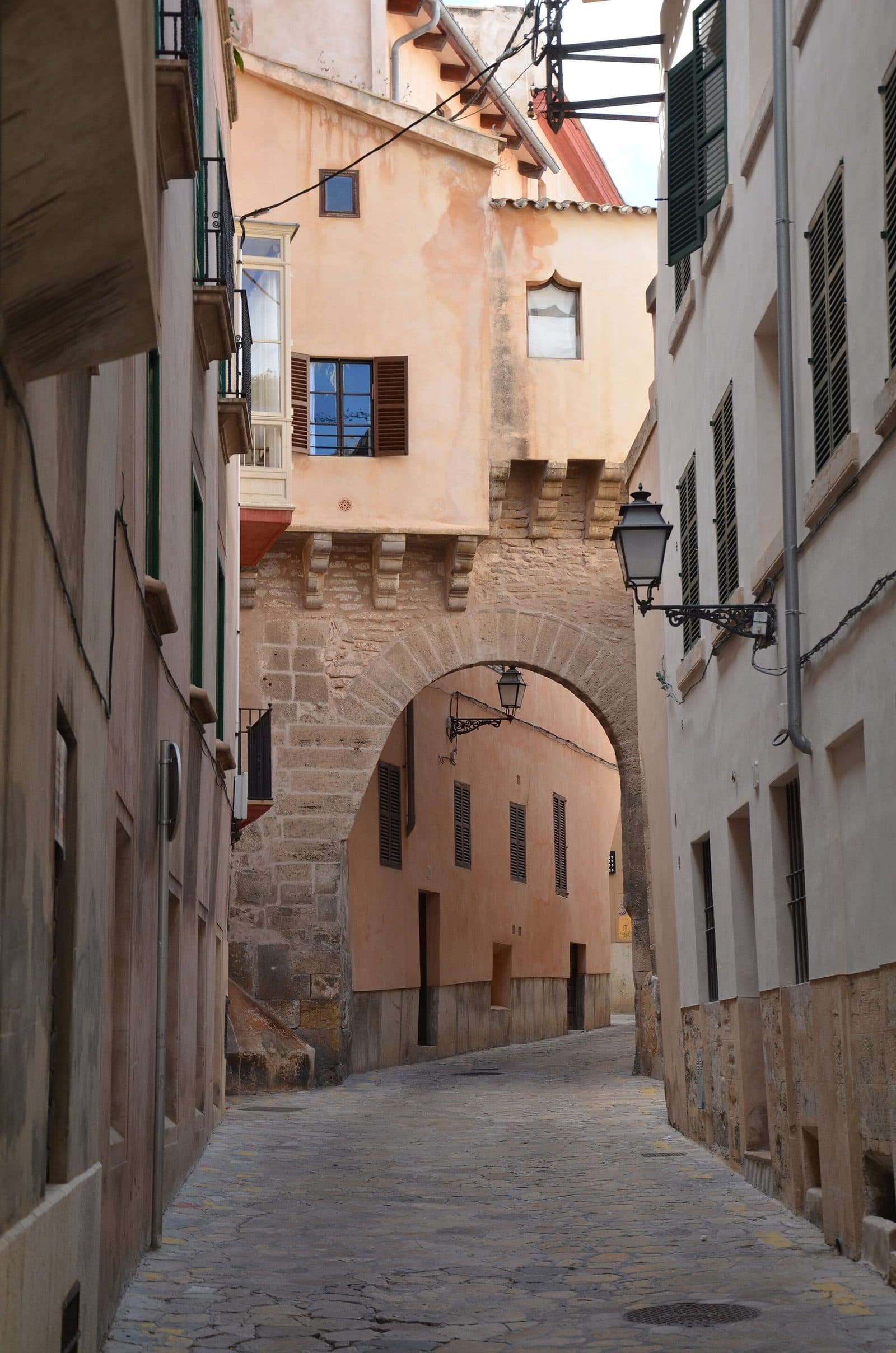

Can Amorós is one of those historic addresses in Palma that does not stand out as an isolated monument but only becomes fully understandable within the fabric of the Old Town. The building lies in the heart of the Mallorcan capital and draws attention to its preserved cityscape—to houses, streets and squares that together tell the story of Palma’s long history. The stop is especially interesting for travelers who want to appreciate architecture beyond the major landmarks. Can Amorós represents the less obvious side of cultural heritage: historic architecture within a city center that remains in everyday use. Its appeal therefore lies as much in the route there as in the destination itself.
A visit can easily be incorporated into a walk through the Old Town. Rather than planning a lengthy museum visit specifically for it, Can Amorós is best viewed as an architectural landmark among the squares, lanes and other historic houses in the center. Those who explore Palma attentively will discover that the city’s history is preserved not only in its cathedral, palace and castle. Before visiting, however, it is advisable to check current accessibility. Confirmed visiting hours and admission conditions are not available and may change. This is particularly important if you expect to enter the building rather than simply view its location and architecture from outside.
Visiting Can Amorós
Can Amorós is reached through the streets of the Old Town. From Plaça Major, a walk through the historic center leads toward Carrer d’En Morei, where the building is listed at number 1. Along the way, larger squares alternate with narrower streets, making Can Amorós part of a coherent exploration of the city rather than merely an isolated point on the map.
Once there, it is worth first stepping back and viewing the house in relation to the street. With historic urban buildings, the overall impression is not determined by a single detail alone. Its position within the row of houses, its orientation toward the street and its transition to neighboring buildings are equally revealing. Can Amorós is therefore particularly rewarding for visitors who take time to appreciate the historic urban fabric rather than seeking only an extensive exhibition.
The length of the stop depends on actual accessibility. As part of an architectural walk, the visit remains brief; anyone able to access additional areas will need correspondingly more time. A fixed duration would therefore be of little help. For planning purposes, it is more important to allow enough time for the walk through the Old Town and for other historic addresses nearby. Without published visiting arrangements, claims about especially quiet visiting times would also be unreliable. Instead of structuring the entire day around Can Amorós, it is more practical to include the stop in an already planned walk and check the access situation beforehand. This ensures that the route remains worthwhile even if only the exterior can be viewed.
Anyone traveling with children should present Can Amorós as a short discovery on a varied city walk rather than as a destination for the whole day. Moving between buildings, small streets and squares provides more variety than a long visit focused exclusively on architecture. No reliable accessibility information is available for the attraction, so visitors should not assume in advance that there is step-free access or that interior routes are suitable.
Directions and Parking
From Palma Airport, the drive initially follows the Ma-19 into the island’s capital. The distance to Palma is 11 road kilometers, and the journey takes around 20 minutes. These details explicitly apply to the drive from the airport to Palma, not directly to Can Amorós. Additional time must therefore be allowed for the final section into the historic center, finding parking and continuing on foot.
The destination address is Carrer d’En Morei 1 in central Palma. Walking is the most natural option for the final section because Can Amorós can easily be combined with the streets and squares of the Old Town. Anyone arriving from Plaça Major can treat the route as part of the walk rather than trying to drive as close to the building as possible. This also makes orientation easier: the attraction appears not as a freestanding monument but as part of the established fabric of surrounding houses.
When arriving by car, parking arrangements should be considered separately from the basic airport route. For planning purposes, the journey via the Ma-19 ends in Palma; it includes neither a guarantee of parking near the building nor the subsequent walk through the center. It therefore makes sense to choose a place to leave the vehicle and approach Can Amorós from there on foot. No specific parking facility directly beside the building is listed.
Several city bus stops are conveniently located around the Old Town. These include stops at Plaça de Cort, Plaça d’en Coll, Plaça de sa Quartera and Plaça del Mercat. The best option depends on the chosen route and what else you plan to do beforehand in Palma. From all of these areas, the final section is completed on foot, which makes it particularly easy to combine the visit with the historic center without a detour.
From Plaça Major, a described walking route leads through central streets toward Carrer d’En Morei. Because routes through the Old Town can vary depending on construction work, events or pedestrian diversions, an up-to-date map is helpful for precise navigation. Once nearby, pay particular attention to the street name.
Bus lines to Can Amorós at a glance
| Line | Route | Departures/day | First | Last |
|---|---|---|---|---|
| 35 | Aquàrium - Pl. Reina | Catedral | 8 | 07:10 | 13:50 |
| 3 | Pont d'Inca / Joan Carles I | 6 | 07:37 | 09:46 |
| 25 | s'Arenal - Pl. Reina | Catedral | 6 | 09:35 | 12:41 |
| 20 | Portopí - Son Espases | 2 | 07:17 | 07:19 |
From the official GTFS feeds (TIB/SFM), no real-time data. The figures cover all stops in the town; weekend and holiday services differ — check with the operator before travelling.
Getting there by bus
662-pl. de Cort · 0.1 km as the crow flies
- CCCircular Centre Ciutat · 08:00–08:00 · Daily
663-pl. d'en Coll · 0.2 km as the crow flies
- CCCircular Centre Ciutat · 08:00–08:00 · Daily
664-pl. de sa Quartera · 0.3 km as the crow flies
- CCCircular Centre Ciutat · 08:00–08:00 · Daily
106-pl. del Mercat · 0.3 km as the crow flies
- 3Pont d'Inca / Joan Carles I · 08:00–08:00 · Daily
- 4Ses Illetes - Pl. Columnes · 08:00–08:00 · Daily
- 7Son Gotleu - Son Serra - Sa Vileta / Son Vida · 08:00–08:00 · Daily
- 20Portopí - Son Espases · 06:06–22:40 · Daily
52-pl. del Mercat · 0.4 km as the crow flies
- 4Ses Illetes - Pl. Columnes · 08:00–08:00 · Daily
- 7Son Gotleu - Son Serra - Sa Vileta / Son Vida · 08:00–08:00 · Daily
- 20Portopí - Son Espases · 06:06–22:40 · Daily
- 35Aquàrium - Pl. Reina | Catedral · 06:21–22:41 · Daily
453-pl. de la Reina - Catedral · 0.4 km as the crow flies
- 25s'Arenal - Pl. Reina | Catedral · 06:36–21:01 · Daily
7-pl. de la Reina - Catedral · 0.4 km as the crow flies
- 35Aquàrium - Pl. Reina | Catedral · 06:21–22:41 · Daily
986-pl. de la Reina - Catedral · 0.4 km as the crow flies
- 35Aquàrium - Pl. Reina | Catedral · 06:21–22:41 · Daily
- CCCircular Centre Ciutat · 08:00–08:00 · Daily
983-Jutjats Nous · 0.4 km as the crow flies
- CCCircular Centre Ciutat · 08:00–08:00 · Daily
105-pl. de Joan Carles I - Catedral · 0.4 km as the crow flies
- 3Pont d'Inca / Joan Carles I · 08:00–08:00 · Daily
- 4Ses Illetes - Pl. Columnes · 08:00–08:00 · Daily
- 7Son Gotleu - Son Serra - Sa Vileta / Son Vida · 08:00–08:00 · Daily
- 20Portopí - Son Espases · 06:06–22:40 · Daily
1048-pl. de Joan Carles I · 0.5 km as the crow flies
- 25s'Arenal - Pl. Reina | Catedral · 06:36–21:01 · Daily
- 35Aquàrium - Pl. Reina | Catedral · 06:21–22:41 · Daily
985-pl. de Joan Carles I · 0.5 km as the crow flies
- CCCircular Centre Ciutat · 08:00–08:00 · Daily
Timetable data: official GTFS feeds (TIB/EMT), no real-time — check with the operator before travelling.
What to See Nearby
Around Can Amorós, Palma reveals a history that is not confined to a single era. The city was already settled in Roman times, later came under Byzantine and Moorish rule, and was conquered in the Middle Ages by Jakob I. von Aragón. These successive periods cannot always be clearly distinguished from one another in today’s streetscape, but they explain why an individual historic house here should always be understood as part of a complex whole.
The central squares are good initial stops on a walking route. Plaça Major works well as a starting point, while Plaça de Cort, Plaça d’en Coll, Plaça de sa Quartera and Plaça del Mercat also serve as landmarks within the network of city-center streets. Shopping streets, smaller lanes and historic addresses lie between them. This creates a route in which Can Amorós does not need to be the beginning or the end but instead serves as a quiet stop along the way.
Those who then want to focus on Palma’s major monuments can continue the Old Town walk toward the area around La Seu and the Almudaina-Palast. Both represent the capital’s grand history, while Can Amorós reveals it on a different scale: that of a historic house within everyday urban life. This contrast helps visitors appreciate Palma’s architectural heritage in a more nuanced way.
Listings for the immediate area also include other places such as Can Bordils, Can Ordines d’Almadrà, Can March, Ca n’Olesa and Impremta Guasp. They do not need to be combined into a complete sightseeing itinerary; visiting just some of these stops is enough to develop a stronger sense of Palma’s distinctive world of names.
For a greater contrast, the day can later continue beyond the confined area of the Old Town. Castell de Bellver, west of the center, provides a different perspective on Palma’s history and architecture, while Can Pere Antoni is an urban beach on the coast. Both destinations require separate route planning and should not be mistaken for immediate neighbors of Can Amorós. Within the center, continuing through the historic streets and past other old houses remains the most logical option.
Local insider tips
Do not plan Can Amorós in isolation
Can Amorós works best as a stop on an Old Town walk beginning at Plaça Major. The route through the center helps explain how the historic house fits into Palma’s established cityscape.
Choose the right Old Town stop
Depending on the bus route, Plaça de Cort, Plaça d’en Coll, Plaça de sa Quartera or Plaça del Mercat can serve as a starting point. From there, the final section leads on foot through the historic center.
Combine smaller and grander architecture
After Can Amorós, it is worth comparing it with La Seu and the Almudaina-Palast: the historic townhouse presents Palma’s heritage at street level, while the monuments reveal it on a grander scale.
Pay attention to the street name
When searching, Carrer d’En Morei is the key reference; the building is located there at number 1.