
Recinte cerimonial de ses Talaies de Cala Pi: Archaeology in Southern Mallorca
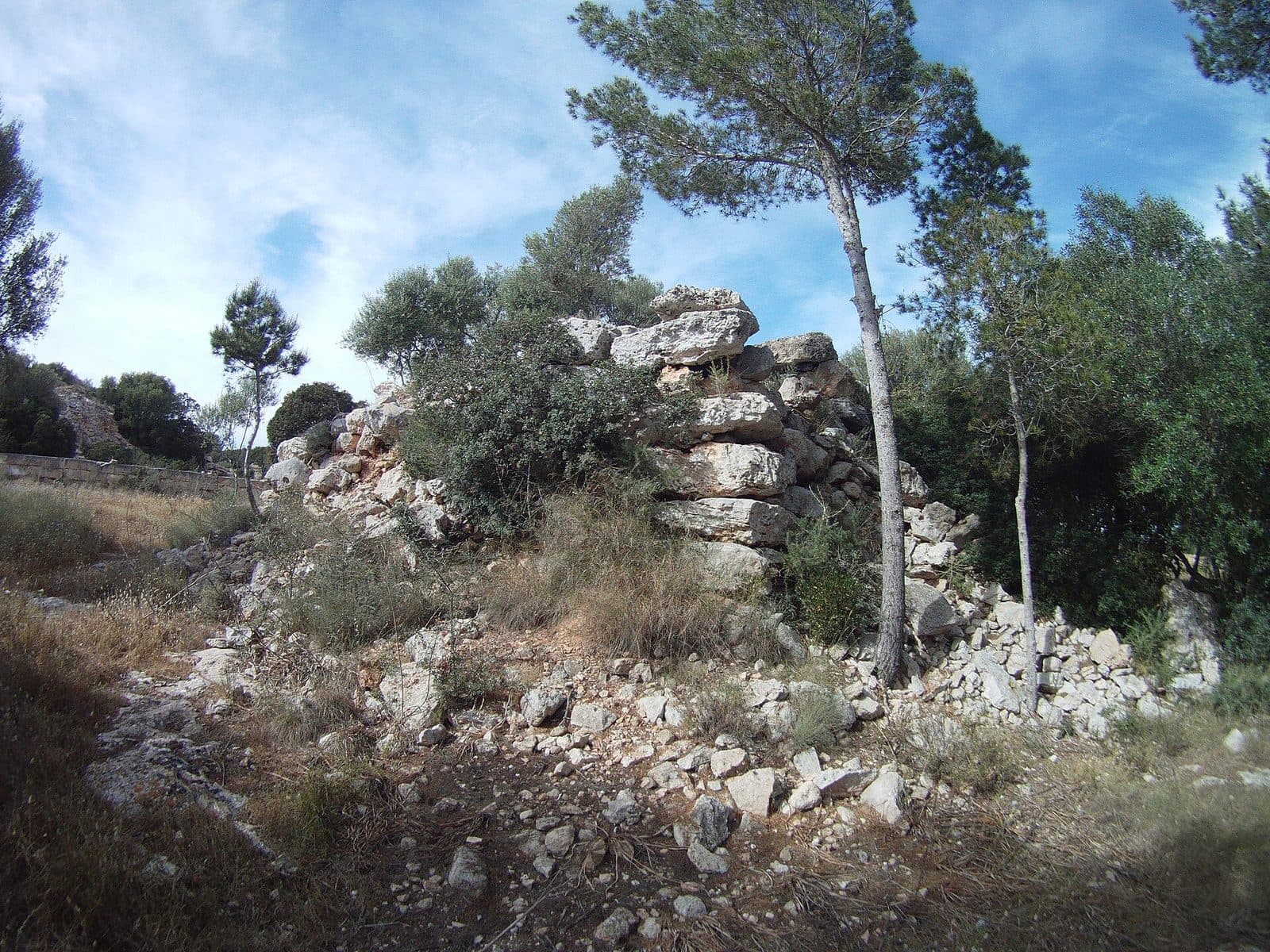

The long name leads to a quieter setting in the island’s history: the Recinte cerimonial de ses Talaies de Cala Pi is an archaeological site near Cala Pi in southern Mallorca. Its focus is on stone remains that directly reveal the layout and character of a historic place.
The site is particularly interesting for travelers who want to discover Mallorca’s past beyond its museums. The square talaiot of Ses Talaies is a documented structure at the site. At the same time, the place demands a careful eye: the documented reference “Talaiot quadrat” and its classification as an archaeological site are central to understanding it.
A visit is also worthwhile as an archaeological counterpoint to the famous cove of Cala Pi. Different chapters of the same area lie close together between the coastal landscape and the stone monument. This connection in particular makes Ses Talaies a worthwhile destination for an excursion that is not devoted exclusively to the beach and sea.
Its precise identity is important. The Recinte cerimonial is neither the beach of Cala Pi nor the early modern coastal watchtower Torre de Cala Pi. Capocorb Vell is also a separate archaeological site. Ses Talaies de Cala Pi has its own protected monument status and should be regarded as an independent site.
History and Significance
A single massive stone can appear inconspicuous. In a carefully built wall, however, it becomes part of a plan—and that is precisely where the historical significance of Ses Talaies de Cala Pi lies. The place is recorded as an archaeological site in the municipality of Llucmajor and forms part of the historical heritage of the landscape around Cala Pi. Its Catalan name refers to the ceremonial enclosure of Ses Talaies de Cala Pi.
The Archaeological Site
The Recinte cerimonial is listed as an archaeological monument in its own right. This classification is important because the name Cala Pi refers to several very different places: the cove, the present-day coastal settlement, a historic Possessió, and the watchtower on the coast. Ses Talaies, by contrast, refers to the archaeological site. Its surviving structural remains are not incidental decoration for the beach resort, but evidence of an earlier, architecturally organized use of the area.
The term “recinte cerimonial” classifies the place as a ceremonial enclosure. It should not, however, be confused with a fully understood history of rituals. Without specific evidence of individual practices, neither a particular cult nor an exact sequence of ceremonies can be described reliably. The architecture and the square talaiot remain the most meaningful evidence.
The Square Talaiot
A square talaiot is documented as a defining feature of Ses Talaies. Its square ground plan is documented.
The available information does not allow the precise purpose of each area to be explained further. Nevertheless, the talaiot is the key to understanding the site. It transforms scattered stones into a monument and the terrain into an archaeological context. When viewing it, visitors should therefore be guided by its documented classification as an archaeological site and by the reference “Talaiot quadrat.”
Protection as Cultural Heritage
On 10 September 1966, Ses Talaies de Cala Pi was registered as a Bé d’Interès Cultural, meaning a cultural asset of special interest. Its monument code is RI-51-0002193. This protected status emphasizes that it is not an arbitrary collection of old stones, but a legally recognized archaeological monument.
For today’s visitors, this status is an essential part of understanding the site. Ses Talaies de Cala Pi is a legally recognized archaeological monument and belongs to the protected historical heritage of the landscape around Cala Pi.
What to See
Ses Talaies de Cala Pi is documented as an archaeological site. The Talaiot quadrat is recorded as a named structure at the site.
Talaiot quadrat
The Talaiot quadrat, or square talaiot, is the most clearly identified structure at the site. The documented term refers to its square shape.
It is worth changing perspective while viewing it. From close range, the size, surfaces, and irregular contours of the stones stand out; from a little farther away, the geometry becomes easier to read. This dual perspective is one of the most powerful experiences at archaeological ruins: planned architecture suddenly emerges from rough material.
The talaiot should not be confused with the Torre de Cala Pi. The coastal tower is a watchtower from a much later period and belongs to a different historical context. The square stone structure of Ses Talaies forms part of the archaeological site in the hinterland of Cala Pi. Similar names and the proximity of the same coastal landscape make this distinction especially important.
Recinte cerimonial
The second part of the name shifts attention from the individual structure to the enclosure. “Recinte” refers to a defined area, while “cerimonial” reflects its archaeological interpretation as a ceremonial space. At the site, the talaiot should therefore be viewed as part of the archaeological site.
The ceremonial enclosure is part of the archaeological site.
Specific altars, cult images, or clearly identified ritual objects are not documented in the available information. The site should therefore not be embellished with invented stories of sacrifices. Its appeal lies precisely in its material traces: stone architecture, ground plan, and the historical decision to mark out a special area permanently.
Stone Courses and Building Lines
The surviving sections show how individual stones become part of a larger construction. Not every visible stone reveals its function on its own. Only repetitions, alignments, and corners create an architectural context. The eye needs a little time to recognize it.
For photographs, an overview is often more helpful than a close-up alone. An image showing several sides or a corner of the square talaiot explains the architecture better than an isolated detail. Close-ups are worthwhile afterward for capturing the texture of the material and the way the stones rest on one another. The site is protected as a cultural asset of special interest.
The Archaeological Ensemble
Ses Talaies should be understood as an ensemble rather than as a photographic backdrop for a single stone structure. The square talaiot provides a point of reference, but the designation as a ceremonial enclosure extends beyond it. The site forms part of the historical heritage of the landscape around Cala Pi.
A complete reconstruction cannot simply be visualized at the site. That is precisely what distinguishes it from restored monuments. The visible remains require comparison, distance, and patience. Those who enjoy this kind of observation will find in Ses Talaies a focused introduction to Mallorca’s archaeology, away from the better-known large sites.
Visiting the Site
A small adjustment in expectations is needed at the outset: Ses Talaies is not a place to be checked off by moving through a series of spectacular interiors. The visit develops through personal observation. The square talaiot serves as a documented point of reference, while the name also identifies the site as a ceremonial enclosure.
Finding Your Way Around the Site
The square talaiot serves as the visual anchor. From there, visitors can examine which stone settings belong to the recognizable structure and how the monument stands out from the surrounding terrain. Instead of photographing every detail immediately, it is advisable first to view it slowly from different directions. This makes the square layout much easier to understand.
A fixed duration for visiting this kind of site would be of little value. Those seeking only an overview will stay for less time, while anyone wishing to compare the ground plan, masonry, and perspectives will need more time and calm. The visit should therefore not be squeezed between two tightly scheduled appointments. Its quality lies less in the number of points seen than in the attention paid to the surviving structures.
Visiting Times and Crowds
No binding opening hours for the Recinte cerimonial are recorded in the available visitor information. There is likewise no current admission price listed. Because access rules at archaeological sites can change, the current conditions should be checked before traveling. This is especially important if Ses Talaies is the main reason for the excursion.
No information is documented about regular visitor numbers specifically at this site. The famous cove of Cala Pi can attract many day-trippers during the high season, but this does not automatically mean that the archaeological site experiences the same level of demand. Anyone planning to combine the cove and the site should primarily take possible traffic and greater demand in the coastal settlement into account when organizing the day.
Archaeology Without Speculation
At the site, it helps to distinguish between what is visible and what is interpretation. The archaeological remains and the square talaiot are visible, while the name indicates a ceremonial enclosure. Detailed stories about particular priests, gods, or individual rituals cannot be inferred from this. A good visit therefore remains focused on what the architecture actually conveys: planning, enclosure, monumental construction, and the historical use of the terrain.
This restraint does not make the site less rewarding. On the contrary, it sharpens the eye for the limited but reliable traces. A corner in a wall, the alignment of one side, or the transition from the structure to the surrounding terrain then becomes the true exhibit.
Getting There and Parking
The journey initially leads to Cala Pi; the stated distances and driving times refer explicitly to the settlement, not to a guaranteed parking space directly beside the archaeological site. For the final section, Recinte cerimonial de ses Talaies de Cala Pi should be selected as a separate navigation destination so that the route does not end at the beach or at Torre de Cala Pi.
From Palma
The road distance from central Palma to Cala Pi is 28 kilometers. The journey takes around 32 minutes and initially follows the Ma-19. Cala Pi is then reached via the southern road network, with the Ma-6015 providing access to the coastal settlement. Traffic can increase the actual journey time, especially when many people are traveling to the cove at the same time.
Correct navigation for the final section is essential. Cala Pi refers to several destinations that are not in the same location. Entering only “Cala Pi” may lead to the cove or the built-up settlement. Using the full name of the archaeological site is more likely to prevent confusion with the beach and watchtower. Local signs and current access rules take precedence over an automatically calculated route.
From Palma Airport
The road distance from Palma Airport to Cala Pi is 22 kilometers, and the journey takes around 21 minutes. No specific road number is given for this measurement in the available travel information. These figures also end in Cala Pi. Additional navigation is therefore necessary to continue to the site.
Anyone traveling directly after landing should not plan solely around the short calculated driving time. Baggage collection, rental car pickup, traffic, and finding the correct archaeological destination all add time. Ses Talaies is better suited to a relaxed visit than to a hurried stop under time pressure.
Parking and Bus
No confirmed information is recorded about a dedicated visitor parking area at the site. In Cala Pi, vehicles should therefore be parked only where current signs permit; access routes and private property must remain clear.
The bus stop Cala Pi (31050) connects the settlement to public transport. Because the stop refers to the coastal settlement and not automatically to the entrance of the Recinte cerimonial, the remaining distance should be planned separately in advance. Timetables can change seasonally and should be checked immediately before the excursion.
Bus lines to Recinte cerimonial de ses Talaies de Cala Pi at a glance
| Line | Route | Departures/day | First | Last |
|---|---|---|---|---|
| 505 | Cala Pi - Tolleric | 43 | 06:50 | 20:35 |
| 504 | Tolleric - Palma | 1 | 20:30 | 20:30 |
From the official GTFS feeds (TIB/SFM), no real-time data. The figures cover all stops in the town; weekend and holiday services differ — check with the operator before travelling.
Getting there by bus
Cala Pi (31050) · 1.3 km as the crow flies
- 504Tolleric - Palma · Daily
- 505Cala Pi - Tolleric · Daily
Timetable data: official GTFS feeds (TIB/EMT), no real-time — check with the operator before travelling.
Nearby Attractions
Within a compact area, Cala Pi reveals very different sides of southern Mallorca. The archaeological Recinte lies in an area now best known for its deeply cut cove. Over time, the Torrent de Cala Pi carved a gorge-like shape into the rock there; the sandy beach lies at the end of the cove between high banks.
Cala Pi and the Cove
The beach is the most obvious scenic counterpoint to the archaeology. It is reached by a stone staircase, while the cove extends far inland. From below, the open sea is not immediately visible because of the cove’s curved course. Anyone combining the site and beach in one day will first experience the ordered stonework of the historic monument and later a coastal formation shaped by water and erosion.
The cove can be very busy during the high season. For a combined excursion, this means that the beach portion often requires more flexibility than the archaeological visit. The return climb up the stairs should also be considered when planning. Conditions at the beach, however, provide no indication of access to or visitor numbers at Ses Talaies itself.
Torre de Cala Pi
The Torre de Cala Pi on the coast represents a later chapter in local history. The watchtower was completed in 1663 and was used to protect and monitor the coast at a time when attacks from the sea were a real danger. It is neither part of the ceremonial enclosure nor a talaiot.
Combining the two places makes their differences particularly clear. Ses Talaies is an archaeological site, while the Torre belongs to early modern coastal defenses. Their shared association with the name Cala Pi should not obscure the fact that their function, architectural form, and historical context are different.
Capocorb Vell
Capocorb Vell is another important archaeological site in the wider area around Cala Pi. It is a worthwhile addition for visitors who want to explore Mallorca’s talaiot architecture in greater depth. Capocorb Vell and Ses Talaies are, however, two independent sites. Structural elements, dates, or descriptions from one site should not be transferred to the other without qualification.
Such a combination is particularly informative when the sites are viewed in succession rather than as interchangeable “stone ruins.” At Ses Talaies, attention is focused on the ceremonial enclosure and the square talaiot. Capocorb Vell opens up a different and more extensive archaeological context. This allows comparison without blurring the identity of either site.
Local insider tips
Use the Full Name
When navigating, always enter “Recinte cerimonial de ses Talaies de Cala Pi.” Searching only for Cala Pi can lead to the cove or the coastal tower—both are different destinations.
Look for the Corners First
The square ground plan of the talaiot becomes easier to understand when you first identify its changes in direction and corners. The structure is easier to read from a little distance than from directly beside a single course of stones.
Compare Archaeological Sites
Anyone wanting to see more of Mallorca’s talaiot architecture can combine Ses Talaies with Capocorb Vell. The two sites should still be considered separately; their differences are precisely what makes the comparison interesting.
Combine Archaeology and the Cove
Ses Talaies can be combined with the cove of Cala Pi. In a single day trip, planned stone architecture meets the coastal landscape shaped by the Torrent.