
Cova de Cala Pi – Prehistoric Burial Cave in Southern Mallorca
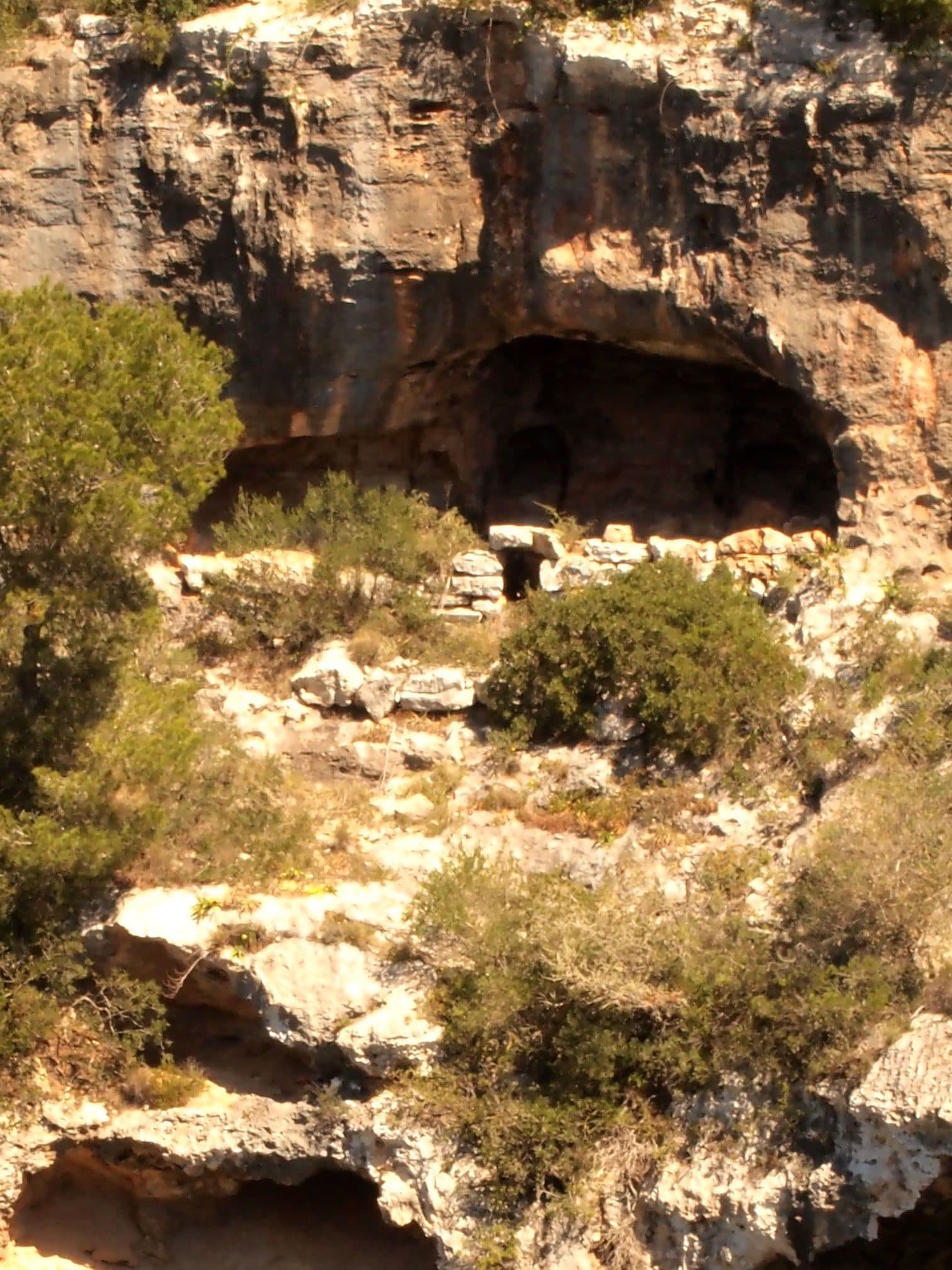

Cova de Cala Pi is not where most visitors first look for it: down by the sandy beach or at the viewpoint above the cove. The archaeological site is located by the Torrent de Cala Pi, the watercourse that shaped the deep cut behind the coast. It is a quiet testament to Mallorca’s prehistoric burial culture.
The Catalan name can easily be misleading. Although “Cova” means cave, Cova de Cala Pi is neither the bathing cove nor the watchtower of the same name. Its value lies in its original function as a sepulchral cave, meaning one used for burials.
It is precisely this understated character that makes the site appealing to those interested in archaeology. The cave can be understood as part of a landscape where the natural environment and early settlement were closely intertwined: the Torrent leads inland, the sheltered cala opens onto the sea, and further significant traces of prehistory survive nearby at Capocorb Vell.
A visit is therefore particularly suitable for people who enjoy examining small archaeological sites carefully and understanding their historical context. Combined with the cove, the coastal views or Capocorb Vell, it makes for an illuminating excursion through several historical layers of southern Mallorca.
History and Significance
The Prehistoric Burial Cave
The key word for understanding the site is “sepulchral.” Cova de Cala Pi is described as a prehistoric burial cave and was therefore not an ordinary living space. Its purpose was connected with the burial of the dead. This function distinguishes it both from natural caves with no known human use and from dwellings, storage spaces or later shelters.
A burial cave was more than a hole in the rock. The available information does not allow reliable conclusions about precisely how the burial rituals were performed, which grave goods were deposited or how many people were buried here. Its fundamental archaeological function is certain, however: the cave belongs to Mallorca’s prehistoric burial context.
This changes how the site should be viewed during a visit. The Cova should not be judged as a spectacular natural phenomenon but as a deliberately used place.
The Torrent de Cala Pi
Its location by the Torrent de Cala Pi is an essential part of its identity. The usually dry watercourse flows into the elongated cove and has cut into the rock over a long period. The burial cave therefore belongs neither to the open plateau nor directly to the beach area, but to the terrain of the Torrent near Cala Pi.
The Cova is documented as a prehistoric sepulchral cave by the Torrent de Cala Pi. This must not be used to construct a specific settlement history for the cave; the spatial context does, however, explain why an archaeological site here does not feel isolated. The Cova forms part of an area where human activity can be traced across very long periods.
A Small Site in a Major Prehistoric Landscape
The extensive stone ruins of Capocorb Vell are easier to recognize as a settlement and immediately convey the impression of built architecture. Cova de Cala Pi tells another side of the same distant past: not life among houses and towers, but how people treated their dead.
For precisely this reason, it should not be dismissed as an insignificant minor site. Archaeological landscapes rarely consist of just one famous monument. Graves, settlements, paths, watercourses and coastal access points together create a more complete picture. Cova de Cala Pi contributes a quiet but important element to that picture.
What to See
The Cave Entrance
At the site, attention first turns to the transition between open ground and the rock chamber. The entrance marks the boundary of the area used as a burial place in prehistoric times. Unlike a freestanding talayot or a masonry tomb, its impact comes not from towering layers of stone but from the cavity enclosed within the rock itself.
This requires a different way of looking. Size and decoration are not what matter, but location, material and function. The natural rock is not merely a backdrop here: it forms the archaeological space. Anyone who pauses before the entrance can examine the rock chamber and its position in the terrain. Its prehistoric sepulchral use is documented.
The site is instead revealed through the surviving relationship between the opening, the rock and the surrounding terrain. This immediate impression is its most important visible feature.
The Rock Chamber
The archaeological significance derives from its former sepulchral use. Individual features should therefore not be hastily interpreted as benches, altars, burial niches or construction phases. Without archaeological explanation, such attributions can quickly become speculative.
It is more helpful to perceive the space as a whole at first. Its former use as a prehistoric burial cave is documented.
Insight comes from close observation and historical context. Those looking only for a major photo opportunity may quickly overlook the place; those who ask about its function will discover a rarely considered aspect of prehistoric life.
The Setting Within the Torrent
The surrounding Torrent is visually and thematically part of the visit. Cala Pi owes its deeply cut shape to the watercourse, which may carry water after heavy rain while its bed remains dry for much of the year. The Cova is situated within this landscape, away from the open seafront.
Here it is particularly easy to see that archaeology does not always consist of excavated walls. Sometimes the topography itself is the key: rock faces, depressions in the terrain and the course of the Torrent determine how the site is perceived and reached. The prehistoric burial cave should therefore not be mentally separated from its surroundings.
This perspective differs markedly from the beach. Down in the cala, sand, water and old boathouses dominate; at the archaeological site, the focus is on rock, seclusion and memory. Both places share the same name but tell entirely different stories.
Reading the Traces Correctly
Restraint is an advantage at small archaeological sites. Depressions, broken edges and irregular surfaces may be natural, may have been altered later or may genuinely belong to the site’s historical use. Without clear identification, it is best not to assign every detail a particular ritual function.
The established fact is already significant enough: this is a prehistoric burial cave. From that starting point, visitors can examine the entrance, rock chamber and location by the Torrent. This keeps the visit vivid without burdening the site with stories that cannot be verified from the visible remains.
Visiting Cova de Cala Pi
Finding the Right Place
The most important preparation is not to confuse the site with Cala Pi itself. Search results, directions and photos under this name often lead to the beach, the viewpoint or the Torre de Cala Pi. The archaeological Cova, by contrast, lies by the Torrent. For navigation, the full name “Cova de Cala Pi” should therefore be used explicitly.
How long you stay depends greatly on your level of interest. Someone who simply wants to see the site will need less time than someone who examines the topography and considers its prehistoric burial function. A fixed visit duration would be misleading. For planning a day out, the Cova can be combined with another destination in Cala Pi.
Best Time to Visit and Crowds
No reliable pattern of visitor numbers is documented for the Cova itself. The nearby cove can, however, become very busy during the swimming season, making the roads and public areas in the village livelier as well. Anyone wishing to combine the archaeological site with the beach or viewpoint will find Cala Pi quieter outside the most popular swimming periods.
Current access conditions should be checked before travelling. No confirmed opening hours or admission information are recorded. This also means that the Cova should not be treated like a major visitor attraction with reliably scheduled entry.
Respecting the Burial Site
The visit is not merely to a cave but to a former burial place. Carving into the rock, moving stones, taking objects away or entering supposed niches is incompatible with the nature of an archaeological site. Even small interventions can alter evidence that may appear inconspicuous to untrained eyes.
The site benefits most from quiet observation. The Cova does not need to be dramatized. Its impact lies precisely in the fact that a direct material connection has survived between present-day Cala Pi and the prehistoric use of the same landscape.
Getting There
From Palma to Cala Pi
From central Palma, the measured route follows the Ma-19 to Cala Pi. It covers 28 road kilometres and takes around 32 minutes. These figures apply specifically to the village of Cala Pi, not directly to the entrance of the archaeological cave.
Once in Cala Pi, detailed navigation is therefore still required. The Cova lies by the Torrent de Cala Pi, not at the better-known photo spot above the beach. The navigation destination and signs should be checked carefully so that the journey does not automatically end at the entrance to the bathing cove.
From Palma Airport
From Palma Airport, Cala Pi is 22 road kilometres away; the journey takes around 21 minutes. This measurement also ends in the village rather than at the Cova.
Anyone visiting solely for the archaeology should not follow directions to the beach entrance without checking them. The key is its location by the Torrent.
By Bus
The local bus stop is called “Cala Pi” and has the code 31050. From there, the route to the archaeological site must be planned separately. The stop serves the village but should not be confused with an entrance to the Cova.
It is advisable to check the current timetable in advance, especially for the return journey. The bus is a practical option when combining the visit with the village or cove; a good map view remains important when specifically looking for the cave.
Bus lines to Cova de Cala Pi at a glance
| Line | Route | Departures/day | First | Last |
|---|---|---|---|---|
| 505 | Cala Pi - Tolleric | 43 | 06:50 | 20:35 |
| 504 | Tolleric - Palma | 1 | 20:30 | 20:30 |
From the official GTFS feeds (TIB/SFM), no real-time data. The figures cover all stops in the town; weekend and holiday services differ — check with the operator before travelling.
Getting there by bus
Cala Pi (31050) · 0.2 km as the crow flies
- 504Tolleric - Palma · Daily
- 505Cala Pi - Tolleric · Daily
Timetable data: official GTFS feeds (TIB/EMT), no real-time — check with the operator before travelling.
Nearby Attractions
Cala Pi and the Torrent
The village of Cala Pi lies above a deeply cut cove on Mallorca’s southern coast. The Torrent de Cala Pi runs towards this cove and carries water after heavier rainfall; its rocky bed may remain dry for much of the year. This landscape explains the name and spatial context of the burial cave better than any isolated object could.
A detour to the cove is worthwhile mainly because of the contrast. At the end of the narrow inlet are a sandy beach and old boathouses between the rock walls. The descent to the beach involves 147 steps. Anyone who has first viewed the quiet burial cave will encounter a very different use of the same landscape there: today, swimming, boats and coastal views; in the past, burial in the rock chamber of the Torrent.
Torre de Cala Pi
The Torre de Cala Pi stands above the southeastern entrance to the cove. The watchtower was completed in 1663 and served to protect the coast from attacks. It is not part of the Cova and is many centuries younger, but it can easily be included in the same excursion.
The combination illustrates how the landscape’s significance changed. The prehistoric cave represents burial and remembrance, while the early modern tower represents observation and coastal defence. There is no shared architectural context between them, but they occupy the same distinctive natural setting around Cala Pi.
Capocorb Vell
Anyone wishing to place the Cova in its archaeological context will find Capocorb Vell the most natural addition. The Bronze Age or Talayotic settlement is one of Mallorca’s major prehistoric sites and displays monumental stone architecture, something that should not be expected at the small burial cave.
The two destinations relate different aspects of prehistory. At Capocorb Vell, the focus is on settlement structure and built spaces; Cova de Cala Pi preserves evidence of burial practices. Combining both sites provides a much more comprehensive impression than visiting the cave alone.
Cala Beltran
Cala Beltran is a good option for extending the trip into the surrounding landscape. The smaller coastal cove is reached on a hike from Cala Pi and is more suitable for visitors with appropriate footwear and time to spare than as a casual addition. It deepens the impression of the rocky southern coast but should not be confused with the archaeological Cova.
Anyone wishing to combine archaeology, coastal scenery and swimming in one day has several options around Cala Pi. It remains important to distinguish clearly between the places: the Cova, beach, Torre and Cala Beltran have similar geographical names but are separate destinations.
The place it belongs to
Cala Pi in the place guidePractical Visitor Information
Footwear and Terrain
After rain, the Torrent requires particular attention because it may carry water; dry conditions should not be assumed for every visit.
Sun and Weather
After heavy rain, the character of a Torrent changes fundamentally; the terrain should then not be treated like an ordinary dry footpath.
Visiting With Children
The explanation is easy to understand: a very long time ago, people used this rock chamber to bury their dead.
No stroller-friendly access or accessible facilities are documented. Families should therefore check in advance which route currently leads to the site and adapt the outing to the children’s age, sure-footedness and the weather.
What Not to Expect
Its subject is archaeology, more specifically a prehistoric burial cave.
The site does not reward a checklist of attractions but careful attention to the rock, landscape and historical function. The most meaningful way to visit is as part of an excursion that also includes the cove or Capocorb Vell.
Local insider tips
Pay Attention to the Torrent
The cave is easier to understand if you first examine the course of the Torrent de Cala Pi. Its position within the rocky cut is part of the archaeological impression and clearly separates the Cova from the beach.
Combine It With Capocorb Vell
The strongest archaeological combination is with the nearby settlement of Capocorb Vell. There, monumental prehistoric stone architecture takes centre stage, while the Cova focuses on burial culture.
Search for the Full Name
Always enter “Cova de Cala Pi” when navigating. A shortened search for Cala Pi often leads to the bathing cove, viewpoint or watchtower instead of the archaeological burial cave.
Do Not Interpret Every Detail
Depressions and broken edges in the rock are difficult to identify without archaeological explanation. What is certain and informative is its function as a burial cave, the sheltered rock chamber and its location by the Torrent.
Two Sides of Cala Pi
After the Cova, it is worth continuing to the cove, where sand, boathouses and coastal scenery take centre stage. This shows how different places sharing the same name can be.