
Cala Beltran – Viewpoint Over Mallorca’s Wild South Coast
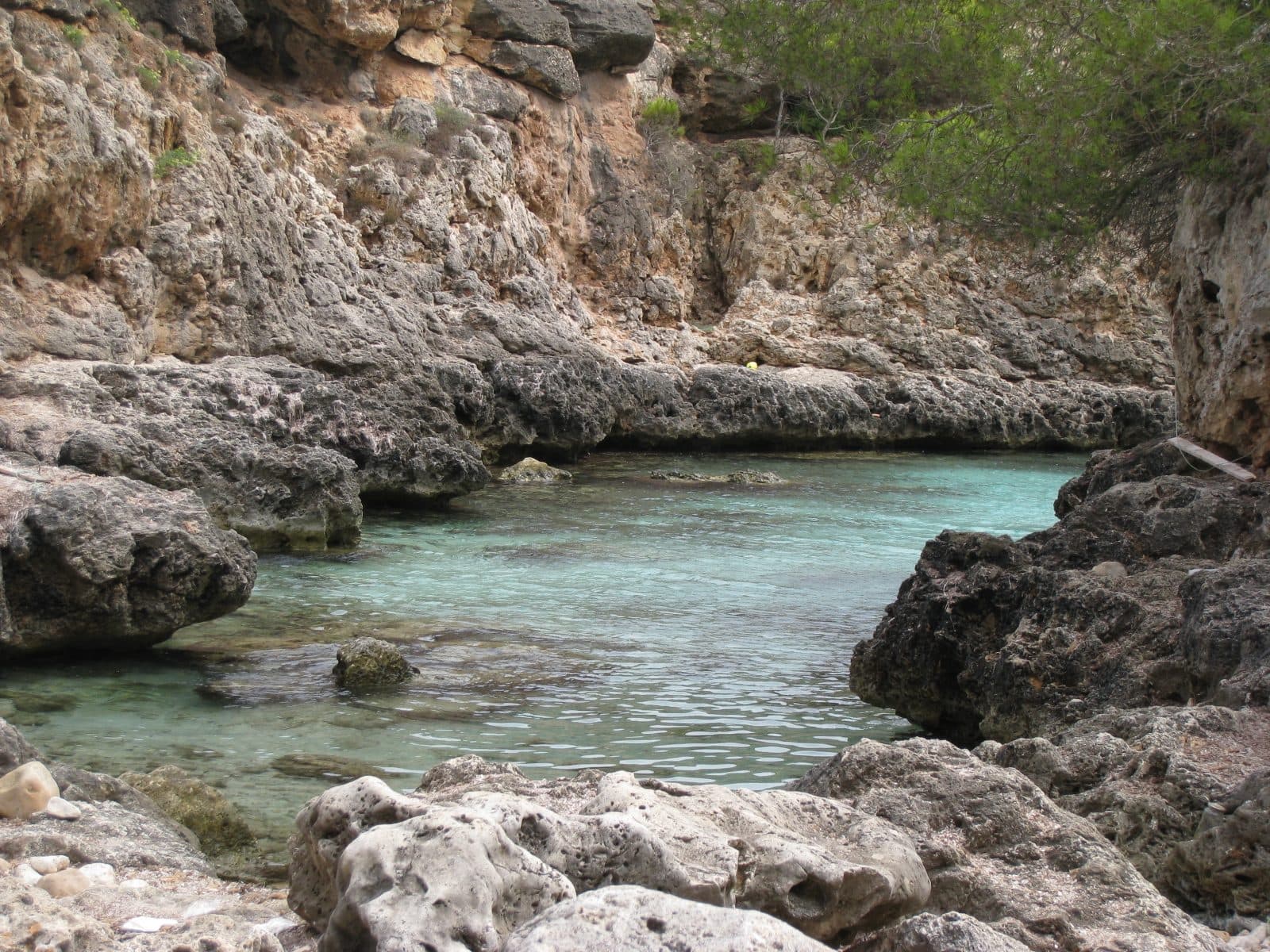

Cala Beltran reveals the quiet, undeveloped side of Mallorca’s south coast. The viewpoint near Cala Pi overlooks a narrow inlet that winds inland between low rock walls and Mediterranean vegetation. From above, the water resembles a turquoise ribbon in the pale limestone—a striking contrast to the better-known and more frequently visited neighboring cove.
The view, however, has to be reached on foot. From Cala Pi, a coastal trail follows the cliffs, offering changing perspectives of both coves along the way. The initial climb is steep and rocky in places, after which the terrain becomes easier to follow. This gradual approach is part of the appeal: Cala Beltran does not appear all at once but slowly takes shape through rock, vegetation, and water.
The spot is particularly suited to visitors who want to combine a short coastal hike with landscape photography. It is also possible to descend to the rocky cove, but Cala Beltran is neither a classic sandy beach nor a conveniently equipped excursion destination. Those primarily seeking views, coastal formations, and tranquility will experience the site best from the natural vantage points above the inlet.
What to See
The Winding Inlet
The defining feature of Cala Beltran is its unusually narrow shape. The cove extends around 200 meters inland and ends where a usually dry streambed meets the sea. Its course is especially easy to recognize from the cliff edge: Instead of an open beachfront, there is a narrow channel of water that bends between the rocks and repeatedly disappears partly from view.
Its geometry changes considerably depending on where you stand. From an elevated position, the Cala appears almost enclosed; a few steps farther on, the view opens toward the sea. The pale rock traces the shoreline sharply, while pines and low coastal vegetation mark the upper edge of the cliffs. The comparison with a miniature fjord may explain the initial impression, but geologically and visually, the inlet unmistakably belongs to Mallorca’s limestone south coast.
At its inner end, the cove is only about 15 to 20 meters wide. Large stones, boulders, and smaller pebbles carried down by the dry torrent bed accumulate there. Soft sand plays almost no role. From above, therefore, not only the color of the water is interesting, but also the transition from the blue inlet to the pale, stony valley floor.
The Natural Viewpoints
Do not expect a constructed mirador with railings and a paved terrace. The views appear along open rocky sections of the coastal trail. Some are closer to the edge, while others are set slightly back among vegetation and flat limestone slabs. The best vantage point depends on whether you want the entire cove, its inner end, or the narrow connection to the open sea in the frame.
The view along the length of the Cala from a slightly elevated position is particularly impressive. From there, the curves of the water become visible, and the opposite rock edge forms a natural frame. Anyone who walks only as far as the first unobstructed view misses part of the effect: Several perspectives follow along the trail, making the Cala appear at times like a narrow channel and at others like a secluded rocky basin.
The view back toward Cala Pi is also part of the experience. During the climb, the deeply cut neighboring cove, its rock walls, and the old watchtower on the opposite side come into view. Cala Pi appears considerably more developed from this height; Cala Beltran, by contrast, remains free of waterfront buildings, rows of loungers, and dining facilities. The contrast between these two landscapes explains why the short hike is often valued as much as the destination itself.
The Rocky End of the Cala
Below the viewpoints lies a tiny, stony shoreline. It is not a comfortable beach but the mouth of the dry torrent. Large stones and uneven rock dominate the ground. Flat places to sit are scarce, and even with a thick mat, a stay here remains more rustic than at the sandy beach of Cala Pi.
The descent offers another perspective on the cove: At water level, the broad lines of the coastline disappear, while the rock walls, stones, and sheltered water draw closer. Entry into the sea is over uneven ground before the water becomes deeper. Anyone wishing to swim should therefore choose a clearly identifiable entry and exit point and remember it for the return.
For sightseeing, however, the view from above remains the key attraction. Only there can the full shape and position of Cala Beltran be appreciated. Below, you experience a quiet rocky cove; above, you understand why this small inlet is one of the most distinctive landscape scenes near Cala Pi.
Visiting Cala Beltran
The Trailhead Behind the Boathouses
The usual approach begins in Cala Pi. From the upper part of the village, stairs first lead down to the cove. At the water, the route passes the boathouses; the coastal trail begins by the last building. A small staircase and an inconspicuous rocky path lead up onto the cliff.
This initial section requires particular attention. The trail first climbs steeply over rock and alongside a partly damaged stone staircase. After that, the route across the coastal plateau becomes easier. Cairns can help with orientation.
The reward begins during the ascent. After every change of direction, the view of Cala Pi, the sea, and the opposite cliffs shifts. Cala Beltran itself does not appear until farther along the route. This makes the visit feel less like checking off a single photo spot and more like taking a short coastal hike.
Time Needed and Pace of Your Visit
Allow more time for the outward walk, views, and return than for a quick roadside stop. One published account gives the hike as taking about an hour, although this includes some detours. Those who photograph frequently, visit several vantage points, or descend to the rocky shore will spend correspondingly longer on the route.
Morning is considered a particularly pleasant time to visit. The heat is usually less intense, and the natural viewpoints are often shared with only a few other hikers. Even on days when Cala Pi is busy, Cala Beltran can remain noticeably quieter. Complete solitude cannot be assumed, however: The hike is well known, and the open rocky sections offer only limited comfortable space.
A slow pace is worthwhile for appreciating the scenery. Rather than heading directly to the inner end of the cove, stop and look back from several safe places. The strongest views are not necessarily found at the lowest point, but where the curve of the Cala and its opening to the sea can be seen at the same time.
Weather and Conditions
Sun and wind have a greater influence on a visit here than at a developed viewpoint. Shade is limited on the coastal plateau, while the rock and low vegetation provide little shelter. On warm days, even the return over the first steep section can become strenuous.
Even in calm weather, it is important to keep your distance from the cliff edge. The natural viewpoints have no railings; a spectacular camera angle does not make a safe place to stand.
Specific opening hours and admission conditions have not been recorded. Because regulations and local access conditions can change, checking current information before setting out is recommended. Regardless, allow enough daylight for both directions, as the rocky approach is not a route that is pleasant to walk in the dark.
Getting There and Parking
Driving to Cala Pi
The driving details refer to Cala Pi, not directly to the viewpoint. From central Palma, the road distance is 28 kilometers; the drive takes around 32 minutes and initially follows the Ma-19. The onward route to the coast uses the road network around Llucmajor and the Ma-6015 to Cala Pi.
The road distance from Palma Airport to Cala Pi is 22 kilometers, with around 21 minutes of driving time. This journey also ends in the village. Cala Beltran itself cannot be reached by car: The final section leads on foot down into the cove of Cala Pi and then along the rocky coastal trail.
From the Village to the Viewpoint
From the upper edge of Cala Pi, access first follows a steep staircase down to the sandy beach. At the bottom, continue alongside the boathouses. The climb onto the western cliff begins behind the final building. The trailhead is inconspicuous and also the most technically difficult section: Rock steps, a tight change of direction, and partly damaged stones require sure footing.
Above the steep section, the path follows the coast. The direction is suggested by the line of the cliff and is marked in places by cairns. Cala Beltran lies west of Cala Pi and becomes visible only after the climb. There is no road access to the actual viewpoint.
Anyone wishing to descend to the inner end of the Cala should expect even rougher terrain. This additional descent is not necessary for a visit focused on the viewpoint; the most revealing overall views are found from the higher rocky sections anyway.
By Bus
The Cala Pi bus stop is served by public transport. Here too, the motorized journey ends in the village. From the stop, walk to the staircase, descend to the beach, and continue along the coastal route described above. Because the return from the cliffs and the subsequent climb up the stairs require time and energy, check the timetable before setting out.
For planning purposes, it is essential to treat the bus journey and hike as separate stages. The stop serves Cala Pi, not Cala Beltran itself. Sturdy footwear and sufficient daylight therefore remain essential even when arriving without a car.
Bus lines to Cala Beltran at a glance
| Line | Route | Departures/day | First | Last |
|---|---|---|---|---|
| 505 | Cala Pi - Tolleric | 43 | 06:50 | 20:35 |
| 504 | Tolleric - Palma | 1 | 20:30 | 20:30 |
From the official GTFS feeds (TIB/SFM), no real-time data. The figures cover all stops in the town; weekend and holiday services differ — check with the operator before travelling.
Getting there by bus
Cala Pi (31050) · 0.9 km as the crow flies
- 504Tolleric - Palma · Daily
- 505Cala Pi - Tolleric · Daily
Timetable data: official GTFS feeds (TIB/EMT), no real-time — check with the operator before travelling.
Nearby Sights
Cala Pi
Cala Pi is both the starting point and the natural counterpart to the quieter viewpoint. The deeply cut cove ends at a pale sandy beach and is bordered by high rock walls. Old boathouses stand by the water, while the houses and streets of the coastal settlement spread across the cliffs above. Anyone wishing to swim after the hike or spend longer on the sand will find the more comfortable option here.
The cove formed at the mouth of the Torrent de Cala Pi. Its stony bed is usually dry, although water can collect after heavy rain. Over a long period, the torrent shaped the deep channel in the coastal rock. This landform can be viewed particularly clearly from the trail to Cala Beltran.
Cala Pi is considerably busier than Cala Beltran on warm days. It therefore makes sense to hike to the viewpoint first and visit the beach afterward. This places the steep coastal climb in the more pleasant part of the day, while no demanding route-finding is required later.
Torre de Cala Pi
The Torre de Cala Pi stands on the opposite side of the cove. The historic watchtower forms a striking focal point even during the climb and recalls the former surveillance of the coast against attacks from the sea. It is not part of Cala Beltran, but it shapes the panorama back across Cala Pi.
For a combined outing, it is sufficient to include the tower as another viewpoint within the village area. A detailed tour is not necessary to understand Cala Beltran; the changing perspective is the main attraction. From the coastal trail, the tower appears above the opposite rock edge, while its side offers views of the mouth of Cala Pi and the open sea.
The Southern Cliff Coast
To the west and east of Cala Pi, an open landscape of limestone, pines, and Mediterranean scrub continues along the coast. Longer coastal hikes connect natural inlets, viewpoints, and historic watch posts. Cala Beltran can therefore be either the destination of a short excursion or a stop on a more extensive route.
The rugged coast should not be underestimated when extending the walk spontaneously. Shade and places to stop for refreshments are absent over long sections, paths are not always clearly defined, and the return distance must be taken into account. Those with only half a day for the excursion are best advised to combine the viewpoint with Cala Pi itself rather than continue along the coast without preparation.
The place it belongs to
Cala Pi in the place guidePractical Visitor Information
Footwear, Water, and Sun Protection
The route should be treated as a short hike, not as a stroll to a paved viewing terrace. Shoes with grippy soles make the steep initial climb easier and provide greater security on loose stones. Sandals without adequate support are poorly suited to the rocky steps and exposed limestone slabs.
There is very little reliable shade on the coastal plateau. Water, sun protection, and a hat should therefore be carried even when visiting only the viewpoints. There are no shops, restaurants, loungers, or other tourist facilities directly at Cala Beltran. Food and drinks are best arranged in Cala Pi beforehand.
Those descending to the stony shore to swim will benefit from water shoes. Large stones and uneven rock surfaces make entry difficult. A thicker mat is more comfortable than a thin towel if you plan to remain by the water for longer.
Visiting with Children
The most difficult section lies immediately behind the boathouses. The steep rocky climb and partly damaged steps require sure footing and close supervision. One hiking report describes the section as manageable with school-age children, but the route is considerably less suitable for small children. A stroller cannot be used on this trail.
The viewpoints have no railings or clearly defined platforms. Children should therefore not run ahead or approach the cliff edge alone. Families who find the initial climb too demanding can enjoy the views over Cala Pi from the upper parts of the village and skip the crossing to Cala Beltran.
What Not to Expect
Cala Beltran offers no designed mirador, promenade, or classic beach day with soft sand. The attraction consists of the landscape view itself and the hike required to reach it. Continuous signage should not be expected either; the trailhead behind the boathouses is easy to miss, and footprints and cairns provide more guidance than signs on the plateau.
Nor is the lowest point automatically the best place for photographs. The cove’s characteristic course is much clearer from above. Those visiting for the view can skip the steep descent to the stony shore and instead seek out several safe positions along the cliff.
Photography here calls for restraint. The exposed edge is not a staged photo spot, and individual rocky outcrops can be narrow or exposed. Keeping a few steps back barely changes the composition but significantly improves safety. Cala Beltran rewards not the most daring position, but an attentive eye for the lines of the coast.