
sa Puntassa Lighthouse near Colònia de Sant Jordi
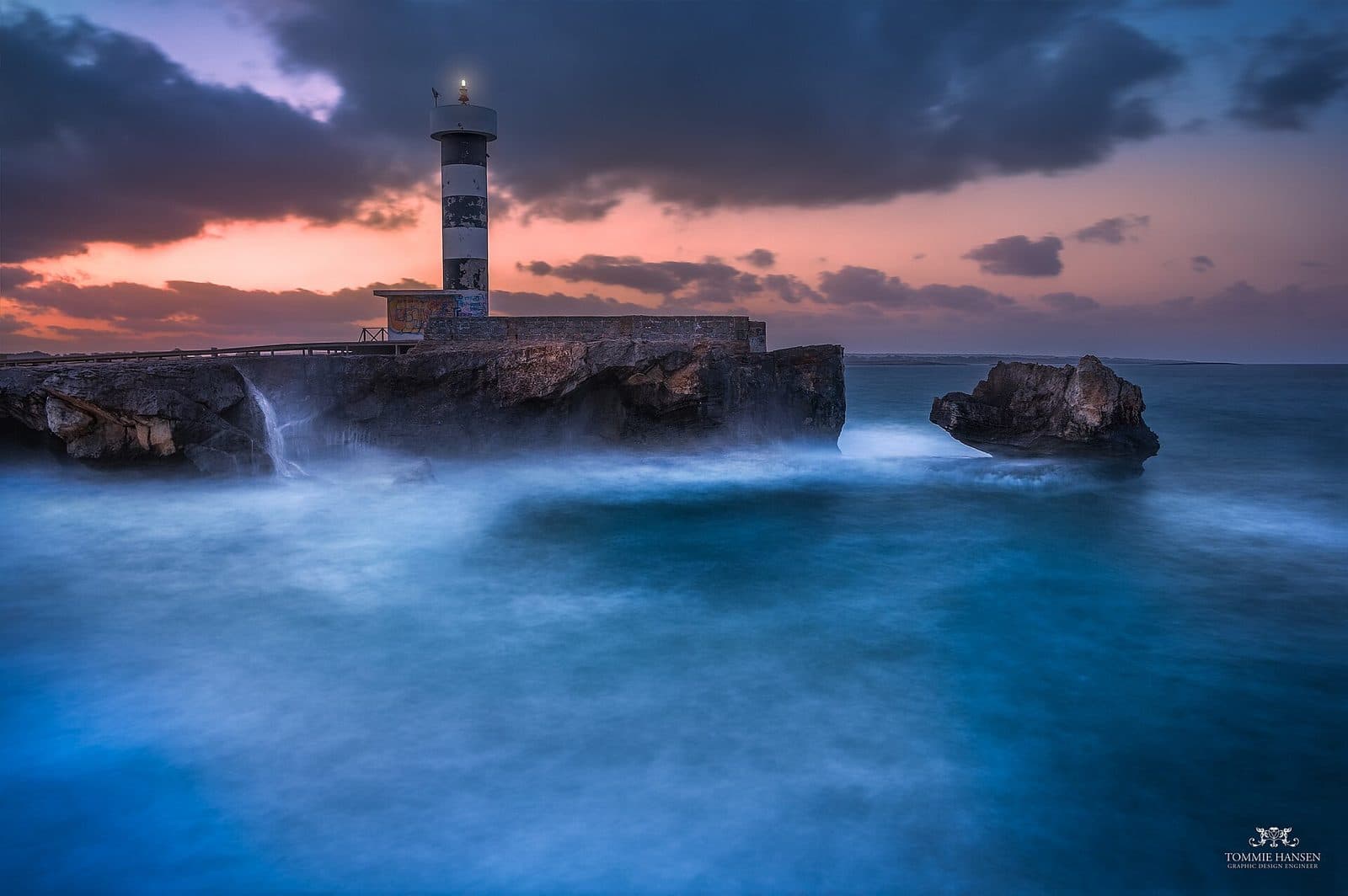
_(23095315834).jpg)
At the eastern end of the broad bay of sa Ràpita, a low, rocky cape extends into the sea. This is where sa Puntassa, the lighthouse of Colònia de Sant Jordi, stands. The place impresses less through monumental architecture than through its maritime setting: open water, a flat rocky coast and views along southern Mallorca define the scene.
Sa Puntassa is especially worthwhile for coastal walkers, photographers and anyone who wants to experience Colònia de Sant Jordi as more than just a starting point for the well-known beaches. The cape forms the geographical endpoint of the Badia de sa Ràpita, also known as Badia de Migjorn. Anyone who pauses here will understand the shape of the coastline better than on any map.
The main attractions are the exterior view and the immediate surroundings of the cape. It is particularly rewarding to combine the visit with a walk along the coast of Colònia de Sant Jordi, whose promenade offers regular viewpoints, benches and unobstructed views of the sea.
Cabrera is also part of the panorama. In clear conditions, the archipelago off the south coast can be seen. This turns a short stop at the lighthouse into a useful point of orientation between the bay of sa Ràpita, the coastal town and the open sea.
What to See
sa Puntassa Lighthouse
Sa Puntassa should not be judged by the size of its tower. Its location is what matters: the lighthouse stands on the cape that closes the eastern end of the Badia de sa Ràpita. It therefore appears as a marker between the sheltered bay and the more open stretch of coast near Colònia de Sant Jordi. The structure gives the view a fixed point of reference, while the sea extends behind it to the horizon.
The available information does not support any reliable statements about the year of construction, historical building phases or a publicly accessible interior. For planning a visit, its character as a coastal destination is therefore more important than any expectation of climbing the tower. Sa Puntassa is experienced from outside and through its relationship with the cape, not through museum rooms.
The Rocky Cape
The headland is low and rocky. Unlike the steep capes of northern Mallorca, this coast does not plunge dramatically into the sea from a great height. Its appeal lies in its horizontal form: pale rock, a flat shoreline and the nearby water create an open, almost graphic landscape. Right at the edge of the cape, the sea is already approximately four metres deep. This explains why boats can pass comparatively close to the coast, but it is also a reason to remain alert near the unprotected rocky edge.
The low elevation allows an immediate view of the water's surface. Wind, waves and changing light shape the impression more strongly than architectural details. In calm weather, the contours of the bay are easy to follow; in rougher seas, it becomes clear how exposed even a low cape can be.
Badia de sa Ràpita
The spatial significance of sa Puntassa is particularly easy to understand from the cape. The Badia de sa Ràpita, also known as Badia de Migjorn, ends here on its eastern side. The view follows the coastline towards the long beaches and dune landscapes west of Colònia de Sant Jordi. The cape is therefore not only the site of a lighthouse but also the natural boundary of one of the distinctive coastal areas in southern Mallorca.
Views of Cabrera
In good visibility, Cabrera appears out at sea. The archipelago can be seen from several points along the coast of Colònia de Sant Jordi and adds depth to the otherwise open horizon. From sa Puntassa, this distant view fits particularly well with the maritime character of the place: the lighthouse in the foreground, the low cape and Cabrera in the distance tell, without exhibition panels, the story of a coast that has always been shaped by the sea.
Visiting sa Puntassa
A Coastal Stop Rather Than a Lighthouse Tour
A visit is best approached with the right expectations. Sa Puntassa is primarily a place to view from outside and spend time on the coast. Climbing the tower, accessing lighthouse keepers' rooms or visiting an exhibition should not be assumed. Those who come for the location, however, will find a clearly legible point on the coast: the bay ends here, the sea opens up here, and the orientation of Colònia de Sant Jordi is easy to understand from here.
A short stop is sufficient for the lighthouse alone. It is worth allowing more time if sa Puntassa is included in a walk along the coast. The promenade of Colònia de Sant Jordi follows the shoreline and has viewpoint benches from which the sea and horizon can be contemplated at leisure. This makes the visit more than an isolated photo stop, turning it into a walk through the town's maritime side.
Light, Visibility and Weather
The quality of the visit depends more on the weather than on a fixed sightseeing programme. Clear visibility increases the chance of spotting Cabrera on the horizon. Wind and waves significantly alter the character of the low rocky cape; the open shoreline lacks the shelter of narrow streets or dense development. This should be considered when choosing clothing and spending time near the rocky edge.
For photography, the unobstructed sightlines along the bay are more interesting than a perfectly frontal shot of the lighthouse. A little distance reveals how the tower, the flat cape and the broad expanse of water work together. Anyone who photographs only a close-up of the structure misses the very feature that makes sa Puntassa special: its position at the end of the bay.
Check Access in Advance
Confirmed opening hours and admission details are not available. As lighthouses may be technical facilities and access rules can change, checking the latest information before visiting is recommended. This is particularly important if the interior is the main reason for the visit. For a coastal walk, it still makes sense to include sa Puntassa as an outdoor stop and to respect any barriers without exception.
Getting There and Parking
From Palma Airport
The stated driving figures lead to Colònia de Sant Jordi, not directly to the lighthouse. The road distance from Palma Airport to the coastal town is 49 kilometres, and the drive takes around 41 minutes. The route initially follows the Ma-19, then the Ma-6030 and the Ma-6014 towards Colònia de Sant Jordi.
The final section towards the coast begins within the town. Since sa Puntassa lies on a cape within the coastal town, navigation there should be adjusted to the local road layout. The most suitable endpoint for the car depends on the access and parking regulations in effect at the time. Vehicles should be parked legally in the town, with the remaining section to the coast completed on foot unless signs indicate otherwise.
From Central Palma
From central Palma, the road distance to Colònia de Sant Jordi is 55 kilometres. The drive takes around 51 minutes and also follows the Ma-19, Ma-6030 and Ma-6014. These figures likewise apply only as far as the town. Additional time must therefore be allowed for the final streets and the route to the lighthouse, without assuming guaranteed vehicle access directly to sa Puntassa.
The route leads from the urban area of Palma into the flatter landscape of the south. During the high season, traffic around Colònia de Sant Jordi may be heavier because the town also provides access to several well-known beaches. Anyone wishing to combine sa Puntassa with a coastal walk should not automatically drive to the closest possible point, but instead choose a legal parking space from which the town can also be explored on foot.
By Bus
Colònia de Sant Jordi has several bus stops within the town. Visiting sa Puntassa still requires a walk from the chosen stop through the town or towards the coast. As timetables may be adjusted seasonally, the outbound and return connections should be checked on the day of the visit. The bus is particularly suitable when the lighthouse is intended as part of a longer walk through Colònia de Sant Jordi and direct transport to the cape is not expected.
Bus lines to sa Puntassa at a glance
| Line | Route | Departures/day | First | Last |
|---|---|---|---|---|
| 517 | Santanyí - Colònia de Sant Jordi - Campos | 156 | 06:04 | 22:59 |
From the official GTFS feeds (TIB/SFM), no real-time data. The figures cover all stops in the town; weekend and holiday services differ — check with the operator before travelling.
Getting there by bus
Plaça Constitució (59008) · 0.5 km as the crow flies
- 517Santanyí - Colònia de Sant Jordi - Campos · Daily
Roada (59014) · 0.8 km as the crow flies
- 517Santanyí - Colònia de Sant Jordi - Campos · Daily
Marquès del Palmer (59013) · 0.9 km as the crow flies
- 517Santanyí - Colònia de Sant Jordi - Campos · Daily
Primavera (59006) · 1.1 km as the crow flies
- 517Santanyí - Colònia de Sant Jordi - Campos · Daily
Timetable data: official GTFS feeds (TIB/EMT), no real-time — check with the operator before travelling.
Nearby Attractions
Colònia de Sant Jordi
Colònia de Sant Jordi developed from a small fishing and coastal settlement into a popular holiday resort. The harbour, promenade and beaches are close together, allowing sa Puntassa to fit naturally into a walking tour. The lighthouse shows the open, nautical side of the town, while the harbour reveals how closely fishing, excursion traffic and modern beach life are connected.
Viewpoint benches stand along the coast and are suitable for breaks and views towards Cabrera. Colònia de Sant Jordi is particularly worth exploring on foot outside a day devoted solely to swimming: the coastline is not merely a link between beaches, but a sequence of different perspectives on the harbour, rocky shore, bay and offshore islands.
Es Trenc, Es Dolç and Es Carbó
Several of the best-known beaches in southern Mallorca are near Colònia de Sant Jordi. Es Trenc extends northeast of the town, while Es Dolç and Es Carbó lie along the coast in the other direction. They do not all need to be fitted into the same day. Simply combining sa Puntassa with one section of beach reveals the change in landscape between the low rocky cape, sand, dunes and clear water.
Visitors drawn to sa Puntassa by its geographical setting will find a continuation of this coastal landscape at the beaches. The lighthouse marks one end of the bay, while the long sandy areas make its extent tangible. For a relaxed outing, it is enough to choose one beach and leave the rest for a later visit.
Salt Pans and Cabrera
Salt production continues to shape the history of the municipality of Ses Salines. The salt pans near Colònia de Sant Jordi are among the oldest in Mallorca, and salt is still produced there using traditional methods. A look at this landscape places the lighthouse in a broader context: the sea here was not only a transport route and horizon, but also the foundation of an economic activity that remained important for a long time.
Excursions to the Cabrera Archipelago also depart from the harbour of Colònia de Sant Jordi. The islands, which appear on the horizon from the coast in good visibility, can thus become a destination in their own right rather than a distant silhouette. Sa Puntassa and Cabrera are especially easy to connect conceptually, but the boat trip should be organised as a separate and carefully planned part of the itinerary.
The place it belongs to
Colònia de Sant Jordi in the place guidePractical Visitor Information
Footwear and the Rocky Coast
The cape is low but rocky. Shoes with a secure grip are therefore more suitable than smooth soles or loose beach footwear. Uneven surfaces and spray can make the ground uncomfortable, especially close to the water. The information that the sea is already approximately four metres deep directly beside the shore should be taken seriously: the rocky edge is no place for careless balancing.
In windy conditions or stronger waves, keeping a safe distance from the edge is advisable. The low height of the cape should not be mistaken for a shallow, risk-free bathing shore. Barriers and local instructions take priority over the desire for a better photography position.
Sun and Weather Protection
Shade cannot be taken for granted on an open coast. Sun protection and sufficient drinking water should therefore be carried if the visit is combined with a longer walk. At the same time, the wind on the cape can feel stronger than it does between the buildings of Colònia de Sant Jordi. An additional light layer is useful outside warm, windless days.
Clear conditions are essential for distant views of Cabrera. Haze over the sea can make the archipelago disappear even though nothing at the viewpoint itself has changed. The visit remains worthwhile, as the bay and rocky shore reveal the geographical role of sa Puntassa even without distant views.
Visiting with Children
At the lighthouse, children can clearly experience the form of a coastline: bay, cape, open sea and a navigational marker are all close together. However, constant supervision is required as soon as the paved surroundings are left or the rocky shore is entered. Because the water is already deep close to the edge, the cape should not be treated as an unrestricted playground.
The visit is most enjoyable as a short part of a walk. Climbing the tower or a child-friendly exhibition should not be promised. The stop becomes more interesting if a map is used beforehand to show how sa Puntassa closes the bay and where Cabrera lies out at sea.
Local insider tips
Include the Cape in Your Photo
Do not photograph only a close-up of the lighthouse: from a little farther away, the low rocky cape, the waterline and the Badia de sa Ràpita become visible. Only this perspective explains why sa Puntassa is so geographically distinctive.
Look Out for Cabrera
In clear conditions, it is worth looking far across the open sea. Cabrera can be seen from the coast near Colònia de Sant Jordi and provides a distinctive focal point in the panorama beyond sa Puntassa.
Combine It with the Promenade
Sa Puntassa works best as a stop on a coastal walk. The promenade of Colònia de Sant Jordi follows the sea and offers viewpoint benches from which the coast and Cabrera can be contemplated at leisure.
Connect the Sea and Salt
After visiting the lighthouse, it is worth seeing the salt-pan landscape near Colònia de Sant Jordi. It reveals another side of the same coast: the sea served not only shipping but also salt production over a long period.