
Santuari de Lluc: Mallorca’s Tramuntana Sanctuary
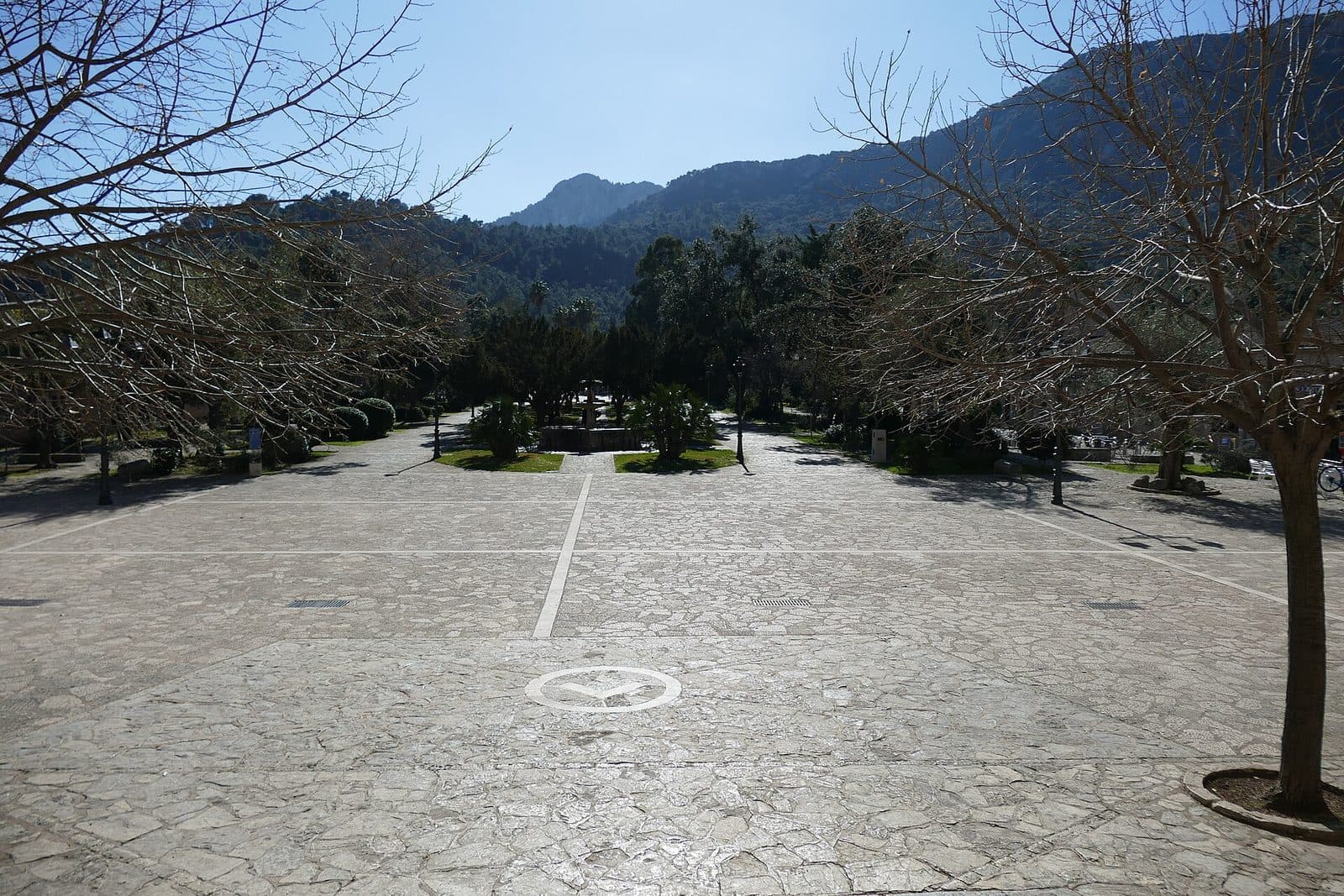

Santuari de Lluc does not stand on a widely visible summit but lies sheltered in a basin in the Serra de Tramuntana. This setting shapes the first impression: beyond the winding mountain road, an extensive complex suddenly opens up, with a pilgrims’ square, stone building wings and the sanctuary façade. Since the Middle Ages, people have come here to venerate the Mare de Déu de Lluc.
For Mallorca, Lluc is far more than a popular mountain monastery. The sanctuary is regarded as the island’s spiritual center and the most important destination in its pilgrimage tradition. At its heart is a dark figure of the Virgin Mary, affectionately known in Mallorcan as “sa Morenita.” Its full name is Santuari de Santa Maria de Lluc; “Santuari” means sanctuary. The common description of it as a monastery is therefore not entirely precise: Lluc is cared for by priests and is not a traditional monastic community inhabited by monks.
The journey is worthwhile even without a religious connection. The complex tells of centuries of pilgrimage culture, music, popular devotion and life in the mountains. The church, courtyards, guesthouse, museum and botanical garden can be combined into a varied tour. Those who come mainly for the architecture should still allow time for the small details, because Lluc reveals itself less through monumental scale than through the interplay of sanctuary, pilgrims’ square and mountain landscape.
Families will find a manageable cultural stop with open spaces, while hikers will discover a traditional starting point or destination. Those seeking peace should not limit their visit to the church: once the strongest flow of day visitors subsides, it becomes especially clear why this remote place has retained such a powerful appeal for centuries.
History and significance
The story begins with a legend. After the Christian conquest of Mallorca, a shepherd boy named Lluc is said to have found a dark figure of the Virgin Mary among rocks beside a stream. He took it to the nearby church of Sant Pere d’Escorca, but the figure disappeared and was discovered again where it had been found. When this happened repeatedly, people interpreted it as a sign: the Madonna wished to be venerated in that place. A chapel is said to have been built there as a result.
This story belongs to religious tradition and should not be confused with a documented founding chronicle. It does, however, explain how Mallorcans have understood the site over the centuries: Lluc was not chosen by a secular ruler but by the Madonna herself. It is historically established that pilgrims were already traveling to this remote mountain region in the Middle Ages. The present sanctuary traces its origins to the 13th century; even then, a lasting pilgrimage tradition developed around the veneration of the Virgin Mary.
The Mare de Déu de Lluc
The religious heart of the complex is the Mare de Déu de Lluc. The dark figure of the Virgin Mary stands behind the main altar of the pilgrimage church and is venerated as the patron saint of Mallorca. Pope Leo XIII and the people of Mallorca honored her in 1894 as queen and patroness of the island. Lluc is therefore not merely a historical monument but an actively used place of worship. Services, pilgrim visits and personal devotion are part of everyday life at the complex. The description “Black Madonna” refers to the figure’s dark appearance. For a respectful tour, it is helpful not to regard this living devotion as a museum display.
Els Blauets
A second strand of tradition is the Escolania de Lluc, whose young singers are known as the “Blauets.” The choir school has existed since the 16th century and is closely connected with the liturgy and identity of the sanctuary.
Pilgrimage and lodging
Lluc was built not only as a place of prayer but also as a place of arrival. Its remote location made accommodation and provisions necessary for pilgrims. The Hospedería developed from this role, and its rooms are traditionally known as “porxets.” They are grouped around a central courtyard, preserving the character of a lodging where the stay itself matters more than prestigious comfort.
Even today, Lluc can serve as the starting point, stopover or destination of a hike. This continuity distinguishes the sanctuary from an abandoned monastery complex: it remains under religious care, accommodates guests and continues to be part of Mallorcan customs. The Serra de Tramuntana, to which the site belongs, was added to the UNESCO World Heritage List as a cultural landscape in 2011. The sanctuary itself is one of the clearest examples of how faith, routes and mountain life were connected over long periods.
What to see
Most tours begin on the Plaça dels Pelegrins. From here, the complex can be understood according to its original logic: arriving pilgrims found an open gathering place, accommodation and the sanctuary immediately beside one another. The town hall of Escorca stands on the left, the Porxets extend along the right, and the façade of the Santuari stands straight ahead. Only from this perspective does it become clear that Lluc is not a single church building but a pilgrimage complex that developed over time.
The pilgrimage church
Inside the church, attention is drawn to the main altar and the Mare de Déu de Lluc venerated behind it. The Madonna is impressive not because of monumental dimensions but because of the significance attributed to her. Two very different kinds of visit meet before the altar: some people observe the art and architecture, while others come to pray. Quiet voices, footsteps and the church’s acoustics make this coexistence immediately tangible.
It is worth spending more than a few moments inside. Up close, visitors can see how strongly the room is focused on the image of the Virgin Mary. The figure forms the center of Lluc’s religious narrative; the rest of the complex—the lodging, pilgrims’ square and choral tradition—ultimately developed around her veneration. During a service, sightseeing naturally takes second place. Photographs should be taken only where and when permitted and without disturbing anyone’s devotion.
The Mare de Déu de Lluc
The Madonna known as “sa Morenita” is 61 centimeters tall. Her small size surprises many visitors who have previously heard only of the image’s great significance. This very contrast is part of the experience: a comparatively small figure became the religious focal point of an entire island.
The popular founding legend is always present when viewing her. The shepherd boy, the discovery among the rocks and the miraculous return to the same place explain why the Madonna is not regarded simply as part of the church furnishings. She is the true reason this sanctuary came into being. Those who know the context also notice the pilgrims’ quiet gestures more consciously.
Plaça dels Pelegrins and Porxets
The Plaça dels Pelegrins offers the best overview of the building complex. The Porxets on the right were and remain connected with guest accommodation. Their arrangement around a central courtyard creates a clear contrast with the open square in front of the church. Instead of a magnificent cloister, visitors encounter the simple architecture of a pilgrims’ lodging.
The courtyard contains a special trace of medieval pilgrimage: the only surviving wayside shrine of the seven “Joys” erected in 1393. This detail is easily overlooked because most visitors head straight to the church. It recalls how the approach to the sanctuary was once structured by devotional stations and how the pilgrimage route did not begin or end only before the altar.
The museum
The complex includes a museum that adds cultural and historical perspectives to the church visit. Its collections extend beyond purely religious objects and also include archaeological and artistic artifacts. Anyone wishing to understand Lluc not only as a pilgrimage site but also as part of the island’s history should allow additional time for this section.
A visit to the museum changes the way the complex is perceived: the church presents living devotion, while the exhibition organizes historical layers and collected objects. Because access and operating hours may differ from those of the rest of the complex, checking current information before traveling is recommended. Access to the museum should not automatically be assumed from the general accessibility of the sanctuary.
The botanical garden
Beyond its religious and architectural focus, Lluc has a quieter area: the botanical garden. It was created in 1956 and is devoted to the region’s plant life. In its mountain setting, it feels less like a decorative urban garden than a concentrated encounter with the vegetation of the Tramuntana. After the church and museum, the garden offers a fitting conclusion, as the flow of visitors usually thins more noticeably among the plants, stone and shaded passages than on the pilgrims’ square.
Views of the entire complex
Lluc cannot be fully appreciated from close range. A short walk into the higher surroundings reveals the building wings, pilgrims’ square and basin as a single unit. From this perspective, it becomes clear why the site feels both protected and secluded. The mountains are not merely a backdrop; they explain the hardships faced by earlier pilgrims and the need for lodging.
No demanding summit tour is necessary. The paths above the complex already provide a good overview, provided the weather, fitness level and footwear are suitable. The contrast with the immediate church visit is striking: below, façades and courtyards dominate the view; higher up, the settlement almost completely recedes into the mountain landscape.
Visiting Santuari de Lluc
The best place to begin is the Plaça dels Pelegrins. Instead of heading straight for the church door, take a moment to look across the entire square: the town hall, Porxets and façade provide orientation and show how the individual sections fit together. The tour then continues into the pilgrimage church and to the Mare de Déu de Lluc. Inside, consideration is more important than speed, because Lluc remains an active place of prayer.
Route and time required
A compact visit is possible for the church, pilgrims’ square and a quiet look into the courtyards. Anyone also planning to visit the museum, botanical garden and an elevated viewpoint over the complex should allow considerably more time. Around 1 to 2 hours is a useful guideline; hikes, a service or a longer break are not included. The order can be adjusted easily: when visitor numbers are higher, it is advisable to see the outdoor areas or garden first and return to the church later.
Quiet periods and crowds
Lluc welcomes pilgrims, tour groups, hikers, cyclists and day visitors. The pilgrims’ square and church can therefore become busy over the course of the day. According to consistent travel reports, the complex becomes quieter toward evening. Its character as a lodging and mountain sanctuary then becomes more apparent, while many day visitors have already left.
This quieter time at the edge of the day is especially appealing to people who do not wish to rush through as many sights as possible. However, the current access hours for individual areas must be taken into account. No reliable fixed information is available for opening hours and admission; times and conditions should therefore be checked immediately before the visit. This applies particularly to the museum and garden.
Conduct inside the sanctuary
Conversations inside the church should be kept quiet, mobile phones switched to silent and services not interrupted by walking around. Even a short sightseeing visit takes place in a room that others use for prayer. Photography is no substitute for looking carefully. Quiet moments of devotion may occur particularly around the Madonna. Those who keep some distance and allow waiting worshippers to go first usually experience the site more deeply than visitors who hurry to the altar and back.
Getting there and parking
The approach from the island’s interior follows the Ma-2130 into the Serra de Tramuntana. Beyond Caimari, the road becomes more winding and climbs through the mountain landscape toward Lluc and Escorca. The final section requires more attention than driving on the motorway: bends, cyclists and changing visibility call for a calm driving style.
From Palma and the airport
The road distance from central Palma to Escorca is 49 kilometers. The drive takes around 68 minutes and follows the Ma-13 before continuing along the Ma-2130. From Palma Airport, the distance to Escorca is 52 kilometers, for which around 64 minutes should be allowed. The route follows Ma-30, Ma-13 and Ma-2130.
These details expressly apply only as far as Escorca. Santuari de Lluc lies within the extensive mountain municipality; for the final section, follow signs to Lluc or the Santuari. Near the complex, the fast approach along the Ma-13 becomes a considerably slower mountain drive. The distance alone therefore says less about the character of the route than the winding Ma-2130.
Parking at the Santuari
A managed car park is located directly beside the Santuari. From there, the access route leads toward the pilgrims’ square and main complex. Because parking conditions and fees may change, the instructions on the ticket machine and signs should be read carefully before leaving the vehicle. Especially for a short stay, it is sensible to check the applicable fee structure before paying.
On busy days, even the approach road may become crowded. An earlier start not only reduces crowds inside the church but also makes the mountain drive and search for parking more pleasant. Vehicles should be left only in designated spaces; the narrow roads and access routes around Lluc are not suitable for improvised parking.
Arriving by bus
The Lluc bus stop is located in the sanctuary area and is the most convenient choice for arriving without a car. Other stops are located at Coll de sa Batalla and Menut, but they do not provide the same direct access to the Santuari. The outward and return journeys should be planned together before beginning the tour or a hike.
Traveling by bus avoids the demanding drive along the mountain road but limits flexibility over the length of the stay. Anyone wishing to combine the museum, garden and a walk should leave sufficient time before the return journey. Particularly at the beginning or end of the day, check whether the desired service is actually operating.
Bus lines to Santuari de Lluc at a glance
| Line | Route | Departures/day | First | Last |
|---|---|---|---|---|
| 312 | Lluc - Inca - Muro | 32 | 08:32 | 18:03 |
| 231 | Port de Sóller - Alcúdia | 16 | 10:15 | 19:58 |
From the official GTFS feeds (TIB/SFM), no real-time data. The figures cover all stops in the town; weekend and holiday services differ — check with the operator before travelling.
Getting there by bus
Lluc (19011) · 0.1 km as the crow flies
- 231Port de Sóller - Alcúdia · Daily
- 312Lluc - Inca - Muro · Daily
Coll de sa Batalla 1 (19003) · 1.1 km as the crow flies
- 312Lluc - Inca - Muro · Daily
Coll de sa Batalla 2 (19002) · 1.1 km as the crow flies
- 312Lluc - Inca - Muro · Daily
Menut 1 (19015) · 1.3 km as the crow flies
- 231Port de Sóller - Alcúdia · Daily
Menut 2 (19014) · 1.3 km as the crow flies
- 231Port de Sóller - Alcúdia · Daily
Timetable data: official GTFS feeds (TIB/EMT), no real-time — check with the operator before travelling.
Nearby places and activities
Escorca is not a compact village with a clearly defined center but an extensive mountain municipality. Around the Santuari, however, a small functional center has formed from the sanctuary, lodging, town hall and visitor facilities. Anyone expecting a traditional village square with shopping streets will therefore misread Lluc. The settlement grew from pilgrimage, accommodation and the need to provide for people in a remote mountain region.
Serra de Tramuntana
The sanctuary stands in the heart of the Serra de Tramuntana cultural landscape, which has been a UNESCO World Heritage Site since 2011. Lluc is therefore well suited as a cultural stop during a day in the mountains. The surroundings are characterized by forests, karst formations, streams and high peaks; they explain the special character of the pilgrimage site better than any isolated view of its façade.
Numerous hiking trails pass through Lluc or begin nearby. They include traditional approaches from the direction of Caimari and routes through the Tramuntana. Their length and difficulty vary considerably. A walk above the complex is not the same as a mountain tour, and longer routes require separate route planning, suitable footwear and enough time.
Coll de sa Batalla and Menut
Those arriving from the direction of Inca and Caimari pass through this area shortly before reaching the sanctuary. Both places are more useful for orientation and as starting areas for nature experiences than as additional sights to be casually “ticked off.” Anyone combining them with Lluc should plan the day according to the route and weather. The roads are winding, and short distances in the mountains often take longer than expected.
Sa Calobra and the highlands
A continuing drive through the Tramuntana may lead toward the highlands, reservoirs or the turnoff for Sa Calobra. Such combinations are scenic but turn the visit into a full day in the mountains. The roads demand concentration and may become slow because of excursion traffic and cyclists.
A clear choice is often more enjoyable than an overloaded driving tour: either combine Lluc with a short walk and detailed visit, or use the sanctuary as a peaceful stop on a longer Tramuntana route. Anyone arriving late in the day should not underestimate the return journey.
The place it belongs to
Escorca in the place guidePractical visitor information
Everyday footwear is sufficient inside the church, but paths to elevated viewpoints or into the rocky surroundings require greater sure-footedness. For a combined cultural and nature visit, sturdy shoes are a better choice than smooth-soled sandals. After rain, paths in the mountain landscape may be slippery.
Weather and clothing
Lluc lies high in the Serra de Tramuntana and may feel climatically different from Palma or the coast. Clouds, wind and cooler air are possible even when the day began pleasantly by the sea. An extra layer and light rain protection are therefore sensible. In summer, sun protection and drinking water remain important, especially when the tour continues into the open surroundings.
The complex has indoor spaces and courtyards but is not a completely weather-independent destination. The botanical garden, pilgrims’ square and viewpoints are best experienced outdoors. In poor weather, the visit can focus on the church and museum, provided they are currently accessible.
Visiting with children
For families, Lluc works best as a varied tour that is not too long. The Madonna and the legend of her discovery offer children a tangible way into the history; the courtyard, pilgrims’ square and garden break up the quieter periods inside the church. The visit should nevertheless not be treated like time at a playground, as prayer and services take place in the sanctuary.
With younger children, it is advisable to alternate between the church and outdoor areas. A short walk with views of the complex may be more engaging than an extended museum visit. On paths outside the built-up complex, the usual precautions for mountainous terrain apply: children should be closely supervised on rocky or steeper sections.
What to expect—and what not to expect
Lluc is not a secluded, silent monastery behind closed walls. It is a living pilgrimage site with guests, tour groups, a choral school tradition and tourist infrastructure. Anyone expecting absolute silence during peak visiting hours may be disappointed. Quieter moments are more likely at the edges of the day, in the courtyards, in the garden or during a walk above the complex.
Nor is the visit solely about a spectacular church façade. Its significance lies in the whole: Madonna, legend, choir, pilgrims’ lodging and mountain setting. Anyone allowing 1 to 2 hours and first viewing the square as a complete ensemble will understand Lluc better than during a quick photo stop between the car park and altar.