
mirador de Miramar near Deià – views of Mallorca’s west coast
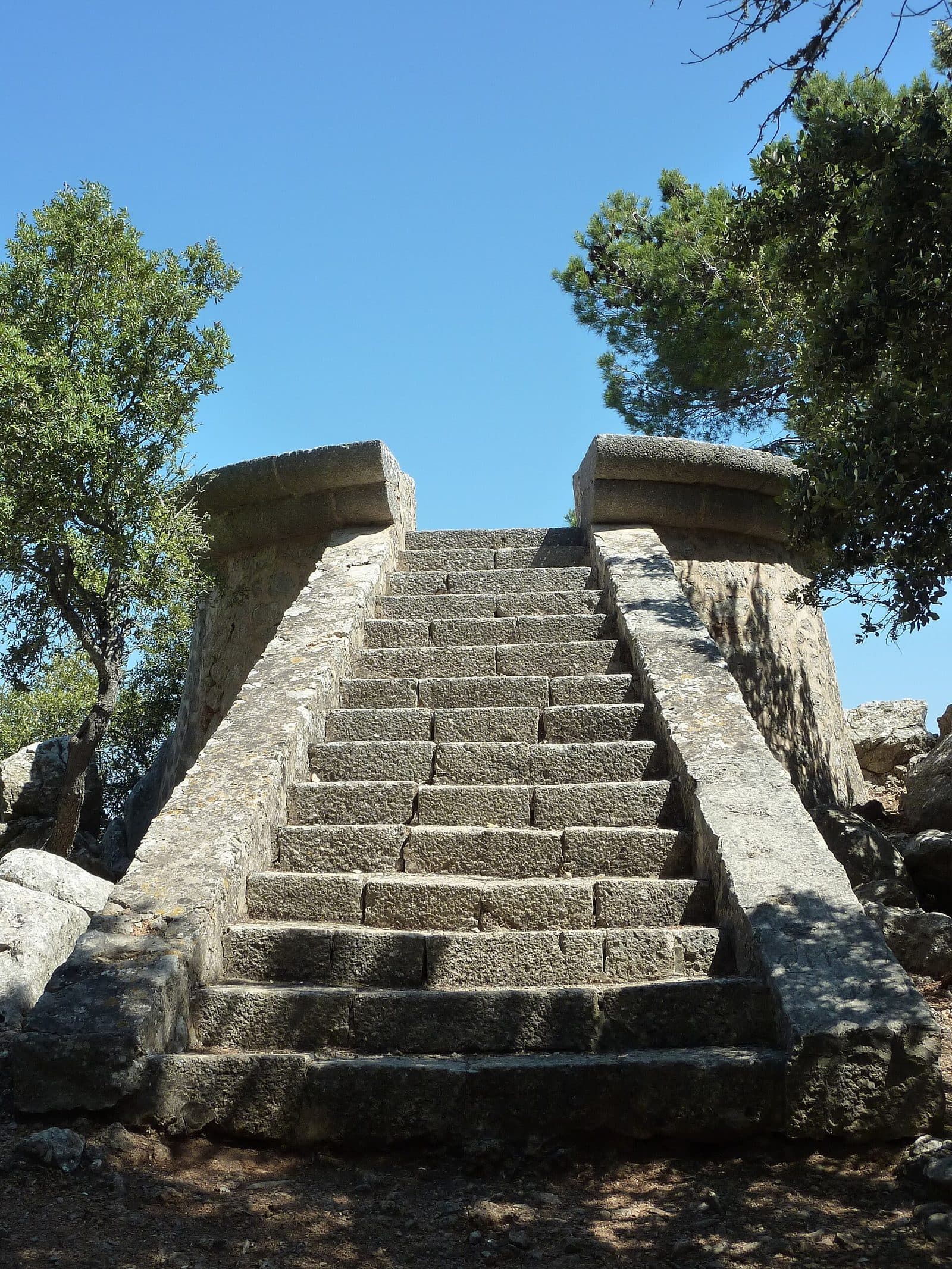
.jpg)
The mirador de Miramar is one of those viewpoints on Mallorca’s northwest coast where the setting itself, rather than a single photo subject, takes center stage. The viewpoint is located near Deià in northwestern Mallorca. It is particularly suitable for travelers who want to break up a drive along the Ma-10 with a peaceful stop in the landscape.
The name can easily cause confusion. This specifically refers to the viewpoint near Deià—not a hotel, a residential development, or another place with the same name. The neighboring Monestir de Miramar should not be confused with the Mirador either.
A visit does not require an extensive sightseeing checklist. What matters is a clear day, some time to take in the view, and a willingness not to treat the Mirador as merely a quick photo stop. The layered mountain slopes and open sea reveal their full effect only when you let your gaze rest for a while.
What to see
Views of the Mediterranean
At the mirador de Miramar, the sense of space dominates. From the hillside, the land drops toward the Tramuntana coast, while the Mediterranean opens out ahead. Unlike a viewpoint centered on a single famous landmark, there is no isolated rock or urban structure here that immediately demands all your attention. The real attraction is the layered landscape: wooded and rocky slopes in the foreground, the coastline below, and the calm expanse of the sea beyond.
This composition changes with visibility. In clear conditions, the contours of the slopes stand out distinctly; in hazy air, the sea and horizon blend more closely together. Rather than being held by numerous details, the eye moves between nearby vegetation, the steep coastal terrain, and the open water.
The view also distinguishes the Mirador from the village panoramas in Deià. Travelers wishing to see the village’s tiers of stone houses will find other vantage points in and below the village. At the mirador de Miramar, attention is directed primarily toward the coast and the sea.
The coastal landscape as a subject
Miramar lies in a section of the Serra de Tramuntana where mountains and sea meet directly. The landscape therefore does not feel like a flat viewing terrace above a bay. The terrain remains prominent: slopes extend into the view, and the sea appears from an elevated position behind or below the mountain flanks.
This is precisely where its photographic appeal lies. A wide-angle view captures the relationship between mountains and water, while a tighter frame emphasizes the lines of the coast or individual tiers of the slopes. Even so, the camera should not define the entire visit. The setting is best appreciated by first letting your gaze move across the landscape without looking through a viewfinder.
Visiting the viewpoint
Arriving and getting oriented
The mirador de Miramar is a destination for a focused encounter with the landscape, not for a tour through numerous rooms. After arriving, it is therefore worth taking a moment to get oriented.
Once you reach the Mirador, the essential features reveal themselves without any fixed order. The open sea usually catches the eye first. The mountain slopes and the structured coastline then become more apparent. Visitors who do not immediately continue their journey will notice that the panorama is composed of several layers.
Time of day, light, and crowds
No reliable fixed visiting hours are recorded for the viewpoint. Because access and conditions can change, its current status should be checked before setting out. The same applies to any possible access requirements. Older information about the Monestir cannot be used to infer reliable rules for the viewpoint.
The light shapes the experience more strongly than an extensive sightseeing program.
Miramar does not automatically lose its appeal under overcast skies. Clouds and haze soften the terrain and emphasize the secluded setting. Those primarily hoping for clear long-distance views, however, should take visibility conditions into account.
How much time should you allow?
It is advisable not to make your schedule too tight. The Ma-10 is not a road where every section can predictably be covered quickly. Anyone planning a time-sensitive reservation in Deià immediately after the Mirador gives up the sense of calm that actually defines this place.
Getting there and parking
From Palma and the airport to Deià
From Palma Airport, the route initially follows the Ma-20, then the Ma-1110 and the Ma-10. Deià is 32 road kilometers away, and the drive takes around 48 minutes. These figures expressly apply to the route as far as Deià, not all the way to the mirador de Miramar. The final section follows the Tramuntana route in the area between Deià and Valldemossa and should be checked against the viewpoint’s exact map location.
From central Palma, Deià is 27 road kilometers away. The drive takes around 52 minutes and follows the Ma-1110 and the Ma-10. The fact that the shorter route can take longer than the journey from the airport is explained by the starting point within the city and the course of the access roads. Here too, the travel time refers only to the journey as far as Deià.
The Ma-10 is the key road for the final part of the drive. It provides access to the northwest coast but follows the mountainous terrain through numerous bends. Your speed is determined by the road, not by the apparently short distance on the map. The exact destination for the Mirador should therefore be saved so that you do not accidentally navigate to another place with the same name or only to the Monestir.
By bus
The bus stops Son Gallard 1 (18008), Son Gallard 2 (18007), Ca Madò Pilla 1 (63005), and Ca Madò Pilla 2 (63004) are located in the Miramar area. For the specific journey, the connection, direction of travel, and subsequent walking route should be checked immediately before the visit.
Traveling by bus requires more preparation than driving. The key question is not only which stop is closest, but whether the route from there to the intended access point is actually usable.
Bus lines to mirador de Miramar at a glance
| Line | Route | Departures/day | First | Last |
|---|---|---|---|---|
| 203 | Valldemossa / Deià | 174 | 06:41 | 22:38 |
From the official GTFS feeds (TIB/SFM), no real-time data. The figures cover all stops in the town; weekend and holiday services differ — check with the operator before travelling.
Getting there by bus
Son Gallard 1 (18008) · 0.4 km as the crow flies
- 203Valldemossa / Deià · Daily
Son Gallard 2 (18007) · 0.5 km as the crow flies
- 203Valldemossa / Deià · Daily
Ca Madò Pilla 1 (63005) · 0.6 km as the crow flies
- 203Valldemossa / Deià · Daily
Ca Madò Pilla 2 (63004) · 0.7 km as the crow flies
- 203Valldemossa / Deià · Daily
Sa Foradada (18009) · 1.6 km as the crow flies
- 203Valldemossa / Deià · Daily
Ermita de la Trinitat 1 (63003) · 2.0 km as the crow flies
- 203Valldemossa / Deià · Daily
Timetable data: official GTFS feeds (TIB/EMT), no real-time — check with the operator before travelling.
Nearby places
Deià
Deià lies between the mountains of the Serra de Tramuntana and the Mediterranean. Stone houses rise in tiers along the hillside, narrow lanes lead through the village center, and the church and cemetery stand above the village. Since the past century, the village has been particularly associated with writers, painters, and musicians; Robert Graves is among the best-known names in this cultural history.
Deià combines well with the Mirador because the two destinations offer different perspectives on the same landscape. From the viewpoint, the gaze extends outward across the sea and coastal slopes. In the village, by contrast, the focus is on architecture, lanes, and the position of the houses in the mountains. Experiencing both in succession provides a better understanding of how closely settlement and landscape are connected in this part of the island.
Time should be set aside for a village walk independently of the Mirador. The hillside location means that even short routes often alternate between ascents and descents. Possible additions include the village center, the viewpoints around the village, and Cala Deià. Each of these is a separate destination and should not be misunderstood as part of the mirador de Miramar.
Valldemossa and the Ma-10
In the other direction, the Ma-10 leads to Valldemossa. The road connects two of Mallorca’s best-known mountain villages, making Miramar a natural stop along the way. Travelers arriving from Palma first reach the Valldemossa area and then continue through the coastal landscape toward Deià.
The appeal of this combination does not lie in making as many stops as possible. Instead, Valldemossa, the mirador de Miramar, and Deià reveal different sides of the Tramuntana: a historic mountain village, a viewpoint by the sea, and an artists’ village on the hillside. For a relaxed day, allow sufficient flexibility between the different places.
The place it belongs to
Deià in the place guidePractical information for your visit
What not to expect
The mirador de Miramar is neither an amusement park nor automatically a complete museum visit. There is no long sequence of spectacular attractions at the viewpoint. Its value lies in the panorama and its position on the northwest coast.
Nor should the viewpoint be confused with the Mirador de Sa Foradada. Anyone specifically looking for the perforated rock and the famous sunset view has a different vantage point in mind. Miramar offers its own perspective.
The Monestir and the Mirador remain separate destinations. The museum’s opening hours or admission conditions must not be applied to the viewpoint without checking current information. Before setting out, you should therefore confirm which access point you intend to visit and whether it is usable on the relevant day.