
jardí de sa torre des Moro – Viewpoint near Deià
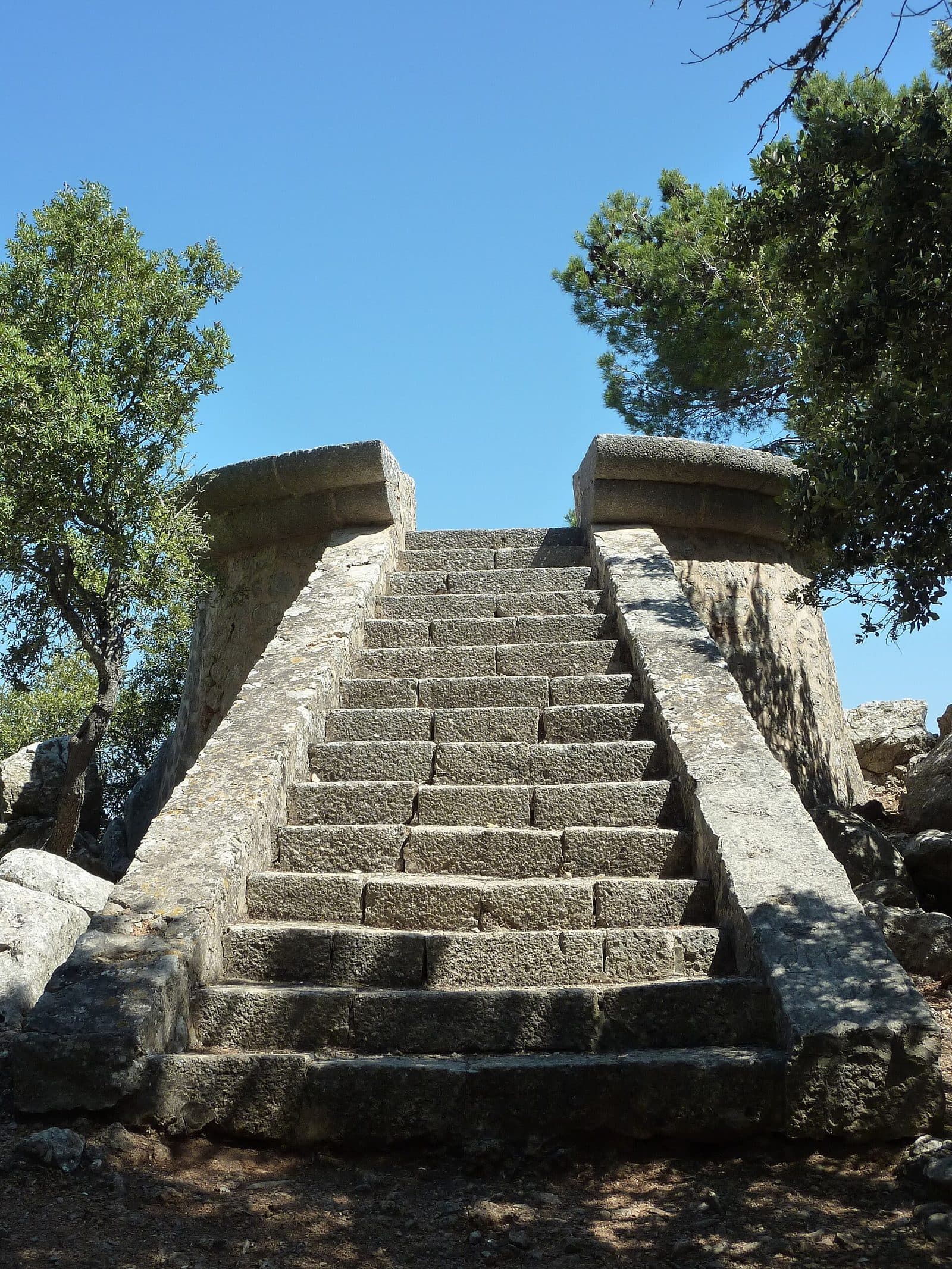
.jpg)
The jardí de sa torre des Moro is a viewpoint near Deià in northwest Mallorca. Its appeal lies not in an exhibition or a monument open to visitors, but in pausing to take in the surroundings: The landscape around Deià is compressed into a narrow space between the slopes of the Serra de Tramuntana and the Mediterranean, making it particularly impressive from elevated locations.
For travelers who want to see Deià as more than a pretty collection of natural-stone houses, the viewpoint is a fitting addition to a walk around the village. From this elevated perspective, it becomes clear how strongly the terrain and coast shape the place. Houses, paths, and terraces follow the slope; the mountains rise behind them, while the coastal landscape opens up on the other side.
A visit is best suited to a quiet stop during a stay in Deià. Anyone expecting a developed attraction with interiors, an exhibition, and a set visitor route would be misjudging the destination. Here, the focus is on the view across the landscape. It is also important to distinguish between places with similar names: The Torre de sa Pedrissa on the coast of Deià and the Torre des Moro near Portals Vells are different excursion destinations.
What to See
The first impression comes not from a single structure, but from the topography. Deià lies where Mallorca's northwestern coast is tightly interwoven with the slopes of the Tramuntana. The settlement extends across rising ground, and even within the village the direction of the view changes quickly: first toward closely packed houses and natural stone, then toward wooded slopes, terraces, or the sea. As a viewpoint, the jardí de sa torre des Moro is a place where this landscape is more important than a sequence of individual exhibits.
Deià on the Hillside
From an elevated perspective, it becomes clear why Deià feels different from a coastal town built on level ground. The buildings follow the terrain instead of reshaping it. Narrow paths and rising roads connect the various levels; roofs and façades appear staggered rather than arranged in straight rows. As a result, the scene changes after only a few steps. A house that initially blocks the view may soon become part of a wider panorama encompassing the village and mountainside.
This tiered layout is part of Deià's historic character. Natural stone, terraces, and adaptation to the steep terrain define the entire surrounding area. At the viewpoint, it is therefore worth looking beyond the classic photo opportunity. The most revealing sightlines are often those where settlement and landscape overlap: in the foreground, structures shaped by people; behind them, the far larger contours of the Tramuntana.
Serra de Tramuntana and the Coast
Deià's setting is defined by the contrast between mountains and sea. Behind and above the village rise the rocky slopes and mountains of the Serra de Tramuntana. The terrain descends toward the coast, where the small Cala Deià is connected to the village by a winding road. The viewpoint belongs to this transitional zone between mountain village and coastal landscape.
Light changes the experience more dramatically than it would at an indoor attraction. Pale façades and natural stone stand out clearly in bright sunshine, while clouds soften the contours of the mountain slopes. Views of the sea also depend on the weather and haze. A visit can therefore never be planned as a completely predictable sequence of images: The landscape itself determines which elements appear most prominently at any given time.
A Viewpoint, Not a Tower Visit
The name can easily create false expectations. For planning a visit, it is essential to understand that the jardí de sa torre des Moro is listed as a viewpoint. It should not be confused with the Torre de sa Pedrissa, a historic coastal watchtower within the municipality of Deià. Nor is it the Torre des Moro near Portals Vells in southwest Mallorca.
Anyone specifically wishing to enter a defensive tower, explore historic interiors, or see a museum-style presentation would therefore be overlooking the site's actual character. Its strength lies in the perspective it offers over Deià and the surrounding area. Instead of immediately turning to a mobile phone, take a moment to follow the layered terrain: from the built-up hillside across the terraces to the broader contours of mountains and coast.
Visiting the Viewpoint
The best way to experience the jardí de sa torre des Moro is as part of a stay in Deià. A separate day trip solely for the viewpoint generally makes less sense than combining it with a walk through the village. Deià reveals itself slowly: The roads climb, lanes change direction, and new sections of the landscape repeatedly appear between the houses. The viewpoint does not provide a monumental finale to this walk, but instead gives it a quieter, scenic emphasis.
Time Required and Suggested Itinerary
How long the visit takes depends mainly on whether you only plan to take a photo or want time to explore the different views. Anyone discovering Deià on foot should give more consideration to the route through the village and the changes in elevation than to the time spent at the destination itself.
A sensible itinerary begins with a walk through Deià. This provides an impression of the narrow streets, staggered houses, and hillside setting before viewing the same structures from a broader perspective. The viewpoint can then serve as a place to pause. Travelers who enjoy photography or sketching landscapes may want to stay longer, while others will use it as a brief stop between the village center and other destinations.
Time of Day and Weather
As no confirmed visiting hours or admission charges are recorded in the available information, current conditions should be checked before traveling. This is especially important if the viewpoint is intended to be a fixed part of a tightly scheduled day. Local notices and possible access restrictions take precedence over older map listings.
For the visitor experience, the weather is at least as important as the time of day. In clear conditions, the coast and mountain slopes stand out more distinctly; haze may restrict distant views without making the view of Deià itself any less worthwhile. In strong sunshine, even a short stop at the viewpoint will be more comfortable if water and sun protection are already in your day bag.
Assessing Crowds Realistically
Deià attracts many day visitors, and its narrow streets offer limited space. Crowds therefore affect more than a single viewpoint: Access roads, finding parking, and walking routes may take longer than expected. Travelers who can remain flexible should avoid the typical peak times for day trips and allow room for delays in their schedule.
There is no reliably documented quiet period specifically for the jardí de sa torre des Moro. An adaptable plan is therefore more useful than a fixed time: Check current traffic conditions, allow enough time for Deià, and do not make the entire visit depend on a single photo opportunity. Even when other visitors are at the viewpoint, the landscape can still be appreciated from several angles.
Getting There and Parking
The journey to Deià follows the roads of the Serra de Tramuntana. The final section runs along the Ma-10, the main road connecting several mountain towns across the northwest of the island. Bends, changing gradients, and heavy excursion traffic may determine the pace. The stated distances and driving times explicitly apply only as far as Deià.
From Palma Airport
The road distance from Palma Airport to Deià is 32 kilometers. The journey takes around 48 minutes and follows the Ma-20, Ma-1110 and Ma-10. First, take the Ma-20 around Palma, then follow the Ma-1110 toward Valldemossa and continue along the Ma-10 to Deià.
This journey time should be understood as a guide for normal traffic conditions, not as a guaranteed arrival time at the viewpoint. The stated time applies only as far as Deià.
From Central Palma
The road distance from central Palma to Deià is 27 kilometers. The journey takes around 52 minutes via the Ma-1110 and Ma-10. Although the route is shorter than the one from the airport, leaving the urban area may take more time. The road then leads through Valldemossa into the Tramuntana and onward to Deià.
This information also ends in Deià.
Parking in Deià
Parking is limited in Deià. The steep setting, narrow streets, and restricted space leave little room, especially when many day visitors arrive at the same time. Use only designated parking spaces and do not block driveways or narrow stretches of road. A seemingly nearby parking spot can quickly prove less practical than a regular space followed by a walk.
Travelers wishing to avoid searching for parking can consider arriving by bus. Possible stops in the Deià area include the pairs of stops named Son Gallard and Ca Madò Pilla. Which is most convenient for the specific access route should be checked immediately before traveling, using the current service information and exact map location.
Bus lines to jardí de sa torre des Moro at a glance
| Line | Route | Departures/day | First | Last |
|---|---|---|---|---|
| 203 | Valldemossa / Deià | 203 | 06:41 | 22:38 |
From the official GTFS feeds (TIB/SFM), no real-time data. The figures cover all stops in the town; weekend and holiday services differ — check with the operator before travelling.
Getting there by bus
Son Gallard 1 (18008) · 0.4 km as the crow flies
- 203Valldemossa / Deià · Daily
Son Gallard 2 (18007) · 0.5 km as the crow flies
- 203Valldemossa / Deià · Daily
Ca Madò Pilla 1 (63005) · 0.5 km as the crow flies
- 203Valldemossa / Deià · Daily
Ca Madò Pilla 2 (63004) · 0.7 km as the crow flies
- 203Valldemossa / Deià · Daily
Sa Foradada (18009) · 1.7 km as the crow flies
- 203Valldemossa / Deià · Daily
Ermita de la Trinitat 1 (63003) · 1.9 km as the crow flies
- 203Valldemossa / Deià · Daily
Ermita de la Trinitat 2 (63011) · 2.2 km as the crow flies
- 203Valldemossa / Deià · Daily
Timetable data: official GTFS feeds (TIB/EMT), no real-time — check with the operator before travelling.
Nearby Attractions
Deià is more than a backdrop for the viewpoint. The village itself is one of the characteristic mountain settlements of northwest Mallorca: Natural-stone houses extend across the hillside, while the Serra de Tramuntana defines the upper edge of the landscape and the terrain descends toward the coast. Since the end of the 19th century, this location has attracted painters, writers, and other artists. The British writer Robert Graves is particularly closely associated with Deià.
Deià
A walk through the village is the most natural combination. It is less about ticking off individual façades than experiencing a sequence of different levels, lanes, and changing views. The church of Sant Joan Baptista stands in the upper part of Deià; the small cemetery and elevated paths are also among the notable points on a walk. Because of the gradients, do not schedule too little time for exploring.
The archaeological museum, church museum, and Robert Graves Museum provide further insight into the village's history and culture. Whether visiting a museum before or after the viewpoint makes more sense depends on the day's schedule. For a varied stay, consider first experiencing Deià's setting outdoors and then adding a cultural focus.
Cala Deià
Below the village lies Cala Deià, a small pebble cove on the rocky northwestern coast. A winding road leads from the village area down to the sea. Combining the viewpoint with the cove provides two very different perspectives on the same landscape: from above, the layered mountains, terraces, and settlement; from below, immediate proximity to rocks and water.
Parking at the coast is also limited. Cala should therefore not be treated as a casual extra that can be added without requiring more time. Anyone wishing to drive or walk down should plan a separate part of the day for it and first consider whether the return journey is compatible with their energy levels and the weather.
Hiking and Neighboring Towns
The GR 221 long-distance hiking trail passes through Deià, connecting several towns and landscapes of the Serra de Tramuntana. The jardí de sa torre des Moro can therefore also be seen as a small scenic component of a hiking-focused stay. A longer tour, however, requires separate route planning, suitable footwear, and current information about trail conditions.
Valldemossa and Sóller are nearby destinations along the Ma-10. Both can be included in a drive through the northwest, but they should not be squeezed into the same day's schedule without sufficient spare time. The winding roads and search for parking often make a focused visit more enjoyable than a long series of brief stops.
The place it belongs to
Deià in the place guidePractical Visitor Information
The name sounds like a garden with a historic tower, but for practical planning the jardí de sa torre des Moro should primarily be understood as a viewpoint. Museum facilities, a signposted interior route, or the chance to climb a tower are not among the features that should be expected based on its classification. The visit is about the landscape, perspective, and connection with Deià.
Footwear and Terrain
Deià lies on a hillside. Even a short walk through the village can therefore be more strenuous than it appears on a map.
No reliable information about step-free accessibility at the viewpoint is recorded. Anyone who requires step-free paths, gentle gradients, or a particular surface quality should specifically check local conditions before visiting. A place being listed as a viewpoint does not automatically mean that it can be reached without changes in elevation.
Sun, Water, and Changing Weather
Viewpoints are more exposed to the weather than museums or churches. Sun protection and drinking water should therefore be carried even for a short stop. At the same time, the weather in the Serra de Tramuntana may feel different from conditions in Palma or on flatter sections of the coast. Clouds, wind, and damp paths affect not only the view but also walking comfort.
Restricted visibility does not necessarily mean the visit must be canceled. The closer view of Deià's hillside setting remains interesting even when distant coastlines disappear into the haze. In heavy rain or when the ground is unsafe, however, it is better not to force a stop at the viewpoint and to choose a more sheltered activity in the village instead.
Visiting with Children
For families, the viewpoint is best suited as part of a short walk rather than as a standalone entertainment attraction. There is no documented exhibition or activity designed specifically for children. The stop becomes more engaging when the landscape is explored together: Where does the village end, how do the slopes run, and which route leads from the mountain village to the coast?
A combination with Cala Deià should also not be judged solely by the distance shown on a map, because the descent and later return journey increase the physical effort. Families are better off planning breaks and deciding on site how far to extend the walk.
Avoiding Confusion
When navigating, the full name is important. The Torre de sa Pedrissa is also within the municipality of Deià, but it is a historic coastal watchtower accessible only on foot. The Torre des Moro near Portals Vells, meanwhile, is in a different part of Mallorca. Sa Torre Cega near Cala Ratjada and Caló des Moro in the southeast are also separate destinations.
Before setting off, check that the map marker actually shows the jardí de sa torre des Moro near Deià. Searching only for “Torre des Moro” may lead to a distant place with a similar name. This check is especially important when a navigation app automatically suggests similarly named attractions.
Local insider tips
Search for the Full Name
When navigating, always enter “jardí de sa torre des Moro, Deià.” The Torre de sa Pedrissa near Deià and the Torre des Moro near Portals Vells are different destinations and must not be confused with the viewpoint.
Use Deià as Your Starting Point
Do not plan the viewpoint as an isolated stop by car. A walk through Deià's rising streets makes the elevated perspective easier to understand and avoids the expectation that you will be able to park directly at the destination.
Combine It with the GR 221
The GR 221 long-distance hiking trail passes through Deià. Anyone already exploring the Tramuntana on foot can include the viewpoint as a brief scenic stop; longer stages require a separate route check.
Compare the Views from Above and Below
The view from the hillside combines well with Cala Deià. The cove shows the same landscape from coastal level; however, separate time should be allowed for the winding descent, limited parking, and later return journey.