
Mallorca Weather in April: Temperatures & Travel Tips
Palma normals as an island-wide approximation: In April, the average daytime high is 19.3 °C and the sea is 14.9 °C, with 6 rain days and 7.3 hours of sunshine per day.
April is one of those months in which Mallorca visibly breaks free of winter without yet arriving in high summer. The days grow noticeably longer, the landscape shows itself in lush green after the last winter rains, and around Easter the island experiences the year's first genuine wave of visitors. The sea, however, keeps to its own, slower calendar: while the air already tastes of spring, the water remains winter-cold. Anyone who knows this difference can use April for exactly what it is truly good for.
The weather in April at a glance
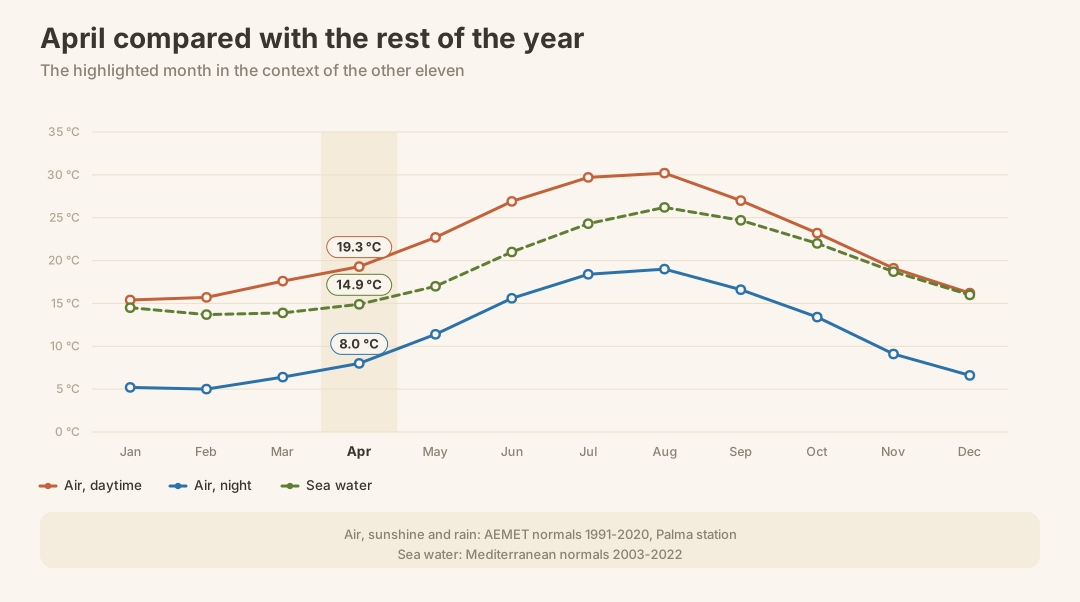
April marks Mallorca's transition from winter to spring, even though the sea only follows this change reluctantly. By day the mercury climbs to 19.3 °C, cooling at night to 8.0 °C – a range ideal for long walks, city sightseeing and the first hours on a terrace, without yet becoming oppressively hot as in high summer. The month's mean temperature stands at 13.6 °C, noticeably above March and still some way below what May brings. This places April in the annual cycle as the month of visible upswing: after the rather subdued winter months, it grows markedly warmer, even though the island has not yet reached the tourist high season.
The sea behaves quite differently. At 14.9 °C, the water temperature in April remains at a level most visitors would call cold – the sun has long since warmed the air, but the sluggish water still needs months to catch up. Anyone arriving for Easter or in the weeks that follow should treat the sea more as scenery than as a swimming destination.
The sun already shows itself generously in April: with 7.3 h per day, the month lies well above the duller winter months, and the days grow noticeably longer – daylight duration increases to 13.0 h. Rain falls on 6 rainy days, spread across the month, so that extended spells of fine weather are the rule rather than the exception. For many, April is therefore the first month of the year that truly rewards a trip: Easter traditionally draws the first larger numbers of visitors, the landscape appears in lush green, and the temperatures allow for activity without being demanding.
Water, sun and rain in April
Three factors shape the course of the day in April so fundamentally that they influence any trip planning: air temperature, water temperature and the distribution of rainfall. Between the first two, April sees a gap that strikes many as surprisingly large. While the air already rises to 19.3 °C during the day, the sea lingers at 14.9 °C – a difference explained by the physical inertia of large bodies of water. Water stores heat far more slowly than air, and releases it just as slowly. Winter's effects therefore linger in the Mediterranean well into spring: the sea cools with a delay in late autumn and warms with an equal delay in spring. April falls right into this lagging phase – the air has long since begun its spring, while the water is still caught in winter.
In practical terms this means that anyone arriving in April should not make swimming the centrepiece of their plans. A few brave souls go in briefly, while most visitors limit themselves to the seafront promenade, even as they might already be sitting comfortably in a T-shirt on land. It is only in May, and above all in June, that this gap between air and water begins to close noticeably.
Sunshine hours, by contrast, are already developing in a direction holidaymakers appreciate. With 7.3 h per day, the month reaches a level that allows for long, bright days and – combined with the growing daylight duration of 13.0 h – leaves plenty of time for extended excursions and sightseeing, without early darkness cutting the day short.
When it comes to rain, April shows a pattern typical of the whole island and quite different from the picture many northern European spring months present: this is not about persistent rain, but about individual, often heavy events interspersed with plenty of sunshine. The month counts 6 rainy days, spread across individual days with showers or, occasionally, a longer-lasting frontal passage. The month's precipitation total stands at 39 mm – an amount that is usually concentrated on a few days rather than spread evenly across the month. Anyone booking a week in April should therefore expect one or two days when a shower disrupts plans, but can expect stable spring weather for the rest of the time. Humidity sits at 70 %, keeping the air pleasant and rarely muggy, and the wind blows at an average of 14 km/h – noticeable, but as a rule no reason to change plans.
What is possible in April — and what is not
April is a month for activity on land, not in the water. Classic swimming in the sea is out of the question for most visitors – at 14.9 °C the water is simply too cold for more than a brief, invigorating dip. Anyone who values warm bathing water is better advised to come a month later, or better still in high summer. It helps no one to gloss over this point: a sea at 14.9 °C does not become warmer just because it goes unmentioned.
In return, April is one of the best months for everything that takes place on land. Temperatures between 8.0 °C at night and 19.3 °C during the day are almost ideal for hiking: warm enough for short sleeves in the midday sun, but not yet so hot that long ascents in the Tramuntana become an ordeal. Anyone who avoids the mountains in high summer because even early morning is already oppressively warm will find the exact opposite in April – clear visibility, moderate temperatures and a landscape standing in vivid green after the winter rains. Cycling benefits from the same conditions: the island sees heavy traffic from road cyclists in spring, and this is no coincidence but the result of precisely this combination of mild temperatures and manageable rain risk.
City and cultural tourism works excellently in April. Palma, the monastery gardens, the markets and the many small villages of the island's interior can be explored at these temperatures without heat stress, and the sunshine duration, already noticeably higher than in winter, provides good light and pleasant evenings on terraces once the sun sits lower in the sky.
Easter deserves separate mention here: in the days around the festival, the island traditionally attracts markedly more visitors than in the preceding weeks, processions and celebrations shape many towns, and anyone wishing to experience this atmosphere will find April the right time for it. At the same time, this also means that accommodation and restaurants are busier during Easter week than in the rest of the month – an aspect worth factoring into any planning.
Not every day in April passes flawlessly: on 6 rainy days showers must be reckoned with, which can bring outdoor activities to a halt for hours or even an entire day. Anyone who stays flexible and, if necessary, bridges a bad-weather day with a museum visit, a bodega tour or a leisurely lunch will cope with this easily.
Where you are best off in April
Our measurement series comes from the Palma station and thus reflects conditions around the bay, not those of the entire island. For individual locations elsewhere we have no dedicated measurements – the following notes should therefore be understood as a general tendency, not as an exact forecast for a particular place.
As a general rule in April, the coastal locations in the south and east still benefit from the sea, though differently than in summer: instead of cooling sea breezes on hot days, proximity to the water in spring tends to provide more balanced but also somewhat fresher conditions than inland. Anyone staying there feels pleasant warmth during the day, but the evenings cool noticeably due to the closeness of the sea. The island's interior around the plain of Es Pla often warms faster and more strongly during the day, since there is no proximity to the sea to moderate temperatures – so anyone seeking the warmest afternoon hours tends to have better chances inland, though at the cost of cooler nights.
The Tramuntana in the north-west demands particular attention in April. The mountain range captures moisture from passing weather systems, so that showers here are more frequent and sometimes heavier than on the east coast. At the same time, this is precisely why the region is so green in spring and its hiking trails so popular. Anyone out in the mountains should factor in changes in weather that barely register around Palma – a shower over the Puig Major need not reach the Bay of Palma, and vice versa.
Wind-sheltered coves, for instance on the east coast around Cala Ratjada or in many small bays in the south, are more pleasant in April than exposed stretches where the wind hits unchecked. Anyone expecting an average of 14 km/h should know that individual days can turn out considerably windier, especially on open coastal stretches and in the mountains. Palma itself and the coastal towns immediately to the south usually offer the most balanced conditions of the month in this respect.
What you should pack in April
The packing list for April follows directly from the range between 8.0 °C at night and 19.3 °C during the day. A layered system of clothing therefore makes more sense than a single fixed outfit: light clothing and a T-shirt are entirely sufficient during the day, but a jumper or light jacket belongs in the luggage for the evening and early morning hours. Anyone planning a hike in the Tramuntana should also pack a windproof layer – the average wind of 14 km/h can pick up considerably in exposed locations, and it is generally cooler in the mountains than on the coast.
Rain protection belongs in every April suitcase, even if it goes unused on most days. With 6 rainy days in the month, the probability is real that at least one day of the trip will be affected by a shower, and a light, foldable rain jacket weighs almost nothing yet can save the whole day if in doubt. For the sun, which at 7.3 h is already strong enough to cause sunburn with prolonged exposure, sunscreen, a hat and sunglasses should not be missing – hikers and cyclists in particular often underestimate the April sun, since the air temperature alone does not yet feel like high summer.
Swimwear may go in the luggage but should be planned realistically: at 14.9 °C a dip in the sea is more a brief, refreshing exception than a daily activity. Anyone still wishing to swim is often better served by the heated pools of their accommodation than by the open sea. Sturdy footwear is worthwhile for anyone wanting to use the green hiking trails inland or in the mountains – after the winter rains, paths can still be damp in places. And anyone travelling at Easter would do well to pack some slightly smarter attire too, in case processions or festive occasions are on the programme.
April compared with its neighbouring months
April stands between two very different neighbours, and this is precisely what makes its place in the year interesting. March, with 17.6 °C during the day and 13.9 °C in the sea, still brings noticeably cooler conditions, along with fewer sunshine hours per day (6.7 h compared with 7.3 h in April) and a landscape only just waking from winter. Anyone travelling in March gets calmer, cheaper conditions without the Easter rush, but must reckon with distinctly cooler temperatures, especially in the evening hours.
May, on the other hand, already shows where things are heading: with 22.7 °C during the day and a water temperature of 17.0 °C, spring draws noticeably closer to summer, sunshine hours rise to 9.4 h, and swimming becomes a genuine option rather than a brave exception. May pays for this with more advance booking required and beaches tending to fill up, though it still remains pleasantly calm compared with high summer.
April sits exactly in between and is therefore particularly suited to anyone who wants warmth on land without yet accepting the full summer season with its crowds and prices. Compared with March, the month gains decisively in daylight and sunshine duration; compared with May, it still lags noticeably behind in terms of the sea – so anyone who wants to be active primarily on land and can do without swimming will often find the better balance of weather, crowds and price in April. Anyone who values a sea that offers more than a brief refreshment should reach for May or later instead. The choice between the three months is thus less a question of 'better' or 'worse' weather than of which of the two factors – land temperature or water temperature – matters more for one's own trip.
Frequently asked questions
How warm is Mallorca in April?
Does it rain much in Mallorca in April?
Is April a good month for cycling in Mallorca?
Do I need a jacket in Mallorca in April?
How long are the days in Mallorca in April?
What's on in Mallorca in April
Events
Worth doing now
- Cycle the island's quieter back roads during one of the most popular months for training camps.
- Walk among spring wildflowers on countryside trails before the summer heat sets in.