
Mallorca water temperature in April: cool, clear, active
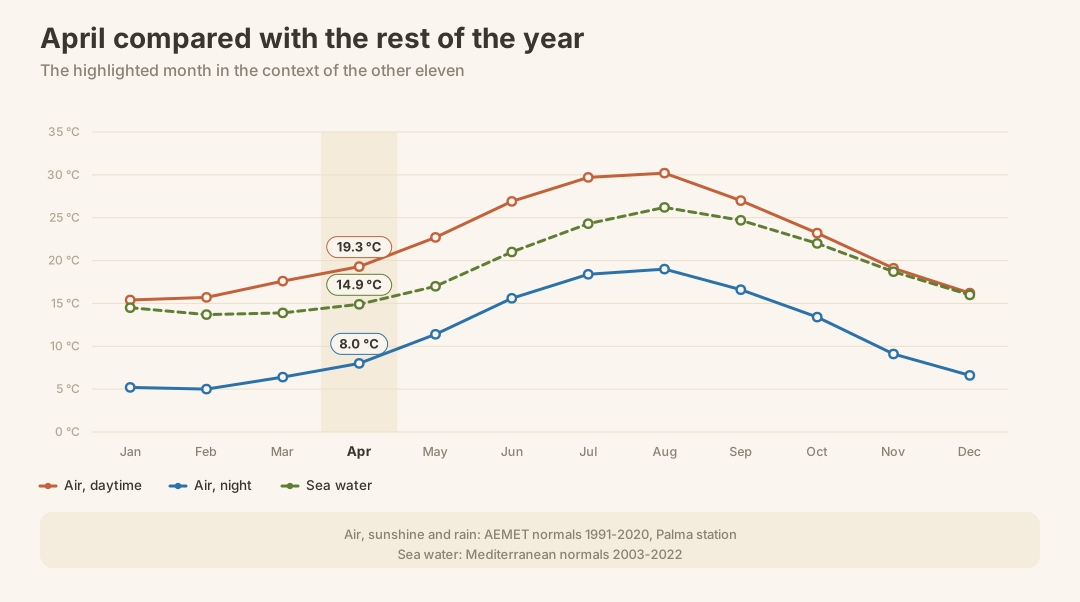
Palma normals as an island-wide approximation: In April, the average daytime high is 19.3 °C and the sea is 14.9 °C, with 6 rain days and 7.3 hours of sunshine per day.
Those who come to Mallorca in April usually have Easter and the first warm spring days in mind – yet the sea follows its own calendar. While T-shirt weather has long since arrived on land, the water still needs patience. We tell you how cold it really is, why that is the case, and where around the island the chances of a few mild degrees are best.
Water temperature in April
The short answer first: bathing in the classic sense, with a run-up and a dive in, is not yet unclouded pleasure in April. The Mediterranean around Mallorca sits at 14.9 °C – a temperature that for most people lies well below the threshold at which water is perceived as pleasantly warm. Anyone who has ever swum in a heated pool or in the sea at the height of summer knows the difference: there, the feeling of warmth sets in almost by itself, whereas in April the body noticeably tenses up on entry, and staying in for any length of time without a wetsuit is difficult.
That does nothing to change the fact that April is a popular month to travel to Mallorca. Around Easter, the island experiences the first noticeable rush of visitors of the year, restaurants and promenades fill up, and the days grow noticeably longer – with 13.0 h of daylight, there is nothing left of winter's brief brightness. The sun already shines strongly, the air warms up pleasantly on many days, and walks along the beach or extended hikes in the Tramuntana mountains are a great pleasure. Only the sea remains largely untouched by this spring mood and holds on to its wintry coolness.
This is no coincidence and no disappointment either, but simply the nature of the Mediterranean: it reacts to the longer, warmer days with a noticeable delay. Anyone heading to the coast in April should therefore think of the sea more as a backdrop for walks, a subject for photographs in the golden afternoon light, or a target for brief, brave jumps into the cold water – an extended sunbathe in the water itself is a better choice later in the year. Those who nevertheless don't want to forgo a swim will already find good conditions with a wetsuit – more on that later.
Why the sea lags behind the air
The reason for this delay lies in a physical property that fundamentally distinguishes water from air: its heat capacity. Water can absorb a far greater amount of energy before its temperature changes noticeably than air can. A gust of wind or a sunny afternoon is enough to make the air temperature rise or fall noticeably within hours. The sea, by contrast, only reacts to changed conditions after weeks and months, because the entire mass of water along the coast and in the adjoining bays first has to be warmed through or cooled down. This inertia is not a peculiarity of Mallorca but a basic principle that applies to any larger body of water – on the island, however, it can be observed particularly well, because the annual cycles of air and sea diverge so clearly.
This is shown most clearly in the shift of the respective peak values. The air reaches its warmest point as early as the height of summer: in July the thermometer climbs on average to 29.7 °C, in August to 30.2 °C. The sea, on the other hand, noticeably lags behind this trend and only reaches its own maximum later, once the air has already begun to cool again somewhat. In August the water temperature stands at 26.2 °C, and in September, when the air is already getting cooler, it even climbs further to 24.7 °C. The sunshine of the summer months is thus still stored in the water weeks later, while the air has long since moved on.
In spring this pattern reverses, and the gap between the two elements becomes greatest. While the air already rises to a pleasant 19.3 °C in April, the water remains at a cool 14.9 °C – winter still lingers noticeably in the sea's bones, even though the sun is already shining much more strongly. This difference is the moment of the year in which the differing speed of reaction between air and water is felt most directly: you sit on the beach in a T-shirt yet still shiver at the first step into the water.
Where the water is warmest in April
Even though the island-wide average water temperature offers a reliable point of orientation, the sea around Mallorca is by no means equally cold everywhere. The shape of the coastline and the depth of the water largely determine how quickly a bay warms up in spring. Shallow, sheltered bays with a sandy bottom store the sun's warmth noticeably faster than deep, open water, because here a smaller volume of water needs to be warmed and wave movement as well as mixing with colder deep water are lower.
In the south and east of the island, for instance around Playa de Palma, the Bay of Alcúdia or the shallow stretches near Cala Millor and Sa Coma, you can therefore expect comparatively the mildest values in April. These stretches of coast are also often in wind-sheltered locations, which additionally helps to retain the warmth in the water. The north-west coast, by contrast, with its steeply plunging cliffs near Sa Calobra, the deep water off Sóller or the open stretches of the Serra de Tramuntana, remains noticeably cooler. Here the sea quickly reaches great depths, meaning colder deep water mixes more easily with the surface and warming overall progresses more slowly.
An important qualification here: for individual bays and beaches we do not have our own verified measurement series, so these differences can only be described qualitatively rather than in concrete degree figures. The island-wide water temperature given for April should therefore be understood as an average across the entire coastline – in individual, particularly sheltered spots the water can feel noticeably milder in detail, while in exposed stretches it can feel cooler.
April's sea compared with the rest of the year
Looking at the annual cycle as a whole, April clearly falls within the cooler half of the cycle, though not yet at its coldest point. That point is usually reached by the Mediterranean only in late winter, once the winter cooling has taken its full effect and the water temperature drops to 13.7 °C in February. From the warmest month of the year, August with 26.2 °C, April is separated by an even greater distance – hardly any other month-to-month comparison shows so clearly how far the spring water still is from the summer peak.
A particularly revealing comparison is with the month that sits opposite April in the yearly cycle: October. Both months are similarly distant from summer and therefore offer a comparable duration of sunshine and similar air temperatures – spring and autumn resemble each other in many ways here. This is also evident in the air temperature: October brings a figure of 23.2 °C, which comes fairly close to April's. With the water, however, the two months diverge widely. While April, at 14.9 °C, is still deep in wintry inertia, the sea in October, at 22.0 °C, has stored the whole of summer's warmth and sits markedly higher.
It is precisely in this contrast that the thermal inertia of the sea shows itself most vividly: two months with almost identical sunshine and similar air, yet water that in autumn still carries the memory of summer within it, while in spring it has not yet found its way out of winter. Anyone who has to choose a swim between these two poles will therefore find autumn the far warmer alternative.
Swimming, snorkelling, diving: what's worthwhile now
Whether a simple swimsuit is enough in April can be deduced directly from the water temperature: at 14.9 °C, the sea is clearly below the mark at which staying in for any length of time without cold protection feels pleasant. A brief, refreshing dip into the water is certainly possible and appealing to many, but for relaxed swimming over several minutes, or for snorkelling trips along the steep cliffs, a wetsuit is recommended. It compensates exactly for the difference that exists between the mild air and the still wintry-cold water, and makes even longer periods in the sea comfortable.
For divers the same logic applies, only intensified by depth: as water depth increases, the temperature drops further, so that a thicker wetsuit or even a drysuit is a sensible investment in April, especially in the deep stretches of the north-west coast. One advantage of the cooler season, however, lies in underwater visibility: the low temperatures slow the algae growth that often limits visibility at the height of summer, so the water in April remains clearer than average. Anyone who values good visibility while snorkelling or diving will therefore find particularly pleasant conditions beneath the surface in this still-cool month, even if the experience itself calls for warmer equipment than in summer.
Anyone who would rather do without a wetsuit altogether should limit themselves to short, invigorating dips and spend the rest of the time on the beach sunbathing, taking walks, or reading a book – a perfectly pleasant alternative in April, as long as one doesn't expect summery temperatures from the sea itself.
Frequently asked questions
Can you swim in Mallorca in April?
How does April's sea temperature compare to March?
Is April good for snorkelling in Mallorca?
When will the sea in Mallorca be warm enough for swimming?
What's on in Mallorca in April
Events
Worth doing now
- Try a short, wetsuit-assisted snorkel along the coast while the water is still cool.
- Pair a beach visit with a spring hike rather than planning around a swim.