
Mallorca Weather in June: Temperatures & Travel Tips
Palma normals as an island-wide approximation: In June, the average daytime high is 26.9 °C and the sea is 21 °C, with 2 rain days and 10.4 hours of sunshine per day.
Many consider June to be the real starting point of the Mallorcan summer, even though not all elements follow this pace at the same speed. The air already reaches summery levels, the days grow as long as at no other time of year, and the sun shows itself reliably. Only the sea still needs a little patience before it has fully absorbed the warmth of recent weeks. Anyone wanting to know what to expect in June on Mallorca will find here an assessment based on the verified climate figures.
The weather in June at a glance
June marks the transition on Mallorca from spring to high summer, even though not all elements follow this pace equally. During the day the thermometer climbs to 26.9 °C, while the nights remain pleasantly mild at 15.6 °C, so you can still go out in the evening without a jacket. This puts June noticeably above May and already brings it close to the values usually associated with high summer. Around the summer solstice, the day reaches its longest extent of the year with 14.8 h of daylight – a circumstance that favours long excursions, late evenings at the beach and extended meals out under the open sky.
The sun shows itself in June for 10.4 h per day, a figure that can almost compete with the July peak. Rain is the exception this month: on 2 rainy days precipitation makes itself noticed, usually in the form of short, heavy showers rather than days-long spells of rain. Anyone planning a trip with a guarantee of sunshine is already making a very good choice with June.
The sea looks rather different. The water temperature reaches 21.0 °C in June, staying clearly behind the air. The Mediterranean stores warmth over months and releases it just as sluggishly – in June it has not yet fully absorbed the warm air of recent weeks. Anyone who first stepped into the water in May and found it cool will already notice a clear difference in June, yet the sea still lags one step behind the air – the proper swim in warm water only comes with high summer.
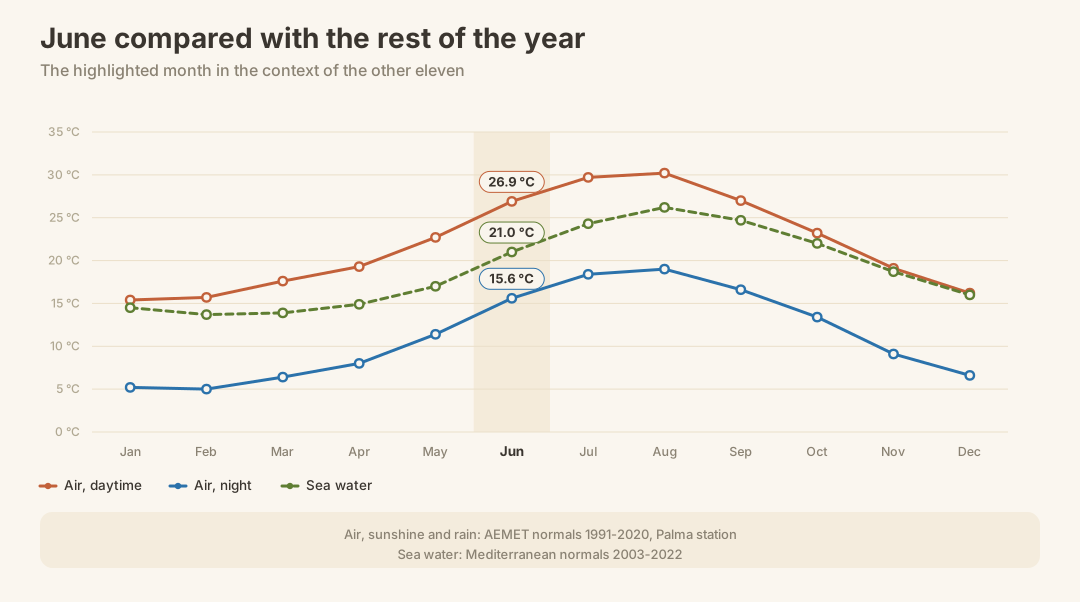
Water, sun and rain in June
Three factors determine how a day on Mallorca feels in June: air temperature, water temperature and the distribution of rainfall. They work together, but do not follow the same rhythm, and it is worth understanding this before planning your trip.
The air reacts almost immediately to the longer days and the higher position of the sun: with 26.9 °C during the day and 15.6 °C at night, June is clearly in summer territory. The sea, by contrast, is a sluggish system. Water needs many times the energy that air does to warm up, and releases that warmth just as slowly. This is why the water temperature lags weeks behind the air temperature: while the air gains strongly in April and May, the sea moves only hesitantly. Only in June does it visibly catch up, reaching 21.0 °C – noticeably warmer than in May, but not yet the warm bathing water that many only associate with high summer. In practical terms, this means the first plunge into the water may still hold a small shock, especially early in the morning or after cloudy days when the surface has cooled slightly.
The sun, on the other hand, already shows itself in June at a level hardly behind the July peak: 10.4 h per day is the norm, spread over long, bright days with 14.8 h of daylight. Clouds are mostly a marginal phenomenon, often passing through in the early morning hours and clearing as the day goes on.
When it comes to rain, the typical character of the Mallorcan summer half-year shows itself: little, but concentrated when it does occur. On 2 rainy days rain falls in June, a small number compared to the year as a whole. What matters here is less the frequency than the form: instead of days-long steady rain, as can occur in temperate regions in early summer, it is usually short, sometimes thundery showers that often move in during the afternoon and pass again after a short while. A rainy holiday day in the classic sense is the exception in June, while a brief shower in between is always possible and usually quickly forgotten once the sun breaks through again.
What is possible in June — and what is not
June is well suited to many things, but not equally suited to everything, and it is worth taking an honest look at each activity before packing the suitcases.
Swimming is certainly possible in June, though with one small caveat: anyone expecting bathtub-warm water will be disappointed. At 21.0 °C the sea is refreshing rather than warm, but manageable for most people, especially once you have swum for a few minutes. Anyone particularly sensitive to cool water should choose the midday hours, when the sun has additionally warmed the uppermost layer of water, or seek out sheltered coves, where the water heats up faster than along open stretches of coast.
Hiking is still very much possible in June, especially in the morning hours and at higher elevations in the Tramuntana. The daily highs of 26.9 °C are noticeably lower than in high summer, when many routes can hardly be recommended because of the heat. Anyone planning longer walks should nonetheless start early and carry enough water, since shade is scarce along many stretches. For demanding day hikes, June is still a good compromise between stable weather and bearable temperatures – in July and August it usually becomes too hot for this.
Cycling benefits in June from the long, bright days: with 14.8 h of daylight there is plenty of time for extended tours, even if it is best to avoid the hottest hours around midday and instead ride early or late in the day. The island is particularly popular with road cyclists in early summer, because the weather is stable but not yet oppressive.
Sightseeing and cultural visits work excellently in June. Palma, the monasteries inland or the markets of the smaller towns can be explored at these temperatures without major breaks, quite unlike high summer, when at midday you tend to retreat into shady lanes or air-conditioned interiors instead.
What June does not offer, however, is the truly warm bathing water that many associate with a Mediterranean holiday. Anyone coming specifically for the sea and placing value on the warmest possible water temperatures is better served in high summer. Equally, no one should expect June to be entirely rain-free – on 2 rainy days rain is to be expected, even if it usually amounts to no more than brief interruptions to an otherwise sunny day.
Where you are best off in June
Our measurement series comes from the weather station in Palma and thus describes conditions along the bay in the south of the island fairly precisely. For other regions of Mallorca we have no verified figures of our own, but the fundamental differences between the various landscape zones are well known and can also be sensibly applied to June.
Along the coast you benefit in June from the moderating effect of the sea: temperatures fluctuate less strongly between day and night than inland, and a light breeze provides cooling especially in the afternoon hours. This applies particularly to the east coast and the south, where open locations allow the wind to pass through easily. Anyone who prefers it quieter and more sheltered from wind will find that more readily in small coves or along the northwest coast beneath the Tramuntana, where the mountains shield off some of the air movement.
The inland areas, for instance around excursion destinations such as Sineu or Petra, warm up more strongly during the day in June than the coast, since the cooling effect of the sea is absent there. At night, however, it can also become noticeably cooler there than at the coast, because the warmth radiates away more quickly. For daytime excursions it is therefore worth starting early, while for mild evenings the coastal towns are usually the more pleasant choice.
The Tramuntana in the northwest brings its own microclimate due to its elevation: here it is usually a few degrees cooler in June than down at the coast, which makes hikes in the mountains pleasant even on otherwise warm days. At the same time, cloud can build up against the mountain slopes while the sun shines down at the coast – an effect worth factoring in when choosing between a beach day and a mountain day.
The south and southeast of the island, with their flat, open bays, count among the most reliable regions for sun and warmth in June, since neither mountains nor significant cloud disrupt the course of the day. Anyone seeking maximum hours of sunshine is generally well served there, though they should also expect more wind on open beaches than in sheltered coves along the east coast.
What to pack for June
What belongs in the suitcase can be deduced fairly precisely from the weather figures in June, rather than from general travel guides.
For daytime, light, breathable clothing and airy fabrics are recommended, since at highs of 26.9 °C it already feels distinctly summery during the day. For the evening, however, a light layer is still worthwhile, such as a thin jumper or a light jacket: with 15.6 °C at night, it cools noticeably, especially near the coast or when wind picks up in the evening.
Swimming gear naturally belongs in the suitcase, though sensitive swimmers might give it a little more thought than in high summer: at a water temperature of 21.0 °C some people still find the sea a touch cool, so a light neoprene shirt or a bathrobe for the walk back from the beach can provide extra comfort here.
Sun protection is compulsory in June, not optional: with 10.4 h of sunshine per day and the high position of the sun around the summer solstice, UV exposure is considerable. Sunscreen with a high protection factor, a hat and good sunglasses belong in the luggage just as much as lip balm with UV filter, especially if you spend longer periods on the beach or on hiking trails.
Even though rain remains the exception in June, a small precaution is worthwhile: on 2 rainy days precipitation is to be expected, usually in the form of short, heavy showers. A light, foldable rain jacket or a small umbrella take up little space in the luggage and can save you from a completely soaked afternoon, just in case.
Since the days around the summer solstice are especially long, with 14.8 h of daylight, it is finally worth remembering a head torch or at least a phone light in case you are out and about later in the evening – dusk sets in later than you might be used to from more northerly destinations, but it does arrive eventually.
June compared with the neighbouring months
Anyone choosing between May, June and July is really choosing between three different stages of development of the same early summer.
May, with 22.7 °C during the day and a water temperature of 17.0 °C, is noticeably cooler than June, but also calmer and less crowded. Anyone who values hiking and excursions over swimming often finds the more pleasant temperatures for longer tours in May, but must summon considerably more resolve when it comes to the sea than in June.
July, by contrast, shows where summer is heading: with 29.7 °C during the day and a water temperature of 24.3 °C, it lies noticeably above June, the sea has by then finally caught up and offers the warm conditions that many associate with the Mediterranean high summer. At the same time, the demands on sun protection and time planning increase: midday hikes become considerably more strenuous in July, and the coastal towns fill up noticeably more.
June sits exactly in between, and that is precisely where its appeal lies. The air, at 26.9 °C, has already reached summery levels without the strain of the high summer months, and the hours of sunshine, at 10.4 h per day, are hardly behind July. With the water, on the other hand, you still pay a small premium in freshness: 21.0 °C is noticeably cooler than in July, but already quite a bit warmer than in May.
For travellers who value warm bathing water and are willing to accept the heat, July is usually the better choice. Anyone wanting to be active, however – hiking, cycling, exploring towns – without having to forgo reliable sunshine and long, bright days, often finds the more fitting compromise in June. The transition is also clearly visible in the number of rainy days: with 2 rainy days June already moves close to the summer minimum, while May typically still brings somewhat more rainfall.
Frequently asked questions
How hot is Mallorca in June?
Is June a good month to avoid crowds in Mallorca?
Does it ever rain in Mallorca in June?
How long are the evenings in Mallorca in June?
Is it too hot to go hiking in Mallorca in June?
What's on in Mallorca in June
Worth doing now
- Ease into beach club season as the sea reaches a genuinely pleasant temperature.
- Take an evening stroll through Palma's old town while the long daylight hours last.