
Bunyola, Mallorca – Tramuntana Village of Gardens, Steps and Trains
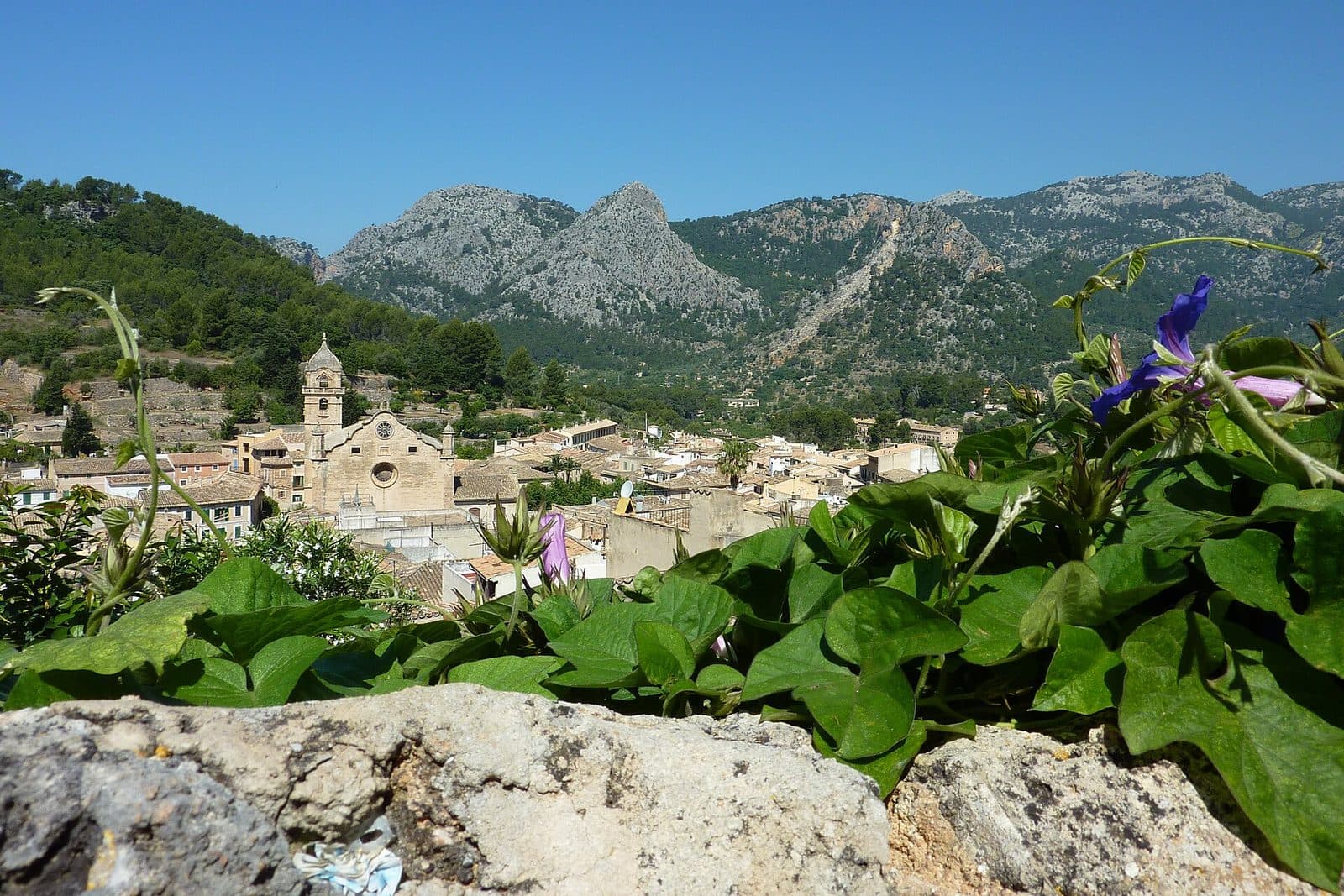
.jpg)
Places to stay in Bunyola
AdTo load the accommodation map by our partner Stay22, we need your consent for marketing cookies. Your consent applies to all marketing content on mallorca.com.
Bunyola lies where Mallorca’s flatter interior rises toward the Serra de Tramuntana. Many people know the name only from passing through on the way to Sóller. Those who stop, however, discover an established village with steep lanes, natural-stone steps, a lively main square and a station still served by the historic railway between Palma and Sóller. The centre is small enough to explore on foot without feeling like a setting created especially for visitors.
Bunyola’s real strengths lie in the connection between village and landscape. In the centre, the church, squares and Pujadors set the tone; outside it, Raixa and the Jardins d’Alfàbia are two important historic estates. Beyond them begin the forests, slopes and trails of the Tramuntana. Bunyola is therefore less suited to a long list of conventional attractions than to a day combining architecture, garden design and activity.
Bunyola also has a distinctive character as a place to live. Its proximity to Palma is paired with a much more rural daily life, while the train and bus provide alternatives to the car. At the same time, the sloping location of the centre calls for a realistic assessment: many routes are short but not level, and outlying residential areas function differently from the compact village. Anyone considering moving here should therefore examine not only the landscape but also their daily journeys.
For travellers, Bunyola is particularly worthwhile as a quiet stopover, a base for hikes or a stop on a journey through the northwest. Visitors should not expect a holiday resort with a large shopping street and a packed sightseeing programme. Its appeal comes from the village scenery, the historic estates nearby and the opportunity to experience Mallorca in a village that continues to be used for everyday life.
Things to See in Bunyola
Bunyola’s sights are divided between two distinct areas. In the centre, the church, square, stepped lanes and station are close together. The large historic estates lie outside the compact village centre and should be considered separately when planning the day. This division is precisely what makes the village interesting: a walk reveals the close-knit settlement, while Raixa and Alfàbia tell the story of Mallorca’s grand country estates and gardens.
Església de Sant Mateu
The parish church of Sant Mateu, together with the adjoining square, forms a natural landmark in the centre. It is best understood not as an isolated monument but as part of the village fabric: the narrow streets open out in front of its façade, everyday routes intersect here, and the ascending lanes are easy to explore from this point. For visitors, the area around the church offers the clearest sense of how closely public space, religious architecture and daily village life are connected in Bunyola.
The square is also a suitable starting point for a walk. Rather than following a fixed sightseeing route, it is worth alternating between the small streets around the centre and the higher sections. The church provides the most reliable point of reference whenever the network of lanes becomes confusing.
Sa Plaça
Sa Plaça is the social heart of Bunyola. The town hall, market activity, cafés and routes through the old village centre all meet here. The square is not a spacious ceremonial area but a compact meeting place that is used intensively in daily life. Especially outside major events, it is a good place to observe how naturally shopping, quick errands and conversations overlap in public space.
For visitors, Sa Plaça is important above all as a junction. Routes lead from here to the church and the steeper lanes; local shops and places to eat are also concentrated in the centre and along Passeig Antoni Estarellas. On market days and during the Fira de Santa Catalina, the atmosphere changes noticeably as the square also becomes an event venue.
Pujadors de Bunyola
Among the most characteristic features of the village are the Pujadors, the steep steps and passageways connecting different street levels. They make the hillside setting immediately tangible and lead through residential streets where natural stone, steps and narrow façades matter more than individual monuments. Anyone who knows Bunyola only from the main road misses precisely this part of the village.
The Pujadors are also the section where sturdy footwear matters most. Distances remain manageable, but steps and gradients make the walk more strenuous than a glance at the village map might suggest. For children, the stairways can become a small trail of discovery; with a pushchair or limited mobility, however, it is advisable to focus the walk on the more level surroundings of Sa Plaça.
Bunyola Station
The station is not merely a transport stop but part of one of Mallorca’s best-known historic railway lines. The train between Palma and Sóller stops in Bunyola, creating an unusually attractive connection: the village can be reached without a car, and the journey itself becomes part of the excursion. The station is slightly removed from the central square but is connected to the village centre on foot.
Visitors should not expect grand architectural impact here. The station is interesting instead because of its continuing active role and the village’s proximity to the tracks. Combining the train journey with a walk provides a different experience of Bunyola from a quick drive through by road. Before the return journey, however, enough time should be allowed to reach the platform, as the steep streets can slow the walk.
Jardins d’Alfàbia
The Jardins d’Alfàbia are among the municipality’s best-known destinations. The historic estate lies at the entrance to the Tramuntana and ranks among the most important sights around Bunyola.
Alfàbia should not be treated as a quick photo stop. The estate rewards slow exploration. It lies outside the village centre, so a walk through Bunyola and a visit here are two separate parts of the day. Combining them nevertheless makes sense because they show different scales of the same area: the compact village on one side and the historic estate on the other.
Raixa
Raixa also lies outside the village centre and is one of the area’s outstanding historic country estates. Its defining features are the manor house, the garden architecture and its integration into the hillside. The estate was designed under the Count of Montenegro and is a good example of how Mallorca’s history of landownership, prestige and landscape planning were combined.
Despite their proximity, Raixa and Alfàbia should not be treated as identical in theme. Both tell the story of grand country estates, but they place different spatial emphases. Anyone interested in architecture and garden culture can devote a substantial part of the day to them. For a simple village walk, however, they are too far from the centre to be included casually.
Sights in Bunyola
The Weekly Market
The market is centred on Sa Plaça in the heart of the village and remains distinctly modest compared with the island’s large markets. That is precisely its character: it primarily serves people from Bunyola and is more a place for regular shopping and social contact than a tourist attraction. Between the town hall, cafés and adjoining streets, market mornings bring more activity without causing the centre to lose its village scale.
The stalls offer seasonal fruit and vegetables from the region, plants and flowers, prepared foods, and selected textiles and handicrafts. The exact mix may vary because every change is more noticeable at a small market than at the island’s major market towns. Anyone looking for a broad selection of souvenirs or long rows of similar stalls will find more elsewhere. In Bunyola, the value lies in straightforward, direct shopping.
The market fits well at the beginning of a village walk. Afterwards, short routes lead to the church and the Pujadors; cafés and small shops are also nearby. Drivers should not attempt to reach the square itself because the access roads are narrow and parking in the centre is under greater pressure on market mornings. A space outside the densest network of lanes avoids difficult manoeuvring and makes the subsequent walk more pleasant.
For residents, the market reveals an important side of Bunyola: it is part of the basic local provision and also a recurring social occasion. Its small size does mean, however, that it does not completely replace regular shopping. It works best for fresh seasonal produce and small purchases, not as a comprehensive open-air shopping centre.
Markets in Bunyola
One market with dates, opening hours and what is on sale, in the market calendar.
Activities and Day Trips
Bunyola is most convincing when it is not viewed in isolation. Its location at the foot of the Serra de Tramuntana opens up opportunities for hiking, cycling and trips to historic country estates. At the same time, Palma and Sóller remain easily accessible by road and rail. A stay can therefore begin quietly while still leading to very different landscapes without long detours.
Sa Comuna de Bunyola
Sa Comuna is documented as the destination of a guided mushroom excursion held as part of the Fira de Santa Catalina. Hiking is generally one of the activities available around Bunyola and in the Tramuntana.
The chosen route should suit both fitness levels and the season. Even the village centre has noticeable gradients; farther out, there are longer climbs, uneven paths and less infrastructure. Water, sun protection and suitable footwear are therefore sensible preparations even for a supposedly short outing. Rocky sections can be slippery after rain.
Cycling on the Edge of the Tramuntana
Bunyola is an established stop for road cyclists and mountain bikers. The village is conveniently located between Palma, the entrance to the Tramuntana and the roads toward Sóller, Orient and Alaró. Cycling groups are particularly visible around the central square in spring and autumn, when the cafés offer a natural place to pause before or after the climbs.
The surrounding area is not automatically easy for inexperienced riders. Gradients, winding roads and shared traffic require attention. Anyone who simply wants a relaxed ride should check the route and elevation profile in advance; ambitious cyclists, by contrast, will find numerous ways to combine a village visit with a longer mountain ride. A restrained pace is advisable in the centre itself because of the narrow streets.
Taking the Train to Sóller
The railway makes Bunyola a particularly practical stopover. A journey to Sóller can be combined with a walk through the village without parking searches and the mountain road dictating the day. It is also possible to arrive from Palma, allowing the historic route through the island’s interior and alongside the mountains to become part of the experience.
For planning purposes, it is essential not to treat Bunyola merely as a platform. A separate walk can be fitted in between the station, Sa Plaça, the church and the Pujadors. Anyone also wishing to visit Alfàbia or Raixa must account for their locations outside the centre and may need to arrange another form of transport.
Orient and the Northwestern Mountains
The mountain village of Orient is a natural destination for continuing through the quieter Tramuntana landscape. The route leads into a much more secluded valley and is especially suitable for travellers using Bunyola as the starting point rather than the endpoint of a day trip. Alaró, Esporles and Sóller can also be combined with a visit, although each offers a different balance of village history, mountain scenery and food.
Several destinations in one day only make sense if the village walk is deliberately kept compact. Anyone wishing to explore Raixa or Alfàbia thoroughly and also go hiking should combine fewer activities. Bunyola’s advantage is not the number of stops that can be quickly ticked off but the choice between garden culture, village life and nature.
Festivals and Events
Bunyola’s annual calendar is not shaped solely by visitors to the Tramuntana. Recurring events use Sa Plaça, the streets and other public areas of the village as a shared stage. This is particularly evident during the Fira de Santa Catalina in late autumn. Bunyola then appears not as an excursion stop but as a community whose associations, music groups, restaurants and families jointly support the programme.
Fira de Santa Catalina
The Fira de Santa Catalina is Bunyola’s major autumn celebration. It extends over several days around the feast day in November and combines market stalls, local food, music and activities for children. Sa Plaça forms a focal point, although parts of the programme are spread across different locations in the village. For visitors, this is a good opportunity to experience the usually quiet centre in a much livelier form.
Recent programmes have included performances by local choirs, live concerts, street music, folk dancing and a tapas tour through the bars. Traditional Xeremiers, Mallorcan bagpipe players, move through the streets; the Bunyola brass band and the giant figures Mateu and Bàrbara accompany the festivities. There are also games and workshops for children, as well as excursions around Sa Comuna. Individual programme items and times change from year to year, but the community character remains a defining feature.
On the main fair day, stalls and processions fill the centre. This means more pedestrians, altered access routes and greater parking pressure than on a normal weekend. Anyone coming specifically for the festival should leave their vehicle outside the narrow centre. Those who prefer to experience Bunyola at its quietest should choose another date.
For people looking for a place to live, the Fira is revealing. It shows that social life is not limited to the tourist months. Associations, music groups, family activities and local restaurants all participate; at the same time, it becomes clear how strongly public events can temporarily occupy the small centre.
Upcoming dates
Getting There and Getting Around
Bunyola lies northwest of Palma on the important route toward Sóller. Under normal conditions, the village can be reached by car from the island’s capital in approximately twenty minutes. The exact journey time, however, depends heavily on traffic approaching the Tramuntana. The main road makes Bunyola easy to reach but also causes many travellers simply to pass through.
By Car
For a village visit, it is advisable not to drive as far as possible into the historic centre. The streets become narrow, are steep in places and offer little room for turning or manoeuvring. A parking space outside the densest development, followed by a walk to Sa Plaça, is more practical. On market mornings and during larger events, extra time should be allowed to find parking.
A car offers more flexibility for Raixa and Alfàbia than for a walk around the village itself because both estates lie outside the centre. Anyone combining several destinations should treat them as separate stops rather than expecting a quick detour from the village square. For hikes, it is also important to check in advance whether the starting and finishing points are the same.
By Train
The historic train between Palma and Sóller stops in Bunyola. This makes the village one of the few Tramuntana destinations that can be reached without a car in a particularly characterful way. The train is suitable both for a dedicated excursion and for a break in the journey to Sóller. The timetable and return service should be checked before beginning the walk, as this connection should not be treated like a frequent urban transit service.
The village centre is reached on foot from the station. The route is not long, but it includes gradients. Travellers with a lot of luggage, a pushchair or limited mobility should take account of this difference between a short distance and challenging terrain.
By Bus and on Foot
Bus services also connect Bunyola and provide an alternative to the train for daily life and excursions. The best connection depends on the point of departure and the day’s plans: the train is particularly attractive along the Palma–Sóller route, while the bus may be more suitable for other connections. Especially in the evening and at weekends, the return journey should be confirmed in advance.
Within the centre, walking is the most sensible way to get around. The church, Sa Plaça, the Pujadors and local shops are located within a compact area. The complete walk is not fully accessible, however. Cobblestone-like surfaces, steps and gradients can mean that a short route takes more time. The area around the main square is easier to access than the higher lanes.
Bus lines to Bunyola at a glance
| Line | Route | Departures/day | First | Last |
|---|---|---|---|---|
| 205 | Bunyola - Palma | 93 | 06:25 | 22:24 |
| 204 | Port de Sóller - Palma | 38 | 00:20 | 22:55 |
| 303 | Bunyola - H. Joan March - Palma | 20 | 07:50 | 20:10 |
From the official GTFS feeds (TIB/SFM), no real-time data. The figures cover all stops in the town; weekend and holiday services differ — check with the operator before travelling.
Getting there by bus
Sa Plaça (10025) · 0.0 km as the crow flies
- 205Bunyola - Palma · Daily
Costa de s'Estació (10030) · 0.4 km as the crow flies
- 205Bunyola - Palma · Daily
- 303Bunyola - H. Joan March - Palma · Daily
Es Garrigó (10045) · 0.6 km as the crow flies
- 205Bunyola - Palma · Daily
Can Penasso 2 (10015) · 1.0 km as the crow flies
- 204Port de Sóller - Palma · Daily
Timetable data: official GTFS feeds (TIB/EMT), no real-time — check with the operator before travelling.
Living in Bunyola
Bunyola is not a seasonal holiday village but an independent residential community with year-round daily life. Small shops, cafés, restaurants and municipal services are concentrated around Sa Plaça and Passeig Antoni Estarellas. The market serves regular shopping needs, while the square remains a meeting place. The centre therefore feels inhabited even outside the summer travel season; cyclists and hikers bring additional activity, especially in spring and autumn.
Daily Life in the Village Centre
Anyone living centrally can combine many short errands on foot. The downside is the hillside setting. Steps and steep streets are not merely part of the picturesque village scene but part of the daily journey home, to the shops or to the station. Before deciding to live here, it is therefore advisable to walk realistic everyday routes rather than only exploring the more level area around the main square.
The historic structure also limits space for cars. A home in the centre may offer short distances, while parking and access are less convenient. For households that commute frequently by car or transport shopping, a private parking space is more important in practical terms than it may initially appear during a holiday viewing.
Commuting to Palma
The road connection to Palma is short enough to make regular commuting practical in principle. Under normal conditions, the drive takes approximately twenty minutes; rush-hour traffic and traffic toward Sóller can change this time. The train is a genuine alternative if working hours and the timetable are compatible. The walk between home, the station and the workplace should be included in the total journey time.
Living entirely without a car is more conceivable in central Bunyola than in scattered locations outside the village. The train, bus, market and shops in the centre cover various everyday journeys. For destinations away from the transport routes, larger shopping trips or frequent evening appointments, however, a car provides significantly greater flexibility.
Winter and the Low Season
In winter, Bunyola does not disappear behind closed hotel complexes. The market, community life and facilities serving residents remain relevant, while excursion traffic becomes quieter. The Fira de Santa Catalina in late autumn and the activities of local music and cultural groups demonstrate that events are not aimed solely at the high season.
Living in the Village and Beyond
In the village centre, closely packed houses, narrow streets and short distances shape everyday living. Farther out, development becomes more dispersed and the landscape more prominent; dependence on a car, however, usually increases. Someone seeking tranquillity and immediate proximity to woodland or mountain trails will assess such a location differently from someone who needs to reach the station, market or Palma every day.
Bunyola is particularly suitable for people seeking a year-round Mallorcan community who value proximity to the Tramuntana more highly than proximity to the beach or a large urban offering. It is less suitable for households expecting level routes, a strong nightlife scene or every service within immediate walking distance. Among long-established village life, commuters and foreign newcomers, daily life remains more locally focused than in purely holiday-oriented areas.
Practical Information for Your Visit
A few hours are usually enough for a walk around the centre. This applies to Sa Plaça, the church, the station and part of the Pujadors, but not to a day that also includes Alfàbia, Raixa or a hike. These destinations should be added deliberately. Anyone squeezing everything into a short stopover will spend more time moving between places than exploring the sites themselves.
The morning is particularly suitable because the cafés, shops and market activity then reveal the village’s everyday rhythm. On market days, Sa Plaça is livelier and parking in the centre is more limited. On a normal weekday, the village scenery can be viewed more quietly. For photographs in the stepped lanes, early morning and late afternoon are usually more pleasant than the bright midday hours.
Sturdy footwear with good grip is sensible even for a walk around the village. The Pujadors, sloping streets and uneven surfaces make Bunyola unsuitable for an entirely level stroll. Families with young children can explore the centre easily but should choose a reduced route around Sa Plaça if using a pushchair. In hot weather, water and sun protection should be carried; shady lanes are no substitute for preparing for uphill routes.
Drivers should use the first free and sensibly located parking space outside the narrowest part of the centre. This saves time and avoids difficult turning manoeuvres. When arriving by train, the return timetable matters more than a precisely scheduled walking route. Anyone who misses the service cannot assume that another connection will follow immediately.
Sensible combinations include Bunyola and a train ride to Sóller, a visit to the Jardins d’Alfàbia or Raixa, or a hike around Bunyola. For a relaxed day, one of these additions is usually enough. Visitors should not expect a large collection of museums, an extensive shopping area, immediate proximity to the beach or a tourist-oriented old-town tour. Bunyola is best discovered by walking slowly and choosing a clear focus.
Eating, drinking and staying in Bunyola
The best-rated businesses from our directory, ordered by Google rating — not by advertising.
Restaurants
Cafés and bakeries
Local businesses and services
The best-covered sectors in our directory for Bunyola — each with address, contact details and opening hours.
Run a business here? Add it to the directory for free and be found on this page. Add your business
Latest news from Bunyola
- 27 Mallorca towns lack Alcover and La Balanguera
- Mallorca electric cars and fire demo fill Palma
- Mallorca storm kills woman amid 173 incidents
- Mallorca cemetery yields two Civil War victims