
Living in Can Carbonell, Mallorca: A Practical Guide

Places to stay in Can Carbonell
AdTo load the accommodation map by our partner Stay22, we need your consent for marketing cookies. Your consent applies to all marketing content on mallorca.com.
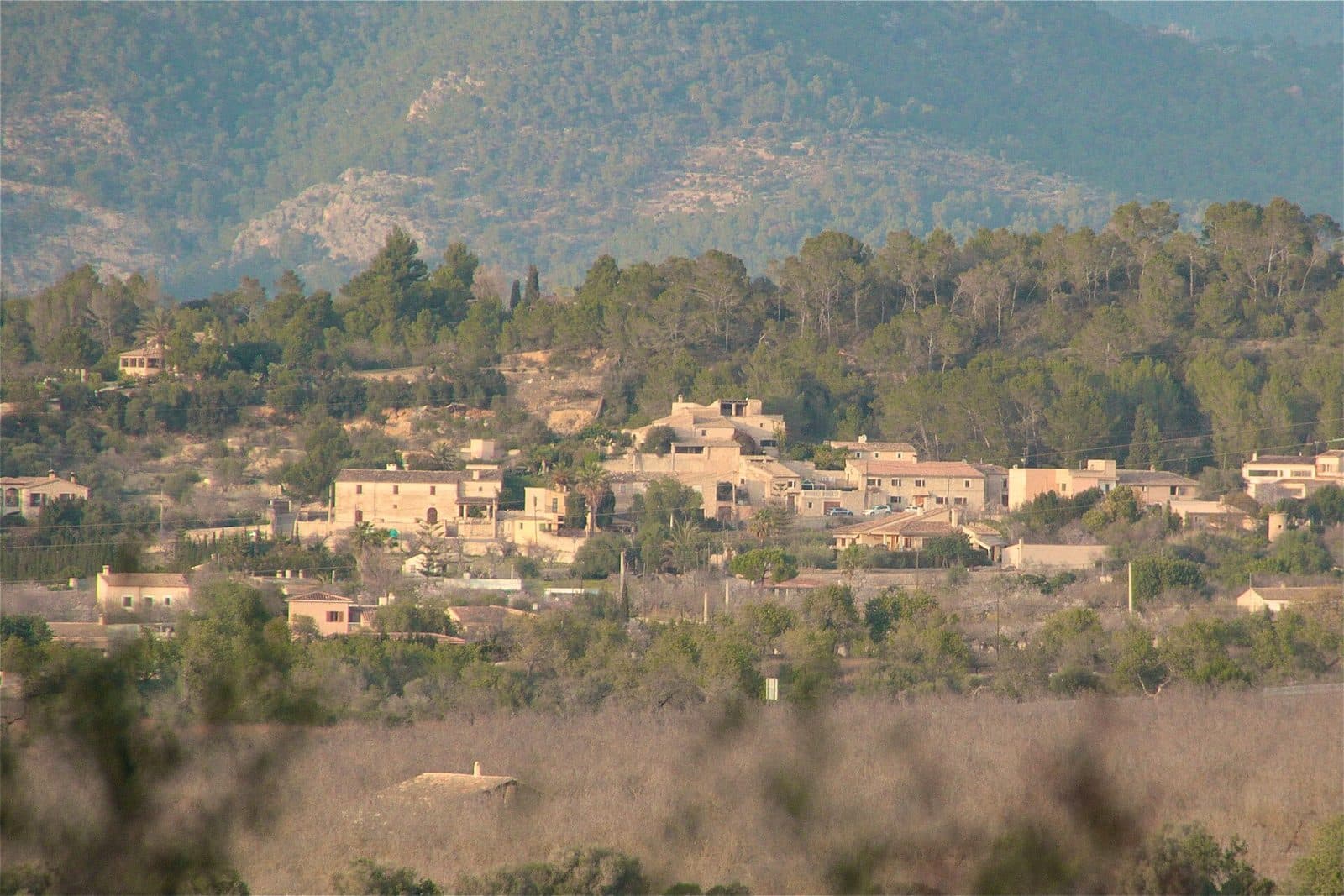
Can Carbonell is a residential development in Marratxí, directly within Palma’s sphere of influence. The area caters less to traditional Mallorca holidaymakers than to people seeking a quiet residential setting with relatively short journeys to the island’s capital. Families and commuters shape its character more strongly than hotels, excursion restaurants, or historic sights. Can Carbonell is therefore most worthwhile for visitors who have a personal reason to come here or who use the development as a base for activities around Palma. There is no historic center, seafront promenade, or self-contained sightseeing itinerary to define a stay. Instead, the area reveals an everyday side of Mallorca: residential streets, neighborhoods, and the transition zone between the capital region and the island’s interior.
The location is the most important point of reference. Can Carbonell belongs to Marratxí and lies inland, yet Palma and the airport remain quickly accessible via the Ma-3017. Anyone with appointments in the capital, frequent airport trips, or plans to use Palma’s leisure facilities can live outside the dense city without facing a long cross-country drive. A short stay is enough for a simple sightseeing visit, but Can Carbonell has greater value as a place to live. It suits people who are not looking for a tourist center and who deliberately organize their daily journeys between the development, Marratxí, and Palma. Before moving, the focus should therefore be less on sights than on the exact distance from the particular house to shops, schools, medical services, and public transport.
Activities and Day Trips
Can Carbonell has no documented collection of traditional attractions, but it works well as a base for a cultural day in Palma. The center of the capital is 16 road kilometers away via the Ma-3017; the drive takes around 28 minutes. This allows residents and visitors to reach several major sights without having to stay within the old town.
Cathedral La Seu
La Seu is Palma’s widely visible landmark and one of the island’s most important Gothic buildings. The cathedral is a suitable first point of reference for a walking tour of the city. From there, it is only a short walk to the historic lanes and the Almudaina Palace. La Seu is particularly worthwhile for a trip from Can Carbonell because its location brings architecture and urban history together. Visitors with limited time will gain a much clearer impression of the historic capital here than by driving through individual modern neighborhoods.
Palau de l’Almudaina
The Palau de l’Almudaina stands directly opposite the cathedral. The palace is one of the residences of the Spanish royal family, and parts of the building are open to visitors. Its location beside La Seu makes it an obvious second destination without requiring another change of location. A visit helps place Palma’s political and architectural history in context. This combination is especially convenient when traveling from a residential development such as Can Carbonell: the journey leads directly into the historic center, after which the day can continue on foot.
Castell de Bellver
The Castell de Bellver stands out from many other castles because of its circular design. Its elevated location offers views across Palma and the harbor. It therefore suits visitors who want to gain a geographical overview of the capital and its bay as well as see notable architecture. The Castell de Bellver should be treated as a separate item on the itinerary. When coming from Can Carbonell, it can easily be combined with a subsequent stay in the center. This creates an excursion that first provides an overview from above and then introduces the streets and squares of the old town.
Passeig des Born
The Passeig des Born runs through Palma’s historic heart and is less an individual sight than a link between a city stroll, a café break, and architecture. The tree-shaded promenade provides a peaceful contrast to the narrow lanes of the old town. For residents of Can Carbonell, the Born is a practical destination when an extensive museum visit is not planned. A walk along the promenade can be combined with errands, a meal, or a visit to the cathedral. This is what distinguishes a practical everyday trip to Palma from a rigid sightseeing itinerary.
Museu Fundación Juan March
Visitors who want to focus their excursion on art will find works by Pablo Picasso and Salvador Dalí, among others, at the Fundación Juan March museum. The museum is in Palma and can be included in a walk through the old town. It offers a weather-independent alternative to viewpoints and outdoor walks. The capital’s proximity is a genuine advantage of Can Carbonell in this respect: cultural attractions do not have to form part of a rare major day trip but can instead be visited specifically for a few hours. This is particularly relevant to people who live permanently in the development and regularly make use of Palma.
Getting There and Getting Around
Can Carbonell’s practical strength lies in its road connections. The development is not on the coast and is not a destination that travelers automatically pass along a traditional island route. For navigation, Can Carbonell in Marratxí should therefore be selected as the destination. Confusing it with places of the same name outside Mallorca will lead to the wrong region.
From Palma Airport
Can Carbonell is 13 road kilometers from Palma Airport. The drive follows the Ma-3017 and takes around 19 minutes. This means the development can be reached quickly after arrival without first having to cross central Palma. For residents who fly frequently and visitors with an appointment in Marratxí, this short transfer is a major advantage of the location. A rental car or pickup remains the simplest option for a direct journey with luggage. The full destination address should be entered into the navigation system before departure, as Can Carbonell is a residential development and has no tourist center where all routes converge.
From Palma
The route from central Palma also follows the Ma-3017. The journey covers 16 road kilometers and takes around 28 minutes. In practical terms, this means appointments, cultural attractions, and major shopping trips in the capital can easily be planned as a same-day round trip. Nevertheless, additional time should be allowed for urban sections during rush hour. For commuters, the driving time alone is not the only deciding factor. The precise workplace in Palma, the house’s location within the development, and the possibility of parking at the destination are equally important. A workplace on the eastern edge of the city may be reached differently in everyday life than an office in the historic center.
By Bus
Several bus stops are located around Can Carbonell. Public transport therefore generally provides an alternative to using a private car. Specific routes and current departure times should be checked immediately before traveling, as the walk to the appropriate stop varies according to the residential address. The bus can work well for occasional journeys. However, anyone who commutes daily, takes children to different facilities, or needs to combine several errands should consider the entire journey from door to door. In a more spread-out residential development, access to public transport is less straightforward than in a compact town center.
Rail Travel and Getting Around Without a Car
When traveling by public transport, the appropriate bus stop and a walk to the destination must be factored in. This is particularly important when arriving with suitcases or when the destination house is not close to a stop. Living without a car is not fundamentally impossible, but it requires more careful daily planning. Before making a long-term decision, it is advisable to test the journeys that will actually be needed: to work in the morning, to school or the shops in the afternoon, and back home in the evening. A connection that is sufficient for a single excursion may not offer the same convenience for a daily commute.
Bus lines to Can Carbonell at a glance
| Line | Route | Departures/day | First | Last |
|---|---|---|---|---|
| 341 | Pòrtol - Son Llàtzer - FAN | 186 | 06:42 | 22:07 |
From the official GTFS feeds (TIB/SFM), no real-time data. The figures cover all stops in the town; weekend and holiday services differ — check with the operator before travelling.
Getting there by bus
Jaume I (36073) · 0.4 km as the crow flies
- 341Pòrtol - Son Llàtzer - FAN · Daily
Can Domingo (36033) · 0.4 km as the crow flies
- 341Pòrtol - Son Llàtzer - FAN · Daily
Olesa 3 (36040) · 0.6 km as the crow flies
- 341Pòrtol - Son Llàtzer - FAN · Daily
Es Campet (36034) · 0.6 km as the crow flies
- 341Pòrtol - Son Llàtzer - FAN · Daily
Timetable data: official GTFS feeds (TIB/EMT), no real-time — check with the operator before travelling.
Living in Can Carbonell
Can Carbonell is primarily a residential area within Marratxí. The development is particularly associated with families and people who commute to Palma. Anyone moving here is therefore not choosing life in a historic village center but a more residential environment within reach of the capital.
Residential Character and Neighborhood
Daily life revolves more around the home and surrounding residential streets than around a central market square. This can appeal to families seeking some distance from dense city life while still traveling regularly to Palma. The location is also attractive to working people whose professional and leisure journeys lead to different parts of the capital region. On property portals, Can Carbonell is listed together with Sa Cabana and Ses Cases Noves. This shows that the residential location should not be considered in isolation. When looking for a house or rental property, the exact street is more informative than the place name alone: distances to bus stops, main roads, and facilities can vary considerably within the larger residential area.
Commuting to Palma and the Airport
Central Palma is 16 road kilometers away and can be reached via the Ma-3017 in around 28 minutes. For daily commuters, this is a manageable road connection as long as working hours, rush-hour traffic, and the search for parking are included in the planning. Proximity to the capital makes it possible to use Palma not only for work but also for culture, public administration, and larger shopping facilities. The airport is 13 road kilometers away via the same road, a journey of around 19 minutes. This is practical for people employed near the airport and those who make regular business or family trips. At the same time, Can Carbonell remains an inland residential development and does not feel like an airport suburb with passing tourist traffic.
Local Services and Daily Organization
When planning daily life, Can Carbonell should not be treated as an independent, fully equipped town center. Shops, pharmacies, medical services, schools, banks, and post offices must each be assessed from the exact residential address. The deciding factor is which facilities in the adjacent residential area or other parts of Marratxí are genuinely convenient to reach. This assessment is particularly important for households without a car, older people, and families with several daily journeys. The bus stops around the development provide a foundation for public mobility, but they do not automatically replace short walks to every service. Anyone considering a move should simulate a normal weekday rather than testing only the journey to Palma.
Daily Life Outside the Holiday Season
Can Carbonell is not dependent on beach operations, a hotel zone, or a promenade. The area therefore remains primarily residential even outside the summer travel season. Life is shaped more by school journeys, working hours, and the neighborhood than by the opening hours of tourist businesses. In winter, this continuity is an advantage for people choosing Mallorca as their permanent home. At the same time, the seasonal leisure activities of a holiday resort are absent. Seafront restaurants, beach days, and tourist events must be planned as excursions; the immediate surroundings serve primarily as a place to live.
Who the Location Suits
Can Carbonell is particularly suitable for families, commuters, and residents who need to reach Palma regularly but do not want to live in the middle of the capital. The short drive to the airport can also play an important role when choosing where to live. Expect a functional residential location rather than a picture-postcard Mallorcan village. The area is less suitable for people who want to complete every errand on foot, choose spontaneously among numerous cafés, or live directly on a historic plaza. A beach is not part of the immediate residential environment either. Before making a decision, it is therefore important to establish whether peace and road access matter more than having a dense range of amenities directly outside the front door.
Practical Information for Visitors
A visit to Can Carbonell requires different planning from an excursion to Palma, Sóller, or a historic market town. The development has no documented center with a succession of monuments. Anyone arriving without a specific destination should therefore not treat Can Carbonell as a full-day attraction but as a brief introduction to Marratxí’s residential landscape or a base for further activities.
Purpose and Duration
Part of a day is sufficient for an orientation walk through the residential area. This is primarily of interest to people considering a move, viewing a property, or assessing the commute to Palma. In that case, visitors should not look at only one street: the routes from the potential home to the nearest usable bus stop and the Ma-3017 are more informative. A tourist walk without any personal connection will be correspondingly short. Can Carbonell is neither an old town nor a coastal resort and offers no documented route linking a church, museum, square, and viewpoint. The value of a visit lies in realistically assessing the residential surroundings.
Best Time of Day
For prospective residents, a normal weekday is the most informative. Arriving in the morning shows what the journey toward Palma feels like; another visit later in the day provides an impression of the return trip and life on the residential streets. Anyone coming only for a private appointment can plan a quieter journey outside typical commuting hours.
Parking and Orientation
Parking should be limited to places where signs and the available road space permit it, without blocking driveways or private entrances. During a property viewing, it is sensible to examine the parking situation at the exact address. For navigation, both the place and municipality must be entered clearly: the destination is Can Carbonell in Marratxí on Mallorca. Buildings and places with the same name outside the island are not part of this development.
Combining a Visit with Palma
A visit benefits most from being combined with Palma. The center is 16 road kilometers away; the drive via the Ma-3017 takes around 28 minutes. The cathedral, Almudaina Palace, Passeig des Born, and the Fundación Juan March museum can be combined into a cultural itinerary. The Castell de Bellver is suitable as an additional, geographically separate stop. Anyone assessing Can Carbonell as a possible place to live should not view Palma only as a tourist, however. A test drive to the actual workplace or facilities needed regularly reveals more about everyday practicality than a visit to the old town.
Eating, drinking and staying in Can Carbonell
The best-rated businesses from our directory, ordered by Google rating — not by advertising.
Restaurants
Latest news from Marratxí
- Palma transport push: plan sought with three neighbours
- 27 Mallorca towns lack Alcover and La Balanguera
- Marratxí gets green light for 60 public homes
- Mallorca ceramics show: fire shapes Català Roig’s art