
Sa Indioteria, Palma – A Residential District Between Fields and Industrial History

Places to stay in Sa Indioteria
AdTo load the accommodation map by our partner Stay22, we need your consent for marketing cookies. Your consent applies to all marketing content on mallorca.com.
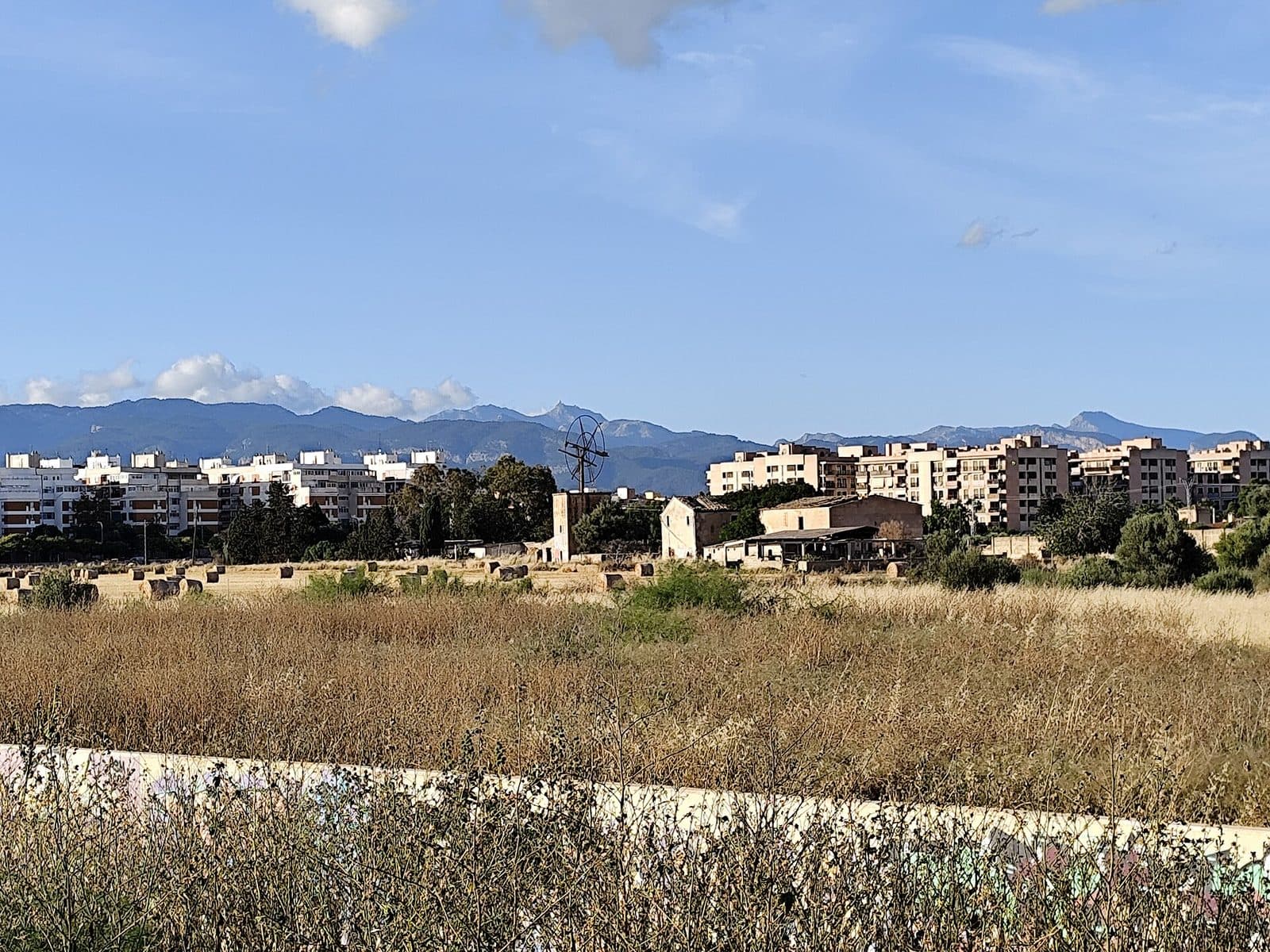
Sa Indioteria lies in northern Palma, between the densely built-up urban area and the northern outskirts of the island’s capital. The neighbourhood is neither a classic holiday destination nor a historic village with a compact centre. Instead, its character emerged from three successive phases: agriculture, the first residential development and, finally, its close proximity to the Son Castelló industrial estate.
For visitors, Sa Indioteria is particularly interesting if they want to understand Palma’s development. The architecturally striking sports centre is the main specific point of interest. The streets and residential areas also tell the story of how a formerly agricultural area was transformed into a working-class urban neighbourhood. For people who live in Mallorca or are considering moving to Palma, Sa Indioteria has a different appeal: its proximity to the centre and the airport makes the neighbourhood convenient for everyday life and commuting. At the same time, residential development and the neighbouring Son Castelló estate shape its daily rhythm more strongly than tourism does.
A visit is therefore less worthwhile as a standalone day trip than as a deliberately chosen detour in northern Palma. Sa Indioteria reveals a side of the capital that is often absent from travel guides: the Mallorca of fields, urban expansion, industrial jobs and established residential neighbourhoods.
History of Sa Indioteria
Agricultural beginnings
Sa Indioteria was originally a predominantly agricultural area between Son Sardina and Son Cladera. Large estates shaped the landscape long before a continuous urban neighbourhood emerged here. Farming and irrigated agriculture defined both people’s work and the structure of the landscape. The area’s present-day urban character does not immediately reveal these origins, but they are the starting point for the neighbourhood’s development.
The first houses were built in the 19th century. Their residents initially remained closely connected to agriculture, horticulture and irrigation. It was a sparsely populated farming landscape on the outskirts of Palma, where building development arose from the cultivation of the land.
The spatial structure remained relatively stable until the period preceding the construction of the neighbouring Son Castelló industrial estate. This long continuity explains why the neighbourhood’s history can be read less through individual monuments than through the former use of the land. Sa Indioteria is an example of how Palma’s rural outskirts became part of a growing city within just a few decades.
Son Castelló and urban change
The decisive turning point came with the construction of the neighbouring Son Castelló industrial estate. It was one of Palma’s first large commercial and industrial areas and was initially called La Victoria. Its official opening took place in November 1967. The Asociación de Industriales de Mallorca, known as Asima, was responsible for the development and also promoted the nearby Can Valero industrial estate.
Son Castelló changed more than just the appearance of Sa Indioteria. The new employment area created an immediate need for housing for workers. What had previously been an outlying location became a place where homes and workplaces stood in close proximity. This had direct urban-planning and demographic consequences for Sa Indioteria.
The workers’ housing estate from 1969 onwards
Construction of the first social housing began in 1969, specifically for workers employed in the Son Castelló industrial estate. This step gave Sa Indioteria an important part of the identity it retains today. The neighbourhood became home to families whose everyday lives were connected to the factories, workshops and businesses in the immediate vicinity.
The development of this housing also explains why Sa Indioteria is closely linked to Son Castelló in terms of social history without itself being merely an industrial area. It developed as a residential neighbourhood beside a major employment centre. Its old agricultural roots and later working-class history are therefore equally important parts of the area’s story.
From a tourist perspective, it lacks the spectacular historic settings that characterise many places in Mallorca. Yet that is precisely what makes it distinctive: Sa Indioteria documents Palma’s transformation in the 20th century and demonstrates that the modern island capital grew not only through tourism but also through industry and social housing.
Sights in Sa Indioteria
Sa Indioteria is shaped by its agricultural origins, residential development and proximity to Son Castelló. Anyone arriving with expectations of conventional sights will misread the neighbourhood. Its main named attraction is a modern building; beyond that, its appeal lies in the urban structure and the traces of the transition from agricultural land to a residential district.
Sa Indioteria Sports Centre
The Sa Indioteria Sports Centre is the neighbourhood’s most architecturally remarkable building. It was designed by architect Jordi Herrero. Rather than creating an enclosed hall sealed off from its surroundings, the building follows the concept of fluid transitions between the park, covered platform, stands and playing field.
Part of the complex, including the playing field and changing rooms, was sunk into the ground. This makes the building appear less like a massive block. The route through the complex leads from the outdoor space, without any harsh visual separation, through the covered areas to the spectator stands and then down to the sports area. For architecture enthusiasts, this sequence is more important than a decorative façade.
The sports centre illustrates a form of architecture in which movement and use determine the design. The building is not intended merely to be viewed from a distance; it reveals itself through changing perspectives, differences in height and its connection with the adjoining open space. The open sightlines and the way the sunken sections reduce the perceived scale of the building are particularly interesting for photography. Anyone visiting the centre should observe the access rules that apply on site.
The settlement structure of Sa Indioteria
The residential streets are not sights in the conventional sense, but they provide the context necessary to understand the neighbourhood. Its development from an area of large estates, through scattered houses built in the 19th century, to social housing from 1969 onwards explains why Sa Indioteria resembles neither an old village nor a uniformly planned suburb.
During a walk, it is more worthwhile to look for transitions than for prestigious façades: between homes and larger roads, between public open spaces and dense development, and between the residential neighbourhood and the commercial areas towards Son Castelló. The neighbourhood’s origins become clearer at these boundaries than at any individual monument.
Son Castelló as a historical reference point
The neighbouring Son Castelló industrial estate is not a tourist attraction, but it is the most important reference point for Sa Indioteria’s recent history. Without its opening in November 1967 and the subsequent construction of housing for employees, the present-day neighbourhood would be difficult to explain.
Anyone interested in urban development can view the proximity of workplaces and homes as part of a broader walk. Son Castelló should not be romanticised, however: it is a functioning commercial and industrial area. Its significance lies in its immediate proximity and its role as the catalyst for Sa Indioteria’s urban growth.
Sights in Sa Indioteria
Activities and excursions
Sa Indioteria is not a starting point for a classic beach day or mountain hike. Short urban explorations, sports-related outings and combinations with destinations in Palma are more appropriate. Its location in the north of the capital makes it possible to discover a little-known neighbourhood without devoting an entire day of a holiday to it.
Architectural walk around the sports centre
The sports centre makes a suitable focal point for a short architectural walk. The transition between the park, covered platform, stands and sunken playing field is particularly interesting. The design reveals itself through movement: only while walking around does it become clear how the complex preserves open sightlines and uses differences in height as a design element.
Daylight is recommended for this kind of walk because it makes the spatial transitions and integration of the outdoor areas easier to appreciate. The access rules that apply on site should be observed. The centre is especially interesting for travellers who seek out contemporary architecture, public spaces or sports buildings rather than exclusively historic monuments.
Urban history walk
A walk through Sa Indioteria can focus on the neighbourhood’s development. The starting point is the former agricultural landscape between Son Sardina and Son Cladera; the later residential development can then be viewed in connection with Son Castelló. The streets tell this story through scale, use and the proximity of contrasting urban areas.
Realistic expectations are important. Sa Indioteria does not have a compact old town. The walk is suitable for people who want to observe urban development and understand Palma’s less prestigious side. Anyone interested only in famous attractions would make better use of their time in the old town.
Combining a visit with Palma
The centre of Palma is 4 kilometres away by road; the journey takes around 17 minutes. This makes it easy to combine Sa Indioteria with the capital’s well-known attractions. The contrast between the modern residential and employment district in the north and the historic city centre is particularly striking.
La Seu Cathedral is one of Palma’s most important landmarks. A combined excursion reveals the city’s different layers of development: on one side, the monumental and touristically renowned seaside capital; on the other, Sa Indioteria, which emerged from agriculture, industrialisation and residential construction. This comparison is more meaningful than trying to treat the neighbourhood as a major attraction in its own right.
Son Sardina and Son Cladera
Son Sardina and Son Cladera are important for orientation because Sa Indioteria’s original agricultural area lay between these neighbouring districts. Exploring in this direction helps visitors understand its location on the northern edge of the continuous urban area. The focus is not on an individual monument but on the transition between different forms of development.
For longer routes, it is advisable to check beforehand which roads are pleasant to walk along. Near a large industrial estate and major urban roads, not every direct connection is automatically an appealing walking route. For a focused exploration, short, deliberately selected sections are more suitable than an unplanned trek through commercial and traffic-dominated areas.
Travel and getting around
Sa Indioteria forms part of Palma’s urban area and is therefore approached differently from an independent village in the island’s interior. For practical orientation, use the northern part of the capital and the neighbouring areas of Son Castelló, Son Sardina and Son Cladera. For the final stage, navigation to a specific destination within the neighbourhood is useful, as there is no main tourist square towards which every visit is directed.
Travelling from the airport
From Palma Airport, the road route follows the city’s main road network to Sa Indioteria. The distance is 8 kilometres by road, and the journey takes around 13 minutes. This generally makes the neighbourhood quick to reach, whether for an appointment, a visit to the sports facilities or as a residential location for people who travel regularly to the airport. In practical terms, however, the short connection does not mean that Sa Indioteria must serve as a typical first stop on a holiday. Travellers with luggage should head directly to the exact destination address.
Travelling from central Palma
Sa Indioteria is 4 kilometres by road from the centre of Palma; the journey takes around 17 minutes. The relatively short distance shows that, despite its former peripheral location, the neighbourhood is part of the city’s continuous everyday urban fabric. This proximity is more important for commuters and residents than for conventional day-trippers.
Anyone combining the visit with the old town can schedule Sa Indioteria before or after the centre instead of setting aside two separate excursion days. During normal commuting hours, additional time should be allowed for Palma’s busy road network. Nevertheless, the specific journey time of around 17 minutes remains a useful guide for planning.
Getting around by bus
Several bus stops serve Sa Indioteria and the adjacent neighbourhoods. These include stops in Son Gibert, es Rafal Nou and Mimosa. Before departure, check which connection is closest to the specific destination, as “Sa Indioteria” refers to a neighbourhood rather than a single bus stop.
For visitors without a car, the bus is the most obvious public transport option. The final section may still involve a walk through ordinary residential streets. These connections are particularly relevant to everyday life because journeys to other parts of Palma do not necessarily require a private vehicle. Service frequencies and operating hours should be checked for the relevant day of the week.
Parking and orientation on site
A precise destination is useful for finding your way around, especially when visiting the sports centre or attending a private appointment. Pay close attention to access roads, one-way restrictions and road markings. Spaces outside homes, businesses and sports facilities may be reserved for residents, deliveries or current event traffic. For a short walk, it is advisable to park the vehicle legally in one place and explore the immediate surroundings on foot.
Bus lines to Sa Indioteria at a glance
| Line | Route | Departures/day | First | Last |
|---|---|---|---|---|
| 5 | Es Rafal Nou - Pl. Progrés | 6 | 07:36 | 10:25 |
From the official GTFS feeds (TIB/SFM), no real-time data. The figures cover all stops in the town; weekend and holiday services differ — check with the operator before travelling.
Getting there by bus
861-Son Gibert · 0.1 km as the crow flies
- 5Es Rafal Nou - Pl. Progrés · 08:00–08:00 · Daily
- 34Son Espases - Aeroport · 06:11–23:04 · Daily
1059-es Rafal Nou · 0.1 km as the crow flies
- 34Son Espases - Aeroport · 06:11–23:04 · Daily
1205-es Rafal Nou · 0.1 km as the crow flies
- 5Es Rafal Nou - Pl. Progrés · 08:00–08:00 · Daily
862-Mimosa · 0.2 km as the crow flies
- 5Es Rafal Nou - Pl. Progrés · 08:00–08:00 · Daily
- 34Son Espases - Aeroport · 06:11–23:04 · Daily
Timetable data: official GTFS feeds (TIB/EMT), no real-time — check with the operator before travelling.
Living in Sa Indioteria
Sa Indioteria is primarily a residential neighbourhood of Palma. Its everyday character dates back to the period when housing for workers was created beside the Son Castelló industrial estate. Living here therefore means residing not in a holiday resort but in an urban neighbourhood whose development is closely connected with employment, commuting and social housing.
Living between the city and the northern outskirts
The location in northern Palma combines two different impressions. On the one hand, Sa Indioteria forms part of the continuous urban area and is only a short drive from the centre. On the other, its proximity to Son Sardina and its agricultural past recall the time when Palma’s built-up outskirts ended here.
The residential environment is not comparable to a coastal resort, mountain village or historic old town. What matters is the specific street and its relationship to residential buildings, main roads and the commercially developed areas around Son Castelló. When choosing a place to live, it is therefore important to consider not only the name of the neighbourhood but also the immediate surroundings of the individual address.
Commuting to Palma and Son Castelló
For working residents, proximity to the centre is a major advantage: the 4 kilometres by road to Palma are estimated to take around 17 minutes. Son Castelló is also directly adjacent. Historically, this proximity was precisely what prompted the construction of workers’ housing from 1969 onwards, and it continues to shape the neighbourhood’s function today.
Without a car, everyday journeys can be organised around the bus stops in the neighbourhood and adjoining areas. Whether a particular home is well connected depends on its distance from the appropriate stop and whether the route to work is available without changing buses. Regular commuters should test the journey at the times they will actually need it rather than assessing the location solely on a map.
Everyday life rather than holiday tourism
Sa Indioteria does not depend on conventional beach tourism but is primarily a residential neighbourhood of Palma.
Assessing infrastructure realistically
Anyone considering a move should check local amenities for the specific address. Sa Indioteria is part of a large city, but routes within the neighbourhood can vary in convenience depending on the residential street. Relevant factors include the walking distance to the appropriate bus stop, access to regularly needed shops and connections to medical and educational facilities within Palma’s urban area.
Before deciding where to live, an additional walk around the area on an ordinary weekday is recommended. This makes it possible to assess how noticeable traffic and commercial activity are, which routes genuinely work on foot and whether the immediate streetscape matches personal expectations.
Long-established and later residents
Sa Indioteria’s social history extends from the agricultural residents of the 19th century to the families of industrial workers for whom housing was built from 1969 onwards. The neighbourhood is therefore neither a purely new development nor an unchanged farming village. Several generations of urban development have shaped its population.
For newcomers, this background is important because it explains the local character better than tourist categories do. Sa Indioteria has an established working-class and residential identity. Respect for ordinary neighbourhood life is more appropriate here than expecting the area to cater to visitors.
Practical information for your visit
How much time should you allow?
Sa Indioteria is a destination for a focused detour, not a full day of sightseeing. The main points of interest are the sports centre, the spatial relationship with Son Castelló and an impression of the residential development. Anyone with a strong interest in architecture or Palma’s urban development can explore in greater depth; for others, a short stop as part of a broader day in Palma is sufficient.
Before visiting, decide whether the focus will be on the sports centre, the history of social housing or simply understanding the geography of northern Palma. Without a specific focus, a walk can quickly feel like an ordinary route through a residential neighbourhood.
Best time of day
Daylight is the most suitable time to visit the sports centre. It makes the transitions from the park to the covered platform, stands and sunken playing field easy to recognise. On a normal weekday, the relationship between the residential neighbourhood and neighbouring employment area is also particularly clear.
Anyone primarily interested in photography should not photograph athletes, employees or residents without asking. Sa Indioteria is not an open-air museum. The most interesting images are created in any case by the architecture, changes in level, open spaces and contrasts between different types of buildings.
What to expect
Do not expect a historic old town, beachfront promenade, holiday marina or dense sequence of famous monuments. Sa Indioteria is worthwhile for a different view of Mallorca: as an example of Palma’s development from agricultural outskirts through industrialisation to a modern residential neighbourhood.
First-time visitors to Mallorca with only one day in Palma will generally prioritise the well-known sights in the centre. For returning visitors, architecture enthusiasts, urban researchers and people considering the area as a place to live, however, Sa Indioteria can be revealing.
Useful combinations
The most obvious combination is with central Palma, which is 4 kilometres away by road and can be reached in around 17 minutes. There, the visit can be complemented by La Seu Cathedral and the historic city. The contrast is precisely what makes the detour understandable: Sa Indioteria represents modern social and industrial history, while the centre embodies Palma’s monumental side.
Son Sardina and Son Cladera also help with geographical orientation. However, they should not be treated as interchangeable attractions but as neighbouring areas between which the original agricultural landscape of Sa Indioteria was located. Advance route planning is advisable for longer journeys because major roads and commercial areas do not provide pleasant pedestrian connections everywhere.
Eating, drinking and staying in Sa Indioteria
The best-rated businesses from our directory, ordered by Google rating — not by advertising.
Restaurants
Cafés and bakeries
Upcoming dates
Latest news from Palma
- Palma transport push: plan sought with three neighbours
- Palma: nine Ñaco Fabré works slow the pace at CaixaFòrum
- Mallorca airport plan: 50m passengers by 2031
- Mallorca neighbours pitch 32 rubbish fixes for Pere Garau