
So n'Espanyol, Mallorca: Peaceful Living near Palma

Places to stay in So n'Espanyol
AdTo load the accommodation map by our partner Stay22, we need your consent for marketing cookies. Your consent applies to all marketing content on mallorca.com.
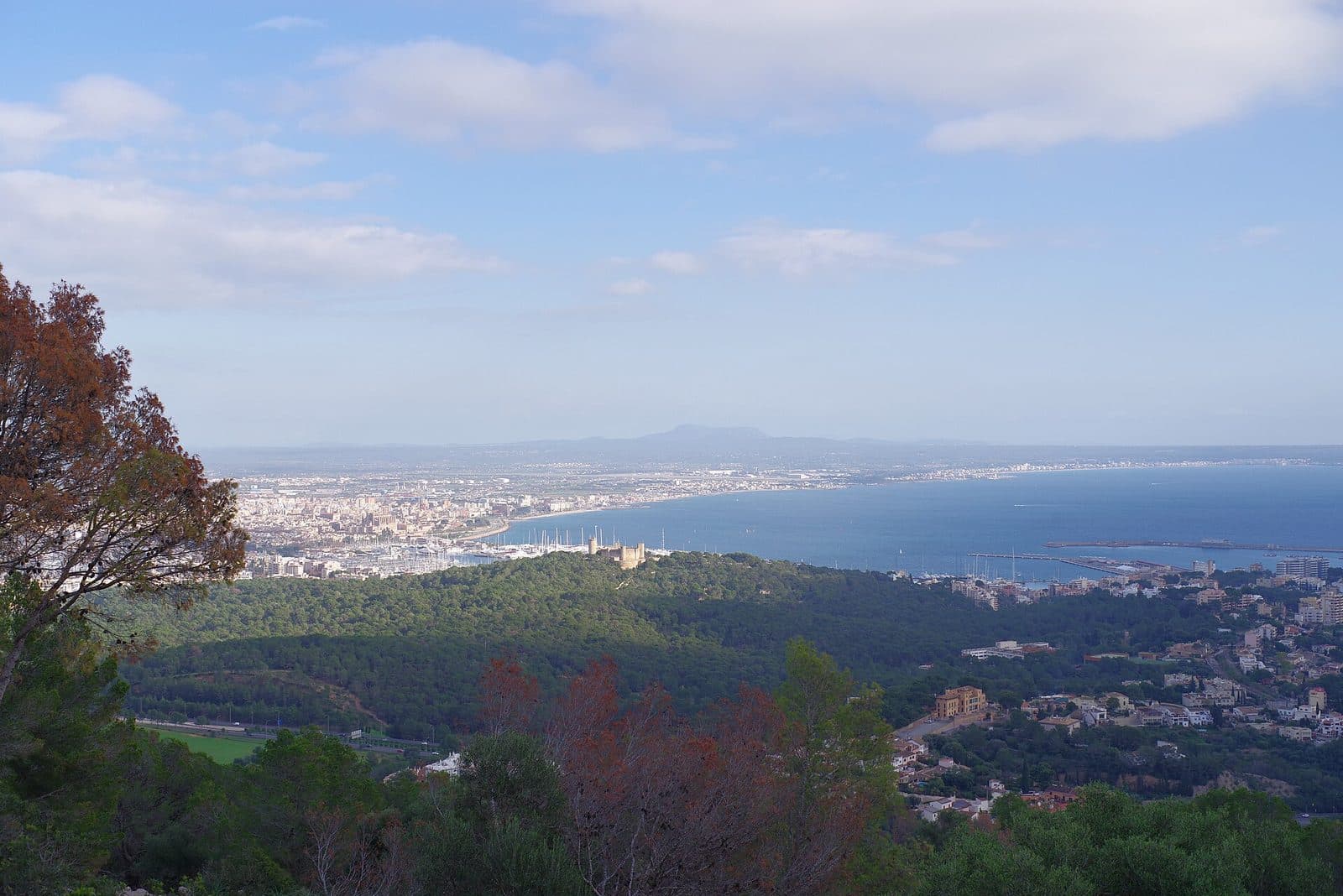
So n'Espanyol is a peaceful residential area on the outskirts of Palma. It lies where the densely developed capital region gives way to more spacious residential areas and rural-looking landscapes. Its appeal therefore comes less from individual sights than from the combination of peace, privacy and a short drive into the city.
For visitors, So n'Espanyol is primarily of interest as a base. Palma can be reached quickly, the airport is nearby via the ring road, and at the same time, a much quieter side of Mallorca than the well-known holiday resorts begins right on the doorstep. Anyone expecting a classic tourist destination has come to the wrong place. Those who deliberately want to stay away from large hotel zones and take excursions from there, however, will find a practical base.
For residents, the location is even more important than it is for holidaymakers. So n'Espanyol combines a residential setting with proximity to Palma's workplaces, services and cultural attractions. This makes the area particularly appealing to people who do not want to live in the midst of the city's bustle but regularly travel to the capital. When comparing individual residential locations, however, close attention should be paid to the distance to the nearest bus stop and personally required amenities: in a loosely developed suburban area, the exact address has a greater impact on daily life than it would in a compact village.
The place name should not be confused with Pueblo Espanyol in Palma. The latter is an open-air museum featuring replicas of Spanish architecture and is a separate attraction within the city. So n'Espanyol, by contrast, refers to the residential area on the outskirts described here.
Activities and Excursions
So n'Espanyol's strength lies in its role as a peaceful base. The area itself is not about ticking off tourist highlights, but about short journeys into different environments: the capital, more spacious suburban areas and, farther afield, the landscapes of Mallorca. A stay here therefore benefits from a personal daily rhythm in which the accommodation remains a retreat while the actual sightseeing takes place elsewhere.
Palma
Palma is the most obvious excursion destination. So n'Espanyol is around 16 minutes by car from the centre. This makes it possible to divide city visits into individual parts of the day: the old town in the morning, back to the quieter residential area in the afternoon, or out again in the evening for dinner and an event. A tightly scheduled, full-day city tour is not essential.
Palma is home to the region's major cultural and historical attractions, including La Seu Cathedral. There are also city markets. This contrast in particular explains the quality of the location: the capital is close enough for spontaneous errands and excursions, yet it does not constantly shape the immediate residential atmosphere.
Pueblo Espanyol
Pueblo Espanyol is part of Palma, not So n'Espanyol, but the similar names make this a useful clarification when planning excursions. The open-air museum displays replicas of characteristic buildings, streets and squares from various regions of Spain. Anyone who encounters images of historic façades and grand squares while searching for So n'Espanyol may therefore be looking at this museum rather than the residential area.
Pueblo Espanyol can be combined with a stay in So n'Espanyol as an excursion destination. It presents architectural history in a concentrated form, whereas the residential area itself has no comparable museum character. When using navigation, always pay attention to the destination's full name.
Serra de Tramuntana
For longer excursions, the Serra de Tramuntana in northwestern Mallorca is a good choice. The mountain landscape, with its rock faces, terraces, olive groves and places such as Valldemossa, Deià, Sóller and Fornalutx, forms a marked contrast to the outskirts of Palma. It is suitable for scenic drives, hikes and cycling tours, although the chosen route should match your own level of experience.
From So n'Espanyol, you can begin such a day without first having to cross a tourist-oriented coastal area. Especially in spring and autumn, the combination of a peaceful residential base, country roads and a mountain excursion works well. For more demanding hikes, careful route planning, suitable footwear and checking the weather conditions remain essential.
Quiet Routes Nearby
The immediate surroundings are better suited to a leisurely walk than to a signposted sightseeing circuit. More spacious development and rural-looking sections sometimes create a greater sense of openness than Palma's inner neighbourhoods. The experience lies in the transition between residential area and suburban landscape, not in a sequence of named monuments.
When walking or cycling, bear in mind that suburban areas do not automatically have continuous tourist paths. A route should therefore be checked in advance for safe connections. For road cyclists, the location can be an interesting starting point for the wider road network; for families and leisurely rides, quiet, clearly traceable sections are more important than making the circuit as long as possible.
Getting There and Getting Around
So n'Espanyol lies close to Palma but does not have the clear orientation of a traditional town centre. For arrival, an exact destination address is therefore more important than simply entering the place name. Anyone driving to accommodation, a private home or a business should check the final access route in advance. This is especially true in loosely developed areas where property entrances and side roads can shape the streetscape.
By Car from Palma Airport
From Palma Airport, the route to So n'Espanyol follows the Ma-20. The distance is 16 kilometres by road, and the journey takes around 17 minutes. For travellers, this means a comparatively short transfer: after collecting your luggage, there is no need for a long journey across the island, and an early return flight can also be organised conveniently from here.
The Ma-20 is Palma's main bypass and carries a substantial proportion of the traffic around the capital. Additional time should be allowed during busy periods, but the basic route remains straightforward: from the airport, take the connection towards Palma and then the appropriate exit for the destination address. Especially on a first visit, it is advisable to save the full address rather than only “So n'Espanyol”.
From Central Palma
The drive from central Palma takes around 16 minutes. So n'Espanyol is therefore close enough for regular city visits without itself feeling like an inner-city neighbourhood. For holidaymakers, this allows the day to be divided flexibly; for working residents, the connection is generally more commuter-friendly than from many places farther away on the island.
Nevertheless, the stated time should not be mistaken for a door-to-door figure for every address. In Palma, access to the specific destination, finding parking and inner-city traffic must also be taken into account. Anyone commuting to a fixed workplace every day should test the route at the actual times they will need it. For occasional journeys, the proximity to the capital remains a clear practical advantage.
Buses and Routes to the Bus Stop
There are bus connections around So n'Espanyol. The timetable overview on the page shows the specific stops and routes; for personal planning, the most important factor is the walking distance from the accommodation to the appropriate stop. Unlike in a compact village, homes here are not necessarily grouped around a single central departure point.
For visitors without a rental car, the bus can work if the accommodation, bus stop and daily destinations are well coordinated. Before booking, check the options for returning in the evening and whether luggage can be transported comfortably along the walking route. For longer excursions around the island or frequently changing destinations, a car offers greater flexibility, while public transport can be an alternative for specific journeys to Palma.
On Foot and by Bicycle
Proximity to Palma does not mean that every route can be covered comfortably on foot. Ring roads, access roads and larger traffic arteries shape the outskirts more strongly than a historic village layout. Walking routes should therefore be assessed according to their actual course, not solely by the apparently short distance on the map.
The same applies to bicycles. Experienced cyclists can use So n'Espanyol as a starting point, but they must take the transitions between residential streets and busier connections into account. For a daily journey to Palma, a safe route, lighting and bicycle parking are just as important as the travel time itself. Anyone cycling with children should choose a quiet, continuous route and avoid larger access roads.
Parking at Your Destination
So n'Espanyol has no tourist centre where all visitors can use a central car park. Parking therefore depends on the specific destination. For accommodation, clarify in advance whether parking is available on the property, on the street or in the immediate vicinity.
Gates and property entrances must not be blocked on narrower access roads. Anyone making only a brief stop to get their bearings should also choose a proper parking space instead of stopping at the roadside on a section with poor visibility. For journeys to Palma, it is often more sensible to plan parking separately for the particular city destination than to drive into the old town without preparation.
Getting there by bus
137-Base militar · 0.4 km as the crow flies
- 36Circular Son Espases · 05:56–22:36 · Daily
- 47Gènova - la Bonanova - Sindicat (esquerra) · 08:00–08:00 · Daily
151-Base militar · 0.4 km as the crow flies
- 46la Bonanova - Gènova - Sindicat (dreta) · 08:00–08:00 · Daily
1061-camí dels Reis - Tren de sa Pedrera · 0.5 km as the crow flies
- 46la Bonanova - Gènova - Sindicat (dreta) · 08:00–08:00 · Daily
1060-camí dels Reis - Tren de sa Pedrera · 0.5 km as the crow flies
- 47Gènova - la Bonanova - Sindicat (esquerra) · 08:00–08:00 · Daily
Timetable data: official GTFS feeds (TIB/EMT), no real-time — check with the operator before travelling.
Living in So n'Espanyol
As a residential location, So n'Espanyol is fundamentally different from a coastal holiday resort. Daily life is shaped more by Palma and the immediate neighbourhood than by hotels, seafront promenades or seasonal visitor flows. Anyone moving here is not choosing village life centred on a market square, but a suburban location where peace and accessibility must be weighed against each other.
Residential Character and Neighbourhood
The area is characterised by peaceful residential sections and surroundings that sometimes feel rural. This can mean more space, privacy and a slower pace than in central urban locations. At the same time, it lacks the natural concentration of daily life found in traditional villages, where the main square, shopping street and municipal facilities are grouped together.
The immediate surroundings are therefore crucial when choosing a flat or house. One address may be conveniently located for a bus stop or main access road, while another may be much more dependent on a car. Road noise, access width, lighting and the route to everyday destinations should also be checked directly at the property. General statements about the whole area are less useful here than inspecting the specific residential location in the morning, evening and on a weekday.
So n'Espanyol is also not a self-contained holiday complex. Its character as a residential area suggests everyday life among permanent neighbours rather than an exclusively tourist population. New arrivals live on the edge of the capital region, not in an international holiday enclave; Spanish and Catalan or Mallorquí are therefore helpful for administrative matters, social contact and daily life.
Local Amenities and Services
So n'Espanyol should not be viewed as a self-contained small town with fully centralised infrastructure. Proximity to Palma is important for daily organisation: larger shopping trips, specialised services, cultural attractions and many work-related journeys lead to the capital or adjacent urban areas. The short distance can make this arrangement practical, but it does not replace checking the amenities available directly around the desired address.
Before moving, the supermarket, pharmacy, family doctor, school, childcare, bank and post office should each be checked individually on the map and then in person. What matters is not only whether a facility can be reached, but whether the journey works without a car, what connections are available in the evening and whether opening hours suit your daily routine. Families have different travel patterns from commuters or people who regularly attend medical appointments.
Anyone wanting to complete as many errands as possible on foot will often find life easier in a compact urban neighbourhood or traditional town centre. So n'Espanyol is better suited to households that consciously prioritise a quieter residential setting and accept driving for some errands. A car provides the greatest independence; living without a private vehicle requires a carefully selected address within convenient reach of the right bus connections.
Commuting to Palma
The drive to central Palma takes around 16 minutes. For commuters, this is one of the area's strongest features: working in the capital and living in quieter surroundings can generally be combined. Appointments, shopping trips and evening cultural events also do not require a journey across the island.
For a realistic housing decision, however, the city centre should not be the only destination considered. Anyone travelling daily to an office, hospital, school or commercial area should test that exact route. The Ma-20 and other access roads around Palma can be busier during normal commuting hours. A test drive on a regular weekday is therefore more informative than a viewing during a quiet weekend.
With public transport, the first and last sections of the journey are especially important. If the home is close to a suitable stop and the destination is also conveniently located, the bus can be a regular alternative. With a more remote address or frequent changes, the journey time increases significantly. For households with only one car, this question is often more important than the distance to Palma itself.
Daily Life in Winter
So n'Espanyol is primarily a residential area, not a classic tourist destination. For residents, the specific location of the home, routes to Palma and the immediate neighbourhood are therefore the main considerations.
At the same time, the peaceful location does not mean that all amenities are always within easy walking distance. Especially in winter, when journeys are made in darkness or bad weather, lighting, safe pedestrian connections and a short route to the bus stop become even more important.
Spring and autumn are particularly suitable for getting to know the residential area. During these seasons, it is possible to assess how outdoor areas, access roads and routes feel in normal island life. Anyone planning to stay permanently should nevertheless also view a potential property after dark and on an ordinary winter day.
Who the Residential Area Suits
So n'Espanyol is particularly suitable for people who regularly need to travel to Palma but do not want to live in the dense city centre. Commuters, households with a car and residents who value peace and privacy can benefit from this location. Proximity to the airport is also practical for longer stays, provided that air traffic and the individual noise situation at the specific address are checked in advance.
The area is less suitable for people looking for a lively village centre directly outside their door. Cafés, shops, a weekly market and historic squares do not form a compact setting for a stroll here. Anyone wishing to live entirely without a car should also pay especially close attention to the walking route to the bus stop and the connections to shopping, work and medical care.
For families, suitability depends heavily on daily routes. The journeys to school and childcare, leisure activities and safe places for children to move around should be considered in practical detail before making a decision. The same applies to older people regarding pharmacies, doctors and accessible connections. Proximity to Palma is helpful, but its full benefit becomes apparent only when the individual address suits personal routines.
Practical Information for Your Visit
So n'Espanyol is not a destination for a traditional day of sightseeing. A visit is most worthwhile when viewing accommodation, assessing a residential area or using the location as a base for Palma and further excursions around the island. Its role as a peaceful starting point is the main attraction.
Best Time for a First Impression
Spring and autumn are particularly well suited to the character of the area. For viewing a flat or house, a regular weekday should also be chosen, as this makes commuter traffic and everyday noise easier to assess.
The morning gives an impression of access routes and amenities, while the late afternoon shows the return of commuter traffic. Anyone planning to live here permanently should also return after dark. Lighting, walking routes and the atmosphere of a suburban location cannot be assessed reliably during daylight alone.
Time Needed in the Area
There is no need to plan an extensive sightseeing itinerary for So n'Espanyol itself. Without a specific appointment, the area is more suitable for a short stop than as a destination for a full day out. More time is useful when comparing different residential locations, walking the routes to bus stops or checking access to accommodation.
Travellers should therefore combine their stay with a clear second destination. Palma is the most obvious addition because of the short drive. A subsequent excursion into the Serra de Tramuntana also works well if So n'Espanyol is understood as a starting point rather than the main cultural feature of the itinerary.
Navigation and Similar Names
The full destination address should be entered when using navigation. The place name refers to a residential area and does not necessarily lead to a recognisable main square. Anyone who saves only the name may arrive at a location that is inconvenient for the actual destination.
Particular attention should be paid to confusion with Pueblo Espanyol in Palma. Pueblo Espanyol is the architectural open-air museum; So n'Espanyol is the residential area on the outskirts. Images of Spanish squares and reconstructed historic buildings may show this museum rather than the residential area described here.
What to Expect for Dining and Shopping
For spontaneous restaurant hopping or extensive shopping, Palma is the more reliable choice. So n'Espanyol does not have the layout of a holiday resort with a promenade and a dense concentration of tourist establishments. Anyone staying here should therefore include meals and larger shopping trips in their daily planning rather than relying on a lively centre within walking distance.
This is not a disadvantage for every traveller. For self-catering visitors and long-term guests, the separation between peaceful living and city amenities can be particularly pleasant. It is simply important to clarify before arrival which shopping options suit the specific accommodation and whether a car or bus journey is required.
Visiting with Children
With children, So n'Espanyol is more suitable as a peaceful accommodation base than as an excursion destination in its own right. So n'Espanyol is not a classic tourist destination. Families can benefit from the short drive to Palma and the retreat from city life, but they should plan their daily activities outside the residential area.
When walking, the actual route is more important than the rural impression. Suburban locations may include road sections without continuous tourist infrastructure. Especially with pushchairs or bicycles, check in advance whether the chosen route is safe, continuous and suitable for the relevant age group.
Upcoming dates
Latest news from Palma
- Palma transport push: plan sought with three neighbours
- Palma: nine Ñaco Fabré works slow the pace at CaixaFòrum
- Mallorca airport plan: 50m passengers by 2031
- Mallorca neighbours pitch 32 rubbish fixes for Pere Garau