
Son Gual, Mallorca: Golf, Living and Travel Tips

Places to stay in Son Gual
AdTo load the accommodation map by our partner Stay22, we need your consent for marketing cookies. Your consent applies to all marketing content on mallorca.com.
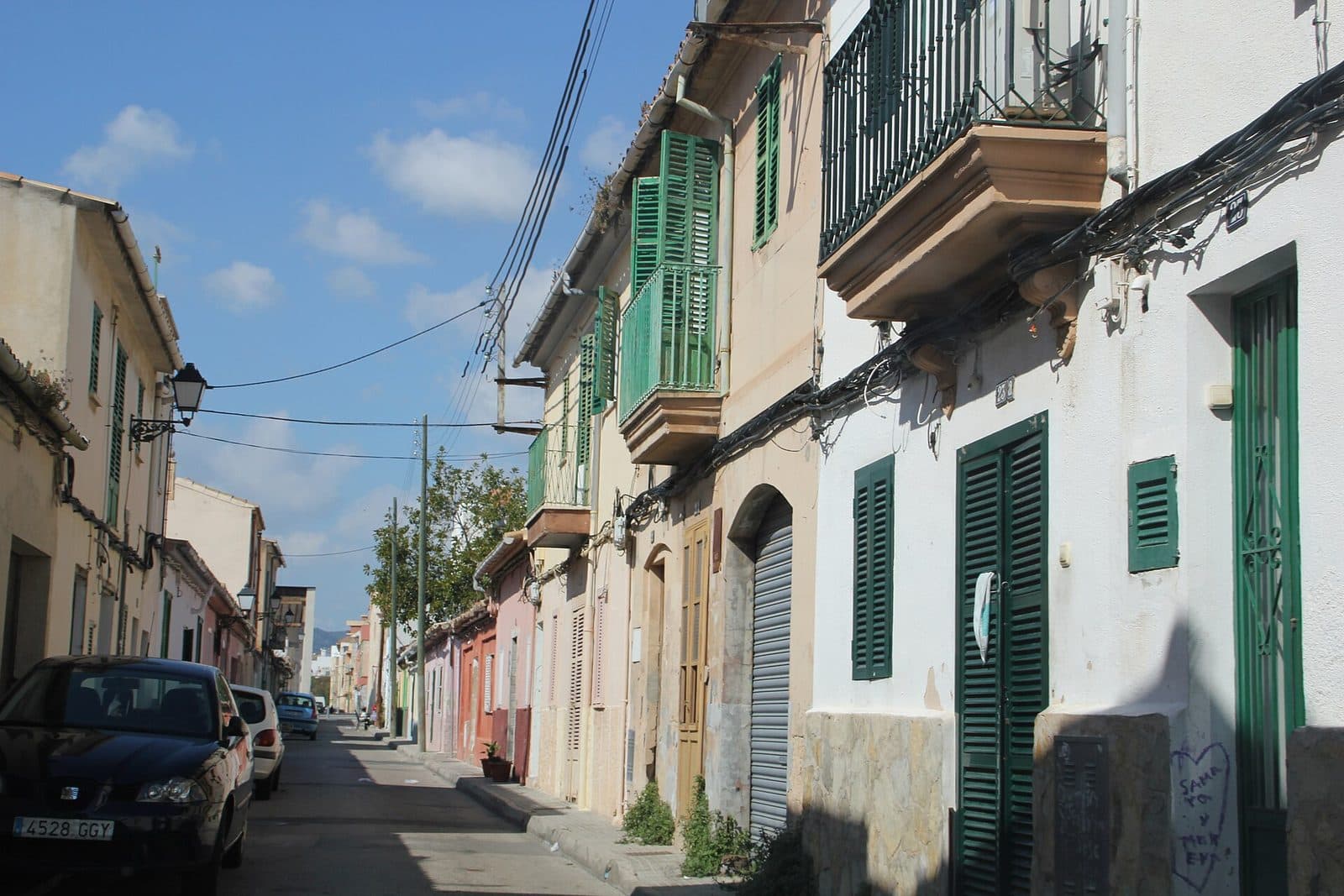
Son Gual is not a Mallorcan village with a church square, old-town lanes and a weekly market, but a sprawling residential area in the rural east of Palma. Between individual fincas, loosely developed plots and open land, it reveals a side of the island capital that has little in common with the dense city centre. The name is best known for Golf Son Gual, whose immaculately maintained grounds are far more conspicuous than the understated settlement.
Son Gual has limited appeal as a destination for conventional sightseeing. It has neither a historic centre nor a series of publicly accessible monuments. Instead, the area is of interest to golf travellers, people curious about unusual urban outskirts and anyone who wants to understand how far Palma extends beyond its continuous built-up area. The distinctive blue-and-white water tower serves as a landmark visible from afar.
For residents, Son Gual has an entirely different value. Large plots, low-density development and rural tranquillity are offset by very sparse infrastructure. Living here does not mean village life with shops and a café around the corner, but a daily routine centred heavily on one's own property and car. Being part of Palma provides proximity to the capital, but it does not replace local amenities within the settlement.
A visit is particularly worthwhile if a round of golf is planned or Son Gual lies along a journey between Palma and the east of the island. As a destination in its own right, however, the area calls for realistic expectations: its appeal comes from landscape, space and contrast, not from a list of tourist attractions.
History of Son Gual
The Development of Son Gual I
The present-day settlement is relatively young. Its first residents moved to Son Gual. Unlike many of Mallorca's historically evolved communities, the area therefore did not develop around a church, market or old village centre, but as a residential development beyond the continuous city. This origin continues to shape its appearance: plots and houses are widely spaced, while there is no public focal point.
One of the first residents was a newcomer from the Channel Island of Guernsey. Her story shows that international residents have been part of Son Gual for more than just the recent past. At the same time, the settlement remained modest in size: a report mentioned around 500 residents and described a place whose inhabitants had long felt overlooked by the city council despite officially belonging to Palma.
Son Gual II and the Divided Settlement Structure
After the turn of the millennium, the development was extended with Son Gual II. Within this newer area, a distinction is made between a Zona Urbana and a Zona Rústica. Residential development is more concentrated in the urban-designated zone, while individual fincas in the rural zone occupy especially extensive plots. As a result, Son Gual I, the residential zone of Son Gual II and its rural section feel less like a single community than neighbouring residential islands.
The development brought roads and new building land, but no traditional centre. Some sections that had already been laid out or paved ended without any subsequent construction. Potholes, damaged streetlights and overgrown roadsides were also reported. These are as much a part of Son Gual's recent history as its prestigious fincas: development, private residential quality and incomplete public spaces did not progress at the same pace everywhere.
From Finca to Golf Course
The second defining development began with Finca Son Gual. In 1995, entrepreneur Adam Pamer formed a plan to create a challenging golf course on the property. Approval followed, and German golf architect and former amateur champion Thomas Himmel was commissioned to design it. He transformed the previously agricultural terrain into a gently sculpted parkland landscape with water features, bunkers and newly planted olive trees.
Golf Son Gual opened in 2007 and fundamentally changed public perceptions of the area. While the residential development outside Palma remained little known for a long time, the golf course became a destination with an international reputation. Since then, the name Son Gual has referred to two very different realities: a quiet residential settlement with sparse infrastructure and an elaborately maintained golf course attracting an international clientele.
Sights in Son Gual
Golf Son Gual
Golf Son Gual is the area's clearest destination and also the place where its open landscape can best be appreciated. The privately owned, family-run club extends across extensive Mediterranean terrain. Designed by Thomas Himmel, the course has 18 holes set in gently rolling, open parkland. Numerous bunkers, elevated greens, thicker rough and water hazards make the course challenging even for experienced players.
Its landscaping includes numerous old olive trees, areas of wildflowers and vines near a disused old Palacio. Water basins are not merely decorative but are also used in part for irrigation. Elevated areas and the clubhouse terrace offer views towards Palma and the Serra de Tramuntana. The club grounds are not a public park, however: anyone wishing to experience the landscape should plan a round of golf, a lesson or an expressly permitted visit to the clubhouse and observe the private club's etiquette.
The Blue-and-White “Lollipop” Water Tower
The striking blue-and-white water tower is the visual landmark of the residential development. Residents and people familiar with the area call it the “Lollipop.” It is not an example of historic architecture, but it is an important point of orientation because Son Gual has neither a central square nor a church visible from afar. Anyone driving through the scattered residential areas can use it to recognise that they have reached the core of the development.
The tower also says something about the identity of the area. In an established village, a bell tower, town hall or market hall marks the centre; in Son Gual, a piece of technical infrastructure assumes this role. It has no dedicated visitor facilities or museum use. The water tower is therefore more of a landmark than a sight in the conventional sense.
Son Gual I
Son Gual I is the older part of the development and the starting point of its settlement. Visitors will not find a walking route lined with historic façades, but an unusual example of a Mallorcan suburban settlement: detached houses, private driveways, broad stretches of road and, between them, areas where the planned development appears incomplete.
This contrast in particular has at times earned Son Gual a reputation as a “lost” neighbourhood. The phrase should not, however, obscure the fact that people live here permanently. Those interested in architecture, urban development or Palma's lesser-known outskirts can appreciate its character on a quiet drive through the area. Private properties and access roads must always be respected.
Son Gual II and the Zona Rústica
Son Gual II presents two different residential models side by side. In the Zona Urbana, houses stand closer together without forming an enclosed centre. In the Zona Rústica, fincas are far more isolated on large plots. Walls, gates and long driveways provide privacy, while public gathering places play virtually no role.
For visitors, this area is not a collection of individual buildings to tour. What is worth seeing is the settlement pattern itself: Palma appears here not as a compact Mediterranean city but as a far-reaching municipality with rural residential areas. The roads should not be treated as scenic routes for looking onto private property. A brief impression is usually sufficient unless there is a specific destination within the settlement.
Sights in Son Gual
Food and Drink
The Clubhouse at Golf Son Gual
The clubhouse is the most important dining venue directly associated with Son Gual. Its offering is primarily aimed at members, golfing guests and event attendees. The terrace is valued for its sweeping panorama across the course towards Palma and Tramuntana; changing rooms, practice areas and other club facilities underline that this is not an ordinary excursion restaurant.
This distinction is crucial when planning a visit. A meal in the clubhouse works well alongside a reserved round of golf or a club appointment, but it should not be treated like a spontaneous visit to an unrestricted village bar. Access rules, clothing and current food service depend on club operations. The culinary experience is part of the well-maintained golf complex, not an expression of a local restaurant district.
Los Últimos Mohicanos
On the road towards Manacor, Los Últimos Mohicanos has been described as a well-known meeting place for motorcyclists. Its location on the main road clearly distinguishes it from the secluded residential areas. Rather than relying on passing trade from a centre, the venue attracts guests who travel there deliberately along the road linking Palma with eastern Mallorca.
The meeting place represents a more down-to-earth side of Son Gual than the golf club. Current opening, menus and event arrangements should be checked before making a dedicated journey. Its reputation as a motorcycle meeting point makes it a familiar landmark, but does not provide a basis for assuming that the development itself has a comprehensive dining scene.
Everyday Food Options
Son Gual I and Son Gual II were described as purely residential areas without a supermarket or bar. For visitors, this means that a walk cannot automatically be combined with breakfast, ice cream or a drink in a village square. Food and water should be purchased before arrival unless the golf club or a specifically selected restaurant is part of the plan.
Mallorcan culinary traditions are also represented differently here than in old market towns. There is no documented historic celler, old local bakery or central food market. Those looking for Pa amb oli, Ensaimada or classic island dishes in a village setting are better advised to combine Son Gual with Palma or an established community farther along their route. The area's strength lies not in culinary diversity, but in a few distinct and clearly separated destinations.
Activities and Excursions
A Round at Golf Son Gual
Golf is the main leisure activity in Son Gual. The course was designed as a challenging championship layout and requires thoughtful play because of its bunkers, water hazards, elevated greens and demanding rough. Different tees allow the course to be adapted to players' abilities, but even experienced golfers should not underestimate it as a casual holiday round.
The club includes a golf academy as well as extensive training and practice areas. Guests are welcomed according to the rules of the family-run private club. A tee time, suitable clothing and observance of etiquette are therefore part of the preparation. The course promotes its year-round playing quality, making Son Gual a suitable golfing destination outside the classic summer season as well.
The Golf Landscape as a Nature Experience
The course's cultivated landscape creates a strong contrast with the drier land and residential roads around it. Olive trees, wildflowers, vines, water basins and sculpted fairways form a distinctive landscape. It is best experienced while playing or during a club visit, not on an unannounced walk across the grounds. Son Gual has no documented, waymarked local hiking route and no public landscape park. Nor are its residential roads a conventional walking area, due to the long distances, absence of public meeting places and infrastructure that has sometimes been described as incomplete.
A City Trip to Palma
Its proximity to the island capital makes Son Gual a quiet base for visiting the city. Palma's historic districts and dining scene form a counterpoint to the open residential landscape. Son Gual lies east of Palma and is connected to the capital by the Ma-15; in everyday terms, this proximity mainly means that cultural and urban amenities are easier to reach than from many more distant parts of the island.
A clear division works well for a day trip: golf or a brief look at Son Gual during the quieter part of the day, followed by Palma as the main destination. Spending a long time sightseeing solely within the residential development is hardly necessary.
Platja de Palma and Palma Aquarium
Platja de Palma and Palma Aquarium are among the nearby tourist destinations that can be combined with time in Son Gual. Both offer a very different atmosphere from the quiet settlement and are therefore well suited to a varied day out.
Son Gual itself is not a coastal destination and has no beach access. Those who live or stay here benefit more from its location between the capital, airport and southern coastal area than from any resort atmosphere. A private vehicle remains the most practical way to reach the beach.
Beaches in Son Gual
2 beaches and coves with their own page belong to Son Gual.
Festivals and Events
Golf Tournaments in Son Gual
Son Gual's events calendar is shaped not by village festivals, processions or a public fair, but by the golf club. Tournaments bring members, visiting players and sponsors to the course and may affect clubhouse operations and tee-time availability. Visitors should therefore consult the relevant club calendar when planning a round of golf.
The published calendar for 2026 shows how much the programme can vary. Among other events, it listed the SOFTLINE tournament on 28 July, a Bavarian Oktoberfest Golf Tournament on 7 November and the Linder Hotels Golf Trophy from 19 to 21 November. These dates are not general local festivals; participation, access and accompanying programmes are governed by the club's requirements.
New Year's Eve at Golf Son Gual
New Year's Eve events have been announced at Golf Son Gual in successive annual programmes. For 31 December 2026, the club planned an evening with a reception, dinner, live DJ, live music and fireworks. A similar celebration had also been publicly advertised for the previous New Year. This makes the club one of the area's few documented event venues offering a festive end to the year.
The celebration is not an unrestricted street festival, however. Reservations, conditions and the current programme must be checked directly with the organiser. Residents should also bear in mind that music and fireworks can alter the area's normally quiet character that evening.
No Traditional Festival Calendar in a Town Centre
Son Gual has no historically evolved centre around which its own cycle of public festivities could have developed. Documented events are concentrated at the golf club and are often tied to specific tournament years. Anyone wishing to experience patron-saint festivals, market stalls or processions should choose one of Mallorca's established communities or Palma. This distinction is important when setting expectations: an event day in Son Gual is generally a deliberately organised club occasion, not a festival discovered spontaneously while walking through the settlement.
Upcoming dates
Travel and Getting Around
Via the Ma-15 to Son Gual
The main road link is the Ma-15 from Palma towards Manacor. Golf Son Gual is located directly on this route at kilometre 11.5, and the residential development is also reached through the corridor east of Palma. Because Son Gual has no obvious village square as an arrival point, travellers should establish before departure whether their destination is the golf club, Son Gual I or an address in Son Gual II.
The road distance from Palma Airport is 8 kilometres. The journey takes around 10 minutes and leads into the Ma-15 road corridor. Son Gual lies east of Palma and is connected to the capital by the Ma-15. For visitors, this means a direct road connection, but it is not well suited to spontaneous exploration on foot: individual destinations are scattered and access routes are designed for car traffic.
Arriving by Car
A car is the most reliable option for Son Gual. It makes not only the journey easier, but also shopping, restaurant visits and onward travel to Palma or the coast. On the Ma-15, it is important to select the correct exit and a precise navigation destination. Entering only “Son Gual” may, depending on the map service, lead to the golf course, the edge of the residential development or another part of the extensive area.
Vehicles should be parked only where they do not obstruct private driveways, the roadway, gates or emergency access. For sightseeing alone, a short and considerate drive through is often more sensible than searching for a supposed town centre.
Bus and Train
Public transport plays only a minor role in Son Gual. A report described a very limited bus service that required a stop to be arranged in advance. Current stops and connections are displayed separately on this page and should be checked immediately before travelling. Older descriptions cannot provide a reliable timetable for the present day.
No railway line reaches the residential areas. Even if part of the journey is made by public transport, travel from a suitable interchange to the specific address still has to be arranged. Son Gual is therefore not a convenient car-free residential location for daily journeys, shopping or appointments.
Cycling and Walking
The Ma-15 is a fast main road, not a quiet local street. A suitable and safely planned route should be chosen for a cycling trip rather than simply following the direct road. Within the settlement, the large distances between residential areas also result in longer journeys than the phrase “district of Palma” might suggest.
On foot, Son Gual is mainly accessible within whichever subsection has been reached. There is no designated continuous tourist route between the golf course, Son Gual I and Son Gual II. The location is therefore better suited to purposeful journeys than to a car-free day trip.
Getting there by bus
410-Puerto Rico · 0.2 km as the crow flies
- 12Sa Garriga - Nou Llevant · 08:00–08:00 · Daily
- 24Antiga Presó - Nou Llevant · 06:33–21:18 · Daily
609-Mèxic · 0.3 km as the crow flies
- 12Sa Garriga - Nou Llevant · 08:00–08:00 · Daily
- 24Antiga Presó - Nou Llevant · 06:33–21:18 · Daily
617-Caracas · 0.4 km as the crow flies
- 12Sa Garriga - Nou Llevant · 08:00–08:00 · Daily
- 24Antiga Presó - Nou Llevant · 06:33–21:18 · Daily
414-Manacor - la Soledat · 0.4 km as the crow flies
- 7Son Gotleu - Son Serra - Sa Vileta / Son Vida · 08:00–08:00 · Daily
- 14Sant Jordi / S'Hostalot - Pl. Espanya · 08:00–08:00 · Daily
- 32s'Arenal - Sindicat · 08:00–08:00 · Daily
- N2Can Blau - Can Valero · 08:00–08:00 · Daily
Timetable data: official GTFS feeds (TIB/EMT), no real-time — check with the operator before travelling.
Living in Son Gual
Living Without a Town Centre
Daily life in Son Gual takes place more on one's own property than in public space. The settlement consists of detached houses and fincas, not a compact network of shops, squares and short walking distances. Privacy and tranquillity are consequently important residential qualities. Anyone who likes to run all errands within the neighbourhood or regularly walk to a café will not find a suitable structure here.
The area belongs to Palma but does not feel like a conventional city district. Open land lies between individual sections, and even neighbouring residential zones can feel separate from one another. A move should therefore always be assessed based on the specific street. The differences between Son Gual I, the Zona Urbana and the Zona Rústica matter more in daily life than their shared place name.
Local Amenities and Daily Journeys
According to a detailed survey, Son Gual I and Son Gual II had neither a supermarket nor a bar. Public leisure amenities such as a sports ground were also absent. The area is therefore not a service centre for everyday needs. Grocery shopping has to be combined with journeys to better-equipped districts or Palma.
For families, carefully assessing school routes, childcare and transport is especially important. The same applies to people who regularly need medical facilities. The connection to Palma helps with planned appointments, but does not change the fact that spontaneous errands require a vehicle and time for the return journey. Keeping substantial supplies and combining shopping trips therefore suit Son Gual better than a routine involving many small errands.
Commuting to Palma and the Airport
Son Gual lies east of Palma and is connected to the capital by the Ma-15. The airport is 8 kilometres away by road and around 10 minutes by car. For commuters with a car, the location is therefore potentially attractive: workplaces, services and air connections are accessible while the residential environment remains rural. Access to the Ma-15 is the decisive locational advantage.
The actual quality of the commute depends heavily on the address within the sprawling development. A house near good road access must be assessed differently from a remote finca at the end of smaller roads. The condition of the immediate access infrastructure also deserves attention. Potholes, broken streetlights and overgrown roadsides were criticised in parts of the settlement; when viewing a flat or house, the route should therefore be examined as carefully as the building itself.
Daily Life Without a Car
Living entirely without a car is difficult in Son Gual. Limited bus service, a lack of local amenities and the spatial separation of residential areas mean that even simple journeys must be planned. A bicycle can help within individual areas, but it does not readily replace driving for major shopping trips, medical appointments or school journeys.
A realistic trial day is advisable before moving: travel to Palma during the usual morning commuting period, then to the intended supermarket and later back to the property. Taxi availability and access to a currently served stop should also be checked for the specific address. The name Palma alone does not imply urban walkability.
Son Gual I, Zona Urbana and Zona Rústica
Son Gual I is the older part of the settlement and bears traces of its early development. Son Gual II emerged after the turn of the millennium. Its Zona Urbana has somewhat more concentrated development but still lacks a conventional centre. The Zona Rústica is characterised by individual fincas and especially large plots. Here, the desire for distance and private outdoor space takes priority.
These residential areas appeal to different needs. The more compact sections at least make contact with neighbours easier, while the rural zone offers greater seclusion. At the same time, dependence on a vehicle and the effort required for property maintenance, access and utilities increase there. Anyone considering a property should therefore not search vaguely “in Son Gual,” but assess the location, road condition and accessibility of each plot individually.
Long-Term Residents and Newcomers
The settlement's history shows an international presence from the outset. One of the earliest residents was a British woman from the Channel Island of Guernsey. More residents arrived later, while Son Gual remained part of the municipality of Palma. It is therefore neither a traditional village with family structures developed over generations nor a settlement consisting solely of holiday homes.
Neighbourhood life develops more within the individual residential areas than around a central square. Anyone seeking social connections is more dependent on direct contact and private initiatives. This can appeal to people who value tranquillity and independence; those expecting a visible social centre will miss it.
Son Gual in Winter
Son Gual is predominantly residential and not a seasonal beach resort. Daily life therefore does not disappear completely in winter, but the already small number of public venues is not supplemented by tourist activity either. It remains quiet, private and oriented towards journeys elsewhere. Short days and bad weather make dependence on a car and the condition of access roads and lighting more noticeable.
Golf Son Gual emphasises year-round course quality and remains a clearly defined destination outside summer. This does not, however, create a lively town centre. Winter in Son Gual primarily means living in rural surroundings while remaining close to Palma.
Practical Information for Your Visit
Setting the Right Expectations
Son Gual is not suitable for a conventional village stroll. There is no old town, central church, documented weekly market or series of public attractions. Visitors arriving without a specific reason will mainly gain an impression of an unusually low-density residential development on the outskirts of Palma. A short drive through or brief walk in one subsection is sufficient for this.
Only those playing golf, attending a club appointment or visiting a private destination within the settlement should allow significantly more time. The golf course is the principal visitor attraction; residential roads and fincas are not a tourist backdrop and should be viewed with appropriate restraint.
Time of Day and Season
For the residential areas, a bright morning or late afternoon is most pleasant because landmarks, roadsides and access routes are clearly visible. A dedicated visit after dark makes little sense, particularly since damaged lighting has been reported in parts of the settlement.
Golfers should time their arrival according to their confirmed tee time and the club's requirements. The course promotes year-round maintenance. The clubhouse and course may be busier on tournament days.
Navigation and Parking
The full destination address should be saved before departure. “Son Gual” may mean the golf club, the older part of the settlement or an area of Son Gual II. The blue-and-white water tower helps with orientation within the development but is no substitute for precise navigation. Anyone heading to the golf course should follow the address on the Ma-15 at kilometre 11.5.
In residential streets, particular care must be taken not to obstruct gates, driveways or private property. A vehicle should not simply be left at the roadside for a long walk.
Sensible Combinations
Son Gual makes most sense as part of a day divided between the golf course, Palma and the southern coastal area. After a round of golf, Palma is a good option for dining, culture or shopping. The trip can also be combined with Palma Aquarium or Platja de Palma. Anyone seeking historic village architecture and market life should not make Son Gual the main destination for an entire day.
Water and light refreshments should be kept in the vehicle if no visit to the clubhouse or a previously checked restaurant is planned. Spontaneous shopping and dining options should not be expected within the residential development.
Latest news from Palma
- Palma transport push: plan sought with three neighbours
- Palma: nine Ñaco Fabré works slow the pace at CaixaFòrum
- Mallorca airport plan: 50m passengers by 2031
- Mallorca neighbours pitch 32 rubbish fixes for Pere Garau