
Beat Ramon Llull Near Campanet
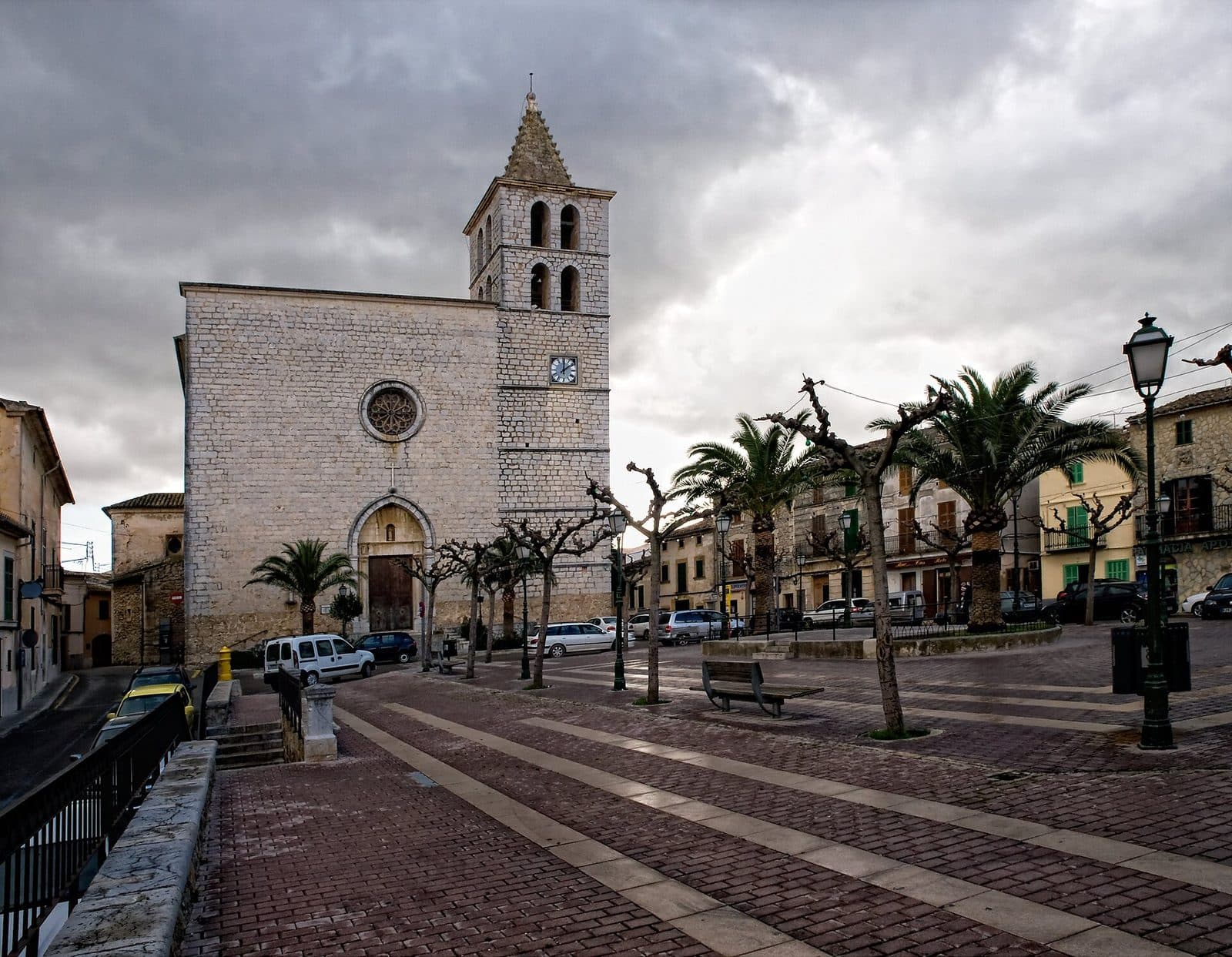

The name Beat Ramon Llull leads straight into Mallorca’s intellectual history. Near Campanet, it designates a historic site listed as a Bien de Interés Cultural. This protected status makes the site particularly interesting for travelers who, alongside churches, caves, and landscapes, also seek the lesser-known examples of cultural heritage in the north of the island.
Its appeal lies in its historical context and its connection to a name that remains present throughout Mallorca today. Ramon Llull was a writer, philosopher, mystic, and missionary; his biography touches on the island’s history, the development of written Catalan, and intellectual exchange across the medieval Mediterranean.
Beat Ramon Llull therefore fits particularly well into a day when Campanet serves as more than merely a starting point for well-known natural attractions. Those who take time to explore the town’s streets and squares will find a landmark rich in cultural and historical significance.
It is important to identify the location clearly: this refers exclusively to the historic site near Campanet. Ramon Llull’s cave near Randa, Miramar on the northwest coast, his tomb in Palma, and other institutions named after him are separate places and do not form part of this destination.
History and Significance
The true significance of the name becomes clear through the story of a life that began on Mallorca and extended far beyond the island. Ramon Llull was born in Palma in 1232 or 1233. His family came from Barcelona and had arrived on the island in connection with the Christian conquest of Mallorca by King Jaume I. Llull therefore grew up in a society whose political and religious order had been fundamentally transformed only a few years earlier.
The Courtier and Troubadour
Before Llull became known as a religious thinker, he participated in courtly life. He wrote poetry in the troubadour tradition and was connected to the circle of the future King Jaume II. of Mallorca. In 1257, he married Blanca Picany; the couple had two children. Sources portray this early period as the life of a wealthy, worldly man whose interests initially gave little indication of his later ascetic and missionary existence.
This contrast became a central element of his traditional biography. Around 1262 or 1263, Llull repeatedly experienced visions of the crucified Christ. He interpreted them as a call to change his former way of life. The courtly poet became a layman devoted to religious study, writing, and missionary work. His decision was not entirely outside the currents of his time: other medieval religious movements also sought a Christian life beyond the enclosed monastic world.
Languages as the Key
Llull’s mission was not focused on preaching alone. He wanted to communicate religious convictions through comprehensible arguments and considered language skills essential. He studied Arabic as well as philosophy, theology, and other fields of knowledge. Mallorca provided a distinctive setting for this work because Muslim culture and the Arabic language did not suddenly disappear from the island after the Christian conquest.
In 1276, Llull founded a school in Miramar where future missionaries were to learn Eastern languages. This site is not near Campanet and must not be confused with Beat Ramon Llull. Miramar is nevertheless important for understanding the name: it shows that Llull did not approach exchange with other religions only in theory but sought to establish institutional training for it.
The Traveling Author
Llull’s life took him beyond Mallorca to North Africa, Cyprus, Sicily, and several European centers. At the same time, he repeatedly returned to his home island. In 1300, he wrote the Cant de Ramon on Mallorca. Between 1312 and 1313, he stayed on the island again and wrote the Art abreujada de predicació there. He drew up his will in April 1313 before continuing to Messina.
His texts were written in Latin, Catalan, and at least partly in Arabic. His use of Catalan to express philosophical, scientific, and religious ideas became especially important for the development of the language. Llull treated it not merely as an everyday language but as an instrument for sophisticated argument and literature. This is a major reason why his name still appears today on schools, streets, monuments, and historic sites throughout Mallorca.
Death, Remembrance, and Protected Status
According to tradition, Llull died in 1316 aboard a ship off the Mallorcan coast while returning from Tunis. His tomb is located in the Basilica Sant Francesc in Palma. This basilica is also a separate place to visit; Beat Ramon Llull near Campanet is not the same as the tomb.
The designation “Beat” means “blessed” and refers to the religious veneration of Llull. The site near Campanet is also listed as a Bien de Interés Cultural. It therefore forms part of the specially protected historic heritage. The site is a reminder that Mallorca’s cultural history is preserved in monasteries, castles, town churches, and other protected monuments.
Visiting Beat Ramon Llull
Beat Ramon Llull is a historic site within Campanet. The name alone can easily be misleading because several unrelated places and institutions on Mallorca bear Ramon Llull’s name. The map location near Campanet should therefore be checked before traveling. Destinations near Randa, Miramar, Palma, or Inca lead to other sites.
Historical Context
Its classification as a historic cultural asset places the focus on the location and its connection to Mallorcan cultural history. Llull’s life links the period after the Christian conquest of the island with courtly culture, religious renewal, linguistic history, and contact between the Christian and Islamic worlds.
Those already familiar with this background will understand the name “Beat Ramon Llull” differently. It commemorates not only a medieval scholar but also a man who abandoned his courtly life after a religious experience, learned Arabic, founded a language school for missionaries, and formulated his ideas in several languages. This knowledge adds context to the historic site.
Planning Before You Go
Reliable visiting hours and a current admission fee have not been recorded. Both should be checked before traveling, especially if Beat Ramon Llull is the main reason for the journey. The same applies to direct access to the protected property.
It is not possible to give a dependable fixed visit duration. It depends on whether travelers visit only the historic site or combine it with a walk through Campanet. Those interested in history should avoid leaving immediately: the town provides a setting in which to consider Llull’s lifetime and the profound changes Mallorca experienced during the Middle Ages.
What to Expect
Visitors should not expect to find the cave near Randa where, according to tradition, Llull meditated, the school he founded in Miramar, or his tomb in Palma. Keeping these places clearly separate prevents the most common mistake in trip planning. Beat Ramon Llull near Campanet is a distinct historic destination, not a collective term for all sites associated with Llull on Mallorca.
The visit is therefore particularly suitable for those who enjoy cultural history and like to understand a place through its name, protected status, and regional setting.
Directions and Parking
The stated road distances and driving times lead to Campanet, not directly to the historic site. Because only Campanet is recorded as the address for Beat Ramon Llull, the precise map location should be used for the final part of the journey. This distinction is important: the quick drive along the main road network ends upon entering the town, followed by local navigation within Campanet.
From Palma Airport
The road distance from Palma Airport to Campanet is 42 kilometers. The drive takes around 34 minutes and initially follows the Ma-30, then continues north on the Ma-13. The Ma-13 covers most of the route toward the north of the island. After leaving the main road, the remainder of the journey follows the local access route to Campanet.
For planning purposes, Beat Ramon Llull should be saved as the destination within the town, rather than simply the name Ramon Llull. Without Campanet added, navigation services may suggest other places on Mallorca, including destinations near Randa, Palma, or Miramar. Because the recorded address is only general, the final meters cannot be determined from the route figures.
From Palma
From central Palma, the road distance to Campanet is 39 kilometers. The drive takes around 38 minutes and follows the Ma-13. Here too, the distance and driving time expressly refer to Campanet. Once in town, travelers must also locate the historic site.
The route is relatively straightforward because the Ma-13 connects Palma with northern Mallorca. Nevertheless, sufficient time should be allowed for the exit, entry into the town, and navigation along local roads. A verified dedicated parking area directly at Beat Ramon Llull is not included in the recorded visitor information; it is therefore advisable to follow signage and observe the parking regulations in force locally.
By Bus
Campanet and Menestralia are recorded as bus stops in the surrounding area. For visitors traveling without a car, the Campanet stop is the most obvious reference point for the town, while Menestralia offers another stop in the area. The exact walking route from the stop to Beat Ramon Llull should be checked in advance using the precise map location.
The stop numbers help when searching for a connection: Campanet is listed under 12002 and Menestralia under 9002. These identifiers prevent confusion with similarly named destinations. Timetables can change and should therefore be part of current trip planning rather than a permanent historical description.
Bus lines to Beat Ramon Llull at a glance
| Line | Route | Departures/day | First | Last |
|---|---|---|---|---|
| 314 | Campanet / Búger | 83 | 06:15 | 22:02 |
From the official GTFS feeds (TIB/SFM), no real-time data. The figures cover all stops in the town; weekend and holiday services differ — check with the operator before travelling.
Getting there by bus
Campanet (12002) · 0.2 km as the crow flies
- 314Campanet / Búger · Daily
Menestralia (9002) · 1.1 km as the crow flies
- 314Campanet / Búger · Daily
Búger (9001) · 2.2 km as the crow flies
- 314Campanet / Búger · Daily
Timetable data: official GTFS feeds (TIB/EMT), no real-time — check with the operator before travelling.
Things to See Nearby
Campanet lies where the open landscapes of northern Mallorca meet the nearby mountains. The village is smaller and quieter than many well-known coastal resorts. Cobbled streets, traditional squares, and historic buildings give a walk through the town a distinct local character. Beat Ramon Llull can therefore be easily included as a cultural and historical highlight in a visit that is not centered on a single attraction alone.
Campanet
In the town center, it is worth avoiding the temptation to treat the historic site as an isolated box to tick. Campanet reveals a side of Mallorca away from large urban ensembles and tourist promenades. Its streets and squares reflect the scale of a town that has grown organically, while the protected listing of Beat Ramon Llull is a reminder that protected monuments also form part of cultural memory.
The name Llull also opens a broader historical perspective. His childhood fell in the decades after the conquest of Mallorca by Jaume I., when the island’s social order was being reshaped. The setting in which Llull later learned Arabic and developed his missionary method emerged amid Christian rule, the continuing Muslim population, and connections to the Catalan-Aragonese world. This background adds another historical layer to a village visit without presenting Campanet as a documented place where Llull lived.
Caves, Springs, and Churches
The area around Campanet is known for underground caves, natural springs, and historic churches. These attractions emphasize different themes from Beat Ramon Llull: geology, waterscapes, or sacred architecture take center stage there, while here the focus is on the memory of one of Mallorca’s most influential thinkers and the site’s status as a protected cultural asset.
These destinations can be combined with a walk through Campanet. An excursion can thus bring together the landscape and culture of the north within a manageable area.
Ramon Llull Sites on Mallorca
Those wishing to explore Ramon Llull in greater depth will find other clearly distinct sites on Mallorca. Palma is home to his tomb in Sant Francesc and several places associated with his life and legacy. Miramar recalls the language and missionary school he founded. Randa is connected to his religious experience and traditions concerning his retreat from the world.
These sites are not part of Beat Ramon Llull near Campanet. They can, however, form a themed journey across the island. Within such an itinerary, Campanet serves as a separate historic point in the north, while Palma, Miramar, and Randa each tell different chapters: origins and tomb, language school, and meditation and spiritual enlightenment.
Local insider tips
Keep Campanet in the Destination Name
Always use “Beat Ramon Llull, Campanet” when navigating. Several unrelated places on Mallorca bear Llull’s name; Randa, Miramar, Palma, and Inca lead to other destinations.
Plan It as Part of a Village Walk
Beat Ramon Llull works best as a historic stop on a walk through Campanet. This combines the protected site with the village’s traditional streets and squares.
Combine Culture and Nature
The area around Campanet is known for caves, natural springs, and historic churches. Visiting one of these before or after Beat Ramon Llull turns a short cultural stop into a varied excursion.
Note the Bus Stop Number
For travel by public transport, Campanet is recorded with the identifier 12002 and Menestralia with the identifier 9002. The numbers help ensure an unambiguous timetable search.