
Creu de Son Pocos near Campanet
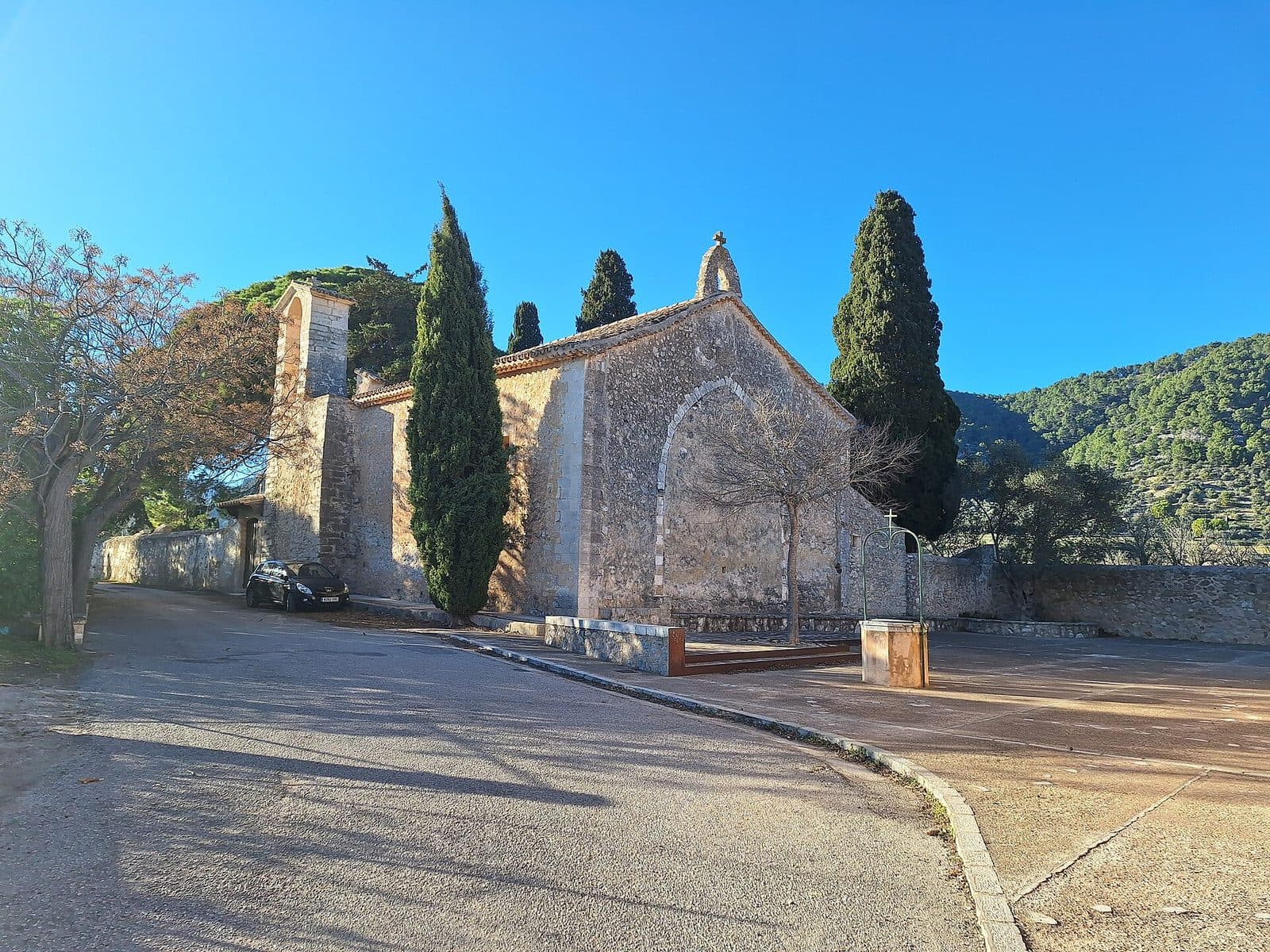

Creu de Son Pocos is one of those small historic places in Mallorca that are easily overlooked even though they form part of the island’s protected cultural heritage. It is located near Campanet in the north of the island and is designated a Bien de Interés Cultural. This makes it particularly interesting for travelers who want to visit not only major churches, castles, or manor houses but also follow the less conspicuous traces of Mallorca’s cultural landscape.
Its appeal lies in the individual historic monument and its relationship with Campanet. The village is situated in the Raiguer landscape south of the Serra de Tramuntana, where settlements, paths, agriculture, and smaller cultural heritage sites have long been closely interconnected.
Creu de Son Pocos is only worth a long journey in its own right if you have a particular interest in Mallorca’s smaller historic heritage. It does, however, fit very well into a day around Campanet: the village, the limestone caves, and Fonts Ufanes each provide a different focus without requiring long journeys across the island.
The site’s understated character is itself part of the visitor experience. The point is not to tick off as many attractions as possible but to consciously appreciate a protected historic landmark. Anyone who enjoys viewing such details within their local context will find that Creu de Son Pocos offers a quiet gateway to the history of Campanet.
Visiting Creu de Son Pocos
It is best to begin your visit not with expectations of a conventional tourist attraction but by taking a close look at the location and the historic monument. Creu de Son Pocos is designated as a cultural heritage site. The length of your stay can therefore be adapted flexibly. Some visitors will pause only briefly, while others will take more time to consciously place the monument and its location near Campanet in context.
A destination for attentive explorers
Creu de Son Pocos particularly appeals to people seeking historic details away from the major monuments. In Mallorca, it is not only cathedrals, monasteries, and fortresses that tell stories of the past. The value of smaller sites is revealed less through spectacular presentation than through careful observation.
The Catalan name should be used unchanged when navigating. This also prevents confusion with other places in Mallorca that likewise include “Creu” in their names. It is especially important to distinguish it from Creu de Son Amer in the Serra de Tramuntana and Creu de Sant Salvador near Felanitx: both are different sights in different landscapes.
Planning your visit
Anyone interested in protected minor monuments is more likely to pause and consider the local context as well.
It makes sense not to build the entire schedule around this single stop. Campanet offers enough additional reasons for a coherent day trip, allowing Creu de Son Pocos to be visited without time pressure. The village center, the caves, and the natural landscape on the edge of the Serra de Tramuntana provide a broader framework for the day.
Check access in advance
Specific opening hours and admission details are not recorded. Before traveling, you should therefore check whether access is currently possible at your preferred time and whether any special notices apply on site. This is particularly important if Creu de Son Pocos is the main reason for your journey. If you are combining it with Campanet anyway, you can adapt your itinerary more easily to the actual conditions.
There is also no documented information about peak times or regular crowds. It is therefore better to choose the time of day according to the rest of your excursion rather than relying on supposedly guaranteed quiet periods. For a combined day, you could visit the village first and schedule the historic stop afterward; if you are visiting the caves, the order should ideally be based on their currently published visiting conditions.
Getting There and Parking
Campanet is close to the Ma-13, the major road connecting the Palma area with northern Mallorca. The stated distances and driving times lead to Campanet, not directly to Creu de Son Pocos. For the final section, you should therefore use the exact position shown on the map. The place name “Campanet” alone is not sufficient for precise navigation to this small historic site.
From Palma Airport
The road distance from Palma Airport to Campanet is 42 kilometers. The drive takes around 34 minutes and initially follows the Ma-30, then the Ma-13 north. The route bypasses central Palma and reaches the Raiguer via the fast northern connection. Local navigation begins at the Campanet exit; from there, the navigation system should be set to the exact position of Creu de Son Pocos.
The stated driving time applies only as far as Campanet and assumes normal traffic conditions. Additional time should be allowed to locate the historic site. Anyone with an appointment at another attraction should avoid such a tight schedule that a small delay on the final section disrupts the entire day’s plans.
From Central Palma
The road distance from central Palma to Campanet is 39 kilometers. The journey takes around 38 minutes and follows the Ma-13. After leaving the urban area, the route largely follows the main artery toward the north of the island. Here too, the distance and driving time expressly refer to Campanet; reaching Creu de Son Pocos then requires a local onward journey using the precise map position.
For travelers visiting several places in the north, Campanet is easy to include in a circular tour due to its proximity to the Ma-13. The full name must appear in the navigation system to avoid being directed to crosses elsewhere in Mallorca with identical or similar names.
The final section
For the final section, it is advisable to check the map scale before leaving the main road. A position saved in advance also helps if the mobile data connection is unreliable.
Traveling without a car
No bus stop is recorded in the immediate vicinity of Creu de Son Pocos. A journey using public transport alone should therefore not be planned without carefully checking the current connection to Campanet and the onward route. Even if you can reach the village, the distance from the bus stop to the sight must be considered separately.
You should not assume that a spontaneous onward journey from a nearby stop will be available.
Nearby Attractions
Campanet lies south of the Serra de Tramuntana in the Raiguer region. The northern part of the municipality is more mountainous, while more open and flatter landscapes extend farther south. Water shapes the surroundings in a distinctive way: several torrents meet in the valleys, and the municipality is known for its springs and underground karst formations. This landscape explains why a historic visit can be combined so well with experiences in nature.
Campanet
The village itself retains the scale of a rural Mallorcan community. Its historic center and main square offer a peaceful contrast to the busier coastal resorts of the north. Visitors who do not view Creu de Son Pocos in isolation but combine it with a walk through Campanet will gain a more coherent picture of the local cultural heritage.
The municipality’s history was shaped by agriculture for a long time. According to the municipality, it remained the dominant economic sector until the 1940s; later, shoemaking became particularly important. Today, commerce, services, and tourism play a larger role. This transformation helps visitors see Campanet not as an unchanged village backdrop but as an evolving place shaped by different economic eras.
The weekly market takes place on the main square on Tuesdays. Anyone wishing to combine market life with a historic walk can include Creu de Son Pocos in a village visit on that day. However, it should still be checked separately whether access to the sight is possible as planned. Market day is primarily an opportunity to experience a livelier side of Campanet, not an automatic guarantee of special conditions at the monument.
Coves de Campanet
The limestone caves of Campanet are one of the municipality’s attractions. They were discovered in 1945 during a search for an underground water source. Today, a visit reveals a karst world of stalactites and stalagmites. Compared with Creu de Son Pocos, this is a completely different experience: underground natural history there, protected historic cultural heritage here.
This contrast is precisely what makes combining them appealing. The caves require more deliberate scheduling and should be visited according to their currently published conditions. Creu de Son Pocos can serve as a quieter stop before or afterward. This creates an excursion that is not focused on a single attraction but instead reveals different sides of Campanet.
Fonts Ufanes
Fonts Ufanes in the Gabellí forest are a hydrogeological natural phenomenon. After sufficient rainfall, water from the Puig Tomir area accumulates and temporarily bursts from the ground with great force. The spectacle is not permanently visible but depends on rainfall. A combination with Campanet can therefore be especially worthwhile after heavy rain.
Fonts Ufanes should not be treated as a reliably scheduled part of the itinerary. Without the necessary hydrological conditions, the characteristic surge of water will not occur. Anyone wishing to combine it with Creu de Son Pocos should check in advance whether the phenomenon is currently active. Regardless of this, the landscape demonstrates how closely Campanet is connected with springs, waterways, and karst.
Combining the village, cultural heritage, and nature
A sensible order depends on the focus of the day. Visitors interested in culture can begin with Campanet and Creu de Son Pocos before visiting the caves. After heavy rainfall, Fonts Ufanes move to the forefront; the historic site can then be included as an additional stop. Anyone arriving on Tuesday can add the weekly market on the main square to the route.
These combinations prevent Creu de Son Pocos from being burdened with expectations of a major visitor attraction. Its value lies in its local context. Campanet provides the right setting: a historic place in the Raiguer, a landscape at the foot of the Serra de Tramuntana, and two natural attractions that reflect the water and limestone of the municipality.
The place it belongs to
Campanet in the place guidePractical Visitor Information
The most important practical step comes before departure: save the exact map position and use the full name “Creu de Son Pocos.” Several crosses and viewpoints in Mallorca have similar names. Searching only for “Creu” or another part of the name can therefore lead to a sight in a completely different part of the island.
Realistic expectations
Opening hours and admission details should not be inferred from older travel reports either. Current information should be checked immediately before the visit. The same applies to possible access restrictions. At a small historic site, local conditions can be more important than a general description of the location.
Clothing and equipment
A saved map is more useful than relying on comprehensive signage. Anyone wishing to take photographs should also treat the protected cultural heritage site and its surroundings respectfully. Surfaces, access roads, and property boundaries must be observed; designation as a Bien de Interés Cultural is not permission to enter any desired viewpoint.
Visiting with children
A subsequent visit to the caves or—under suitable conditions—to Fonts Ufanes offers considerably more variety.
Flexible planning is also advisable for families. The length of the visit can be adapted to attention spans, weather, and the rest of the day’s schedule. Access and the exact location should be checked together before traveling to avoid an unnecessary search on site.
Local insider tips
Save the full name
Several historic crosses in Mallorca have similar names. Always use “Creu de Son Pocos” near Campanet in the navigation system and save the map position in advance to avoid accidentally heading to a different destination.
Combine it with market day
The weekly market takes place on Campanet’s main square on Tuesdays. Anyone wishing to experience village life and cultural heritage together can combine the market with Creu de Son Pocos and arrange the rest of the day accordingly.
Check the springs after rain
Fonts Ufanes may become active after heavy rainfall. It is then especially worthwhile to check current conditions before traveling and combine the natural phenomenon with Campanet and Creu de Son Pocos.
An underground contrast
Coves de Campanet tell the municipality’s natural history, while Creu de Son Pocos represents its protected cultural heritage. Together, the two stops create a more varied excursion than the historic site alone.