
Can Calders in Palma: A Guide to the Historic Site
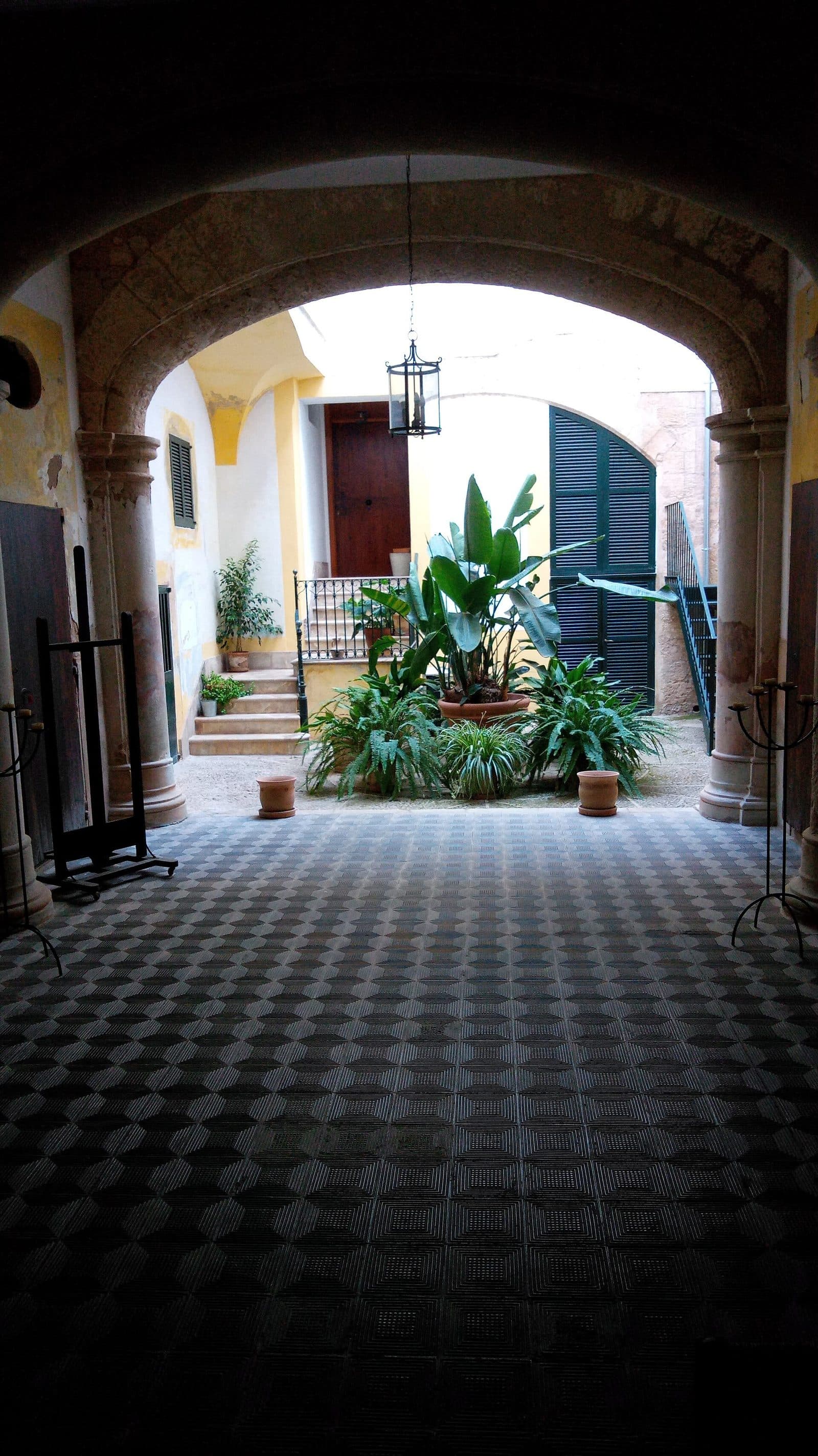

Can Calders is one of those historic places in Palma whose name alone requires careful attention. This article refers to the building in the Mallorcan capital.
The historic building is primarily a destination for people who want to explore Palma through individual houses, old streets, and lesser-known traces of the city’s history. Anyone already visiting the eastern part of the historic center can include Can Calders in a walk around Porta des Camp.
Before visiting, it is advisable to check the exact map location. Can Calders in Palma should be entered explicitly as the destination.
Visiting Can Calders
A visit is best approached with the right expectations. Can Calders is listed as a historic building in Palma, but it should not automatically be regarded as a regularly open exhibition venue or a house museum with unrestricted public access. Anyone traveling specifically to see the interior should therefore check before setting out whether access is possible on the desired day. Current opening hours and admission conditions cannot be determined from the information available for this page.
Can Calders, Not Els Calderers
When preparing for your visit, it therefore makes sense to check Palma as the location alongside the name. The stops at Porta des Camp provide an additional point of reference. This helps prevent route planners from accidentally directing you to the center of the island. This quick check is particularly worthwhile when using saved map lists or automatically translated travel guides.
A Stop on a City Walk
Can Calders is best suited as a deliberately chosen stop within a longer walking route. How much time to allow depends entirely on whether you will only view the building within the cityscape or whether confirmed access is available. A fixed visit duration would therefore be misleading. Leave enough flexibility in your walk not merely to check off a map location, but also to take in the surrounding historic streets.
No reliable information about typical peak times is available. Anyone wishing to experience the area more quietly can, however, take the general flow of visitors in Palma’s old town into account: away from the busiest routes, a historic building can usually be observed more attentively when there is no time pressure. Whether and when the interior is accessible should be checked separately using current information.
Getting There and Parking
From Palma Airport, the documented route initially follows the Ma-19 toward Palma. The road distance to the city is 11 kilometers, and the drive takes around 20 minutes. These figures apply specifically to the route as far as Palma, not to a precise journey directly to Can Calders. The final section depends on traffic, the chosen parking facility, and possible access restrictions within the historic city center.
By Car via the Ma-19
From the airport, the Ma-19 is the clear main route to the capital. Once in Palma, navigation should be adjusted to the specific destination without blindly following directions into narrow old-town streets. Palma’s historic center has pedestrian areas, one-way streets, and traffic-restricted ACIRE zones. An up-to-date navigation system helps, but road signs and access restrictions always take precedence over any digital route.
The areas marked ACIRE are especially important. They may not be entered without the appropriate authorization, and access may be monitored through license plate recognition. For visitors unfamiliar with the area, it is therefore usually more relaxing to leave the car in a regular parking garage on an easily accessible main road and continue on foot. No dedicated visitor parking directly associated with Can Calders is documented.
By Bus to Porta des Camp
For arrival by public transport, the stops around Porta des Camp provide the most reliable points of reference. The transport data lists Porta des Camp 2 with identifier 40002, 458-Porta des Camp, 450-Porta des Camp, and Porta des Camp 1 with identifier 40108. Which of these is suitable for a particular journey depends on the starting point and direction of travel.
Because schedules and routes may change, the current connection should be checked immediately before traveling. The stop names also provide a useful plausibility check: if a suggested route leads to Sant Joan or to a country estate outside Palma, Els Calderers was most likely selected instead of Can Calders.
The Final Section on Foot
From Porta des Camp, continue into the urban area. An up-to-date map should be used for this final section because the available address only specifies Palma and no reliable street number is provided. Walking is also the most practical way to approach the site: it avoids the search for an authorized access route and allows Can Calders to be understood as part of the historic urban fabric rather than as an isolated building reached directly by car.
Bus lines to Can Calders at a glance
| Line | Route | Departures/day | First | Last |
|---|---|---|---|---|
| 501 | Manacor - Campos - Palma | 208 | 05:38 | 23:58 |
| 504 | Tolleric - Palma | 109 | 06:13 | 23:13 |
| 501e | Campos - Palma, exprés | 59 | 06:50 | 20:50 |
| 515e | Cala d'Or - Palma | 10 | 10:30 | 19:15 |
| N1 | Portopí - Porta des Camp | 4 | 00:55 | 23:55 |
| 25 | s'Arenal - Pl. Reina | Catedral | 2 | 10:38 | 10:44 |
| 512 | Portocolom - Felanitx | 1 | 08:05 | 08:05 |
From the official GTFS feeds (TIB/SFM), no real-time data. The figures cover all stops in the town; weekend and holiday services differ — check with the operator before travelling.
Getting there by bus
Porta des Camp 2 (40002) · 0.2 km as the crow flies
- 501Manacor - Campos - Palma · Daily
- 501eCampos - Palma, exprés · Mon-Sat
- 504Tolleric - Palma · Daily
- 515eCala d'Or - Palma · Mon-Fri
458-Porta des Camp · 0.2 km as the crow flies
- 23s'Arenal / Parc Aquàtic - Pl. Espanya · 06:27–21:50 · Daily
- 25s'Arenal - Pl. Reina | Catedral · 06:36–21:01 · Daily
- 30Marivent-Palau de Congressos · 08:00–08:00 · Daily
- 31Sant Jordi - Sindicat · 08:00–08:00 · Daily
- 35Aquàrium - Pl. Reina | Catedral · 06:21–22:41 · Daily
- A1Aeroport - Palma Centre · 08:00–08:00 · Daily
- N1Portopí - Porta des Camp · 08:00–08:00 · Daily
450-Porta des Camp · 0.2 km as the crow flies
- 19UIB i Parc Bit - Porta des Camp · 05:46–22:12 · Daily
- 23s'Arenal / Parc Aquàtic - Pl. Espanya · 06:27–21:50 · Daily
- 31Sant Jordi - Sindicat · 08:00–08:00 · Daily
- 35Aquàrium - Pl. Reina | Catedral · 06:21–22:41 · Daily
- A1Aeroport - Palma Centre · 08:00–08:00 · Daily
- N1Portopí - Porta des Camp · 08:00–08:00 · Daily
Porta des Camp 1 (40108) · 0.2 km as the crow flies
- 501Manacor - Campos - Palma · Daily
- 501eCampos - Palma, exprés · Mon-Sat
- 504Tolleric - Palma · Daily
- 512Portocolom - Felanitx · Daily
- 515eCala d'Or - Palma · Mon-Fri
969-Porta des Camp · 0.3 km as the crow flies
- 30Marivent-Palau de Congressos · 08:00–08:00 · Daily
451-Escola Graduada · 0.3 km as the crow flies
- 12Sa Garriga - Nou Llevant · 08:00–08:00 · Daily
- 24Antiga Presó - Nou Llevant · 06:33–21:18 · Daily
- 31Sant Jordi - Sindicat · 08:00–08:00 · Daily
- N1Portopí - Porta des Camp · 08:00–08:00 · Daily
457-Escola Graduada · 0.4 km as the crow flies
- 31Sant Jordi - Sindicat · 08:00–08:00 · Daily
- N1Portopí - Porta des Camp · 08:00–08:00 · Daily
983-Jutjats Nous · 0.4 km as the crow flies
- CCCircular Centre Ciutat · 08:00–08:00 · Daily
664-pl. de sa Quartera · 0.4 km as the crow flies
- CCCircular Centre Ciutat · 08:00–08:00 · Daily
662-pl. de Cort · 0.5 km as the crow flies
- CCCircular Centre Ciutat · 08:00–08:00 · Daily
412-Pérez Galdós · 0.5 km as the crow flies
- 12Sa Garriga - Nou Llevant · 08:00–08:00 · Daily
- 24Antiga Presó - Nou Llevant · 06:33–21:18 · Daily
663-pl. d'en Coll · 0.5 km as the crow flies
- CCCircular Centre Ciutat · 08:00–08:00 · Daily
Timetable data: official GTFS feeds (TIB/EMT), no real-time — check with the operator before travelling.
Nearby Attractions
Several other nearby points of interest are located around Porta des Camp. This makes a visit particularly appealing to travelers who want to discover Palma beyond its major monuments.
Porta des Camp and Baluard del Príncep
Around Porta des Camp, Can Calders can be combined with other historic sites in the eastern part of Palma. These include Creu de sa Porta des Camp and Baluard del Príncep. Neither has to become a separate, extensive sightseeing stop; simply placing them within a walking route helps visitors better understand the location at the edge of the old city.
Baluard del Príncep is nearby, while Porta des Camp remains a prominent reference point in the street and bus networks. In this context, Can Calders does not appear as a stand-alone excursion destination but as one element of a historic urban landscape. It is precisely this proximity of different historical traces that makes a walking tour more rewarding than an isolated journey to the building.
Historic Houses in the City
Can Lladó, Can Massanet, and Seminari Vell are also located in the wider area. They make useful additional landmarks without requiring a rigid route. In Palma, the strongest impressions are often found between the famous sights: in doorways, façades, and street layouts that have preserved evidence of the city’s transformation over a long period.
Anyone extending the walk can then continue toward the more central part of the old town. Palma’s major landmarks can certainly be added afterward, but they should not distract from Can Calders. The site is worthwhile precisely because it offers a quieter contrast to the heavily visited main attractions.
Combining the City and the Sea
From the eastern old town, the route can also continue toward the coast. Can Pere Antoni is located within Palma and provides a scenic ending to a historic walking tour. Rather than moving directly from one monument to the next, this creates a coherent link between the old city layout and Palma’s setting on the bay.
Such a combination does not require a tightly scheduled itinerary. It is more practical to use Can Calders as a point of reference and make the rest of the route dependent on the weather, traffic, and any access that has actually been confirmed.
The place it belongs to
Palma in the place guidePractical Information for Your Visit
The most important advice fits into a single sentence: Can Calders in Palma is not Els Calderers near Sant Joan. Consistently observing this distinction prevents incorrect admission information, unsuitable images, and a journey to the other end of the route. When searching maps, always check the place name Palma and the reference point at Porta des Camp.
Confirm Access in Advance
Because no reliable regular opening hours or confirmed admission price are available, access to the interior should not be assumed. This is particularly important if Can Calders is the main reason for traveling to Palma. Checking current information prevents you from arriving at a historic building that can only be viewed from the outside that day.
The same applies to guided tours, exhibitions, or special events: they should only be included in the day’s itinerary if they have been explicitly confirmed for Can Calders in Palma.
Clothing and the Urban Setting
Normal clothing for a city walk is sufficient for viewing the exterior and exploring the surrounding area. Comfortable shoes are advisable because a visit is best combined with other historic sites around Porta des Camp. No reliable statements can be made about stairs, flooring, or accessibility within the building itself; anyone requiring step-free access should confirm the specific situation in advance.
Sun and shade alternate in Palma’s streets depending on the time of day and surrounding buildings. Water and sun protection are useful in warm weather, even for a short city walk. There is no documented extensive outdoor area belonging to Can Calders that functions as a visitor facility, so a garden break or tourist infrastructure at the building should not be expected.
With Children and Groups
For families, Can Calders is more suitable as a short cultural and historical stop within a varied city walk than as a guaranteed interactive attraction. Whether an interior visit is possible and appropriate for a group should be confirmed using current information.
Larger groups should also coordinate the stop in advance rather than expecting regular admission without prior notice. Anyone simply including Can Calders in a walking route remains more flexible and can continue around Porta des Camp, Baluard del Príncep, and the adjoining historic streets.
Local insider tips
Check Palma on the Map
When using navigation, always check whether the destination is actually in Palma. If the route leads to Sant Joan or to a country estate in the center of the island, Els Calderers was selected instead of Can Calders.
Use Porta des Camp as Your Anchor
The Porta des Camp 1 and Porta des Camp 2 stops are useful points of reference for getting there. From there, the final section should be planned on foot using an up-to-date city map.
Combine It With Nearby Sites
Can Calders can easily be combined with Porta des Camp, Creu de sa Porta des Camp, and Baluard del Príncep. This turns a visit to an individual building into a city walk.
Avoid Driving Into the Old Town
Do not blindly navigate directly to the building: Palma’s center has one-way streets, pedestrian areas, and monitored ACIRE zones. Using a regular parking garage and continuing on foot is usually more straightforward.