
Can Marquès – Historic City Palace in Palma
.jpg)
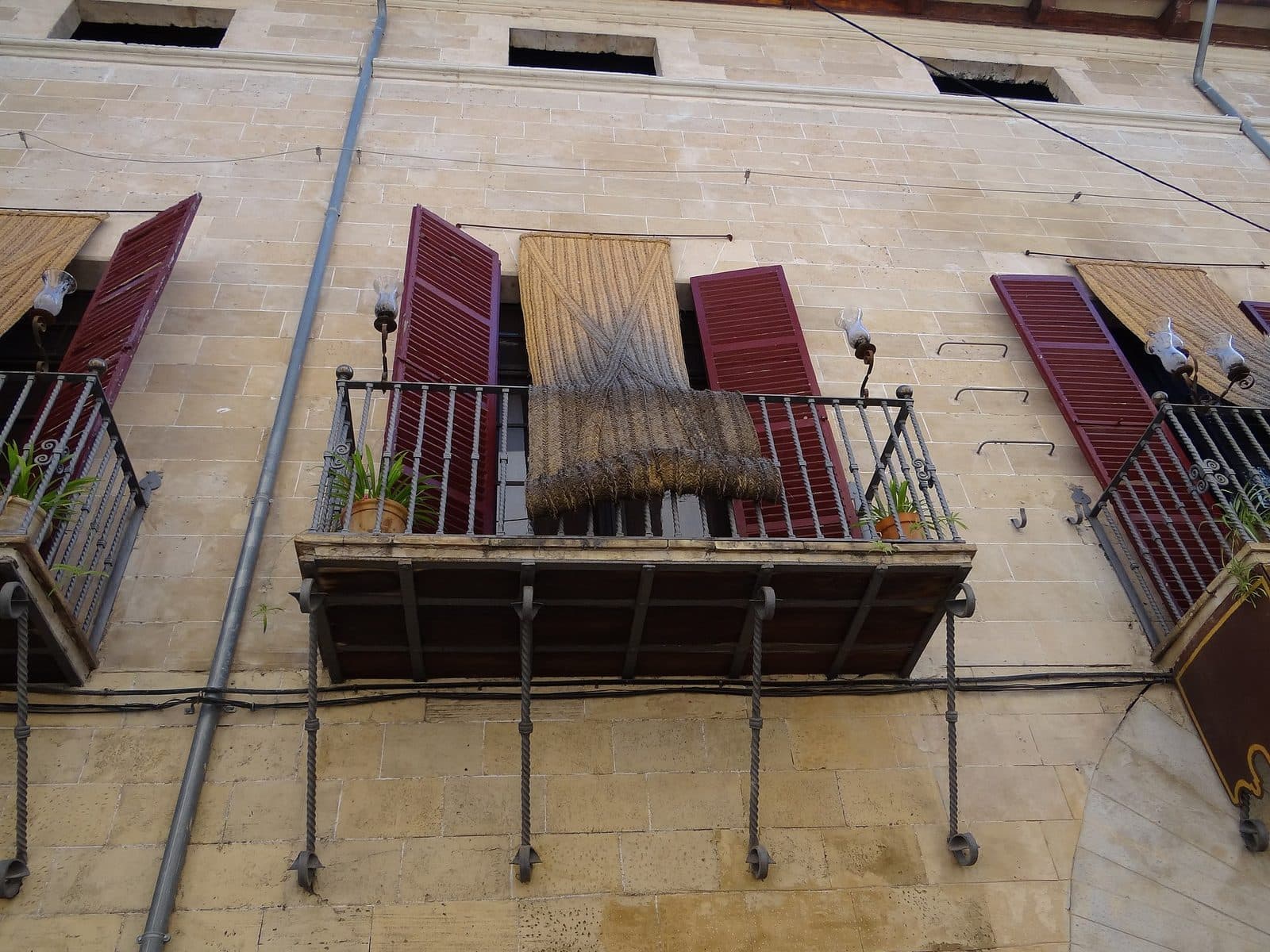
Can Marquès lies hidden in the old lanes of Palma’s La Lonja district. The name belongs to a Mallorcan city palace from the second half of the 18th century, once used as a private residence and now home to an exclusive hotel called Palacio Can Marqués. The building is therefore not a traditional museum with a fixed tour, but a historic house that remains in active use.
The palace reveals its greatest appeal inside. Beyond the lobby is a large covered patio with Gothic alabaster columns; above it opens a lofty space dominated by an unusual imperial staircase. A planted garden and a rooftop terrace overlooking the cathedral reveal two more sides of the house—the quiet, green retreat and the setting above Palma’s rooftops.
For architecture enthusiasts, Can Marquès clearly illustrates how prestigious living was organized in Palma’s Old Town: from the street through the entrance into the central courtyard, and from there up a grand staircase to the private areas. At the same time, its present use shows how a historic palace can be restored and combined with contemporary design, art, and hotel comforts.
Anyone wishing to visit the palace specifically for its architecture should clarify access in advance. The publicly accessible areas and opportunities to see the courtyard, garden, or rooftop terrace depend on current hotel operations. Even without an interior visit, Can Marquès can easily be included in a walk through La Lonja between the cathedral, the waterfront, and the old shopping streets.
History and Significance
Antonio Massa’s Palace
The history of the house begins in the second half of the 18th century. The palace was built as a private residence for Antonio Massa, an unusual figure described in surviving accounts as both a privateer captain and a priest.
Can Marquès was therefore neither a fortress nor a public administrative building. It was an urban residence for a wealthy family. The large courtyard and staircase still define the building today, although the rooms are now used differently.
Antonio Marqués and the House’s Name
The palace later passed to Antonio Marqués, who is described as Palma’s first mayor. He is also associated with the name by which the house has been known for centuries.
At Can Marquès, this connection endured despite changing residents and uses.
The Schindelhauer Family
The Schindelhauers, a European merchant family with close links to seafaring, are named as further owners. Over its long history, the palace is said to have belonged to only three prominent families.
The connection with maritime trade suits its location in La Lonja.
From Private Home to Palacio Can Marqués
After careful renovation, the former family palace became a hotel with thirteen individually designed suites. Historic architectural features remained part of the spatial experience, while contemporary design, art, and modern comforts were added. The transformation is clear, yet the house’s original concept—a sheltered, prestigious retreat in the middle of the city—remains recognizable.
Its present use also explains Can Marquès’s special status as a place of interest. The building continues to be occupied and operated, only now by changing guests rather than a single family. It therefore cannot be viewed like a fully museumized palace. Visitors encounter historic heritage in a house that still has a private, hospitable daily life.
What to See
The Covered Patio
The most impressive spatial experience awaits immediately beyond the lobby. A covered courtyard opens there, measuring 140 square meters and rising to a height of 11 meters. Although the patio is enclosed above, its origins as the central courtyard of a Mallorcan city palace remain clear. It forms the building’s spatial hub, connecting the entrance, staircase, and adjoining interior areas.
The Gothic alabaster columns are particularly striking. Their pale, subtly translucent-looking material contrasts with the palace’s more solid surfaces and gives the courtyard a solemn vertical emphasis. The columns are more than decoration: they guide the eye upward and underscore the room’s unusual height. Anyone with an opportunity to see the patio should not look straight ahead at the staircase alone, but first take in the relationship between the columns, ceiling, and openings onto the adjoining floors.
The narrow Old Town lane is left behind as a lofty, ordered space suddenly unfolds inside.
The Reversed Imperial Staircase
The so-called reversed imperial staircase rises from the patio. It is considered one of Can Marquès’s most distinctive architectural features and is described as a marble staircase. Its placement alone makes clear that it was not merely functional. It formed part of the house’s staging: arriving visitors could see how the route continued from the reception area into the upper living and reception rooms.
At Can Marquès, it is additionally characterized as reversed, giving the staircase its unmistakable appearance. Rather than viewing it only as a photo opportunity, it is worth considering its position within the overall floor plan. The patio and staircase form a single composition; the courtyard’s height gives the staircase the space it needs to make its full impact.
The choice of materials also contributes to this effect. The marble steps meet the courtyard’s alabaster columns, creating a deliberate interplay between load-bearing architecture, smooth surfaces, and ornamental detail. In a building now furnished with contemporary furniture and art, the staircase remains the clearest indication of the historic private residence’s prestigious aspirations.
The Courtyard Garden
Beyond the stone and mineral impressions of the patio lies a contrasting green space. The courtyard garden covers 200 square meters and is defined by large palms as well as cherry and fig trees. It is not an expansive palace park, but a sheltered garden within the dense Old Town. This seclusion is precisely what gives it its character.
The planting creates different accents. Palms give the garden height and a Mediterranean presence, while cherry and fig trees evoke a more domestic kitchen and house garden. Enclosed by the surrounding walls, it forms a retreat suited to the palace’s original role as a private residence.
Visitors should not automatically plan on using the garden as a freely accessible public courtyard. It belongs to the hotel and serves its guests. If a view is possible during a stay, a dining visit, or a prearranged tour, however, it vividly demonstrates how spacious a historic city palace can be behind its street façade.
The Rooftop Terrace
The perspective changes again on the rooftop terrace. Instead of the enclosed world of the courtyard and garden, the view opens across the rooftops toward Palma Cathedral. Its location near the sea is apparent in the breeze blowing from the coast into the Old Town. The tower and roof level thus forms the palace’s most expansive viewpoint.
The view of the cathedral also helps place Can Marquès geographically. The palace stands in the old harbor district of La Lonja, separated from the monumental center around La Seu only by a network of lanes. What seems hidden at street level becomes part of Palma’s skyline when seen from above.
Like the garden, the rooftop terrace is part of the hotel and not a freely accessible city viewpoint. It should therefore not be treated as a guaranteed stop on an Old Town walk. Those who do have access experience the strongest contrast with the inward-looking patio: stone, columns, and filtered light below; sky, wind, and the cathedral as a landmark above.
The Suites and Today’s Design
The palace contains thirteen suites, each individually designed. They are not historic showrooms and do not follow a uniform museum concept. Instead, preserved elements of the house meet contemporary design, artworks, and varied furnishing ideas. Can Marquès therefore does not present itself as a frozen reconstruction of an 18th-century household.
This distinction is important when considering the architecture. The historic core lies primarily in the sequence of spaces, the patio, the columns, the staircase, and the relationship between the house and garden. The furniture and decoration, by contrast, reflect its present use. Anyone expecting an aristocratic palace with original furnishings will encounter something different; those interested in the adaptive reuse of historic architecture will find it particularly revealing.
Visiting Can Marquès
A Palace Operating as a Hotel
A visit to Can Marquès begins with the right expectations. The palace is not a museum that opens its doors at fixed visiting times for a tour through every room. It contains a hotel, dining areas, and spaces for guests and events. Protecting privacy is therefore as much a part of the house as its historic architecture.
Anyone coming solely to see the building should ask in advance which areas are accessible. The lobby and patio may lie at the beginning of the interior sequence, but access there can also depend on hotel operations, events, or occupancy. The garden, rooftop terrace, and suites must never be assumed to be freely accessible stops. A brief look inside an accessible reception area and a more extensive tour are two different visitor experiences.
Visit Format and Duration
It is not practical to specify a fixed visit duration for Can Marquès. Anyone including only the exterior in an Old Town walk will need just a short stop. If access to the patio or dining areas has been arranged, it is worth observing the space carefully and following the sightline from the alabaster columns to the marble staircase. Hotel guests, by contrast, experience the garden, terraces, and interiors over a much longer period.
The best sequence moves conceptually from outside to inside: first the setting on the narrow Carrer dels Apuntadors, then the transition through the lobby, followed by the lofty patio and staircase. If additional areas are accessible, the garden and rooftop terrace provide deliberate contrasts. This order reflects the architecture of the house better than trying to check off individual photo opportunities as quickly as possible.
Timing and Crowds
General statements about quiet visiting times would be misleading for a hotel. Its operations are shaped not by museum visitor numbers, but by arrivals, meals, events, and the needs of hotel guests. Arranging access in advance is therefore more useful than choosing a supposedly quiet time of day.
Current opening hours for external visitors and a separate admission price have not been recorded. Before making a dedicated visit, you should therefore check whether access is possible and in what form. Anyone already walking through La Lonja can still appreciate Can Marquès as a historic part of the district without a confirmed interior visit and combine the stop with nearby streets, the waterfront, and the area around the cathedral.
Getting There and Parking
From the Airport to Palma
The route from Palma Airport follows the Ma-19 into the island’s capital. Palma is 11 road kilometers away, and the drive takes around 20 minutes. These figures expressly apply to the journey to Palma, not directly to the entrance of Can Marquès. The final stretch into the historic La Lonja district also involves city traffic, access through the center, and a walk.
Can Marquès is located on Carrer dels Apuntadors in the La Lonja district. The final meters lead through La Lonja’s network of lanes. For orientation, La Lonja or the area around the cathedral is more helpful than trying to spot the palace from farther away between the rows of buildings.
Parking on the Edge of the Old Town
Can Marquès lies within La Lonja’s network of lanes. It is more practical to leave your vehicle in a regular parking garage outside the narrowest Old Town streets and complete the remaining distance on foot. Palma has parking options both along larger streets and toward the waterfront and Passeig Mallorca. The most suitable parking garage depends on your wider route through the city.
Anyone planning to visit the cathedral, La Lonja, or the waterfront promenade as well as Can Marquès should choose the parking space as the starting point for the entire Old Town walk. This avoids searching for a second access route into the center.
By Bus and on Foot
Useful reference points for arriving by bus are the stops at Plaça de la Reina near the cathedral and at Parc de la Mar. From there, walk through the historic center toward La Lonja and Carrer dels Apuntadors. The stops are located in larger, more accessible urban spaces; the palace itself is only reached within the finer network of lanes.
The walk passes between the cathedral, the former harbor district, and the old residential and commercial buildings. For the return journey, it is advisable to head back toward one of the easily recognizable squares by the cathedral or Parc de la Mar rather than relying entirely on individual lane names.
Bus lines to Can Marquès at a glance
| Line | Route | Departures/day | First | Last |
|---|---|---|---|---|
| 35 | Aquàrium - Pl. Reina | Catedral | 8 | 07:10 | 13:50 |
| 3 | Pont d'Inca / Joan Carles I | 6 | 07:37 | 09:46 |
| 25 | s'Arenal - Pl. Reina | Catedral | 6 | 09:35 | 12:41 |
| 20 | Portopí - Son Espases | 4 | 07:17 | 07:31 |
From the official GTFS feeds (TIB/SFM), no real-time data. The figures cover all stops in the town; weekend and holiday services differ — check with the operator before travelling.
Getting there by bus
7-pl. de la Reina - Catedral · 0.2 km as the crow flies
- 35Aquàrium - Pl. Reina | Catedral · 06:21–22:41 · Daily
986-pl. de la Reina - Catedral · 0.2 km as the crow flies
- 35Aquàrium - Pl. Reina | Catedral · 06:21–22:41 · Daily
- CCCircular Centre Ciutat · 08:00–08:00 · Daily
453-pl. de la Reina - Catedral · 0.2 km as the crow flies
- 25s'Arenal - Pl. Reina | Catedral · 06:36–21:01 · Daily
1982-Parc de la Mar - Catedral · 0.3 km as the crow flies
- 25s'Arenal - Pl. Reina | Catedral · 06:36–21:01 · Daily
- 30Marivent-Palau de Congressos · 08:00–08:00 · Daily
985-pl. de Joan Carles I · 0.3 km as the crow flies
- CCCircular Centre Ciutat · 08:00–08:00 · Daily
1048-pl. de Joan Carles I · 0.3 km as the crow flies
- 25s'Arenal - Pl. Reina | Catedral · 06:36–21:01 · Daily
- 35Aquàrium - Pl. Reina | Catedral · 06:21–22:41 · Daily
53-pl. de Joan Carles I - Catedral · 0.3 km as the crow flies
- 4Ses Illetes - Pl. Columnes · 08:00–08:00 · Daily
- 7Son Gotleu - Son Serra - Sa Vileta / Son Vida · 08:00–08:00 · Daily
- 20Portopí - Son Espases · 06:06–22:40 · Daily
105-pl. de Joan Carles I - Catedral · 0.4 km as the crow flies
- 3Pont d'Inca / Joan Carles I · 08:00–08:00 · Daily
- 4Ses Illetes - Pl. Columnes · 08:00–08:00 · Daily
- 7Son Gotleu - Son Serra - Sa Vileta / Son Vida · 08:00–08:00 · Daily
- 20Portopí - Son Espases · 06:06–22:40 · Daily
104-Jaume III · 0.4 km as the crow flies
- 3Pont d'Inca / Joan Carles I · 08:00–08:00 · Daily
- 4Ses Illetes - Pl. Columnes · 08:00–08:00 · Daily
- 7Son Gotleu - Son Serra - Sa Vileta / Son Vida · 08:00–08:00 · Daily
- 20Portopí - Son Espases · 06:06–22:40 · Daily
- CCCircular Centre Ciutat · 08:00–08:00 · Daily
54-Jaume III · 0.4 km as the crow flies
- 4Ses Illetes - Pl. Columnes · 08:00–08:00 · Daily
- 7Son Gotleu - Son Serra - Sa Vileta / Son Vida · 08:00–08:00 · Daily
- 20Portopí - Son Espases · 06:06–22:40 · Daily
929-Parc de la Mar-Catedral · 0.4 km as the crow flies
- 30Marivent-Palau de Congressos · 08:00–08:00 · Daily
129-Argentina - sa Feixina · 0.4 km as the crow flies
- 1Portopí - Sindicat · 08:00–08:00 · Daily
- N1Portopí - Porta des Camp · 08:00–08:00 · Daily
Timetable data: official GTFS feeds (TIB/EMT), no real-time — check with the operator before travelling.
Nearby Sights
La Lonja
La Lonja forms the historic setting of Can Marquès. Today, narrow lanes wind between old city palaces, shops, restaurants, and smaller squares. In these surroundings, the palace does not appear as an isolated monument but as a particularly well-preserved example of a private residence.
A walk should therefore not end at the entrance. Its location on Carrer dels Apuntadors already helps visitors compare the restrained exterior of a city palace with the surprising spaciousness inside. La Lonja also makes it easy to include Can Marquès on a route to the waterfront without interrupting the day with lengthy transfers.
Cathedral and Parc de la Mar
Palma Cathedral can be seen directly from the rooftop terrace. On foot, it connects the La Lonja district with the elevated monumental center of the Old Town. Parc de la Mar below the cathedral creates a striking contrast with the narrow lanes around Can Marquès.
A coherent walking route can follow a simple progression: first the expansive views at Parc de la Mar, then the cathedral, and finally the smaller-scale streets of La Lonja. At the end of such a route, Can Marquès represents the private counterpart to Palma’s great public and religious buildings.
Waterfront and Shopping Streets
Both the waterfront and Palma’s central shopping streets are within walking distance of La Lonja. A palace visit can therefore be combined easily with a city walk that brings together architecture, the sea, and contemporary urban life. No additional vehicle transfer is necessary.
Even if Can Marquès can only be seen from outside, this combination still provides a fuller picture. The stop then becomes more than a search for a single attractive doorway.
The place it belongs to
Palma in the place guidePractical Visitor Information
Not a Traditional Palace Museum
Can Marquès should not be confused with a publicly operated museum. There is no documented tour that is available at all times through historic chambers, nor a collection explained room by room. The thirteen suites are part of the hotel; the garden and rooftop terrace also primarily serve hotel operations. Anyone specifically wishing to see the patio, staircase, or other interior areas should clarify the possibility before visiting.
This restriction does not diminish the architectural significance, but it does change the nature of the experience. Instead of a complete museum visit, visitors may have a brief, respectful glimpse inside a palace that remains in active use. Privacy, events, and dining operations take priority over spontaneous sightseeing.
Urban Climate
The patio and garden provide sheltered interior spaces, but they should not be planned as publicly accessible places to escape the sun or heat. The rooftop terrace is more exposed and shaped by the sea breeze, but it is likewise not part of a guaranteed visitor route.
Considerate Photography
The patio, alabaster columns, and staircase offer compelling photo opportunities. Because Can Marquès is a hotel, permission should be requested before taking interior photographs. Other guests, staff members, and private areas should not be photographed without consent. An open door also does not automatically mean that every room beyond it may be entered or photographed.
In any case, the most rewarding approach is to observe the architecture quietly: the height of the patio, the relationship between the columns and staircase, and the transition from the stone courtyard to the planted garden. These details reveal more about the house than taking as many quick photographs as possible.
Local insider tips
Look Up First in the Patio
If access to the patio is possible, do not immediately focus only on photographing the marble staircase. Looking up along the Gothic alabaster columns to the 11-meter-high ceiling is what reveals how generously proportioned the covered courtyard is.
Three Tree Species in the Garden
The courtyard garden is not defined by palms alone. Cherry and fig trees are also part of the planting. This detail makes the 200-square-meter retreat feel more like a private house garden than a formal hotel setting.
The Cathedral as a Sightline
The rooftop terrace looks toward Palma Cathedral. The terrace is not a public viewpoint, but anyone with access as part of the hotel experience can clearly see the short spatial connection between La Lonja and La Seu.
Approach from Parc de la Mar
A coherent approach begins at the expansive Parc de la Mar and leads through the cathedral area into the narrow lanes of La Lonja. The transition from the open urban space to Carrer dels Apuntadors makes the palace’s hidden location especially clear.
The Name Tells a Story
The name Can Marquès preserves the memory of Antonio Marqués, a former owner described as Palma’s first mayor.