
Casa natal de Santa Catalina Thomàs in Valldemossa
.jpg)
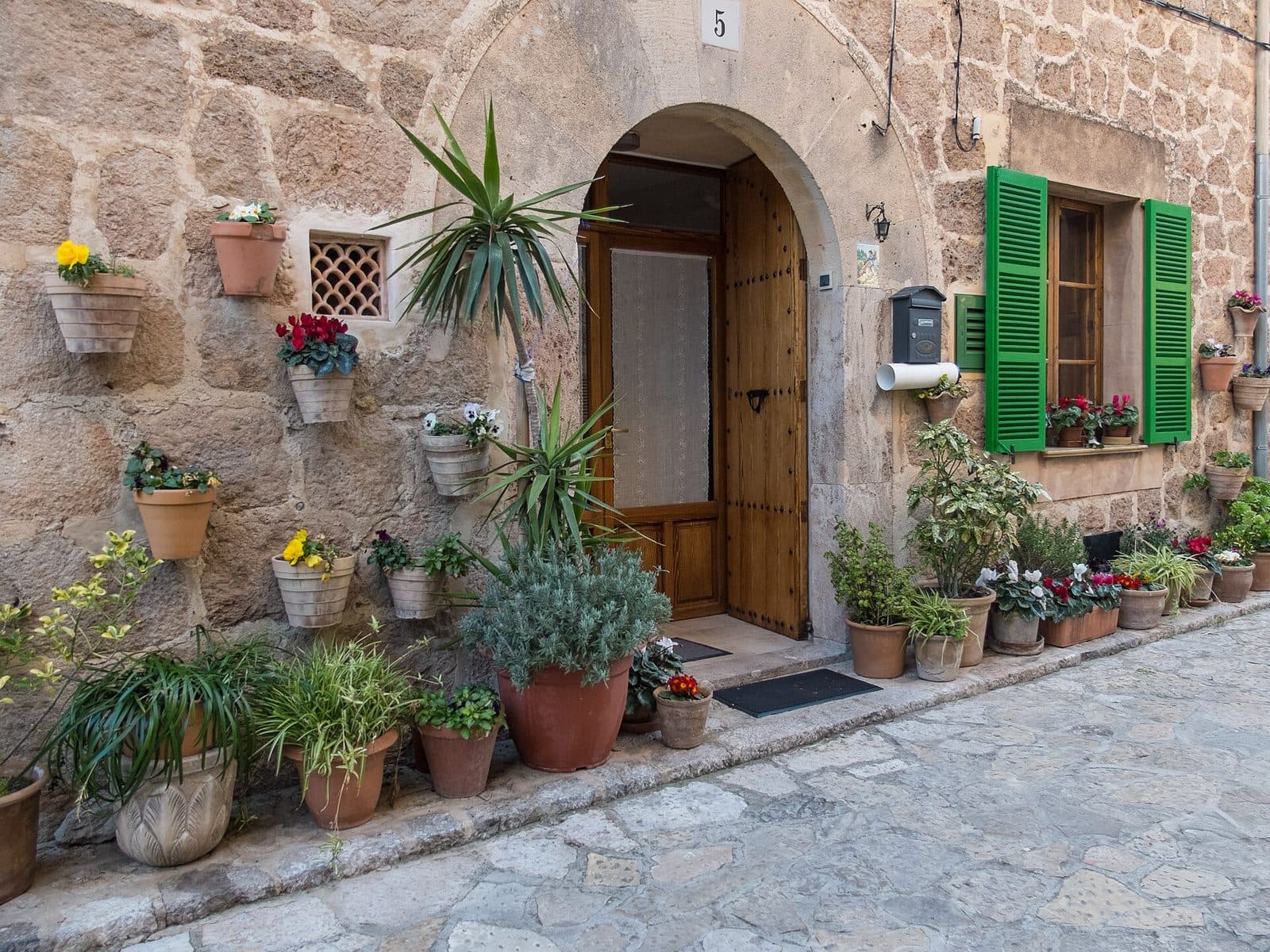
Amid the stone lanes of Valldemossa, the Casa natal de Santa Catalina Thomàs commemorates a woman whose veneration remains vibrant in Mallorca today. The small museum occupies the house regarded as the birthplace of Saint Catalina Thomàs, which was later transformed into a chapel and a personal place of remembrance. This alone makes it markedly different from a traditional museum with large halls and extensive collections.
Its appeal lies in its closeness to the person. While historical figures elsewhere are presented through paintings, documents, and lengthy information panels, here the focus is on her domestic origins. Simple rooms, religious images, older furnishings, and implements from everyday life in the past evoke the rural world from which Catalina Thomàs emerged. The atmosphere is therefore more like that of a quiet shrine than a tourist exhibition.
A visit is especially worthwhile for travelers who want to see more of Valldemossa than its familiar postcard scenes. The house offers access to the village's religious culture, while tile images at the entrances commemorate the saint. Even visitors unfamiliar with the veneration of saints encounter an essential part of local identity here.
The Casa natal is small and does not call for a rushed sightseeing routine. Instead, it makes a peaceful stop during a walk through the historic village center. Those who look closely will discover not only memories of Catalina Thomàs but also traces of simple domestic and agricultural life in Mallorca.
History and significance
The history of the house begins not with its use as a museum, but with a birth. Catalina Thomàs was born in Valldemossa in the 16th century and is still known there by the familiar name la Beateta, the little blessed one. Her later path into religious life took her to a convent at the age of 21. For Valldemossa's culture of remembrance, however, her place of origin remained crucial: not a prestigious church building, but a comparatively modest house became the visible starting point of her life story.
The birthplace
The building dates from the 16th century and represents a rustic form of traditional Mallorcan domestic architecture. It was originally neither a museum nor a purpose-built pilgrimage site. Its significance rests on the tradition that it was the birthplace of Catalina Thomàs. This biographical connection gradually transformed a place of ordinary daily life into a place of remembrance.
These origins shape its effect today. The rooms do not evoke a courtly or affluent way of life, but instead recall a domestic environment in which living, cooking, and agricultural work were closely intertwined. The displayed furniture, kitchen utensils, and tools therefore serve not merely as decoration, but vividly illustrate the social circumstances from which the future nun emerged.
La Beateta
Catalina Thomàs is one of Mallorca's most deeply venerated religious figures and is regarded as the patron saint of Valldemossa. The popular name la Beateta reveals that her memory was never confined to church ceremonies. Religious images at her birthplace also commemorate her.
The birthplace helps visitors understand this veneration. Here, the saint does not appear as a distant figure from an abstract history of the church, but as a daughter of the village. Visitors stand in a building associated with the earliest part of her life, while the lanes and stone façades of Valldemossa still define the surroundings. Biography and place are therefore almost impossible to separate.
From home to chapel
The birthplace was later converted into a chapel. At the same time, it now serves a museum function: it preserves the memory of Catalina Thomàs, presents a historically inspired domestic setting, and introduces the local traditions surrounding her veneration. The terms museum, birthplace, and chapel therefore each describe only one aspect of the site.
This multiple function explains its distinctive atmosphere. Some visitors come out of historical interest, while others deliberately seek a place for prayer or reflection. Between the two, the Casa natal stands as evidence of how a private home can become a publicly accessible place of remembrance. The transformation did not give the building a monumental presentation; its effect remains intimate, personal, and understated.
What to see
The entrance already shows that Catalina Thomàs is not merely the subject of a museum narrative in Valldemossa. Tile images at the entrances commemorate the saint. Looking at these depictions before entering helps visitors understand the house: it is both a historic site and a living place of devotion.
The tile images
The ceramic depictions are among the most striking details at the entrance. They mark the transition from the lane into a religiously defined interior and point to the close relationship between the saint and Valldemossa. Unlike modern signage, they tell their story not through factual text but through images.
It is therefore worth pausing rather than walking straight through the door. Visitors who notice the tiles before entering can more easily understand the connection between the birthplace and the memory of Catalina Thomàs. The house then no longer seems like an isolated museum, but also like a religious place of remembrance.
The domestic interior
Inside, the scale remains small. The Casa natal does not present spacious exhibition halls, but an intimate domestic setting. The confined rooms in particular convey that this site originated as a home. Visitors do not view the exhibits from a distance, but move closely past objects that illustrate an earlier way of life. Several rooms have been furnished with older furniture and objects intended to evoke the saint's era.
Kitchen utensils and work tools
Kitchen utensils and agricultural tools are among the most vivid objects. They shift attention away from an exclusively religious biography and toward the practical foundations of life at the time.
They offer an accessible point of entry for both children and adults: the shapes of many objects suggest their function, even if individual tools cannot immediately be named. Rather than looking only for especially valuable pieces, it is worth comparing them with modern household objects. The inconspicuous items in particular reveal much about physical labor and everyday life in the past.
The chapel
The area designed as a chapel forms the spiritual heart of the house. It is a reminder that the Casa natal does not merely provide retrospective information about Catalina Thomàs, but continues to be understood as a place of veneration. Religious depictions and devotional signs give the room a different character from the reconstructed domestic areas.
It is usually quiet here. The small size creates no ceremonial distance, but an almost private atmosphere. Visitor accounts describe the site as a peaceful shrine suitable for a moment of reflection. Consideration is therefore more important than producing the most complete photographic record possible: those who look slowly and give others space will experience the chapel's character most clearly.
The memorial objects
The presentation devoted to the saint combines biographical remembrance with local devotion. Its value lies less in a large number of spectacular individual objects than in the closeness between place, person, and veneration. The house itself is the central exhibit. Furniture, implements, and religious images acquire their significance from their location at the traditional birthplace.
Anyone expecting a large cultural history museum with long sequences of text, major media stations, and numerous departments is therefore applying the wrong standard. The Casa natal tells its story in a concentrated and spatially compact way. It shows how a simple home first became a shrine and later an accessible place of remembrance, without entirely losing the house's private character.
Visiting the Casa natal
A visit ideally begins in the lane itself. The tile images at the entrance, the building's modest size, and the transition into the quieter interior all belong together. Anyone looking only for a large museum sign may easily overlook the site's true character. Here, significance is announced not by monumentality, but by a sequence of small clues.
A peaceful tour
Inside, the route follows the scale of a former home. The closeness of the rooms and objects is the first thing visitors notice, after which attention shifts from the historic domestic setting to religious remembrance. There is little need for a prescribed sequence.
The Casa natal can be visited as a compact stop along the way. The amount of time spent here depends largely on whether visitors plan only a brief look inside the chapel or wish to examine the furniture, tools, tile images, and devotional depictions more closely. Those interested in religious imagery or Mallorcan social history will naturally stay longer than someone simply including the house in a village walk.
Time of day and crowds
Valldemossa attracts many day visitors. For a quieter experience, early morning and late afternoon are recommended, outside the busiest period. This is particularly worthwhile at this house because its effect depends on silence and physical intimacy. Even a small group can make the compact interior feel considerably fuller.
Those with a choice should therefore combine the Casa natal with a walk before or after the heaviest flow of visitors passes through the village center. Inside, avoid blocking narrow areas and remain quiet in the chapel. This ensures that the site remains accessible to people who come not only out of tourist interest, but deliberately seek a moment of devotion.
Admission and current access
Admission is free. However, this should not be taken to mean that the house is accessible at any time. As no reliable current opening hours are available and access to small religious sites can change, it is advisable to check shortly before a planned visit.
The Casa natal is not an attraction that fills an entire day by itself. Its value lies in its concentration: an authentic biographical site, a small chapel, and a vivid reminder of earlier life in Valldemossa. Combined with a walk through the village, it makes for a coherent visit without artificially turning the Casa natal into a major attraction.
Getting there and parking
From Palma, the route climbs toward Valldemossa and into the northwest of Mallorca. The stated distances and driving times apply as far as Valldemossa, not directly to the door of the Casa natal.
From Palma Airport
The road distance from Palma Airport to Valldemossa is 25 kilometers. The drive takes around 30 minutes, initially following the Ma-20 and then the Ma-1110. The character of the route changes noticeably as Valldemossa draws closer: the journey through the greater Palma area becomes an approach to a mountain village.
The Casa natal is located on Carrer Rectoria, a street within Valldemossa's historic fabric. For orientation, the name of the house and signs referring to Santa Catalina Thomàs are more helpful than expecting a large museum building.
From central Palma
The road distance from central Palma to Valldemossa is 19 kilometers. The drive via the Ma-1110 takes around 35 minutes. Although the route is shorter than from the airport, urban traffic can make the journey take longer. This distance also ends in Valldemossa.
By bus
For travel by public transport, the stops Valldemossa 1, Valldemossa 2, and Ermita de la Trinitat 2 are relevant. From there, the Casa natal can be found within the network of stone streets and small-scale buildings.
Bus lines to Casa natal de Santa Catalina Thomàs at a glance
| Line | Route | Departures/day | First | Last |
|---|---|---|---|---|
| 203 | Valldemossa / Deià | 152 | 06:47 | 22:34 |
From the official GTFS feeds (TIB/SFM), no real-time data. The figures cover all stops in the town; weekend and holiday services differ — check with the operator before travelling.
Getting there by bus
Valldemossa 1 (63002) · 0.4 km as the crow flies
- 203Valldemossa / Deià · Daily
Valldemossa 2 (63001) · 0.5 km as the crow flies
- 203Valldemossa / Deià · Daily
Ermita de la Trinitat 2 (63011) · 2.0 km as the crow flies
- 203Valldemossa / Deià · Daily
Ermita de la Trinitat 1 (63003) · 2.2 km as the crow flies
- 203Valldemossa / Deià · Daily
Timetable data: official GTFS feeds (TIB/EMT), no real-time — check with the operator before travelling.
Nearby sights
Valldemossa provides the essential setting for the birthplace. The village's stone-paved streets and stone façades make it clear why a small domestic shrine has more impact here than an isolated museum building would.
The historic village center
The best approach is to combine the visit with a walk through the old center of Valldemossa. The point is less to check off as many individual sights as possible than to notice the transitions between narrow streets, small squares, and house entrances.
The village in the Serra de Tramuntana is a highly popular destination. During quieter periods, however, its small-scale structure becomes more apparent. Those who do not leave immediately after seeing the interior of the Casa natal will more easily recognize how closely its history is connected with Valldemossa.
Plaça de Santa Catalina Thomàs
Nearby, the name Plaça de Santa Catalina Thomàs already commemorates the village's patron saint. The square extends the private scale of the birthplace into the public realm and makes it clear that Catalina Thomàs is venerated not only inside the chapel, but is also part of Valldemossa's collective memory.
This is a good place to put the visit into perspective: the house tells the story of her personal origins, while the square reflects her significance to the community. After seeing the tile images and devotional depictions, visitors will no longer perceive the square's name as merely incidental street signage.
Sant Bartomeu
Near the square stands the church of Sant Bartomeu, whose origins date back to the 13th century. It can be combined with the birthplace without a major detour. There is no need for an extensive second sightseeing program; the physical proximity alone shows how strongly church history has shaped the village center.
Combining the two places also helps put the Casa natal into context. While Sant Bartomeu represents the broader ecclesiastical setting, the birthplace remains deliberately personal. The contrast between the church and the small home is precisely what makes the distinctive character of the Casa natal understandable.
The place it belongs to
Valldemossa in the place guidePractical information for your visit
The Casa natal rewards attentiveness more than haste. Because it is small, the essential details are close together: the tiles at the entrance, the domestic scale, older everyday objects, and the transition into the chapel. Anyone who walks quickly through the rooms may have seen the building, but will have understood little of its connection with Valldemossa.
Respect in the chapel
The interior is not solely a tourist attraction, but is also regarded as a quiet place of devotion. Conversations should therefore be kept low, and people who wish to pray or pause in reflection need sufficient space. This is especially important when several visitors enter at the same time.
Visiting with children
For families, the house offers an accessible introduction through its objects. Kitchen utensils, old furniture, and agricultural tools are easier to explain than a purely chronological biography. Children can consider what an object may have been used for and what has replaced it today. This turns the short tour into an encounter with everyday life in the past.
Because of the compact rooms, consideration for others is important. Families who approach the visit as a brief tour of discovery and explain the chapel's character will nevertheless find it a manageable cultural stop.
Suitable footwear
When arriving by bus, the route from the bus stop is covered on foot. This short walk also helps place the birthplace within the village.
What visitors should not expect
The Casa natal is neither a large art collection nor a modern multimedia museum. A sprawling exhibition with numerous halls would also be the wrong standard. The focus is on the traditional birthplace, the small chapel, historical everyday objects, and the local veneration of Catalina Thomàs.
This very limitation makes the site credible. It does not attempt to tell the complete history of Mallorca, but to preserve the memory of one woman in her place of origin. Visitors who embrace this will experience a quiet, personal counterpoint to the better-known and more heavily visited sights of Valldemossa.