
Columna de Santuari near Cala Tuent
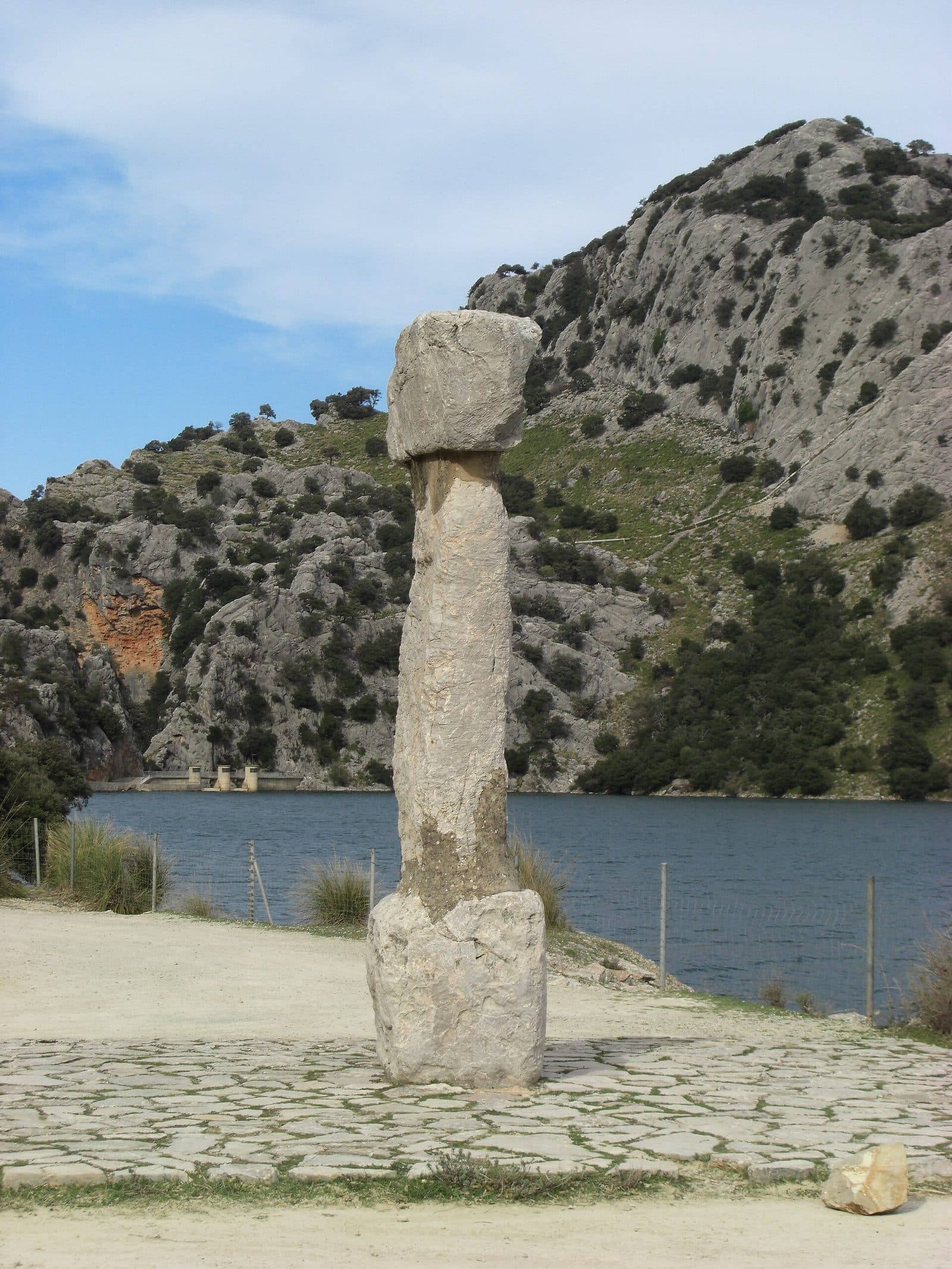

Columna de Santuari is located near Cala Tuent in Mallorca’s secluded northwest. As a historic attraction, it is a destination for travellers who want to look beyond the island’s famous pilgrimage sites and major monuments and discover smaller traces of history in the Serra de Tramuntana.
The setting itself shapes the visit: Cala Tuent lies on a rugged stretch of coast where the mountain slopes reach almost to the Mediterranean. Pine trees, scattered houses and the rocky cove define the surroundings, while Puig Major rises above the region. Columna de Santuari is therefore best visited as part of a deliberately planned excursion into this remote landscape.
The journey takes considerably longer than a glance at the island map might suggest. Winding mountain roads slow the pace, oncoming traffic requires attention, and the final stretch to Cala Tuent passes through a sparsely developed coastal landscape. Anyone looking for only a quick stop can easily underestimate the journey. Those who see the drive as part of the experience, however, will reach a corner of Mallorca that many day-trippers miss.
The destination is particularly suitable for history enthusiasts, independent travellers and anyone wishing to combine a brief cultural stop with Cala Tuent. Allow plenty of extra time for the excursion—not because there is an extensive sightseeing programme, but because of the long journey, limited parking at the cove and the appealing surroundings.
Getting there and parking
From central Palma
The road distance from central Palma to Cala Tuent is 69 kilometres, and the journey takes around 109 minutes. The recorded route follows the Ma-13 and then the Ma-2130 into the Serra de Tramuntana. From there, the journey continues towards the coast along the winding mountain road network. The stated travel time expressly applies only as far as Cala Tuent, not directly to Columna de Santuari.
The character of the drive changes noticeably on the final stage: wide roads give way to a narrower mountain route with numerous bends. From the Ma-10, the access road initially follows the direction of Sa Calobra; the turn-off for Cala Tuent is signposted. The road then continues downhill for several kilometres to the cove. It is worth driving slowly and anticipating the road ahead here, as meeting oncoming traffic on the narrow sections can require patience.
From Palma Airport
The road distance from Palma Airport to Cala Tuent is 72 kilometres. The journey takes around 105 minutes and follows the Ma-30, Ma-13 and Ma-2130. Here too, the measured route ends in Cala Tuent. Allow additional time to find the historic attraction and look for parking.
The comparable travel times from the airport and city centre show how strongly the mountain roads shape this excursion. The actual duration is determined not by the distance alone but by the slow passage through the Tramuntana. It is therefore inadvisable to plan a tightly timed onward journey to a fixed appointment.
Parking and public transport
Parking options in Cala Tuent are limited, especially on days when many beachgoers arrive by car. Parking directly at Columna de Santuari is not included in the recorded directions; it is therefore best to use the local parking options and leave your vehicle only in clearly permitted spaces.
No bus stop has been recorded in the immediate vicinity. General descriptions of Cala Tuent also indicate that the lack of bus connections is one reason for the cove’s relatively peaceful atmosphere. A car is therefore the most reliable way to make a dedicated visit to Columna de Santuari. If possible, drive during daylight, particularly because the winding return journey requires more concentration than an ordinary coastal road.
Nearby attractions
Cala Tuent
After the historic stop, Cala Tuent is a natural continuation of the excursion. The cove lies between the headlands of Morro des Forat and Penyal Foradat. Its shore consists of pebbles, stones and smaller sandy sections. Instead of a densely developed beachfront promenade, the steep slopes, pine forest and a few scattered houses dominate the setting.
The moderate number of visitors should not, however, be confused with complete seclusion. Because parking is limited, arriving on popular beach days can still require some patience. Anyone wishing to combine Columna de Santuari with time by the water should already have swimwear, drinking water and everything else needed for a self-sufficient excursion in the vehicle.
Care is important when swimming. Waves are generally moderate within the elongated cove, but cold and sometimes powerful currents can occur outside the marked swimming area. There is no lifeguard, and the rocky ground makes sturdy water shoes more comfortable than walking barefoot.
Tramuntana landscape
Cala Tuent lies below Puig Major, the highest mountain in the Serra de Tramuntana. This explains the unusually strong connection between coast and high mountains: the slopes rise almost immediately behind the water, while the Torrent de sa Coma flows into the cove. It is formed by mountain streams that do not carry water throughout the year.
This landscape is more than a backdrop for visiting Columna de Santuari. It helps explain why historic places in this part of Mallorca still feel relatively remote: settlements are far apart, roads follow the contours of the terrain, and even short sections on the map can mean a slow drive.
Sa Calobra
Sa Calobra can in principle be included in the same Tramuntana excursion, as both destinations are reached via the region’s winding road network. However, the connection should not be planned too tightly, as looking for parking, oncoming traffic and the slow mountain drive can significantly affect the day’s schedule. Anyone wishing to experience Cala Tuent and Columna de Santuari at a relaxed pace should treat Sa Calobra as a possible addition rather than a mandatory stop.
Local insider tips
Allow extra time for the mountain road
The stated travel times end in Cala Tuent. Allow additional time to look for parking and find Columna de Santuari, especially on days with heavier beach traffic.
Do not miss the turn-off
From the Ma-10, the route initially heads towards Sa Calobra. Only after that does the signposted access road to Cala Tuent branch off and wind downhill for several kilometres to the coast.
Pack sturdy shoes
Anyone combining the historic stop with Cala Tuent will be well prepared with sturdy shoes and water shoes: the shore consists mainly of pebbles and stones, with sand only in some places.
Swim within the marked area
Cold and sometimes powerful currents can occur outside the marked swimming area in Cala Tuent. As there is no lifeguard, caution is more important than swimming a long distance.
Do not combine too much
Cala Tuent and Sa Calobra lie within the same winding mountain road network. Anyone also wishing to drive to Sa Calobra should plan the detour only with plenty of extra time.