
Mirador des Creuer near Deià: Tramuntana Viewpoint
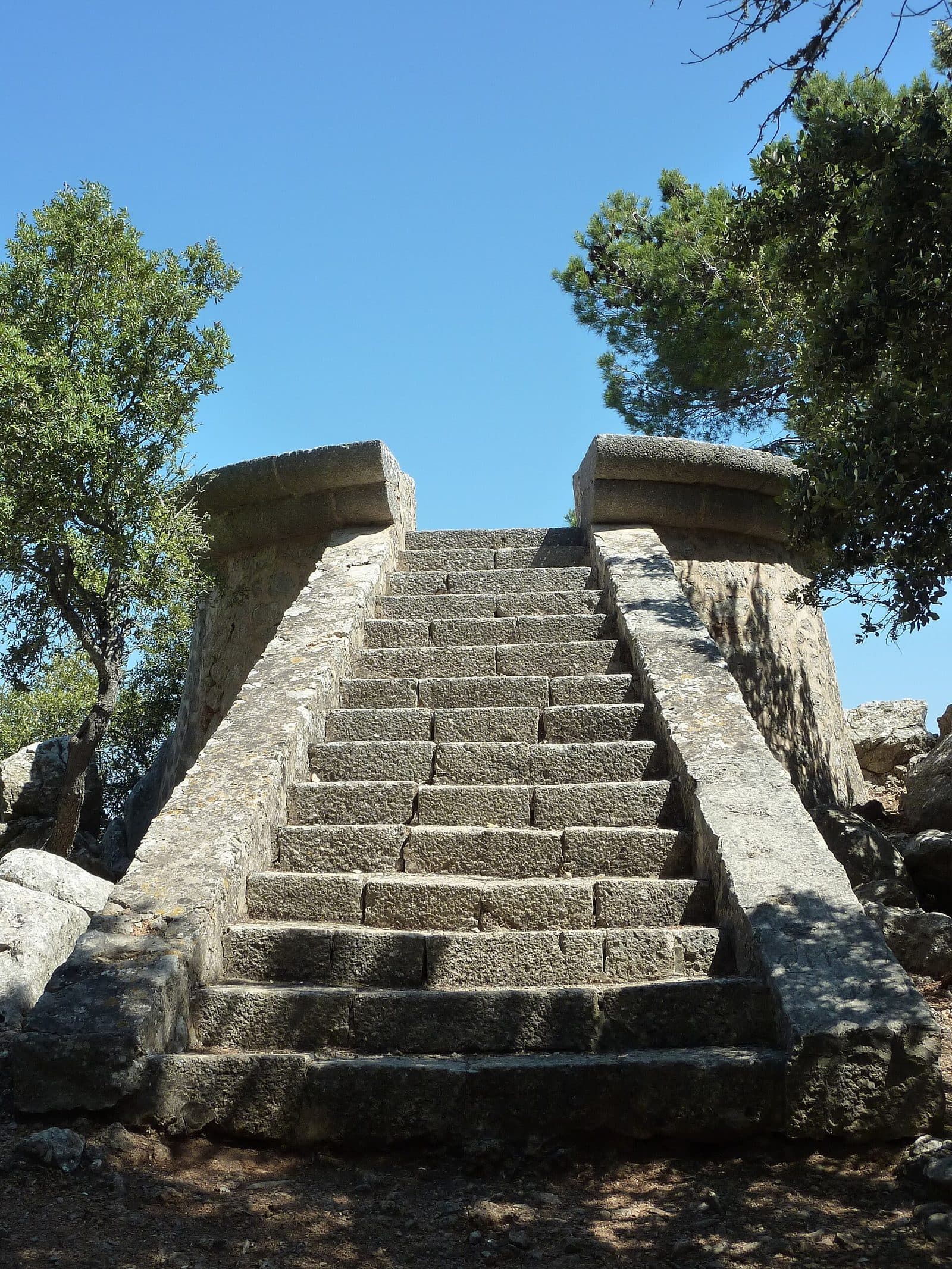
.jpg)
Between the mountains of the Serra de Tramuntana and Mallorca’s northwest coast lies Mirador des Creuer near Deià. The viewpoint is not a museum or a historic monument with halls, collections, or guided tours. Its focus is the landscape—and the opportunity to step out of the rhythm of the winding road for a moment during a journey through the northwest.
That is precisely where its appeal lies: Deià is shaped by mountains, Mediterranean vegetation, traditional natural-stone houses, and the nearby coast. A Mirador presents this landscape differently from a walk through the village, as the view shifts away from individual façades and lanes toward the broader setting. Anyone who enjoys photography, wants a peaceful break during the drive, or would like to experience the Tramuntana beyond the windshield will find a fitting reason to stop here.
It is important to confirm the exact identity of the location. Mirador des Creuer should not be confused with Mirador de sa Foradada, which also belongs to the municipality of Deià and specifically overlooks the perforated rock formation Sa Foradada. Similarly named viewpoints on the Formentor Peninsula, near Banyalbufar, or in other parts of Mallorca are also separate destinations. The navigation destination, map marker, and name should therefore be checked again before departure.
Mirador des Creuer fits best into a day that already includes Deià and the Ma-10. A viewpoint of this kind is not intended as an extensive standalone attraction. As a deliberate landscape stop between the village, the coast, and other Tramuntana destinations, however, it can provide exactly the kind of pause that reveals Deià’s distinctive setting.
What to See at Mirador des Creuer
Mirador des Creuer
Mirador des Creuer is primarily a place for taking in the view. There is no verified exhibition, no documented interior, and no route with a series of stops to complete. The visit centers on the viewpoint itself and on experiencing the surroundings. This distinguishes it from the museums, manor houses, and religious buildings that can also be visited in and around Deià.
This simplicity is helpful: at the Mirador, the quality of the visit is determined not by the number of attractions but by your attention to the terrain, light, and spatial depth. A quick glance provides a first impression; those who stay longer are more likely to recognize how closely Deià’s settled landscape is connected to the slopes of the Tramuntana. The viewpoint is therefore especially interesting for visitors who regard the landscape not merely as a backdrop but as the main subject of their excursion.
The Deià Landscape
Deià lies in the northwest of Mallorca in the Serra de Tramuntana. The village is characterized by traditional houses built from warm-toned stone, narrow streets and paths, and surroundings filled with olive trees and other Mediterranean vegetation. The settlement extends across undulating terrain; above the village stands the church of Sant Joan Baptista. This topography explains why viewpoints here are more than arbitrary photo stops: they help visitors understand the village, mountains, and coastal area as parts of the same cultural landscape.
The Serra de Tramuntana is recognized by UNESCO as a cultural landscape. This designation refers to more than an impressive mountain backdrop. Terraces, paths, and historic water-management systems show how people made the steep terrain habitable and suitable for agriculture over long periods. In Deià, traces of this development extend back to the Arab period. This does not automatically make the Mirador itself a historic structure, but the context adds another layer to its surroundings.
What the Name Does Not Refer To
Several viewpoints in Mallorca have similar-sounding names. Confusion with Mirador de sa Foradada is particularly easy because it is also associated with Deià. That viewpoint centers on the Sa Foradada peninsula and its distinctive opening in the rock. Information about its viewing platforms, dining options, parking, or sunset experience should not be applied to Mirador des Creuer.
Nor is this Mirador Es Colomer, which is also called Mirador de sa Creueta and lies on the Formentor Peninsula. Its cliffside location, paths, and monuments belong to a different place in northern Mallorca. Anyone comparing images in search engines or map apps should therefore look for the location Deià and the full name Mirador des Creuer. A spectacular photograph of another Mirador is not a reliable preview of this viewpoint.
A Landscape Stop Rather Than a Building Tour
Visitors should not expect a monumental structure on site. Mirador des Creuer is listed as a viewpoint, not as a castle, tower, chapel, or museum. The value of the visit therefore lies less in architectural details than in pausing the journey and changing perspective. Particularly on the winding Tramuntana route, a stop like this can make the landscape more tangible than visiting numerous individual attractions in quick succession.
For photographs, it is worth taking time to absorb the location first. Instead of immediately choosing only a tightly framed subject, a broader composition better conveys how the terrain and settled area interlock. Individual lines in the landscape, vegetation, or buildings can then be isolated. The directions in which views are actually unobstructed depend on the precise position on site; documented panoramas from other viewpoints near Deià should not be used as a template.
Visiting Mirador des Creuer
Arriving and Getting Oriented
A visit is best begun by briefly checking the map marker. Several well-known Miradors lie around Deià, and their similar-sounding names can easily lead to the wrong destination. Anyone specifically wishing to see Mirador des Creuer should therefore not rely solely on a general reference to a “viewpoint near Deià.” The full name is essential.
There is no prescribed route to follow at the destination. The sequence emerges naturally from the place: arrive, choose a safe position, take in the surroundings, and only then begin photographing. Because there is no verified exhibition or guided tour, there is also no fixed visit duration around which plans need to be organized. The Mirador is suitable both for a brief stop and a longer landscape break, provided conditions on site permit it.
Taking Time for the View
Anyone who treats the viewpoint merely as a checkpoint on a list will soon continue on their way. The visit becomes more interesting if Deià has already been explored on foot: after the village’s narrow streets and stone façades, the shift to a broader perspective is particularly striking. Alternatively, the Mirador can serve as an introduction, with an overview of the landscape followed by a walk through the village.
There is no reliable information about the time of day when Mirador des Creuer is busiest. The familiar warnings about large sunset crowds apply particularly to Mirador de sa Foradada and should not automatically be transferred here. A flexible break without an appointment immediately afterward is therefore advisable. This leaves sufficient leeway if the roads around Deià are busier or the desired vantage point is temporarily occupied.
Opening Hours and Admission
No reliable opening hours are recorded for Mirador des Creuer. An admission fee is not documented either. Before visiting, check current information in the map or navigation app being used, especially if the viewpoint is the specific destination rather than simply a stop during a drive through Deià. Details about other Miradors in the municipality do not establish either a particular level of accessibility or a price here.
The same applies to on-site facilities. A bar, restaurant, toilets, or visitor information have not been verified at Mirador des Creuer. Online descriptions of such amenities may refer to Sa Foradada or another viewpoint. Drinks and anything else needed for a short break should therefore be planned before arrival.
Weather and Visibility
At a viewpoint, visibility influences the experience more strongly than a minute-by-minute itinerary. Clouds, haze, and changing light can alter the long-distance effect of the landscape. Poor visibility does not necessarily make the stop worthless, but it brings nearby forms, vegetation, and settlement patterns more strongly into focus. Anyone traveling specifically for expansive panoramas should consider the cloud cover over the Tramuntana as well as the general weather forecast.
Wind and intense sunshine should generally be considered at open locations, although no specific characteristics of this Mirador should be inferred from that. On site, it is essential to use only clearly accessible areas and to respect barriers and property boundaries. No photograph is worth stepping onto unsecured terrain.
Directions and Parking
From Palma Airport
From Palma Airport, the documented route initially follows the Ma-20, then the Ma-1110, and finally the Ma-10 to Deià. The road distance to Deià is 32 kilometers, and the drive takes around 48 minutes. These figures explicitly end in the village and not at Mirador des Creuer. For the final section, use the viewpoint’s specific navigation destination.
The Ma-10 is the principal road through this section of the Serra de Tramuntana. Its bends and undulating topography require more attention than an ordinary urban approach. The calculated driving time should therefore not be understood as a promise of reaching the Mirador at an exactly specified time. Traffic in the village and navigation along the final section may delay arrival.
From Central Palma
From central Palma, the route follows the Ma-1110 and the Ma-10. The road distance to Deià is 27 kilometers, and the drive takes around 52 minutes. Although the route is shorter than from the airport, the stated driving time is slightly longer. Here too, the distance and time refer exclusively to Deià; the onward drive or walk to Mirador des Creuer is not included.
Anyone visiting Deià as part of a Tramuntana road trip should not wait until they are driving to choose the viewpoint based on a similar-sounding name. Mirador de sa Foradada also lies within the municipality and is described far more frequently in guidebooks. A search only for “Mirador Deià” may therefore lead to another destination. Before departure, the saved map marker should display the full name Mirador des Creuer.
Parking at the Viewpoint
There is no reliable documentation of the parking situation at Mirador des Creuer. Visitors should therefore not assume that there is a dedicated car park or a particular number of available spaces. Information about paid parking and directly accessible viewing platforms belongs to Mirador de sa Foradada and does not serve as evidence for this location.
In the Tramuntana, it is particularly important to use only clearly designated or legally permitted parking areas. Narrow roads, bends, and property entrances must not be blocked for a spontaneous photo stop. If there is no safe place to leave the vehicle at the map marker, it is better to reassess the situation than to stop at the roadside. The viewpoint does not justify a risky parking maneuver.
Taking the Bus to Deià
Bus stops in the Deià area include Ca Madò Pilla and Son Gallard. Which one is suitable for the specific starting point and the final section to the Mirador depends on the current route network and the chosen walking route. Check the timetable, direction of travel, and return journey before setting out.
The bus stop information does not replace a confirmed route description from the bus to the viewpoint. Because the condition, gradient, and safety features of the final section are not documented, it should not be assessed solely from what appears to be a short route on a map. In mountainous terrain, a path that looks compact on a map may be considerably more demanding than a route within the village.
Bus lines to Mirador des Creuer at a glance
| Line | Route | Departures/day | First | Last |
|---|---|---|---|---|
| 203 | Valldemossa / Deià | 174 | 06:41 | 22:38 |
From the official GTFS feeds (TIB/SFM), no real-time data. The figures cover all stops in the town; weekend and holiday services differ — check with the operator before travelling.
Getting there by bus
Ca Madò Pilla 1 (63005) · 0.5 km as the crow flies
- 203Valldemossa / Deià · Daily
Ca Madò Pilla 2 (63004) · 0.6 km as the crow flies
- 203Valldemossa / Deià · Daily
Son Gallard 1 (18008) · 0.6 km as the crow flies
- 203Valldemossa / Deià · Daily
Son Gallard 2 (18007) · 0.7 km as the crow flies
- 203Valldemossa / Deià · Daily
Sa Foradada (18009) · 1.8 km as the crow flies
- 203Valldemossa / Deià · Daily
Ermita de la Trinitat 1 (63003) · 1.9 km as the crow flies
- 203Valldemossa / Deià · Daily
Timetable data: official GTFS feeds (TIB/EMT), no real-time — check with the operator before travelling.
Things to Do Nearby
Deià
Deià is worth more than a single stop at a viewpoint. The village lies between the mountains of the Serra de Tramuntana and Mallorca’s northwest coast. Its honey-colored natural-stone houses, narrow streets, and buildings spread across the slope give it a cohesive appearance. A walk reveals what a Mirador can only place in context from a distance: walls, steps, vegetation, and paths respond directly to the steep terrain.
The village’s history reaches back to the Arab period. Historic irrigation systems and the form of the cultural landscape are reminders that the Tramuntana is not simply untamed nature but has been cultivated and inhabited over a long period. This human work on the slopes is an important reason why the mountain landscape is understood as cultural heritage.
Sant Joan Baptista
Above the village stands the church of Sant Joan Baptista. Its elevated position makes it a prominent landmark in the townscape. The route uphill leads through Deià’s steep, narrow streets and provides a different visiting experience from Mirador des Creuer: rather than being concentrated at a single stop, the view here unfolds during the climb through the village.
The church and viewpoint should nevertheless not be merged into a single attraction. Mirador des Creuer is a destination in its own right. The church is a worthwhile addition because it provides another perspective on the relationship between the settlement and the terrain.
Literary Deià
Deià has attracted artists and writers for many years. The village is particularly closely associated with the British writer Robert Graves, whose former home is now a museum commemorating his life and work. Deià’s cultural reputation is therefore not merely a modern tourism label but is linked to specific biographies and places of work.
After a scenic stop at the Mirador, a visit to the Graves house shifts the focus from the panorama to cultural history. Both can easily be combined on the same excursion without assigning the viewpoint a historical significance that has not been established.
Cala Deià
Below the village lies Cala Deià, a small cove with pebbles and rocks. It presents the coastal landscape from a very different height and proximity than a viewpoint. Those who combine the Mirador, village, and cove experience the broader landscape, the stone settlement on the slope, and finally the immediate transition to the sea in sequence.
The road to the cove and the conditions there should be planned as a separate part of the excursion. Cala Deià is not an amenity directly associated with the Mirador and cannot be equated with taking a few steps from the viewing area. Because of the pronounced differences in elevation around Deià, it makes sense to treat visits to the village and coast as separate stages in the schedule.
Son Marroig and Sa Foradada
Between Valldemossa and Deià lies the historic Son Marroig estate. It is associated with Archduke Ludwig Salvator of Austria and combines architecture, cultural history, and views of the coastal landscape. The well-known Mirador de sa Foradada is located in the same area, with a panorama focused on the peninsula and its characteristic opening in the rock.
These destinations fit thematically into an excursion centered on views and landscapes but must not be confused with Mirador des Creuer. Anyone visiting several Miradors should consciously keep their names separate. This turns the day from a series of seemingly identical photo stops into a comparison of different perspectives on Deià and its coast.
The place it belongs to
Deià in the place guidePractical Tips for Visiting
Arrive with Realistic Expectations
Mirador des Creuer is listed as a viewpoint. An exhibition, historic interior, dining facilities, or tourist infrastructure are not documented. Visitors should therefore expect a landscape stop rather than a conventional attraction. Anyone planning for refreshments, toilets, or a longer stay with seating should address those needs in Deià or at a destination explicitly equipped for them.
Photographs of other Miradors are not a reliable preview either. Searches for viewpoints in Deià particularly often display images of Sa Foradada. Its round platforms, dining options, and view of the perforated rock do not automatically belong to Mirador des Creuer. Carefully checking the exact name is the most important practical tip here.
Clothing and Equipment
Basic equipment is sufficient for a brief viewpoint stop, but shoes with reliable grip are generally advisable in Mallorca away from smooth urban surfaces. There is no dependable documentation of the specific ground conditions at Mirador des Creuer. Visitors should therefore assess on site whether the chosen access route is suitable for their footwear and personal sure-footedness.
Sun and wind protection should be carried when spending time in the Tramuntana, particularly if several viewpoints or a village walk are planned. Because shade, seating, and refreshments at the Mirador have not been confirmed, bringing water and adapting the visit to the actual conditions is advisable.
Put Safety Before the Photograph
A Mirador can tempt visitors to take one more step for a better composition. Paved, clearly accessible areas and any barriers remain the decisive limits. Walls, road edges, and private property are not improvised photo platforms. This is particularly important in a mountain region where both the terrain and traffic demand attention.
Anyone visiting with children or with limited mobility should assess the access conditions individually. There is no confirmed accessible design at Mirador des Creuer. Information about an accessible car park refers to Mirador de sa Foradada and should not be transferred here. When in doubt, a viewpoint with explicitly documented accessibility is the more dependable choice.