
Son Real: Mallorca's Seaside Necropolis

Son Real begins not at a museum door, but in a landscape. Paths lead through pines, scrubland, and dunes to the coast, where low stone structures stand directly beside the sea. The prehistoric necropolis is one of Mallorca's most unusual archaeological sites: an above-ground burial ground whose forms can still be clearly identified in the terrain today.
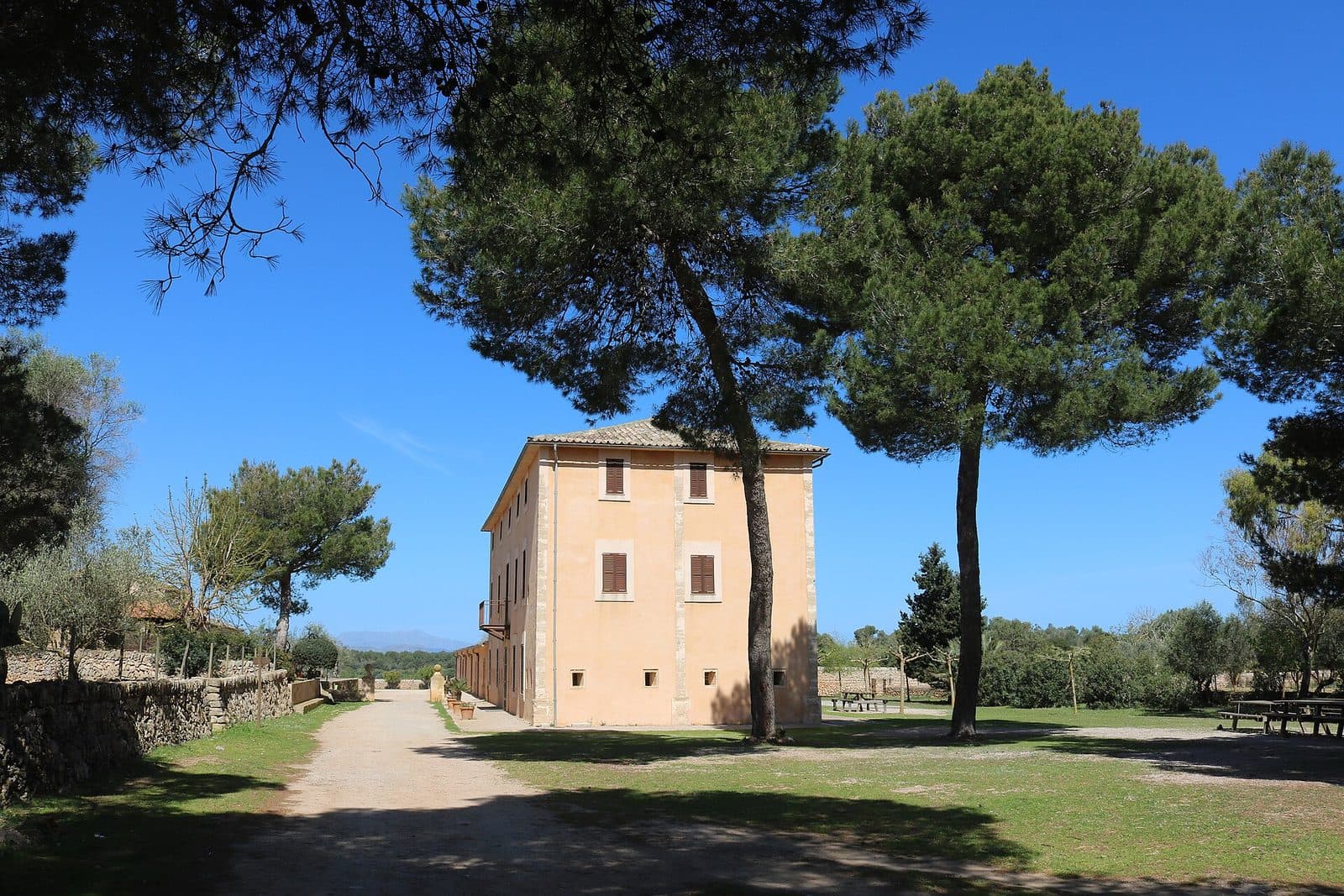
The public Finca Son Real is also part of the experience. Its historic estate preserves a manor house, courtyard, chapel, defensive structures, workshops, stables, and storerooms. An interpretation center provides context about rural life in the past, while marked trails outside lead to archaeological sites and through different natural environments. Son Real is therefore not a single ruin exhausted after a few glances, but an extensive cultural and scenic destination.
The contrast between the silent city of the dead and the open northeast coast is particularly striking. The tombs are not behind glass. Their walls, ground plans, and openings lie among rock, sand, and low vegetation, with the sea moving beyond them. This setting in particular makes it clear why Son Real is often described as an open-air museum.
A visit is worthwhile for those interested in archaeology and history, as well as for hikers and families seeking an excursion without a staged attraction. Even visitors who only want to see the necropolis must allow for a walk. Those who consider the estate, exhibition, landscape, and coast together, however, discover a place where several millennia of Mallorcan history overlap.
History and Significance
The oldest traces of the necropolis date back approximately to the 7th century BC. The burial ground continued to be used over a long period, from the Iron Age into the Roman era. Son Real was therefore not the cemetery of a single generation, but an enduring place of remembrance where burial customs and social changes over the centuries can be traced.
The Son Real Necropolis
An above-ground burial ground was established on the Punta des Fenicis headland and holds a unique position within Mallorca. Unlike tombs cut into the rock, small funerary monuments built from stone remained visible here. More than a hundred burial sites have been uncovered; archaeologists found the remains of more than three hundred people in them. The necropolis extends across approximately 800 square meters and is one of the most important prehistoric cemeteries in the Balearic Islands.
The grave goods turn the tombs into historical sources. Objects made from metal, bone, glass, and ceramics were found, along with jewelry, weapons, shells, and animal bones. Some of the dead were placed in a contracted position. Such findings offer insights into rituals, social concepts, and material culture, even though not every meaning of the individual forms can be deciphered with certainty today. Numerous finds are kept not at the excavation site, but at the Museu Monogràfic de Pol·lèntia in Alcúdia.
Excavations between 1957 and 1970 made a large part of the site scientifically accessible. Although the popular nickname Cemetery of the Phoenicians and the name Punta des Fenicis belong to the site's traditional lore, the visible tombs are attributed to Mallorca's Talayotic and post-Talayotic cultures. The significance of Son Real therefore lies precisely in its island context: the necropolis tells the story of the communities that shaped Mallorca long before its incorporation into the Roman world.
Es Figueral de Son Real
The city of the dead does not stand in isolation within a landscape devoid of history. The estate also contains the remains of the Es Figueral de Son Real settlement. It was established during the Bronze Age; its known chronology begins around 1100 BC and extends to the consolidation of the Talayotic culture around 850 BC. The settlement area is older than the earliest traces of the necropolis and demonstrates that the area was used long before the burial ground was created.
Son Real thus preserves not only burials, but also traces of a cultural landscape shaped over millennia. Old sand quarries recall human activity, while agricultural buildings, fields, and livestock farming make the later use of the land visible. The sites explain one another: dwellings, tombs, working land, and paths together provide a far more complete picture than any single monument.
The Estate
The buildings of the Possessió date back to the Middle Ages and were altered in later centuries. Such a finca was simultaneously a residence, an agricultural enterprise, and a social world. The manor house, servants' quarters, stables, storerooms, and workshops sustained the daily life of a largely self-sufficient community. Sources report that at times more than a hundred people lived and worked on the estate.
With the social and economic upheavals of the 20th century, this traditional order lost its former foundations. The Balearic government acquired the 395-hectare property to preserve its archaeological, ethnological, and natural value. The historic agricultural operation did not become a sealed-off heritage precinct, but a landscape where research, conservation, and visitor trails coexist.
What to See
Son Real is most impressive where the low walls of the tombs appear against the sea. From a distance, some might look like random piles of stones. Only up close do entrances, chambers, and carefully laid outlines become visible. The site demands a slow, attentive gaze: it is not size, decoration, or monumental height that impresses, but the variety of small architectural forms and their extraordinary setting.
The Funerary Monuments
The tombs have circular, rectangular, and horseshoe-shaped ground plans. Some resemble architectural forms of the Talayotic culture on a reduced scale, while others are compared to ships because of their elongated outlines. The structures stand close together, visually overlap, and form a small stone city with narrow spaces between them.
Open chambers reveal how compactly the monuments were built. The low walls are made from stone; some tombs appear almost complete, while only the ground plan survives of others. These differences in particular help visitors recognize distinct architectural ideas. Anyone who walks around the field only once can easily miss how the forms change from tomb to tomb. At the same time, the immediate proximity to the water is part of the site's archaeological distinction: views across the coast open up between the monuments. Son Real is therefore not a neutral exhibition space, as the necropolis remains embedded in the coastal landscape that defines its location.
Punta des Fenicis and Illa des Porros
The necropolis lies on Punta des Fenicis, a flat headland on the northeast coast. The spatial organization of the burial ground is particularly easy to read there: dunes and low vegetation border it on the landward side, while toward the sea the terrain ends abruptly at rock and water. The burial chambers thus stand not just anywhere on the extensive estate, but at a striking transition. This landscape setting is an essential part of the visitor experience.
The Possessió
The estate reveals a much younger but equally defining layer of Son Real. The complex groups buildings with different functions around a courtyard. The ensemble includes manor houses, a chapel, defensive tower, workshops, stables, and storerooms. Thick walls and the enclosed arrangement convey that this was not merely a place to live, but also one where people worked, stored goods, provided protection, and organized daily operations.
The courtyard is the best starting point for understanding the finca as a historic working estate. The individual rooms were not intended as decorative displays, but served daily life. Agricultural equipment, livestock keeping, and working buildings draw attention to the people whose labor sustained the property over a long period. Son Real therefore tells not only of owners and buildings, but also of farmers, shepherds, charcoal burners, hunters, and day laborers.
Ses Cases Noves
Ses Cases Noves houses the interpretation center, which opened in 2008. Its ethnological focus contrasts Mallorca's traditional rural world with modern daily life. Using films and objects, the museum in the main house explains life and work on the estate. A farmhouse kitchen from the early 20th century makes this history more tangible than a mere sequence of archaeological data.
The center provides useful preparation for the route through the finca. Terms such as Possessió, storeroom, or workshop gain a specific context there, and the archaeological sites are also easier to understand afterward. However, not all significant original finds from the tombs are kept on site; visitors should therefore not arrive expecting a large treasure chamber.
The Natural and Cultural Landscape
Four marked routes open up parts of the property to walkers and cyclists. Pine and holm oak woods, garrigue, juniper stands, open areas, and dunes alternate along the way. Old sand quarries, military coastal structures, and agricultural traces show that even apparently untouched sections were used over long periods.
The route to the necropolis is therefore more than a necessary connection. As the coast draws nearer, the trees become sparser and the horizon opens. First comes the finca's historic working landscape, then the dunes, and finally the stone burial ground. This sequence makes it clear why significantly more time should be allowed for Son Real than for an ordinary museum visit.
Visiting Son Real
A good tour begins at the estate. Visitors can explore the buildings of the Possessió and learn about the historical context at the interpretation center before following a marked route toward the coast. Those who set out for the necropolis immediately will reach the best-known part more quickly, but miss the context connecting the city of the dead with the rest of the finca.
From the Estate to the Necropolis
A commonly followed circular walk through the estate is given as approximately six kilometers and around two hours. Another documented route measures 6,2 kilometers and takes about two and a half hours. Both figures demonstrate that Son Real is not a quick roadside stop. Breaks at the estate, in the exhibition, at the necropolis, or on the coast will extend the visit accordingly.
The paths are considered mostly easy and have little variation in elevation. Nevertheless, the surface is not comfortably paved throughout. Sandy, stony, and natural sections are part of the route's character. On some walking routes, fences are crossed using designated stiles; visitors should therefore not leave the marked route.
Time of Day and Season
Spring and autumn are particularly suitable for the longer circular walk because nature watching, archaeological sightseeing, and hiking can then be combined comfortably. An early start is advisable in summer. There is shade along the forest sections, but the dunes, coast, and necropolis are exposed to the sun. Even the wind by the sea is no substitute for sun protection.
Starting early also leaves more time for the estate and exhibition. Those who begin later should consider not only the outward route but also the return journey through the extensive grounds. Current access times and any regulations for the buildings should be checked before visiting.
On Foot or by Bicycle
The finca can be explored on foot or by bicycle along designated routes. Walking makes it easier to observe the tomb forms, quarries, and changes in vegetation; a bicycle increases the portion of the 395-hectare property that can be reached. Regardless of the chosen mode of travel, the necropolis itself is a sensitive archaeological site.
For families, the combination of animals at the estate, easy paths, museum, and coast provides plenty of variety. Small children nevertheless require supervision, especially among the open burial chambers and on rocky ground. The appeal lies not in playground equipment or a staged children's attraction, but in discovering a genuine cultural landscape together.
Getting There and Parking
The route details provided for the page lead to Urbanització Montfarrutx, not directly to the estate or the necropolis. From Palma Airport, the route via Ma-30, Ma-13, and Ma-3400 covers a total of 64 road kilometers; the drive takes around 64 minutes. From central Palma, the route via Ma-13, Ma-3400, and Ma-3440 covers a total of 61 road kilometers and takes around 69 minutes.
The Final Section to the Finca
The stated distances and driving times end in Urbanització Montfarrutx, not at the estate or necropolis. The public finca lies on the Ma-12 between Son Serra de Marina and Can Picafort; the access road is signposted. A dedicated parking area at the finca is described as the starting point for the estate, interpretation center, and walking routes. From there, visitors continue on foot or by bicycle along permitted routes through the property to the coast.
Arriving Without a Car
No bus stop is recorded in the immediate vicinity of the attraction. A bus journey therefore does not automatically eliminate the walk to the estate or necropolis. Visitors arriving without a car can also reach Son Real along the coast from Can Picafort or Son Bauló, or from the direction of Son Serra de Marina. These options are independent hikes, however, and should be planned with sufficient time, water, and reliable navigation.
Nearby Places
Urbanització Montfarrutx lies on the northeast coast and is part of the settled area near Colònia de Sant Pere. From here, the Ma-12 runs west toward Son Serra de Marina and onward to Finca Son Real. The surrounding area is much less densely developed than the large holiday resorts of the Bay of Alcúdia and is therefore a suitable starting point for coastal walks and scenic excursions.
Son Serra de Marina
Son Serra de Marina is the nearest coastal town east of the estate. From there, a visit can be combined with a walk beside the sea. This option leads from the town's coastline into the natural section of Son Real and approaches the necropolis from the water side. It is particularly suitable when the focus is on coastal hiking and the burial site; access via the finca is more practical for the estate and interpretation center.
Can Picafort and Son Bauló
Son Bauló and Can Picafort lie west of the finca. Coastal paths also run from this side toward the necropolis. The contrast is striking: beyond the developed beaches and holiday complexes begins an area of dunes, rocks, low vegetation, and archaeological traces. Such a route extends the excursion considerably, but illustrates particularly clearly the transition from holiday resort to protected cultural landscape.
The place it belongs to
Urbanització Montfarrutx in the place guidePractical Visitor Information
Sturdy shoes are a more sensible choice than simple beach sandals. The route combines forest paths, sandy stretches, stony ground, and the rocky area of the necropolis. After rain or in strong winds, walking may feel different from following a paved promenade. Water and a small snack should be carried on the longer circular route.
Sun, Shade, and Coastal Wind
Shadier sections can be found beneath pines and holm oaks, but there is very little shade among the dunes and on Punta des Fenicis. Sun protection therefore remains important even when the starting point at the estate feels pleasantly sheltered. Wind can develop on the coast, and the open sea becomes considerably rougher in windy conditions. The archaeological excursion should not depend on having a safe place to swim.
Visiting with Children
The easy, mostly level routes and the variety of livestock, estate buildings, forest, dunes, and burial sites make Son Real interesting for families. The route to the sea is longer than an ordinary museum visit, however. Small children should only take a route that remains realistic for the return journey as well.
Respecting the Site and Landscape
The low tomb walls appear robust, but they are part of a sensitive excavation site. Son Real is best experienced from the marked paths, and nothing is lost by viewing the traces of the past from a respectful distance.
What Son Real Is Not
Visitors should expect neither a monumental temple nor a fully reconstructed village. Its impact comes from low wall remains, identifiable tomb forms, a historic working estate, and an expansive landscape. Nor is it an equipped theme park or a comfortable beach day. Those who bring time for walking, close observation, and an interest in the wider context will instead gain an unusually direct connection to Mallorca's prehistory.
Local insider tips
Walk from the Estate to the Sea
The route from the estate to the necropolis presents Son Real in the right sequence: first the Possessió and working landscape, then forest and dunes, and finally the tombs on Punta des Fenicis. This makes the archaeological site easier to understand than on a coast-only visit.
Compare the Tomb Shapes
Do not look only at the largest or most complete tomb. Circular, rectangular, and horseshoe-shaped ground plans lie close together. A slow circuit reveals that the necropolis consists of different tomb types rather than uniform stone chambers.
Set Out for Punta Early
An early start leaves more time for the estate, exhibition, and return journey. In summer, it also keeps the longer exposed section out of the stronger heat of the day.
Visit the Interpretation Center First
Ses Cases Noves explains rural life in the past and contrasts Mallorca's traditional countryside with modern daily life. Visitors who see this introduction before the walk will more easily recognize the workshops, storerooms, and agricultural traces outside as parts of a connected working estate.
Allow Time for the Return Walk
The necropolis is not beside the parking area. A commonly followed circuit covers approximately six kilometers and takes around two hours without extended breaks. At the coast, visitors should therefore still have enough time and water for the entire return journey.