
Water temperature Mallorca in March: cool sea, clear days
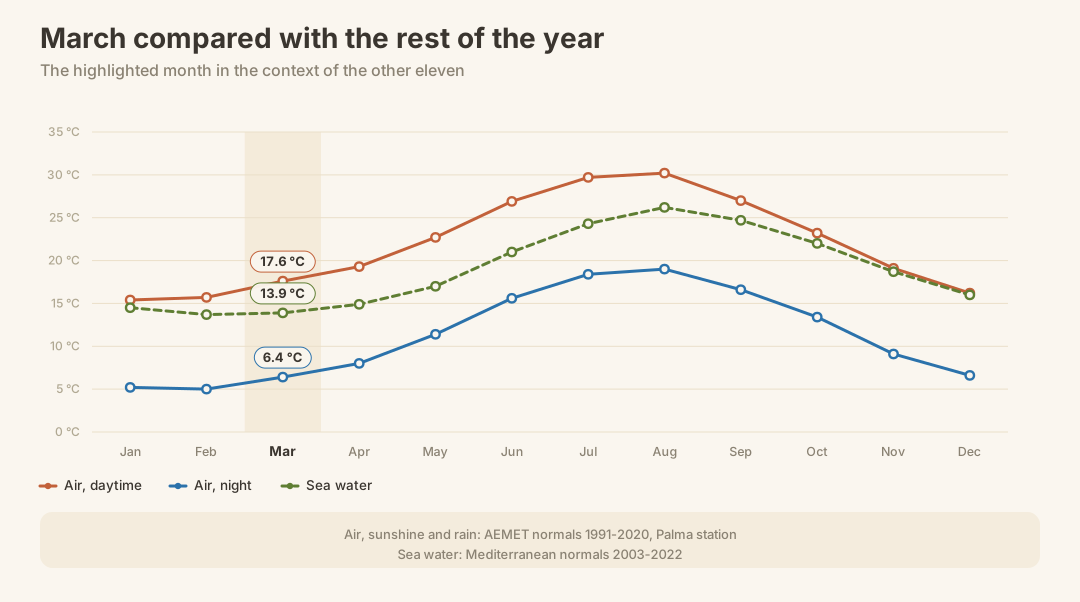
Palma normals as an island-wide approximation: In March, the average daytime high is 17.6 °C and the sea is 13.9 °C, with 5 rain days and 6.7 hours of sunshine per day.
Anyone arriving in Mallorca in March finds the island in a state of transition: land and sea are moving towards summer at very different speeds. While wildflowers are already blooming on land and the afternoon sun brings warmth, the sea is noticeably lagging behind. Whether the water is already fit for swimming in March, what lies behind this gap, and where around the island the differences are most pronounced, is explained below.
Sea temperature in March
The short answer first: swimming in the proper sense – staying in the water for a while and feeling comfortable doing so – is not yet a relaxed affair for most people in March. Around Mallorca, the Mediterranean averages 13.9 °C this month. Most people find seawater pleasant only from around twenty degrees upwards; below that, down to a range of seventeen to nineteen degrees, water is generally considered cool but still bearable for a short while. Clearly below that – and this is where March sits – most people find the water too cold for a relaxed stay without neoprene protection. A brief, refreshing dip in the sea is therefore possible, and some locals and winter visitors do exactly that, but it is not extended swimming in the classic sense.
On land, by contrast, March already shows a much friendlier face. The island is noticeably in spring mode at this time of year: the almond blossom is usually over by now, but other wildflowers now bring colour to the landscape, the hiking trails in the Tramuntana mountains are in excellent condition, and daytime temperatures increasingly invite outdoor activity. On many days the air temperature climbs to 17.6 °C, while nights remain noticeably cool, with values around 6.4 °C. It is precisely this contrast – warm afternoons, cool nights, a sea that is still cold – that defines the character of the month. March is rightly considered one of the best hiking months of the year, because temperatures are ideal for longer excursions without yet becoming too hot. Anyone visiting the island in March therefore comes more for the landscape, the calm and the mild days than for swimming – the sea simply needs more time yet.
Why the sea lags behind the air
The fact that the air already feels springlike and mild in March, while the sea remains noticeably cool, has a simple physical explanation: water has a far higher heat capacity than air. Warming a given quantity of water by one degree requires considerably more energy than warming the same quantity of air. The result: air reacts almost immediately to sunlight, becoming noticeably warmer within hours on a sunny spring day and cooling down again just as quickly at night. The sea, by contrast, stores heat over weeks and months and releases it just as sluggishly. It does not respond to individual sunny days but to the sum of solar radiation over a long period.
This inertia is clearly visible in the annual patterns of air and water. The warmest month for air, in terms of highs, is 30.2 °C, measured in August. The sea, however, only reaches its highest point with a delay, in 24.7 °C the following month. Air and water therefore do not reach their annual maximum in the same month – after the hottest day of air temperature, the sea still needs several more weeks to reach its own peak, because the heat stored in summer is only slowly passed down to deeper water layers and eventually released back into the surrounding environment.
In spring, this delay shows up in the opposite direction, and it is here that it becomes most apparent. While the air is already gaining noticeable strength in March and heading towards the mild transitional months, the sea has only just left the cold winter months behind and is only hesitantly beginning to regain the warmth lost over winter. The gap between air temperature and sea temperature is therefore greater in spring than at any other time of year – greater than in autumn, when the situation is, in a sense, reversed and the sea even exceeds the air in warmth. So anyone wondering why a sunny March afternoon on the beach has so little to do with the water temperature will find the answer in exactly this physical lag: the sun reaches the air directly, but the sea only via the detour of many weeks of stored energy.
Where the water is warmest in March
Even though the island as a whole yields a single, consistent sea temperature record, the sea around Mallorca is not equally cold everywhere in March. There are no separate, verified measurement series for individual bays and beaches, which means no concrete figures can be given here – the following assessments therefore deliberately describe only the tendency, not the exact number.
As a general rule, shallow, sheltered bays warm up faster than deep, open water, because a smaller volume of water can be brought up to temperature with less energy and sunlight reaches the seabed more quickly. In the south and east of the island, for example around the Bay of Alcúdia, on the shallow sandy beaches of Playa de Palma or Can Pastilla, and at Es Trenc, the water in March is therefore likely to be somewhat milder than the island average would suggest. These stretches of coast are shallow, often open towards the south or east, and well exposed to the afternoon sun.
On the north-west coast, however, along the steep cliffs of the Serra de Tramuntana between Port de Sóller and Sa Calobra, the sea drops away quickly into great depth. Here, the surface water mixes more strongly with colder, deeper layers, and the exposed location also tends to bring more wave action and mixing. This coast is therefore likely to sit at the cooler end of the range in March. Between these two extremes lie bays such as Cala Millor or Peguera, which are sheltered but not quite as shallow as the southern sandy beaches. Anyone looking for the comparatively warmest water in March is therefore more likely to find it in shallow, sun-exposed bays in the south and east than along the deep, open north-west coast.
The sea in March compared with the rest of the year
Looking at the annual cycle as a whole, March sits fairly close to the sea's coldest point. The absolute minimum sea temperature, 13.7 °C, is reached in February, while the warmest month, at 24.7 °C, is September – a difference that shows the full range the Mediterranean around Mallorca goes through over the course of a year. March, at 13.9 °C, lies only a little above this winter low point and still a long way from the summer optimum.
The comparison becomes especially revealing when March is set against the month that lies at the same calendar distance from the equinoxes on the other side of the year: November. Both months are roughly equally far from the equinoxes, yet the sea temperatures differ markedly. In November the sea still shows 18.7 °C, noticeably more than in March. The reason lies precisely in the inertia already described: in autumn, the sea is still drawing on the heat stored during summer, whereas in spring it is only at the very beginning of its warming process and has not yet made up for its winter losses. Two months with a comparable position of the sun thus produce noticeably different sea temperatures – a vivid illustration of just how far the sea lags behind the calendar of the sun.
For placing March in context, this means: anyone wanting to swim in spring should rather wait for the months from May or June onwards, when the sea has noticeably approached summer warmth. March, by contrast, still marks the lower edge of the annual curve, closer to the winter minimum than to any summer or even autumn value.
Swimming, snorkelling, diving: what is worthwhile now
At a sea temperature of 13.9 °C, an ordinary swimsuit or a pair of swimming trunks is not yet enough for longer spells in the water. This value lies well below the threshold at which most people can swim comfortably without neoprene protection; a brief, refreshing dip in the sea is possible, but leisurely paddling or extended swimming is really only for those with a very high tolerance for cold. Anyone wanting to get into the water in March will find it hard to do without a wetsuit – for swimmers, a thinner suit is often sufficient, while for longer spells snorkelling or diving, a thicker version with good cold protection for the torso and limbs is advisable.
For snorkellers, however, the low water temperature also has an upside: underwater visibility in spring, before rising temperatures allow algae and plankton to multiply more strongly, is often better than in the height of summer. Cooler water slows biological growth, so the water stays clearer and fish, rock formations and underwater landscapes can be seen more sharply. Anyone who values good visibility more than comfortable temperatures will therefore find good conditions in March – provided the cold protection is right.
Diving schools on the island generally offer excursions all year round, though in March with correspondingly thicker suits or drysuits for longer dives at greater depth, where the water is once again cooler than at the surface. For short snorkelling trips in shallow, sun-warmed bays, a thinner wetsuit is often enough, while more extended dives along the deeper stretches of coast call for a warmer suit. Anyone who chooses their equipment accordingly can make good use of the clear visibility and the calm of the pre-season even in March, without the cold spoiling the trip.
Frequently asked questions
Is the sea warm enough to swim in Mallorca in March?
Why is the sea still so cold in March if the air is getting warmer?
Is March good for snorkelling in Mallorca?
When is the first good month for a proper swim in Mallorca?
What's on in Mallorca in March
Events
- Day of the Balearic Islands
- Weekly Market in ConsellConsell
- “Traditional Mallorcan dance”Alcúdia
- ODISEA - FILM SYMPHONY ORCHESTRAPalma
- Monstruas Impro en Escena 101Palma
- Good Friday
Worth doing now
- Snorkel with a wetsuit while visibility is good, even though the water is still cold.
- Save the beach for sunbathing and countryside hikes for the main activity this month.