
Mallorca Weather in March: Temperatures & Travel Tips
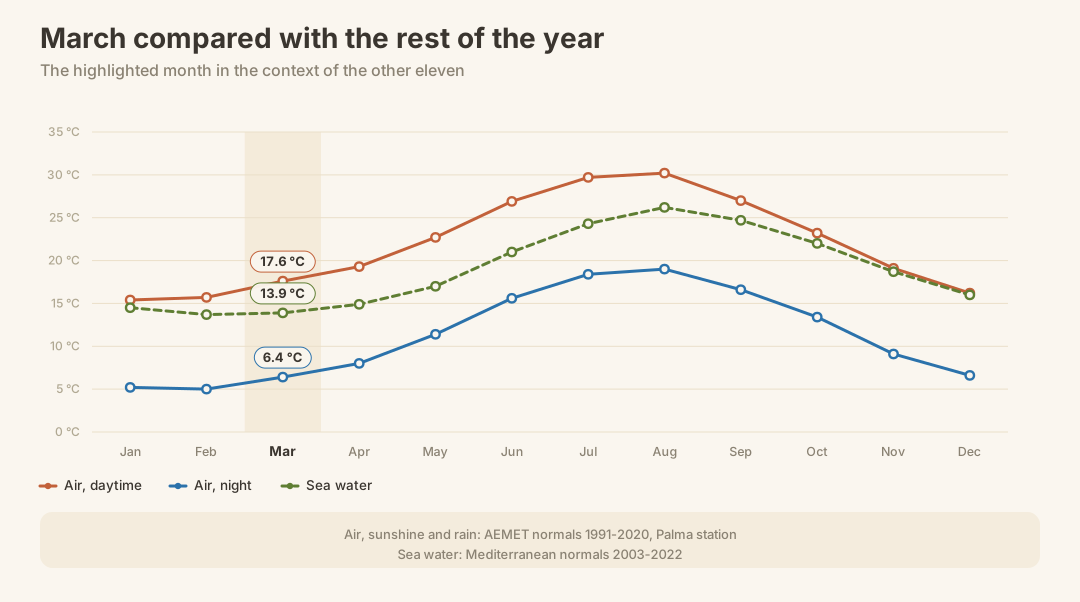
Palma normals as an island-wide approximation: In March, the average daytime high is 17.6 °C and the sea is 13.9 °C, with 5 rain days and 6.7 hours of sunshine per day.
March is the month in which Mallorca visibly shakes off its winter slumber. The almond blossom is usually already over, but this is when spring proper begins: wild flowers line the paths, the sun noticeably gains strength, and the island fills with walkers making the most of the cooler nights and clear air for long hikes. Anyone interested in Mallorca's weather in March should know that the month is more changeable than its reputation suggests – warm afternoons and cool evenings are often only hours apart.
The weather in March at a glance
March marks the real transition from winter to spring on Mallorca. During the day, temperatures climb to 17.6 °C, while at night they drop to 6.4 °C – a difference that shows just how much the daytime sunshine already warms things up, while the nights remain wintry cool. Compared with February, this is a clear step forward, even if there is still no talk of summer warmth. The water temperature stands at 13.9 °C, close to its annual low point, since the sea always reacts with a delay to the milder air.
The sun already shows itself for 6.7 h per day in March, noticeably more than in the winter months, and with 11.7 h of daylight the days become noticeably longer. This creates ideal conditions for anything involving outdoor activity, without it yet becoming uncomfortably warm. Rain falls on 5 rainy days, spread across a month that is overall drier than autumn, though not yet as reliably stable as early summer.
What is characteristic of March is exactly this juxtaposition: in the morning a jumper can still feel comfortable, by the afternoon a T-shirt in the sun is often enough, and as soon as the sun sets, the chill of winter reasserts itself. During these weeks the island shows a particularly green side – the winter crops stand tall in the fields, the almond trees carry their first leaves, and wild flowers bloom all along the walking trails, flowers that would long since have withered by midsummer. For many seasoned connoisseurs of Mallorca, March is therefore one of the most attractive months for hiking, precisely because temperatures are still moderate and the landscape appears in its lushest spring form. Those who wish to avoid crowds and heat will find here a window of time that is easily overlooked, even though it has a good deal to offer climatically.
Water, sun and rain in March
Three factors determine how a day on Mallorca actually feels in March: air temperature, water temperature, and the distribution of rainfall. Between the first two, March sees the widest gap of the entire year. While the air climbs to 17.6 °C during the day, the sea remains at 13.9 °C – cooler than in the depths of winter, because the large volume of water absorbs heat only very slowly and releases it just as slowly. This thermal inertia means that the sea often reaches its coldest point only once the air on land has already become distinctly milder. For March this means, in practice, that anyone lying on the beach on a sunny afternoon may well feel warm, yet a dip in the sea remains a brief, cool affair and not something to build a beach day around.
The sun, by contrast, noticeably gains strength in March. With 6.7 h per day, it already lies markedly above winter levels, and combined with 11.7 h of daylight, this produces long, bright days that are excellent for excursions. It is worth noting that many of these sunshine hours fall on days that are clear but still cool – the sun warms noticeably without the ambient temperature yet becoming summery. This results in pleasant light for photography and sightseeing, without the burden of heat familiar from the summer months.
When it comes to rain, March shows a pattern that is typical for Mallorca as a whole: precipitation falls on 5 rainy days, but this does not mean days of continuous rain. Characteristic instead are individual, sometimes heavy showers or brief spells of poor weather, followed by several stable, pleasant days. Cloud fronts often move through quickly, frequently accompanied by freshening wind from shifting directions, before the sky clears again. Anyone planning a trip should therefore expect not a continuously rainy month but rather the occasional day suited to an indoor programme, while the rest of the stay offers good chances of pleasant weather. This combination of increasing sunshine, still-cool sea, and irregular but not dominant rain makes March a month with a pronounced transitional character – noticeably warmer than winter, yet in some respects still far from summer.
What is possible in March – and what isn't
March is excellent for anything that calls for movement and fresh air but does not depend on warm water. Hiking is one of the island's strongest cards this month: the Tramuntana turns green, daytime temperatures sit in a range where multi-hour tours are not a strain, and the longer daylight hours allow for extended routes without time pressure. Anyone wishing to get to know the island's well-known long-distance trails will often find better conditions in March than in high summer, when heat and dryness make many routes unpleasant.
Cycling also works well in March, though with some caveats: on days with freshening wind or after a shower, roads can be slippery, and those cycling for sport should keep an eye on the forecast for the specific day rather than relying on the month as a whole. The comparatively cool nights are especially noticeable in the early morning hours, when many cycling tours traditionally begin.
City trips, culture and dining all benefit in March from a mild but not oppressive climate. Palma can be explored on foot without heat turning a walk through the old town and cathedral quarter into an effort, and restaurants with terraces are already well usable on sunny days, even if retreating indoors at sunset is often more comfortable.
Swimming, on the other hand, is honestly not one of March's strong points. With a water temperature of 13.9 °C, a short, invigorating dip is possible for the hardy, but a relaxed beach day with swimming is not realistic. Anyone travelling specifically for the sea should choose a later month. Nor should one expect every day to be consistently summer-mild – the alternation between sunny spells and cooler, sometimes rainy phases is part of everyday life in March, and is best met with flexibility in one's daily plans rather than a rigid schedule that assumes continuously stable weather.
Where you are best off in March
Our data series comes from the Palma station and thus gives a good picture of conditions around the bay – for individual locations further afield, no verified figures of their own are available. Nonetheless, the island's geography allows some reliable tendencies for March to be drawn. The Tramuntana in the north-west is noticeably cooler and considerably wetter this month than the south and east of the island. Clouds coming in from the Atlantic pile up against the mountain flanks, which for hikers means appealing, often mistily dramatic views, but also more frequent showers and lower temperatures than in the rest of the island.
The south around Salobreta or Colonia de Sant Jordi, as well as the east coast, usually benefit in March from more hours of sunshine and less wind, since the mountains in the north-west intercept many fronts before they reach these regions. Anyone seeking mainly stable, mild weather in March is generally better off there than in exposed coastal locations in the north.
The interior around the Pla plain behaves differently, thermally, from the coast: during the day it can get similarly warm there in the sun as on the coast, but at night it cools down more sharply, since the sea is absent as a thermal buffer. Anyone staying at a rural finca should be prepared for cooler evenings and nights than in Palma or on the Playa de Palma.
Sheltered bays on the east coast, such as around Cala Ratjada or Portocolom, offer more pleasant conditions for walks by the water in March than the more exposed sections of the north and west coasts. There, the often gusty spring wind can make sitting outside unpleasant even when the sun is shining. In general: those seeking sun and calm have better prospects in the south and east, while those who prefer dramatic scenery and hiking will find it in the north-west – albeit with the risk of more cloud and rain.
What to pack for March
The choice of clothing for March follows directly from the large gap between daytime and night-time temperatures. Since daily highs reach 17.6 °C but nights cool down to 6.4 °C, a layered system is the most reliable solution: light clothing for sunny afternoons, plus a warmer jumper or jacket for mornings and evenings. A windproof, ideally also water-resistant jacket should likewise be in the luggage, since rain showers occur on 5 rainy days and often arrive suddenly and with wind.
For hikes, which are particularly rewarding this month, sturdy, well worn-in shoes with good tread are recommended, since paths can quickly become slippery after rain, along with clothing that can be added or removed in layers – especially in the Tramuntana, the weather can shift noticeably over the course of a day. A lightweight rain cover for the rucksack is a sensible addition, even on the many days when no rain falls at all.
Sun cream and a hat should not be missing despite the still mild temperatures: with 6.7 h of sunshine per day and often clear air, UV exposure is higher than the cooler feel might suggest, especially on hikes in exposed, shadeless terrain. Anyone still tempted by the idea of a quick dip in the sea should bear in mind that the water temperature stands at 13.9 °C – a wetsuit is not an exaggeration here, but almost a prerequisite for spending any length of time in the water. For evenings in Palma or on the coast, a slightly smarter but warm top is worthwhile, since outdoor dining can turn cool quickly after sunset. All in all: better to pack one layer too many than too few, since March rewards flexibility more than any fixed weather expectation.
March compared with the neighbouring months
Between February and April, March stands as a noticeable turning point, and it is precisely this position that makes it interesting for many travellers. Compared with February, where daytime highs still sit at 15.7 °C, they already climb to 17.6 °C in March – a difference that is felt above all in the number of pleasantly warm afternoons. Hours of sunshine also increase: from 6.1 h in February to 6.7 h in March, meaning longer and brighter days for excursions. Anyone wishing to escape the depths of winter without yet waiting for summer conditions will find a good compromise in March.
The comparison with April shows the other side of the coin. In April, highs climb further to 19.3 °C, and the sea also warms to 14.9 °C – still cool, but already a step closer to a water temperature that makes short swims more appealing than in March with 13.9 °C. Anyone wishing to swim, or at least spend a longer time in the water, is clearly better served in April. At the same time, visitor numbers also rise noticeably in April, while March – especially outside the Easter holidays – remains distinctly quieter.
For hikers, this offers a clear guide: those seeking the greenest, most blossoming landscape at still-moderate temperatures and with little bustle should choose March. Those who instead prefer somewhat warmer days, a slightly more inviting sea, and thriving restaurant terraces, and are willing to accept more fellow travellers in return, are better off in April. February, in turn, suits above all those explicitly seeking the quietest and most affordable off-season, and who can live with noticeably cooler temperatures and shorter days. March thus positions itself as a month of transition – warmer and brighter than winter, but not yet at the cost of the calm that many value on the island.
Frequently asked questions
What is the weather like in Mallorca in March?
Is March a good time to visit Mallorca for hiking?
Is it warm enough to sit outside in Mallorca in March?
How many daylight hours does Mallorca get in March?
Is Mallorca busy with cyclists in March?
What's on in Mallorca in March
Events
- Day of the Balearic Islands
- Weekly Market in S'ArenalLlucmajor
- “Traditional Mallorcan dance”Alcúdia
- ODISEA - FILM SYMPHONY ORCHESTRAPalma
- Monstruas Impro en Escena 101Palma
- Good Friday
Worth doing now
- Hike the Tramuntana trails while conditions are mild and the countryside is at its greenest.
- Join the cyclists who use March for early-season training on the island's quieter roads.