
Mallorca Weather in August: Temperatures & Travel Tips
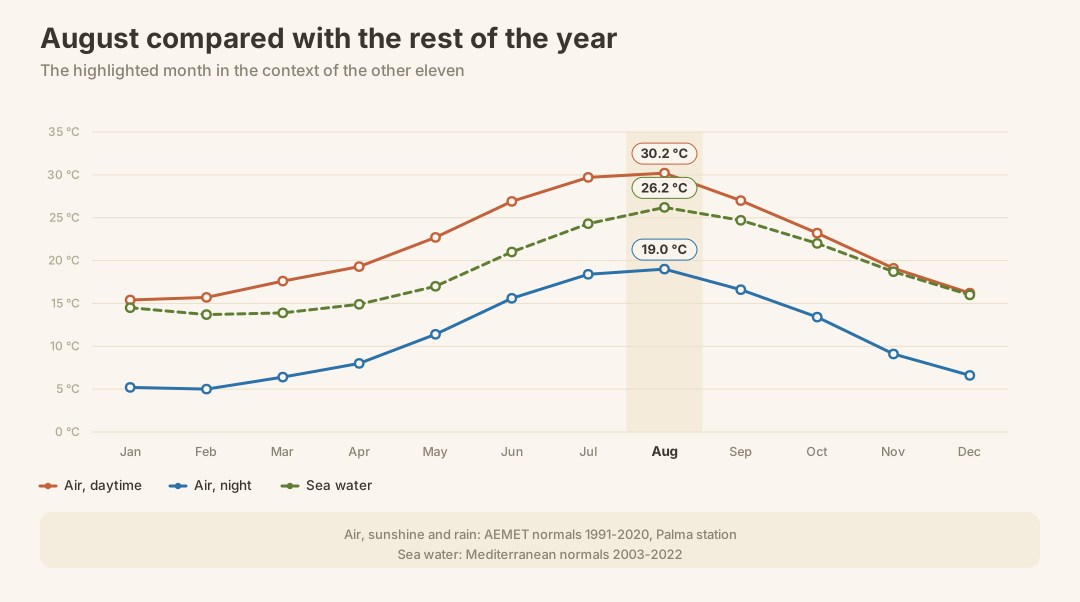
Palma normals as an island-wide approximation: In August, the average daytime high is 30.2 °C and the sea is 26.2 °C, with 2 rain days and 10.3 hours of sunshine per day.
August is the hottest month of the Mallorcan year – for the air just as much as for the sea. Anyone travelling at this time can reliably expect summer in its purest form: long, sun-drenched days, warm nights and water that feels more like a bath than a refreshing dip. That is exactly what makes the month the ideal time to travel for some, while for others planning hikes or city tours it becomes a challenge. The following overview shows what you can expect in concrete terms – with all the figures, insights and outlooks you need for your planning.
The weather in August at a glance
Over the course of the year, August marks the peak of the heat. During the day the thermometer on the coast climbs to 30.2 °C, while at night it barely drops below 19.0 °C – a cooling that is scarcely noticeable, particularly in the towns and densely built coastal resorts. By this point the sea has reached its annual high, or is very close to it: 26.2 °C turns every swim into a warm pleasure with no need to acclimatise. This makes August the warmest month of the year for both air and water temperature, while the annual mean air temperature stands at 16.6 °C and the mean of the daily highs at 21.9 °C – figures that show just how far August exceeds the rest of the year.
The sun shines generously in August: with 10.3 h per day, the month ranks among the sunniest of all, set within a year that totals 2,784 hours. Rain is the exception during this period – on average it falls on 2 rainy days, spread across the whole month and usually in the form of short, sharp showers rather than days-long spells of bad weather. Anyone planning a trip in August can count on reliably stable weather, but must also reckon with heat that becomes especially noticeable inland: away from the cooling sea breeze, temperatures there often climb even higher than on the coast, while the nights in the plains and valleys at least bring somewhat more cooling than in the densely built coastal resorts. On the coast itself, the sea's high capacity for storing warmth means that nocturnal cooling remains slight – an effect that is particularly noticeable in the early morning hours, when the air begins to warm again before it has properly cooled down.
Water, sun and rain in August
Three factors determine how a day on Mallorca feels in August: the temperature of the sea, the number of hours of sunshine, and the few but occasionally intense rain events.
With the sea, an effect that runs through the whole summer becomes apparent: water warms up considerably more slowly than air, but also takes longer to cool down again. Air temperature already rises steeply in early summer, while the sea only follows suit with a delay of several weeks. By August this lag has largely disappeared – the water temperature stands at 26.2 °C, as high as at almost any other point in the year. For you as a swimmer, this means the sea no longer feels cool, not even early in the morning, and the transition from the beach into the water happens without the small shock familiar from early summer. Anyone seeking the warmest possible swimming conditions is in the right place in August and the weeks immediately surrounding it.
Hours of sunshine remain at a high level typical of summer: 10.3 h mean that you can reliably plan your day around clear skies, whether at the beach, on an excursion, or on a terrace in the evening. This reliability is one of the main reasons why August is the most comfortable month for many travellers – you rarely need to abandon a plan because of the weather.
When it comes to rain, the typical pattern of the Mallorcan summer emerges: little of it, but concentrated when it does occur. On average, the Palma station records 2 rainy days in August, with a total precipitation of 21 mm for the entire month. Compared with the annual average of 438 mm and 54 rainy days, this is a very small share – summer as a whole is the driest season on the island. When it does rain in August, it is usually in the form of brief, sometimes thundery showers, often in the late afternoon or evening, after which the sky clears again quickly. Days of continuous rain, as can occur during the winter half of the year, are practically ruled out in August. For your travel planning this means: a rainy day is rarely a lost day, but rather a brief interruption in an otherwise consistently sunny run of days.
What is possible in August — and what is not
August is the month in which swimming works without any restrictions. With a water temperature of 26.2 °C, there is no reason to wait for the right moment – whether early in the morning or late in the afternoon, the sea is consistently pleasantly warm. Water sports, longer swims or extended hours on the beach are all possible without limitation, since cold plays no role here at all.
Things look different for activities that take you into the midday sun or inland. Hiking is possible in August, but only with an adjusted schedule: you should plan tours in the Tramuntana or the interior for the early morning hours, before the heat of the day makes the exposed paths unpleasant. With daily highs of 30.2 °C and humidity of 65 %, physical exertion around midday is no longer enjoyable even for experienced hikers, but a strain that should be taken seriously. The same applies to cycling: anyone out on a bike in August is better off planning the major climbs for the morning and moving the midday hours into the shade or to the water.
City tours and cultural programmes are feasible in August, but follow their own rhythm. Palma at midday is hot; the alleys of the old town offer shade but little cooling, and many locals adapt to the heat during this period anyway – shops close over lunch, and life shifts into the evening hours. Anyone wishing to visit churches, markets or museums will get through the day considerably better in the morning or late afternoon than during the period between early and late afternoon, when the heat is at its peak.
What does not work in August is the idea of a calm, mild summer month suited equally to every activity. The combination of high daytime values, almost no nocturnal cooling and long hours of sunshine makes the month demanding for anything requiring exertion outdoors. Anyone who ignores this and plans a long hike at midday will not experience the island at its best. Anyone, on the other hand, who focuses on swimming, the beach, evening plans and adjusted morning excursions will find August one of the most reliable summer months there is.
Where you are best placed in August
Our measurement series comes from the Palma station and therefore reflects conditions in the bay fairly reliably – for individual locations beyond it we have no dedicated measurements of our own, even though the fundamental differences between the regions can be described well.
On the coast, proximity to the sea makes for a noticeably milder climate in August than inland. The sea breeze that blows inland from the water during the day dampens the sharpest peaks of heat and makes even the afternoon hours at beaches and coastal resorts more bearable than just a few kilometres inland. In the interior, for example across the wide plain of the Pla de Mallorca, this counterbalance is missing – here daytime temperatures often climb noticeably higher, and the nights, too, bring less cooling than on the coast, because the warmth lingers longer in the soil and the built-up landscape.
The Tramuntana in the northwest has its own microclimate in August. At the higher elevations of the mountain range, temperatures drop noticeably with altitude, so that the nights there turn out more pleasant than by the sea – one reason why many hikes in this region are planned for the early morning hours anyway. At the same time, local updrafts and isolated heat thunderstorms can occur here in the afternoon, which are rarer on the coast.
In the south and east of the island, where the coastline is flatter and more open, the wind tends to remain steadier and conditions feel more consistent than in the rugged, wind-exposed stretches in the north, where individual bays can be considerably more exposed depending on the wind direction. Anyone seeking particularly sheltered spots in August will find them more readily in the southern and eastern bays than along the open coastal stretches in the north and northwest. Overall, the rule holds: closeness to the coast almost always beats the interior in August when it comes to bearable temperatures, while the Tramuntana is the only region offering genuine, altitude-driven cooling.
What you should pack in August
What you should pack for August follows directly from this month's figures. With daily highs of 30.2 °C, light, airy clothing made of natural fibres is a good idea, along with a second set for the evening – nights cool down only to 19.0 °C, so even in the evening you will rarely need more than a light top.
Sun protection belongs at the very top of the packing list in August: 10.3 h mean many hours of direct sunlight, so sunscreen with a high SPF, a hat and sunglasses are correspondingly important. Anyone out and about during the day should also think of drinking enough water – humidity stands at 65 %, which noticeably increases sweating and fluid requirements.
For the beach, little additional equipment is needed beyond swimwear, since a water temperature of 26.2 °C allows long stretches in the sea without a wetsuit or anything similar. A light, quick-drying towel and water shoes for hot sand or rocky coves are practical additions.
Even though rain is the exception in August – on 2 rainy days short but heavy showers can occur – it is worth packing a very light, compactly packable rain jacket or a small umbrella just in case, without having to build your entire wardrobe around the weather. For hikes in the Tramuntana or excursions inland, sturdy, breathable footwear is recommended, since these tours are best undertaken in the cooler morning hours, before the ground has heated up. Wind plays a lesser role in August compared with other seasons, averaging 12 km/h – a light jacket for wind-exposed evenings on the coast is usually sufficient.
August compared with the neighbouring months
To understand what makes August special, it is worth looking at the months before and after. July already brings summer heat with 29.7 °C and, at 24.3 °C, still lies noticeably below the August water temperature of 26.2 °C – a difference clearly felt when swimming, even though the air temperatures of the two months are close to one another. Anyone seeking the warmest possible sea is therefore better off in August than in July, while July, with 11.1 h and 1 rainy day, shows a similarly stable, dry weather pattern to August itself.
September marks the transition back into a more moderate autumn. Daily highs drop to 27.0 °C, while the sea, at 24.7 °C, remains close to its annual peak or even reaches it – the typical lag of water temperature behind air temperature becomes apparent here. This means that anyone travelling in September often still swims just as well as in August, but must already reckon with 4 rainy days and a declining number of sunshine hours of 7.9 h – early signs of the onset of autumn's shift in weather.
Between these two neighbouring months, August stands out as the month of greatest reliability: the highest water temperature of the year, stable, sun-drenched days, and a risk of rain that barely registers. Anyone seeking maximum heat and the warmest swimming conditions, without yet making compromises on the weather, makes the safest choice with August. Anyone who instead prefers slightly milder nights and fewer inland heat peaks, and is willing to accept a somewhat higher risk of rain in exchange, will find a sensible alternative in September right afterwards.
Frequently asked questions
Is August the hottest month in Mallorca?
Does it cool down at night in Mallorca in August?
Does it rain in Mallorca in August?
Is Mallorca overcrowded in August?
How do locals cope with the heat in Mallorca in August?
What's on in Mallorca in August
Worth doing now
- Make the most of the warmest sea of the year with a long swim or some snorkelling.
- Follow the local rhythm and shift outdoor plans to the early morning or evening.