
Mallorca Weather in February: Temperatures & Travel Tips
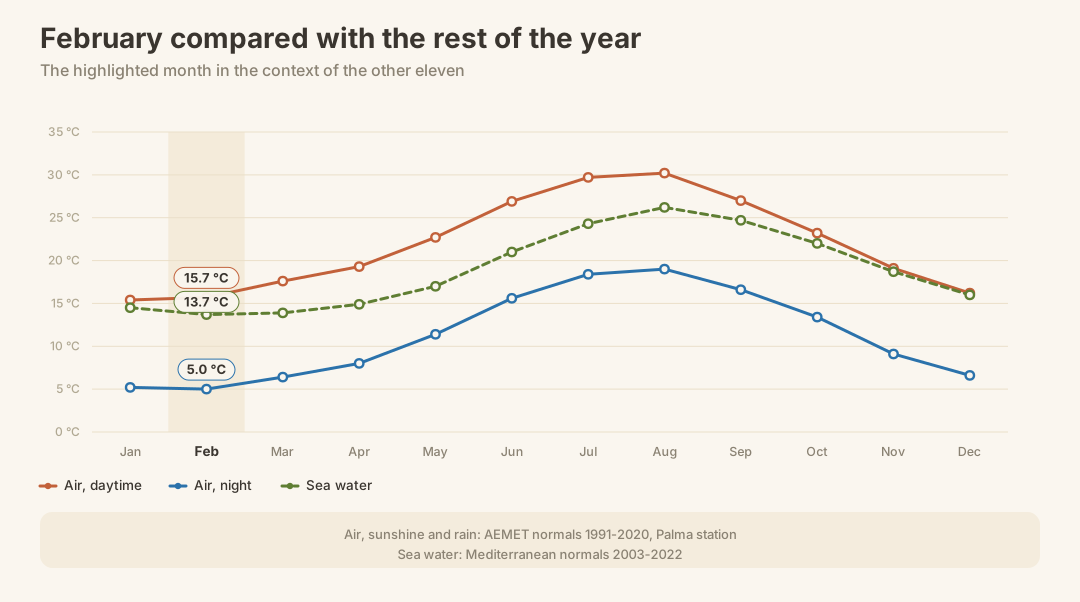
Palma normals as an island-wide approximation: In February, the average daytime high is 15.7 °C and the sea is 13.7 °C, with 5 rain days and 6.1 hours of sunshine per day.
February shows Mallorca in a transition that is nowhere more evident than in the relationship between land and sea: the air is already noticeably warming, while the sea reaches its coldest phase of the year. At the same time, the almond trees transform large parts of the interior into a delicate white-pink haze – for many, the real reason to travel just now. Anyone wanting to know what this month truly brings, weather-wise, will find the details here.
The weather in February at a glance
February falls at the end of the meteorological winter, and this is already noticeable in the air temperature: during the day, the thermometer on Mallorca reaches an average of 15.7 °C, cooling to 5.0 °C at night. This makes February noticeably milder than January, even though summery warmth is still a long way off. The island's annual mean temperature is 16.6 °C – February itself, at 10.4 °C, sits clearly below this, marking one of the cooler stretches of the year, although the curve is already pointing upwards again.
The sea tells a different story. While the air already hints at spring, the water takes considerably longer to respond to the changing seasons. At 13.7 °C, the Mediterranean around Mallorca reaches its annual low in February – colder than in the supposedly colder January. This lag is not a statistical quirk but simply the inertia of large bodies of water: they store the warmth of autumn for a long time and only release it again with noticeable delay. Nowhere in the year is this effect as clear as in February, when the air is already rising while the sea is still falling.
The sun already shows itself more often in February: on average it shines for 6.1 h per day, more than in December or January. Rain falls on 5 rainy days, spread across individual, often heavier showers rather than sustained downpours. For the island, February is thus a month of quiet transition: nature responds faster than the sea, and anyone travelling at this time experiences both at once – cool water and blossoming almond trees, which bathe wide stretches of the interior in a delicate white-pink. For many, this blossom is the true highlight of the month and draws visitors specifically keen to experience the island away from the bathing season.
Water, sun and rain in February
Three factors determine how a day in February feels on Mallorca: the water temperature, the number of sunshine hours, and the distribution of rainfall. All three are more closely linked than they might appear at first glance.
Water temperature is the most sluggish of the three. At 13.7 °C, it sits at its annual low point in February, even though the air has already climbed to 15.7 °C by this time. This delay has a purely physical explanation: water heats and cools far more slowly than air because it stores considerably more energy. The warmth the sea absorbed over summer and autumn is released again over months – and it reaches its coldest point only once the air is already well on its way back up. In practical terms, this means anyone exploring the coast in February should treat the sea more as a backdrop than a place to swim. There is not enough warmth for swimming, but it is exactly the right season for walks along the shore or brief, fully clothed visits to the beach, since the beaches are all but empty.
With the sun, the other side of the coin becomes apparent. At 6.1 h per day, the island has already moved noticeably out of the low point of the dark winter months. The days are getting longer – 10.5 h of daylight are available – and on many days sun and cloud alternate in a rhythm that makes walks and excursions easy to plan, provided you check the short-term forecast.
Rain, finally, falls on 5 rainy days in February – which sounds like more than it feels like day to day. What matters is the distribution: rather than days of drizzle, the picture is shaped by individual, often heavy showers, frequently tied to passing fronts that move on just as quickly as they arrive. Between these events, there is usually enough time for dry hours in which the island shows its best side. Anyone who stays flexible and plans excursions according to the day's conditions rather than a rigid calendar will generally get through the month well. Taken together, this adds up to changeable but rarely persistently poor weather – cool enough to still leave the sea well alone, mild enough to be out and about.
What is possible in February — and what is not
February is not a month for swimming, and not even the loveliest almond blossom changes that. At 13.7 °C, the water temperature is so low that a dip in the sea is at best a brief, bracing plunge – it is no month for a relaxed beach holiday. Anyone looking for water is better off with a heated hotel pool or thermal spa than the open sea.
February plays to its strengths on land instead. Daytime highs of around 15.7 °C are ideal for hiking: not too hot for demanding tours in the Tramuntana, not too cool to feel the chill during breaks. It is precisely in the mountains that the island shows a side of itself in February that would simply be too hot in high summer. Cycling also benefits from the moderate temperatures – many training groups use exactly these weeks for long rides, since heat and wind are less of an issue than in summer. Anyone planning ahead should nonetheless allow for 5 rainy days and pack gear for short-notice rain, as showers do not always announce themselves well in advance.
Cities and culture combine excellently with poor-weather days in February: Palma's old town, museums and churches are ideal options when a front passes through, and are just as enjoyable to explore on foot in sunshine. Since the island has considerably fewer visitors at this time, its sights can be experienced without the summer crowds – an advantage that is often underestimated.
What does not work, however, is worth being honest about: a classic beach holiday, with long days by the water and swimming as the main activity, has no place in February. Anyone relying on consistently stable weather for multi-day outdoor plans without a fallback option should also factor in a plan B – rainy days come irregularly, but they do come. Anyone who knows and accepts these limits will find in February a month with much to offer for active holidays, culture and the calm of the off-season, without false expectations clouding the stay.

Where you are best placed in February
Our measurement series comes from the Palma station and thus reflects conditions in the eastern part of the bay – we do not have separate figures for individual locations on the island. Nevertheless, plausible assessments for individual regions can be drawn from the general weather pattern in February.
The Tramuntana in the north-west is noticeably rougher in February than the rest of the island. Most fronts pass through here first, rainfall is often heavier than on the east coast, and at higher elevations snow on the peaks is even possible on some days. Anyone wishing to hike should factor in this susceptibility to weather and choose routes flexibly rather than committing early to a particular summit. At the same time, it is precisely these mountains that give the island its characteristic contrast – a rainy morning in the mountains can still give way to a sunny afternoon on the coast on the very same day.
The south and south-east of the island, for example around the area near Santanyí or Cala d'Or, lies in the lee of the Tramuntana and stays drier on many days. Anyone prioritising the most stable weather possible in February tends to be better placed here than in the north.
The interior around the plain of Es Pla cools more sharply at night than the coast, since it lacks the moderating effect of the sea. Anyone staying at a rural finca should expect cooler nights than the figures for Palma suggest. Coastal towns, above all the Bay of Palma, benefit from the mild proximity of the water and stay somewhat warmer at night.
Sheltered bays on the east coast and in the south-east are good for walks on windy days, while exposed stretches in the north and north-west can become distinctly uncomfortable when the wind picks up. Anyone valuing calm, low-wind hours by the sea in February is more likely to find them in the east and south than on the open north coast.
What to pack for February
What belongs in your suitcase follows directly from the month's figures. With daytime highs of around 15.7 °C, a jumper or light jacket is often enough during the day, but nights cool to 5.0 °C – for evenings outdoors or early excursions, a warmer jacket that can be removed as needed is worthwhile.
Since rain is to be expected on 5 rainy days, a waterproof, breathable jacket belongs in the luggage, as do sturdy, water-resistant shoes – especially for hikes in the Tramuntana, where paths quickly turn muddy after rain. A small umbrella for the city is a sensible addition, as showers tend to be brief but heavy.
Since the water temperature at 13.7 °C sits at its annual low, there is no need to make room in the suitcase for swimwear, unless a heated pool is part of the accommodation. Anyone still wanting a brief dip in the sea should consider a wetsuit – without one, time in the water will be uncomfortably short.
For the sun, which already shines for 6.1 h per day in February, sunglasses are worthwhile, as low winter light often dazzles more than expected. A light hat provides additional protection on clear days.
Layering is the most reliable strategy in February: several thinner layers can be adapted to changing cloud cover and the temperature differences between morning, midday and evening. Anyone wanting to visit both the mountains and the city is best off packing sturdy footwear for uneven paths as well as a comfortable pair of shoes for pavements and museums. Anyone wishing to see the almond blossom in the interior should also remember a camera and, given the cooler nights inland, an extra warm layer for the early morning.
February compared with the neighbouring months
February sits between two months that each make their own case – and it is precisely in comparison that its own character becomes clear. January brings noticeably cooler days at 15.4 °C and a similar rainfall pattern at 6 rainy days, but overall feels more wintry and darker, since the days are shorter. Anyone wanting to experience the island as quietly as possible, with a focus on extended hikes in moderate conditions, will already find noticeably more light and slightly milder air in February, without the fundamental character of winter changing.
March, on the other hand, already shows clearly where things are heading: at 17.6 °C, it exceeds February, and sunshine hours continue to rise as well. The sea, however, lags behind in its development – the water temperature only follows with a noticeable delay, so the difference from February is smaller here than in the air. Anyone specifically wanting to experience the almond blossom is generally better advised to come in February, since in many years the blossom reaches its peak in exactly these weeks and may already be fading by March.
For anyone valuing as little bustle as possible, the three months differ little from one another – all lie outside the main tourist season. The real difference lies in the detail: January is the quietest and coolest of the three, March already brings noticeably more warmth and longer days, and February sits exactly in between – with the added appeal that, of the three months, it alone marks the annual low point of the water temperature while the air is already picking up pace again. Anyone wishing to experience this contrast deliberately will find it nowhere as clearly as in February.
Frequently asked questions
Is February colder than January in Mallorca?
Is February a good month for outdoor activities in Mallorca?
Does it rain a lot in Mallorca in February?
What should I wear in Mallorca in February?
Is February a good time to see the almond blossom on Mallorca?
What's on in Mallorca in February
Events
- Weekly Market in ManacorManacor
- Weekly Market in ConsellConsell
- THE BOOK OF MORMONPalma
- Monstruas Impro en Escena 101Palma
- Carnival: “Sa Rua Alcúdia 2026”Alcúdia
- Diego Arjona Me Veo en WallapopPalma
Worth doing now
- Drive or hike through the inland valleys around the Tramuntana to catch the almond blossom at its peak.
- Take advantage of quiet trails for hiking before the spring crowds arrive.