
Mallorca Weather in January: Temperatures & Travel Tips
Palma normals as an island-wide approximation: In January, the average daytime high is 15.4 °C and the sea is 14.5 °C, with 6 rain days and 5.5 hours of sunshine per day.
January is the coolest month of the year on Mallorca – quiet, often clear, and carrying the first hints of approaching spring. Those wishing to experience the island away from the summer bustle will find a very particular mood here: empty beaches, open cafés in Palma, and the first almond trees beginning to blossom towards the end of the month. This text shows what you can actually expect in January – from temperatures and rainy days to the question of what the month is suited for and what it is not.
The weather in January at a glance
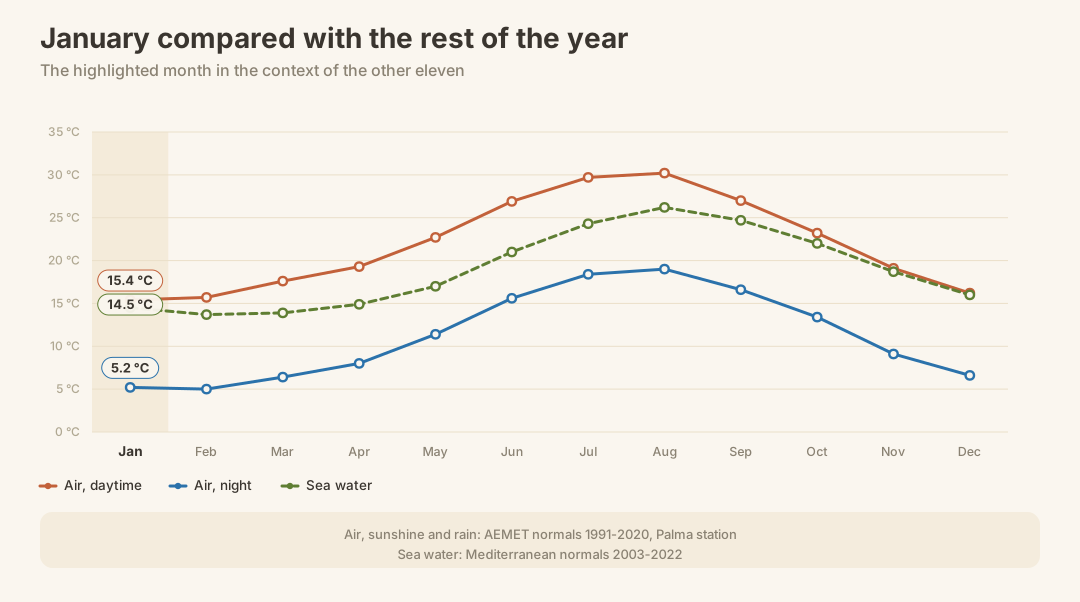
January marks the coldest point in Mallorca's annual cycle. During the day the air warms to around 15.4 °C, while at night it cools to 5.2 °C – figures well below those of the summer months, but still mild compared to many regions of Central Europe. The sea has not yet reached its annual low point at this time: it stands at 14.5 °C, since water reacts sluggishly to falling air temperatures and only cools further with a delay.
In January the sun shows itself for an average of 5.5 h per day – less than in spring or summer, but often enough for clear, cool days with low-angled light that shows off the Tramuntana mountains particularly well. Rain falls on 6 rainy days, spread across the whole month and usually in showers that pass through rather than settling in for days at a time.
What characterises January above all is the calm: many coastal towns that are shaped by visitors in summer now lie in winter dormancy – restaurants and hotels along the beachfront are closed, and life shifts inland and towards Palma. The capital, by contrast, carries on quite normally: markets, museums and cafés are open, and city life differs little from the rest of the year. Towards the end of the month, the almond blossom also begins – a first, delicate sign that winter on Mallorca is never particularly long or harsh, but should rather be understood as a quiet transitional period between autumn and spring. Those who visit the island during this phase experience it in a state quite different from the peak tourist season – slower, emptier, and with its own wintry charm.
Water, sun and rain in January
Three factors determine how a January day on Mallorca feels: air temperature, water temperature, and the distribution of rainfall. They are connected, but follow different rhythms – and it is worth understanding this before planning your days.
The air cools faster in winter than the sea does. Water stores warmth over weeks and months, so the lowest water temperature of the year is not reached in the coldest air month, but only some weeks later – usually in late winter. In January, therefore, the water temperature stands at 14.5 °C, still above the annual low point that is only reached in the following months, while the air, at 15.4 °C during the day, has already hit its coldest point of the year. In practice, this means the sea often feels less cold in January than the air temperature might suggest – though swimming is still, for most people, no longer a pleasant experience; more on that in the next section.
The sun plays an underestimated role in January. With 5.5 h per day, it is below the values of the warmer months, but it is enough for many clear, pleasant days – precisely because stable high-pressure weather is no rarity on Mallorca in winter. On such days, a walk along the coast or a hike inland feels more pleasant than the raw temperature figure would suggest, because the sunshine provides a noticeable warmth.
Rain falls in January on 6 rainy days – though this figure says little about how the rain actually feels. Rather than settling in for days, as is typical in the temperate winter climate of Central Europe, rain on Mallorca usually arrives in showers or short, sharp fronts that sweep in from the west or northwest and move on just as quickly. Between these events, there is often plenty of time for dry, sunny weather. Anyone spending a week on the island therefore need not expect continuously wet weather, but should also not be surprised if a single day is marked by heavy rain and freshening wind – particularly near the coast, where fronts arrive first.
What is possible in January — and what is not
January is not a month for all the classic Mallorca activities – and it is fine to say so openly. Swimming clearly belongs to the things that do not work in January: with a water temperature of 14.5 °C, a dip in the sea is, for the vast majority of people, no pleasure but at best a brief, cold dare. Anyone travelling for the sea should choose warmer months instead.
The picture is different for activities that benefit from cool, clear air. Hiking is one of the best options of the entire year in January: the Tramuntana often presents itself in clear visibility, without the oppressive heat that makes many routes unpleasant in summer. With daytime highs of around 15.4 °C, you can also walk for several hours without breaking a sweat – as long as you cushion the cooler morning and evening hours with suitable clothing. Cycling, too, has its season in January: the island is popular among many road cyclists especially during the winter months, because the temperatures are more pleasant for training than in many parts of Central Europe, and traffic on the inland roads remains manageable. However, anyone out and about on one of the 6 rainy days should plan flexibly and bring weatherproof clothing.
City and culture work particularly well in January regardless of the weather. Palma offers museums, churches, market halls and cafés open all year round, and especially on rainy days the capital is a reliable alternative to outdoor plans. Longer restaurant visits or excursions to monasteries and inland sights are also well suited, since they hardly depend on the weather.
What hardly works, on the other hand, are expectations of summery beach days: many beach bars, water sports rentals and smaller restaurants along the coast are closed in January because demand is lacking. Anyone hoping for an active beach life with sun loungers, rentals and beach clubs will be disappointed. January is a month for quiet days, clear views and activities that benefit from mild, but not warm, temperatures – it is neither a substitute for summer nor intended as one.
Where you are best placed in January
Our measurement series comes from the Palma station and therefore represents the island at only one point. Actual conditions can vary considerably by region in January – particularly in a month where wind and sun exposure make a noticeable difference.
On the coast, January is usually milder than inland, because the sea acts as a heat store and cushions large temperature swings between day and night. Places such as Palma or the bays in the south benefit from this proximity to the water. Inland, however, for example on the plain around Sineu or in higher-lying towns, nights can be noticeably colder than on the coast, because the moderating effect of the sea is absent and cold air collects in the lowlands.
The Tramuntana in the northwest shows its harshest side in January: here you can expect more wind, more frequent cloud, and occasionally wintry conditions on the peaks, while the south and southeast of the island generally remain drier and calmer. Anyone planning hikes in the mountains should therefore be equipped more robustly against the weather than for a stroll along Playa de Palma or in the Bay of Alcúdia.
Shelter from the wind generally plays a bigger role in January than in the summer months. Exposed coastal stretches in the north and northwest often feel freshening winds more directly, while bays in the southeast or sheltered spots inland remain calmer. Anyone seeking a relaxed stay without much wind is usually better advised to choose accommodation in the south or in a sheltered bay rather than on an open north coast.
Palma itself offers a good middle ground here: city life, cultural attractions, and a location that is milder compared to many other places on the island, sheltered within its own bay. For anyone travelling in January who does not depend on the mountains, the capital is therefore an obvious and reliable base.
What to pack for January
The packing list for January is guided by the temperature differences between day and night, as well as by the possibility of rain. Since daytime highs sit at 15.4 °C but nights cool to 5.2 °C, a layering approach is recommended: a warmer jacket for evenings and early mornings, with jumpers or fleece underneath that can easily be removed during the day when the sun breaks through.
A waterproof, windproof jacket is essential gear on 6 rainy days – not because it rains continuously, but because individual showers can be heavy and accompanied by wind. An extra scarf or a light hat is particularly useful for excursions into the Tramuntana, where wind and chill are stronger than on the coast.
Sturdy, water-resistant footwear pays off if you plan to hike or take longer walks – paths can quickly become slippery after rain. For cyclists, windproof, breathable layers are recommended, since the wind chill from riding further intensifies the perceived cold at daytime values of around 15.4 °C.
Even though swimming is out of the question in January, sunscreen is still worthwhile: with 5.5 h per day, the sunshine on clear days is quite noticeable, especially during longer hikes or bike rides around midday. Sunglasses offer additional protection against the low winter light, which can be particularly dazzling near the coast.
What you do not need, on the other hand, is a large amount of summer clothing: swimwear can be packed, but plays hardly any role in the daily routine. Instead, it is worth bringing clothing that can adapt to changing conditions – from sunny, mild afternoons to cool, sometimes wet evenings.
January compared with the neighbouring months
Anyone choosing between December, January and February is primarily deciding between nuances – the major shift towards spring comes only later in the year. Nevertheless, there are differences that can influence the choice.
December, with daytime values around 16.2 °C, sits only slightly above January and often brings a festive mood to Palma with markets and lighting, while the landscape still shows the last traces of autumn. Anyone wishing to experience the reflective time before the turn of the year is well suited to December – climatically, however, it differs little from January.
February, by contrast, already shows a subtle shift: with daytime highs of around 15.7 °C, it is somewhat milder than January, and the almond blossom, which only begins in January, often reaches its peak in February – a reason why many visitors deliberately choose this month for photos and excursions inland. The days also become noticeably longer, leaving more time for afternoon outings.
January itself thus occupies the calmest position between the two months: cooler than February, but without the festive bustle of December. Anyone seeking real peace and quiet – empty hiking trails, uncrowded museums, hardly any waiting times – will find the stillest period of the entire winter in January. Anyone, on the other hand, who wants to experience a touch of spring and the famous almond blossom in full splendour is somewhat better served by February. For hiking and cycling, the three months differ little climatically, so the choice depends more on holidays, the need for quiet, and whether you want to experience the almond blossom at its beginning or its peak.
Frequently asked questions
What is the weather like in Mallorca in January?
Is Mallorca warm enough to visit in January?
How much sunshine does Mallorca get in January?
What should I pack for Mallorca in January?
Is January a quiet time to visit Mallorca?
What's on in Mallorca in January
Events
- New Year's Day
- Weekly Market in CalviàCalvià
- Weekly Market in ConsellConsell
- Theatre: Chronicles of Midsummer - Sala La FornalManacor
- Fogueró de Sarau AlcudiencAlcúdia
- Monstruas Impro en Escena 101Palma
Worth doing now
- Head inland towards the Tramuntana foothills as the first almond blossom starts to appear late in the month.
- Spend the cooler days exploring Palma's old town, cathedral and covered markets.