
Mallorca Weather in July: Temperatures & Travel Tips
Palma normals as an island-wide approximation: In July, the average daytime high is 29.7 °C and the sea is 24.3 °C, with 1 rain day and 11.1 hours of sunshine per day.
July is the month in which Mallorca shows its most intense summer side: plenty of sun, warm sea, hardly any rain – and an island that attracts particularly many visitors at this time. Anyone arriving in July should know what this means for the daily routine, where the heat becomes a real challenge, and which regions nonetheless offer pleasant conditions. This overview puts the month's figures into context and shows what to expect from a trip during this period.
The weather in July at a glance
July is the month on Mallorca when summer unfolds its full force. During the day the thermometer climbs to 29.7 °C, while at night it only cools down to 18.4 °C – a respite barely noticeable during the warm Mediterranean nights. This puts the month well above the annual mean temperature of 16.6 °C and marks it as part of the hottest phase of the year, which continues into August. By this point, the sea has long since shed its early-summer coolness and reaches 24.3 °C – pleasantly warm for extended swims, without the cool shock that earlier months still hold in store.
The sun shines on almost every day of the month, averaging 11.1 h daily – a figure that makes July one of the sunniest months of the year. Clouds are the exception at this time, and an overcast day is almost a curiosity. Rain is rare: throughout the whole month, precipitation occurs on only 1 rainy day, with a total amount of just 7 mm. This makes July statistically the driest month of the year – weeks of uninterrupted sunshine are the rule here, not the exception.
This combination of heat, dryness and intense sunlight also makes July the busiest month on the island. Beaches, restaurants and excursion destinations are well frequented, and the main holiday season reaches an early peak during these weeks. Anyone out and about at midday without shade or enough water quickly notices that the heat is no small matter: the combination of high temperatures and blazing sun becomes a genuine strain on the circulation over several hours of the day. Excursions, hikes or longer walks outdoors are best shifted to the early morning or late evening hours at this time of year, while midday remains reserved for shade, the pool, or a break.
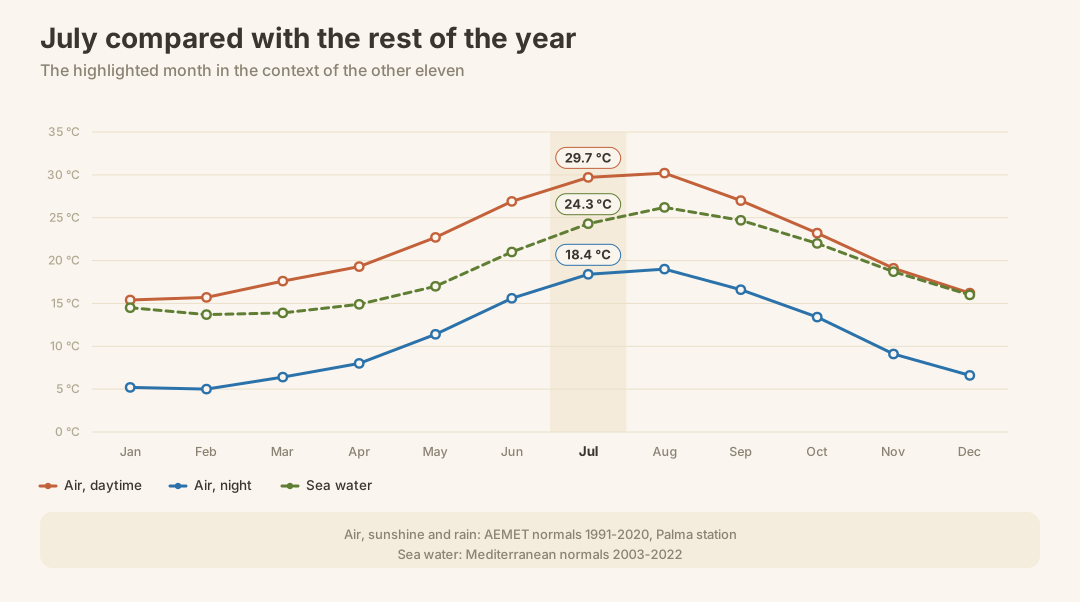
Water, sun and rain in July
Three factors determine how a July day on Mallorca feels: air temperature, water temperature, and the question of whether rain is even a possibility. All three follow their own logic in July, distinct from the preceding months.
Air temperature in July already reaches close to its annual maximum, with daytime highs of 29.7 °C. The sea, on the other hand, lags noticeably behind this rise: water warms up much more slowly than air, because it stores heat and only releases it again with a delay. This thermal inertia means that the Mediterranean around Mallorca doesn't reach its highest temperature until late summer, while the air passes its peak earlier. For July, this means in concrete terms: at 24.3 °C, the water is already pleasantly warm, but not yet as hot as it can become in high summer – a circumstance that actually suits many bathers rather well. In late summer the sea can feel almost too warm in places to be truly refreshing. In July, by contrast, the balance is ideal: warm enough for extended swimming sessions, but still cool enough to feel like genuine refreshment after a hot day on land.
When it comes to sunshine, July holds practically no surprises. 11.1 h per day means that clouds are the exception and an overcast day is almost a curiosity. This reliability is one of the main reasons the month is so popular with travellers seeking planning certainty for beach days or excursions.
When it comes to rain, July shows its driest side. Throughout the entire month, precipitation occurs on only 1 rainy day, with a total amount of 7 mm. What matters here is not just the small quantity, but its distribution: rather than the prolonged, steady rainy days familiar from more northerly climates, the little rain that does occur in July usually falls as a short, intense event – often an afternoon heat thunderstorm that passes as quickly as it arrives. Anyone spending a week on Mallorca in July, therefore, need not expect days of bad weather, but at most a single, usually brief shower that barely affects the rest of the stay.
What is possible in July — and what isn't
Swimming is one of the most reliable activities the island has to offer in July. With a water temperature of 24.3 °C and air temperatures of 29.7 °C, practically every day is a good beach day, and long stretches in the sea are possible without any shivering. Anyone travelling solely for the swimming is unlikely to make a wrong choice in July.
Hiking is a more nuanced matter. Routes through open, shadeless terrain, such as the inland plains, are simply not a good idea around midday – the combination of heat and blazing sun makes such outings tiring at best, risky at worst. Things look different in the early morning hours, or in the higher, shadier reaches of the Tramuntana, where pleasant walks can still be found even in July, provided one sets off early enough and carries sufficient water. Anyone planning a multi-hour mountain hike in high summer should schedule it firmly for the morning and spend midday in the shade or by the water.
Cycling in July works best in the early hours, while the roads have not yet heated up and the sun is not yet directly overhead. Ambitious road cyclists, who otherwise like to use the island for long training rides, typically shift their sessions in high summer to the morning – a ride spread across the day, as is easily possible in spring or autumn, quickly becomes a real test of circulation and concentration in July.
City and cultural visits, such as a stroll through Palma's old town, are generally possible in July but call for a little planning. The narrow lanes do provide shade, but the heated stone façades store the warmth well into the evening. Museums, churches and other air-conditioned or at least cooler indoor spaces are a welcome addition to the itinerary in July, particularly during the hours when the sun is at its highest. Extended city walks lasting several hours at a stretch, on the other hand, are precisely the kind of activity that doesn't work well in July – it pays to shift such plans to cooler parts of the day and deliberately leave midday free.
Where you're best off in July
Our measurement series comes from the weather station in Palma, so the figures quoted cannot be applied one-to-one to every part of the island. Still, in July it's worth looking at the fundamental differences between regions, since they shape how the very same summer day feels in different corners of Mallorca.
On the coast, proximity to the sea provides a certain balance: the air is often a touch milder than inland, and a light breeze off the water tempers the sharpest midday heat, especially on open beaches in the east and north of the island. Inland, however, such as on the plain around Sa Pobla or in the area around Manacor, heat builds up considerably more. Without the sea's cooling effect, the perceived temperatures there often exceed what is measured on the coast, and the evenings bring hardly any relief.
The Tramuntana in the north-west is a special case of its own. At higher elevations of the mountain range it is noticeably cooler than in the lowlands, and shady valleys and gorges still offer tolerable conditions for hiking even on the hottest July days – provided one sets off early. The coastal towns at the foot of the mountains additionally benefit from katabatic winds that can bring noticeable cooling in the evening hours, while sheltered coves positively store the heat during the day.
The south and south-east of the island, more open and flat, are more exposed to the direct sunshine that makes July so dry and hot. Anyone who values a breeze will find more relief on the exposed coastal stretches in the north and north-east than in the sheltered but stuffier coves of the south. In practical terms for a July visit, this means: those who don't cope well with heat are better off on the open coast or in the higher reaches of the Tramuntana than in the narrow lanes of inland towns or in still, south-facing coves.
What to pack in July
The basis for packing in July follows directly from the figures that define this month: plenty of sun, high temperatures, hardly any rain, and a sea that invites long swims.
Light, airy clothing made of natural fibres is the foundation, since with daytime highs of 29.7 °C, tight or synthetic clothing quickly becomes uncomfortable. A sun hat or cap belongs on the list, as does a pair of sunglasses with good UV protection – with 11.1 h of sun a day, the radiation is intense throughout the whole day, not just at midday. Sunscreen with a high protection factor should be packed in generous quantity, along with enough for reapplying in the afternoon, once the initial protection has worn off from sweating or swimming.
Because the water already reaches 24.3 °C, it's worth packing more than a single swimsuit or pair of swimming trunks – anyone who likes to spend long periods in the sea is best off bringing two sets, so a dry one is always available. A light, breathable jacket or a thin scarf for air-conditioned interiors is also sensible, since restaurants and hire cars often cool down considerably in summer, while it remains humid and warm outside.
Even though rain remains the exception in July, with only 1 rainy day, a very light, compact rain jacket or at least an umbrella belongs in the suitcase – in case of a brief but intense afternoon thunderstorm, which does occur occasionally at this time of year. A refillable water bottle is also part of the basic kit, since with the sustained heat, adequate hydration matters more than on any other trip during the year. Anyone planning to be out and about in the evening, for example in harbour towns, would do well to pack a light, long-sleeved item against mosquitoes, which are active during the warm nights.
July compared with the neighbouring months
Choosing between June, July and August essentially means choosing between three variants of the same high summer – with fine but noticeable differences.
June is, in a sense, the milder overture: daytime highs stand at 26.9 °C, noticeably below July's 29.7 °C, and the sea, at 21.0 °C, hasn't yet reached the warmth it offers in July. In return, June is considerably quieter: fewer visitors, more space on beaches and in restaurants, and the heat rarely becomes a genuine strain. Anyone seeking the full swing of summer, but willing to accept a sea that isn't quite summer-warm yet, is well served by June.
August, in turn, carries forward what July began: daytime highs stand at 30.2 °C, the water reaches 26.2 °C – both a step more intense than in July. The island itself is also fuller in August, with the main holiday season reaching its peak. Anyone seeking maximum warmth, both in the air and in the water, will find it more readily in August. Anyone looking for a compromise instead – water that's already summer-warm, but not yet the year's highest occupancy and heat – is better served by July.
When it comes to rainy days, the three months differ hardly at all; all three rank among the driest of the year. July counts 1 rainy day, putting it roughly on a par with August, while June brings a touch more precipitation and is thus regarded as a transitional month between the still more changeable spring and the stable high summer.
In short, July suits anyone who wants reliable sunshine, warm bathing water and a genuine summer feeling, without yet running into the densest travel period and the highest temperatures of the year, which are typical of August.
Frequently asked questions
How hot does it get in Mallorca in July?
Is July the driest month in Mallorca?
Is it too hot for sightseeing in Mallorca in July?
How much sunshine can I expect in Mallorca in July?
Is Mallorca very busy in July?
What's on in Mallorca in July
Worth doing now
- Snorkel along the coast while the sea is at its warmest and calmest.
- Save Palma sightseeing for the cooler morning or evening hours and head for a beach club by midday.