
Mallorca Weather in November: Temperatures & Travel Tips
Palma normals as an island-wide approximation: In November, the average daytime high is 19.1 °C and the sea is 18.7 °C, with 6 rain days and 5.4 hours of sunshine per day.
November shows Mallorca at its calmest: the summer visitors have left, the island breathes out, and the weather noticeably changes character. During the day it's often still mild enough for long walks without a jacket, but the evenings arrive early and cool. Anyone travelling in November should think less of beach days and more of hikes, markets and the quieter side of the island – the sea, by this point, is already noticeably cooler than the air.
The weather in November at a glance
November is the month on Mallorca when autumn finally takes hold. After the still summery warmth of October, temperatures drop noticeably: during the day the air reaches an average of 19.1 °C, while at night it cools to 9.1 °C. This puts November clearly below the level of the preceding months, though it doesn't yet feel wintry – on sunny days in particular, you can still go out at midday without a jacket.
The sun appears markedly less often in November than in summer: on average it shines for 5.4 h per day, a decline explained mainly by the shorter days – the sun sets early, and darkness already sets in by late afternoon. Anyone wanting to spend the day outdoors is best advised to plan deliberately around the daylight hours.
At this point the sea still holds the warmth of summer, but it is cooling continuously. At 18.7 °C, it is no longer summer-warm, but not off-puttingly cold either – a state that invites a brief dip rather than extended swimming.
Rain is very much part of the picture in November: precipitation falls on 6 rainy days, adding up to a total of 51 mm – more than in any other autumn month. This doesn't mean it rains constantly; rather, spells of fine weather alternate with individual, often heavier rain events.
Overall, November is a month of contrasts: mild midday hours, cool evenings, occasional rain, and a landscape turning green again after the dry summer months. It is no longer the time for a beach holiday, but it is very much the time for hikes, cycling tours and exploring the island away from the tourist season.
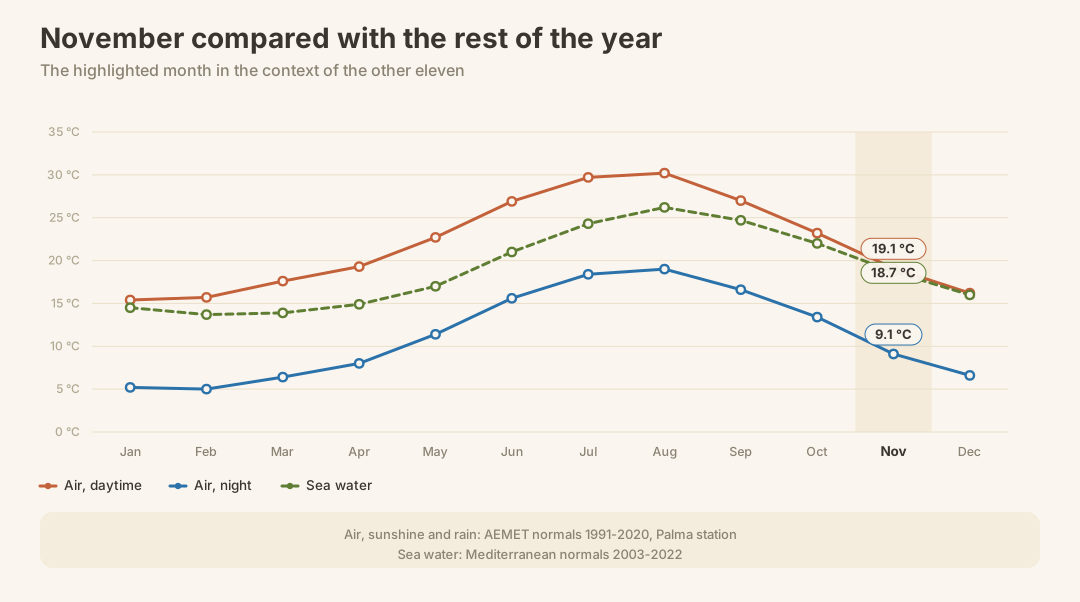
Water, sun and rain in November
Three factors determine how a day on Mallorca feels in November: air temperature, sea temperature, and the question of whether and when it rains. All three follow their own patterns in November, and it's worth understanding them before packing your suitcase.
Air temperature reacts comparatively quickly to weather patterns: a few sunny days are enough to send the air climbing to 19.1 °C, while an incoming cold front can cause temperatures to drop within hours. The sea, by contrast, reacts sluggishly. It has stored enormous amounts of heat over the summer and releases it only slowly – with a noticeable delay of several weeks compared to the air. This lag is why the sea in November, at 18.7 °C, is still more pleasant than one might expect given the cooler air. At the same time, it also means the peak sea temperature is already several weeks behind us, and from here it's downhill only. Anyone still wanting to get in the water in November should do so early in the month.
Hours of sunshine drop noticeably in November. At 5.4 h per day, the month lies well below late-summer levels. This is due less to a build-up of poor weather than to the simple fact that the days are getting shorter – the sun sits lower, sets earlier, and the usable hours of daylight shrink accordingly. For planning your day, this means excursions, hikes and photography are best scheduled around midday, when the light is strongest.
When it comes to rain, November shows its true autumnal face. Precipitation falls on 6 rainy days, adding up to a total of 51 mm – more than in any other month of the year. What matters here, though, is not the number of rainy days alone but their character: Mallorca rarely experiences the steady, prolonged rain typical of Central Europe in autumn. Instead, isolated, often intense rain fronts tend to form, bringing large amounts within a few hours, followed by days of dry and often sunny weather. Anyone spending a week on the island will usually experience several dry days, but should also expect at least one day when there's little to do outdoors.
Together, these three factors create the typical November picture: a month that offers plenty of sunshine but also genuine rain – and a sea that has just passed its best moment of the year.
What's possible in November — and what isn't
November is no longer a swimming month – it's best to accept that before packing your swimwear. At 18.7 °C, the sea is not icy, but for most people it is well below what feels comfortable. A brief, bracing dip is possible on calm, sunny days, but an extended beach day with swimming is no longer realistic. Anyone travelling specifically for swimming is in the wrong place in November.
The picture is different for hiking. Daytime temperatures of 19.1 °C are practically ideal for touring – considerably more pleasant than in summer, when heat makes many routes unappealing. The Serra de Tramuntana often appears in clear air in November, visibility is good, and the vegetation benefits from the first rains of the season. The one caveat: after heavy rain, paths can become slippery, and streambeds that lie dry in summer can carry water again. Anyone planning a route should keep an eye on the forecast for the preceding days.
Cycling benefits from similar conditions to hiking. The mild temperatures allow for longer rides without the summer heat burden, though the shorter days reduce the usable window. Anyone riding early in the morning or at dusk should factor in the early onset of darkness.
City visits, culture and cuisine are among the island's great strengths in November. Palma appears without the crowds of high season, restaurants and museums can be visited at a relaxed pace, and the mild midday temperatures are well suited to strolling through the old town. Even on a rainy day, indoor activities can fill the time well – an advantage you don't have in the height of summer.
What November does not offer is reliability in the sense of consistently stable weather. Anyone planning a week should factor in a plan B for one or two rainy days, rather than fixing every activity to a specific date. This flexibility is the price for the month's advantages: fewer tourists, lower prices, pleasant temperatures for activities – just not for the beach.
Where you're best off in November
Our measurement series comes from the Palma station and thus reflects conditions around the bay fairly well. We have no separate readings for individual locations on the island, but the fundamental differences can still be described without exact figures – and they are especially pronounced in November.
The Serra de Tramuntana is the region where autumn shows itself most clearly in November. The mountains capture moisture from the clouds, meaning it rains more often and sometimes more heavily here than on the coast. At the same time, it is precisely this moisture that makes the landscape look so green and alive in autumn. Anyone wanting to hike will find the most beautiful scenery here, but should bring weatherproof clothing and sturdy footwear and plan routes for sunny days where possible.
The south and southeast of the island, around the bays near Santanyí or Colònia de Sant Jordi, lie in the rain shadow of the mountains and are noticeably less affected by rain fronts. It stays dry here more often in November, the sun appears more reliably, and the mild temperatures are comfortable on sheltered beaches, even if only the hardiest venture into the water.
The inland plain, around Sineu or Petra for example, cools more sharply at night than the coast, since the sea no longer has a moderating effect here. Anyone staying inland should be prepared for cooler mornings and evenings; during the day the difference from the coast usually evens out again.
Palma itself and the bays of the east coast lie somewhere in between weather-wise: mild enough for walks, but also susceptible to the occasional heavy November shower. Anyone who values flexibility and doesn't want to forgo either culture or the option of a spontaneous beach visit is well placed here.
Overall: anyone prioritising sun and dryness in November should look to the south. Anyone seeking the island's green, dramatic side will find it in the mountains – at the cost of more rain and cooler temperatures.
What to pack for November
November calls for a wardrobe geared towards changeability, not a single weather pattern. Since the daily high sits at 19.1 °C, light to medium layers are usually enough during the day – a long-sleeved shirt, a jumper, or a light fleece jacket. Once the sun sets, the temperature drops to 9.1 °C, and a warmer jacket becomes necessary, especially for evenings outdoors.
Since rainfall is to be expected on 6 rainy days, a waterproof jacket or a compact umbrella is essential for the suitcase. November rain often arrives suddenly and heavily, which is why a light, quick-to-pull-on rain jacket is more practical than a bulky umbrella that's hard to hold in the wind.
Anyone wanting to hike should bring sturdy, water-resistant footwear. After rainfall, paths in the Tramuntana quickly become slippery, and dry streambeds can carry water again at short notice. Layered clothing is also advisable, since temperature differences between sunny midday spells and shaded or windy stretches can be considerable.
Swimwear doesn't necessarily need to be left out, but should be packed with realistic expectations: with a sea temperature of 18.7 °C, the sea is better suited to a short, refreshing dip than to extended swimming. Anyone wanting to make use of this is best off packing a quick-drying towel.
Since the sun in November shines for only 5.4 h per day and sets early, a small torch or head torch is worthwhile for later walks or hikes, where dusk can set in earlier than expected. Sunglasses remain useful despite the shorter days, since the sun sits lower in the sky in November and dazzles correspondingly more.
Anyone bearing these points in mind is well equipped for the changeability of the month, without filling the suitcase with unnecessary bulk.
November compared with the neighbouring months
Anyone choosing between October, November and December is really choosing between three different island experiences, even though the months lie close together on the calendar.
October is still noticeably more summery than November. The daily high sits at 23.2 °C, clearly above November's 19.1 °C, and the sea, at 22.0 °C, is still pleasant for swimming. So anyone still seeking genuine beach days is clearly better served in October. In return, beaches and tourist destinations are still somewhat livelier in October, and prices tend to be higher than in November.
December, on the other hand, marks the next step towards winter. With a daytime high of 16.2 °C, it falls again below November's level, and the sea temperature drops to 16.0 °C – for most travellers, swimming is then no longer an option. Hours of sunshine continue to decline, too, and the days grow shorter.
November thus occupies a middle position: milder than December, but already noticeably more autumnal than October. Anyone who values long hiking days, pleasant air temperatures without summer heat, and lower prices, without yet slipping into deep winter, will find November the fitting compromise. Anyone who absolutely wants to still swim should choose October instead, and anyone seeking Christmas markets and a wintry atmosphere is better served in December.
Rainy days are distributed with similarly irregular frequency across all three months, but the total amount rises noticeably from October to November and remains at a high level in December. Anyone prioritising dry weather has no guarantee in any of these three autumn and early-winter months, and should expect occasional rainy days – though more often in November than in October.
Frequently asked questions
How cool does it get in Mallorca in November?
Does it rain a lot in Mallorca in November?
Can you still enjoy outdoor activities in Mallorca in November?
How does November compare to October in Mallorca?
What should I pack for Mallorca in November?
What's on in Mallorca in November
Events
- All Saints' Day
- La Mostra Calvià
- DALIA GUTMANNPalma
- Es Gremi Sounds 2026 – The Excitement of Discovery (2-DAY PASS)Palma
- Dijous Bo
- Santa Cecília EMMAArtà
Worth doing now
- Hike coastal or mountain trails in the cooler, quieter autumn air.
- Round off the wine season with a last vineyard visit inland.