
Unfair mortgage clauses in Spain: what to check
If you suspect your Spanish mortgage contains a problematic clause, it is worth taking a close look at the deed and your statements. You cannot identify an unfair mortgage clause in Spain simply because a repayment seems high or a fee is frustrating. What matters is what was agreed, how the term was explained and what amounts were actually charged. Common issues include an interest rate floor on a variable-rate mortgage, arrangement fees and the risks of a foreign-currency mortgage. This guide shows you where to look, which documents are useful for a review and how to prepare a specific claim to your lender. Even if you have already repaid the loan, do not put the agreement and payment records aside too quickly. Whether you have a claim, and what deadline applies, depends on the legal basis of that claim.

Which mortgage clauses could be problematic?
A cláusula suelo is an interest rate floor on a variable-rate loan. If the agreed reference rate, such as Euribor, falls, the clause can prevent your mortgage rate from dropping below a set level. So the wording is not the only thing to examine: compare it with the interest rate adjustments and the repayments you were actually charged.

An arrangement fee is also worth a closer look if its basis was not clearly explained, there is no clear justification for it, or it was charged alongside other assessment or administration fees. Not every interest rate floor or fee is invalid simply because of what it is called.
| Contract term | What to check | Useful evidence |
|---|---|---|
| Interest rate floor (cláusula suelo) | Was a floor agreed and applied when the interest rate was adjusted? | Mortgage deed and repayment statements |
| Arrangement fee | Was the fee explained and charged alongside other fees? | Contract documents and fee statement |
| Foreign-currency mortgage | What currency risk was agreed, and what effect did it have? | Deed and statements |
Where can you find the interest rate floor in your mortgage?
Start with the mortgage deed and look for the terms covering the variable interest rate. These set out the reference rate and the rules for adjusting the interest rate; you need to read any potential floor in the context of those rules. The term cláusula suelo will not necessarily appear as a heading.
Then compare those terms with your statements: how was the interest rate adjusted, and what rate did the lender actually charge? This comparison is particularly helpful in distinguishing a potentially problematic clause from a mere suspicion. You can find more on how variable-rate loans work in our guide to fixed- and variable-rate mortgages in Spain.
What documents do you need for a thorough review?
First, gather the signed mortgage deed, documents relating to any subsequent changes, and statements showing interest, instalments and fees. To make a claim, it is particularly important to link the disputed contract clause to a specific charge: Which clause do you mean, when was it applied, and which payment do you therefore think needs to be reviewed?
Organise the documents by the original agreement, subsequent changes and payment history. If statements are missing or a fee is not clearly itemised, ask the lender in writing for the relevant documents and an explanation. Do not claim a specific refund amount yet if you cannot substantiate it from the payments.
What can be reviewed legally – and what cannot be answered in general terms?
The wording of the contract alone does not settle every dispute. With an interest rate floor, you need to examine how it was incorporated into the variable interest rate and what effect it had. With a fee, the focus is on how it was explained and calculated. A foreign-currency mortgage, in turn, may involve different questions and legal avenues.
These legal provisions provide useful context, but they are no substitute for reviewing your specific clause:
| Legal provision | Relevant to a mortgage review concerning |
|---|---|
| Art. 82 Ley Hipotecaria | Removal of a registered mortgage after repayment |
| Art. 105 and 140 Ley Hipotecaria | Liability and expressly agreed limits on liability |
| Art. 579 Ley de Enjuiciamiento Civil | Possible continuation of enforcement proceedings if a debt remains |
| Art. 1911 Código Civil | General liability extending to all assets |
Please note: A disputed contract clause, repayment of a loan and removal of the mortgage from the register are separate matters. Even after full repayment, a registered mortgage does not automatically disappear from the Land Registry.
What can you check before signing a new agreement?
With a new Spanish mortgage, you can raise any points you do not understand before the deed is signed before a notary. The binding offer is known as the FEIN. In particular, check that you understand the interest rate, any potential rate changes, fees and the conditions attached to any interest rate discounts offered. The required steps in the process give you an opportunity to ask questions in good time.
| Step before completion | Stated timeframe | How you can use it |
|---|---|---|
| Review of the binding offer (FEIN) | 10-day reflection period | Go through the contract terms and total costs |
| Explanation by the notary | 24 hours before the appointment to sign the deed | Clarify any outstanding questions about the terms and risks |
These steps apply to taking out a new mortgage. They are not deadlines for subsequently claiming back interest charged under an interest rate floor. If you already have a contract, what matters instead is its wording and the payments actually made. For a broader overview, see the guide to property finance in Mallorca.
How do you challenge a clause you believe is unfair?
A well-founded claim starts with specific facts – not a blanket assertion that the contract is ‘unfair’.
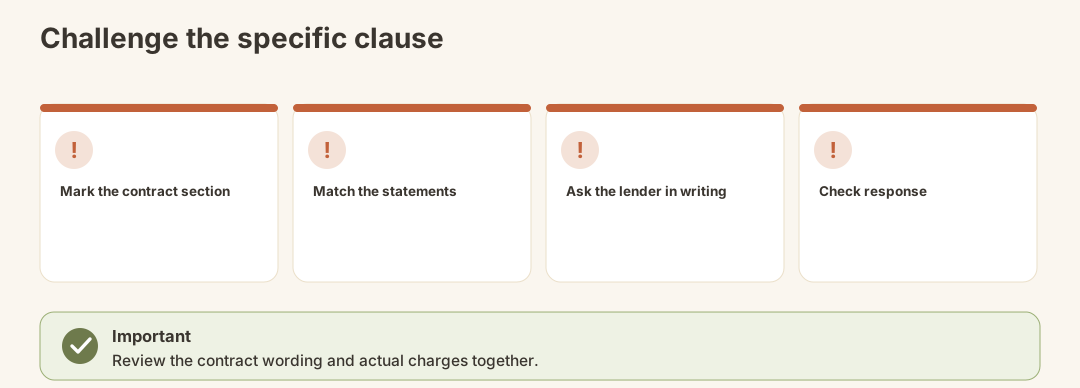
- Identify the clause: State where it appears in the signed deed and describe what it covers.
- Check how it was applied: Link interest rate adjustments, fees or currency calculations to the clause.
- Gather the documents: Have the relevant contract pages and proof of payment ready.
- Ask the lender for clarification in writing: Ask how the charges were calculated and explain which charges you are challenging.
- Have the response reviewed: If the legal effect, amount or limitation period remains in dispute, seek legal advice on your specific case.
Note: A questionable contract term does not automatically entitle you to a claim for a particular amount. Whether you can claim anything back, and if so what, must be assessed in light of the clause, how it was applied and the specific claim.
Can you still challenge an interest rate floor after paying off the mortgage?
Keep the deed and statements even if you have already paid off the mortgage. Repayment alone does not establish whether an interest rate floor was problematic or which limitation period applies to a potential claim. A blanket limitation period for every claim relating to the cláusula suelo would therefore be misleading.
Also, keep any potential claim separate from the registration issue: a mortgage that has been repaid in full is not automatically removed from the Land Registry. Cancellation generally requires a notarised deed of cancellation with the lender’s consent and an application to the registry. This is particularly important before a future sale; you can find out more in the guide to checking the Spanish Land Registry.
What should you do if you have a foreign-currency mortgage?
If your loan is denominated in a foreign currency, first check how the currency is described in the contract and how your statements have changed over time. A foreign-currency mortgage is not simply an interest rate floor by another name. So you should not assume the same basis for a claim or the same time limit applies.
For a challenge on grounds of mistake involving a foreign-currency mortgage, a time limit of four years from becoming aware of the relevant circumstances is cited. This does not create a general four-year time limit for all objections to mortgage clauses. If you have such a mortgage, have the appropriate legal route and the date its time limit starts checked against your documents.
The most common mistakes when reviewing your mortgage
- Searching only for the word “unfair”: The contractual terms and how the amounts were actually calculated tell you more.
- Assuming that an expected lower payment gives you a claim: With variable-rate loans, you need to consider the reference rate, the agreed floor and the rate charged together.
- Claiming back every fee without distinction: Check what it was charged for and how it was explained.
- Confusing repayment with removal from the land register: These are separate matters.
- Applying one time limit to every clause: An interest rate floor and a challenge to a foreign-currency mortgage must not be treated as the same thing.
Checklist: Are you ready to make your claim?
- You have the signed mortgage deed.
- You have marked the clause you are challenging in the contract.
- You have taken any changes to the contract into account.
- You have linked payment, interest or fee statements to the clause.
- Your written query to the lender identifies the specific charge or financial burden.
- If the mortgage has been repaid, you are treating the claim and removal from the land register separately.
- You have not assumed an unverified blanket time limit for a potential claim.
What happens next?
The lender’s response will help you check whether the wording of the contract matches your statements and whether your questions about the charges have been answered. If a dispute remains about the validity of the clause, a refund or a deadline, you will need an individual legal assessment. If you are also considering changing your financing, treat that as a separate decision; the guide to refinancing a mortgage in Spain explains this separate topic.
Conclusion
You cannot reliably identify a problematic mortgage clause from a single term. Read the deed alongside your statements, identify the specific charge and first ask for a clear explanation. Particularly if you have already paid off the mortgage or have a foreign-currency loan, keep any claim, deadline and, where applicable, removal of the mortgage from the Land Registry clearly separate.
Not legal or tax advice. Whether a clause is invalid and whether you have an enforceable claim can only be assessed from your contract and payment history.
Official sources
- Boletín Oficial del Estado (BOE) – official legislation, including the Código Civil, Ley Hipotecaria, Ley de Enjuiciamiento Civil and regulations on property loans.
- Banco de España – official information on banking and mortgages.
- Consejo General del Poder Judicial – information on Spanish case law.