
Buying a cooperative housing property in Spain: What to check
If you want to buy a co-operative flat in Spain, start by clarifying one question: What exactly are you buying – a specific flat or, initially, a stake in a housing project? That determines which documents you need, when payments are due and what risks you bear during construction. An attractive plan and a quoted final price are not enough.
This guide shows you how to assess such an offer, from what you are actually buying to the land, construction progress and payment schedule. You will also learn what benefits may arise in the specific project and why any claimed saving can only be assessed against a complete breakdown of costs. The Mallorca price examples provide a comparison with conventional new-build properties – they are not co-operative offers. Ultimately, your decision should rest on the documents for the particular project, not the label used in the property listing.

What does buying a co-operative flat mean?
The term “co-operative flat” does not tell you when you become the owner of a particular flat. Ask for a written explanation of the status you acquire when you first sign, how a flat is allocated to you and which contract governs the eventual purchase.

It is equally important to distinguish this from a comunidad de propietarios: this is the owners’ association for a residential development. A flat with a communal pool or shared garage is not, for that reason alone, a co-operative flat. What matters is the legal structure of the purchase, not the building’s facilities.
What advantages can this model offer?
One advantage could be good value for money overall. But you can only assess that once the land, construction costs, project costs, taxes and any potential later additional payments are set out in a clear breakdown. You cannot infer a general saving compared with a conventional new-build purchase.
The opportunity to have a say in a project that is still taking shape may also appeal to you. Whether you can actually influence decisions, and how, must be clear from the project documents. So ask not only about the planned flats, but also who approves changes and who pays for them.
How does the purchase process work?
For a project that has not yet been completed, due diligence, payments and handover happen at different times. Conventional new-build purchases typically proceed through reservation, payments during construction and the final deed signed before a notary. Do not assume a co-operative offer follows the same process: ask to see the steps for the specific project.
- Clarify the purchase structure: What do you sign first, and what rights does it give you?
- Check the project: Who controls the plot, what building documents are available, and which flat is planned?
- Check the financing and payment schedule: What amounts are due for what, and what happens if there are changes or delays?
- Check the safeguards before making payments: Ask for the required evidence of how deposits are protected, and have someone assess what it means for your contract.
- Prepare for completion: Clarify what requirements must be met before the notarial deed is signed, the property is handed over and ownership is subsequently registered in the Land Registry.
Warning: A reservation or private contract is no substitute for checking the plot and your contractual rights. When buying property, you may take on obligations before your appointment with the notary.
Which documents and contract clauses matter most?
Ask the co-operative or the people responsible for the project specific questions – and insist on answers in the documents, not just during the sales pitch.
| Area to check | What you should clarify in writing |
|---|---|
| Plot | Who is listed as the owner, and what charges or restrictions apply? |
| Flat | How are its location, floor area, fixtures and fittings, and allocation to you described in binding terms? |
| Project costs | Which items are included in the stated amount, and which are not? |
| Payments | When are payments due, and how are deposits protected? |
| Changes | Who decides on changes to the plans, price or fixtures and fittings? |
| Withdrawal | What happens if you leave or the project does not proceed as planned? |
| Completion | What requirements must be met before the notarial deed is signed and ownership is registered in the Land Registry? |
A recent extract from the Land Registry is an important starting point when checking the plot. For a construction project, you should also check the permits and the stated stage of construction. For more information, read about how to check the Land Registry in Spain and what to look out for when buying off-plan.
What does the advertised price really tell you?
A figure in a property listing is not yet a reliable total budget. Allow for the payments set out in your contract, and bear in mind that some costs may only become clear after you make your initial commitment. Nor can you infer the tax treatment from the word “cooperative” alone: for a standard property purchase, different taxes apply to resale properties and new builds.
The following table shows published asking prices for standard new-build developments on Mallorca. It establishes neither the prices of cooperative homes nor any price advantage they may offer.
| Standard new-build listing | Location | Published asking price |
|---|---|---|
| Las Terrazas de Cala Bona | Cala Bona | from €316,822 |
| Residencial Los Palmitos | Cala Ratjada | from €410,000 |
| Marqués de Fontsanta 72 | Palma de Mallorca | from €419,000 |
A “from” price describes the particular listing, not the total cost of your home. For budgeting, see the separate guides to additional property purchase costs on Mallorca and AJD when buying property in Spain.
What should you compare a cooperative offer with?
Where possible, compare homes in similar locations with similar sizes and features. Bear in mind one important difference: you can view a home that is ready to move into; with a project still under construction, you also need to assess its prospects for completion and the contract terms.
These examples, too, are no co-operative flats. These are published new-build listings in Sa Coma, each with its listing date.
| New-build listing in Sa Coma | Asking price | Listing date |
|---|---|---|
| Premium apartment near the sea | €375,000 | 16.03.2026 |
| Premium apartment in a prime location | €405,000 | 16.03.2026 |
| Premium apartment near the sea | €465,000 | 16.03.2026 |
These prices are points of comparison, not a valuation of any particular co-operative project. Only a comparison of the total costs and the risks you would take on will show whether an offer is better value.
A note about our own interests: mallorca.com also lists properties. The publisher of this guide therefore has its own property listings; a listing there, too, is no substitute for legal and technical due diligence on a property.
Which risks matter most?
The biggest practical risk is tying up money before your rights and the conditions for the project are clear. A construction project also brings the possibility of changes to plans and costs, as well as delays to completion. Check how construction progress relates to payment due dates and what protection is in place for each deposit.
Another risk is confusing project promises with enforceable rights. Any apartment shown, estimated handover date or quoted amount should be reflected in the binding documents. If there are no clear rules for changes or for withdrawing, get them clarified before you sign.
Note: This guide is not legal or tax advice. In particular, your contractual position and the tax implications of a co-operative offer must be assessed based on how it is actually structured.
Most common mistakes when buying
- Assuming you know what you’re buying from the name: Only the contracts show what you acquire initially and how you come to own the apartment.
- Reserving before checking the property: Check the land register, project documents and payment terms before making a binding decision.
- Comparing only the advertised price: A comparison without a full breakdown of costs can be misleading.
- Paying deposits without documentation: Before every payment, ask what it is for, when it is due and how it will be protected.
- Leaving all the checks until the notary appointment: You should clarify the state of construction, permits and contractual risks beforehand.
Checklist before you sign
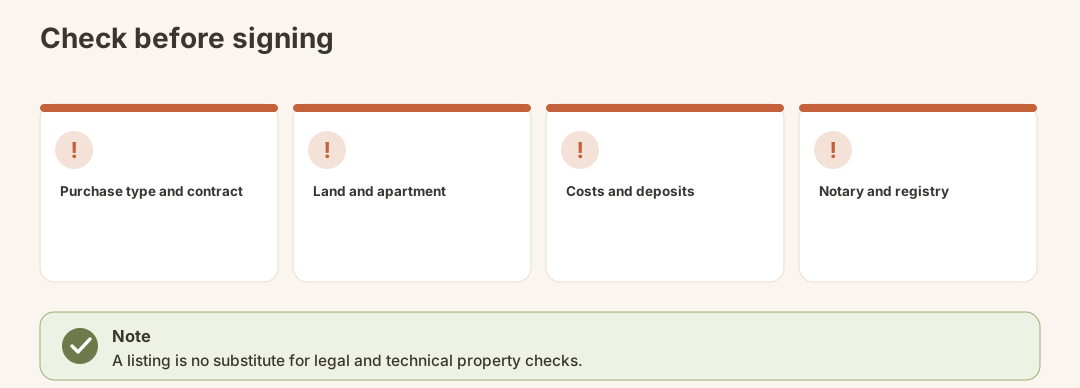
- I can explain what I legally acquire when I first sign.
- The land and any charges against it have been checked.
- The planned apartment and its fittings are described in writing.
- All known costs and payments are itemised.
- The contract clearly explains what happens if there are changes or delays, or if I need to withdraw.
- The documents showing how deposits are protected have been checked.
- The requirements for the notarial deed and land registry registration are clear.
- I have obtained independent advice on the contract and tax implications.
What happens next?
If the checks are satisfactory, keep track of the agreed payment dates and the documents relating to each payment throughout the project. Before completion, check the finished apartment against what was promised in the contract.
After a standard property purchase, you will also need to deal with taxes, land registry registration and transferring utility contracts. The specific route to completion for your cooperative project determines which steps are possible and when. For general guidance on preparing, see our information about the notary appointment when buying a property.
Conclusion
A cooperative apartment may be worth considering if the project, contract and overall budget meet your needs. The name alone, however, guarantees neither a lower price nor a particular date when you will acquire ownership. Check your rights and payments first, then the land and building project – and only then compare the full cost with other apartments.