
Costa de la Calma – Quiet Rocky Coast in Southwest Mallorca

Places to stay in Costa de la Calma
AdTo load the accommodation map by our partner Stay22, we need your consent for marketing cookies. Your consent applies to all marketing content on mallorca.com.
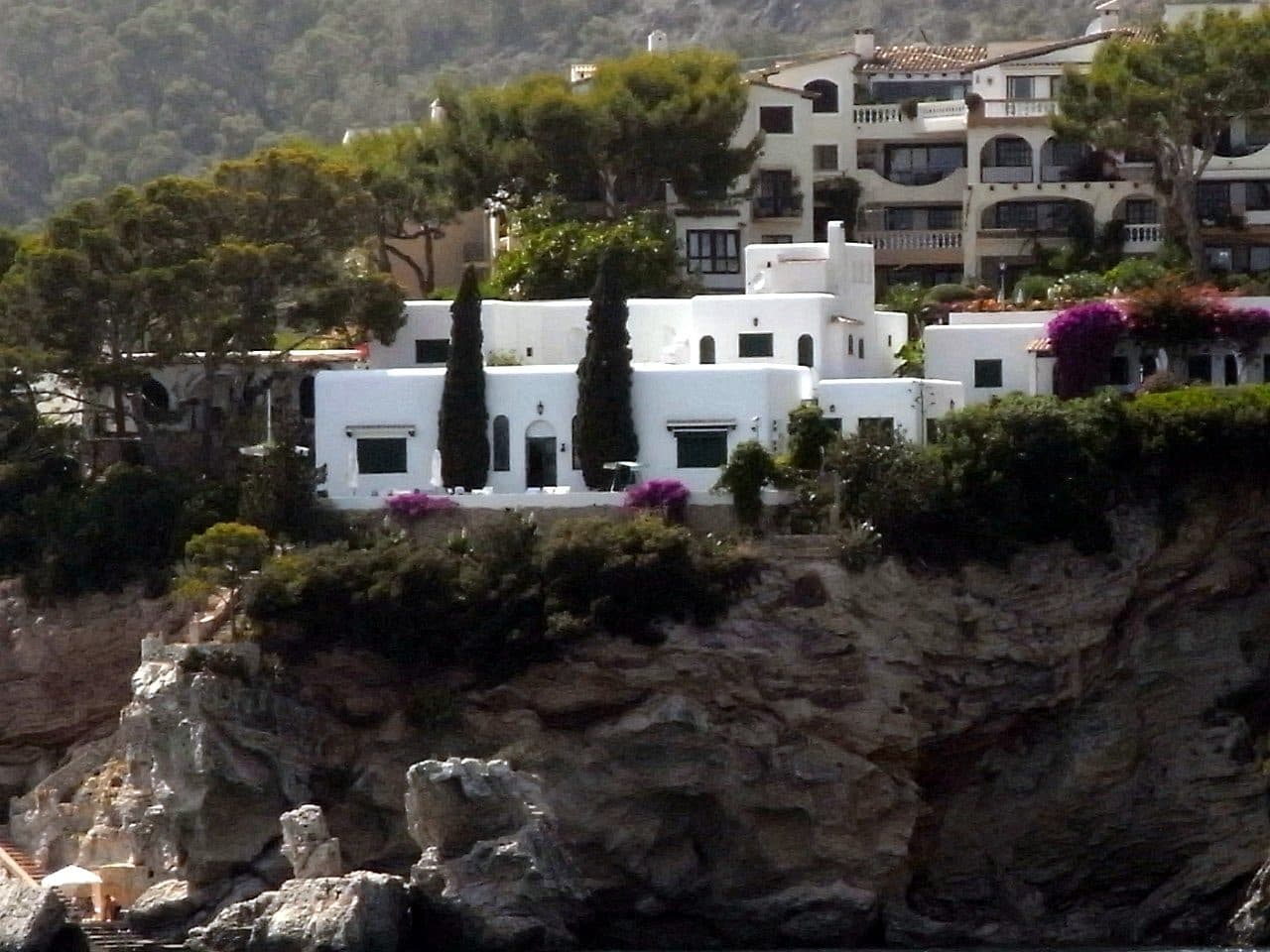
Costa de la Calma lies in southwest Mallorca between Santa Ponça and Peguera. Its name means “Coast of Calm” — and describes the area remarkably well. Villas, apartment complexes, holiday homes, smaller hotels and abundant greenery shape the slopes above a rocky coastline. Here, the sea is not merely a backdrop but the focal point of the area.
For visitors, Costa de la Calma is particularly worthwhile as a peaceful coastal base. Swimming takes place from rocks, small coves and paved platforms; a different destination is required for a classic beach day on a long stretch of sand. The coast becomes especially atmospheric toward evening, when residents and holidaymakers gather at the swimming spots to watch the sunset.
For residents, its value lies elsewhere. Costa de la Calma is more residential area than holiday resort and remains inhabited beyond the main season. Grocery stores, restaurants, cafés, personal care services, and sports and fitness facilities cover important aspects of everyday life. For a wider range of amenities, the area is strongly oriented toward nearby Santa Ponça.
However, the settlement pattern creates clear differences: anyone living close to the main road, shops and bus stops can manage many errands on foot. In the hillside areas and quieter side streets, a car is considerably more practical. Costa de la Calma is therefore particularly suitable for people seeking sea views and an understated residential environment.
History of Costa de la Calma
Costa de la Calma is a coastal district and residential and holiday development. Villas, terraced houses, apartments and smaller accommodation businesses are distributed along the main road, on the slopes and above the rocks.
The surrounding area was inhabited long before the present development. The most important historical point of reference is Puig de sa Morisca near Santa Ponça. A settlement of the Talaiotic culture was archaeologically investigated there. The site documents use extending through antiquity and into the Moorish period. For Costa de la Calma, it is less a local sight in the narrow sense than tangible evidence that this coastal landscape has formed part of inhabited areas for a very long time.
Another historical turning point in the nearby area occurred in the 13th century. Jaume I of Aragón landed with his army near Santa Ponça to conquer Mallorca. A stone cross near the present-day marina commemorates the landing. The event remains part of the local culture of remembrance and is marked in Santa Ponça on the first weekend of September with reenacted scenes depicting the landing and subsequent battles.
Costa de la Calma itself is characterized by holiday apartments, houses and small hotels. The absence of large hotel complexes is precisely what shapes its identity. History appears here primarily in the archaeologically significant surroundings and at the historical landmarks near Santa Ponça.
Sights in Costa de la Calma
The sights of Costa de la Calma are predominantly scenic. Its appeal comes from the interplay of residential streets, rocky outcrops, small access points to the water and open views across the sea. Those who embrace this character will discover a coastal area that reveals itself gradually rather than along a conventional sightseeing route.
Rocky Coast of Costa de la Calma
The long rocky coastline is the area’s true landmark. Small coves, rocky ledges, paved swimming areas, and steps or ladders into the water take the place of a continuous sandy beach. The clear sea can be observed easily from many points.
For a coastal walk, it is best not to look for a continuous promenade. The most interesting perspectives are found where side streets and access points lead between the buildings toward the water. Private properties and difficult rocky terrain create natural boundaries. Sturdy footwear is advisable away from paved surfaces.
Cala Blanca
Cala Blanca is one of the named coastal spots in Costa de la Calma and also a venue for the local summer festivities. The cove is therefore one of the area’s explicitly designated event locations.
Plaça de les Palmeres
Plaça de les Palmeres is one of the clearly identified meeting places in the development. Its importance is particularly evident during the Fiestas de Verano, when it serves as an event venue together with Cala Blanca. Outside such occasions, it is not a monumental town square but a point of orientation within the everyday fabric of this residential area.
For visitors, it is less a destination in its own right than one element in understanding the area.
Puig de sa Morisca
Puig de sa Morisca is located near Santa Ponça and is the most important cultural and historical excursion destination in the immediate surroundings. The settlement of the Talaiotic culture investigated there brings earlier periods of the region to life. Excavations and restored structures demonstrate that this coastal area was used long before the present development.
A visit offers a meaningful contrast to Costa de la Calma. Puig de sa Morisca provides insight into the island’s early history. The two places can therefore easily be combined in one day.
Santa Ponça Landing Cross
Near the marina in Santa Ponça, a stone cross commemorates the landing of Jaume I in the 13th century. It refers to an event that was decisive for Mallorca’s subsequent history and continues to be publicly commemorated within the municipality.
From Costa de la Calma, the cross is a convenient destination for anyone wishing to complement time by the sea with a historical landmark. Its significance is understood particularly well in combination with Puig de sa Morisca and the town of Santa Ponça.
Food and Drink
Restaurants, bars, cafés and bakeries are among the clearly represented types of business in Costa de la Calma.
This is convenient for visitors because a swimming stop or an evening by the sea can be combined with a meal without having to travel elsewhere.
For residents, the dining scene is more than a tourist amenity. Cafés, bars and restaurants create meeting places within the widely dispersed development. Bakeries and grocery stores also make short everyday journeys possible, provided the home is close to the main thoroughfare.
Anyone specifically seeking Mallorcan cuisine should not automatically assume that every establishment focuses on traditional food. The area caters to both residents and holiday guests, and its dining options are correspondingly diverse. Its strength lies in uncomplicated meals close to the coast.
Eating, drinking and staying in Costa de la Calma
The best-rated businesses from our directory, ordered by Google rating — not by advertising.
Restaurants
- KHAO MALLORCA5.0· 214 reviews
- Green Man Cervecería4.9· 73 reviews
- El Coquí4.9· 38 reviews
- Bon Thai Santa Ponça4.8· 149 reviews
- Durty Nelly Pub4.8· 36 reviews
- ZAGROS PIZZERIA KEBAB4.8· 23 reviews
- pizzeria Italia4.7· 348 reviews
- Dos Cocineros Mallorca4.7· 254 reviews
- Hong Kong4.7· 216 reviews
- Tom's Pub4.7· 77 reviews
- O‘BRIENS IRISH SPORTS CAFE4.7· 43 reviews
- Rebels bar4.7· 40 reviews
Cafés and bakeries
- JOHO Ice Paradise Santa Ponsa4.9· 153 reviews
- Destilados y Helados4.9· 38 reviews
- Bar Granada4.7· 284 reviews
- Sebastián Bar and Grill4.7· 132 reviews
- Pirate Candy Shop Mallorca4.7· 24 reviews
- Le Cafe Flora4.5· 341 reviews
- PiZZERiA KEBAB y cafeteria MIL Y UNA NOCHES servicio domicilio partir de 40 es gratis4.3· 21 reviews
- Joygelato3.2· 24 reviews
Bars
- McTavishes4.5· 918 reviews
- Coco Bay4.5· 240 reviews
- Boston O'Brady's4.5· 137 reviews
- ALOHA Cocktail Bar4.5· 116 reviews
- Pub Carlos III4.5· 115 reviews
- Flamingos Irish Pub4.4· 334 reviews
- Flozzies Bar4.3· 155 reviews
- Bar Code 74.2· 99 reviews
- Dutche4.0· 85 reviews
- Green Hills Disco3.4· 34 reviews
- Infinity Bar2.9· 22 reviews
Hotels and fincas
- Purobeach Resort Santa Ponsa4.6· 67 reviews
- Apartamentos acapulco4.5· 11 reviews
- Sun Beach Santa Ponça4.4· 1249 reviews
- Mimosa.4.4· 49 reviews
- Apartamentos Holiday Center Santa Ponsa4.3· 699 reviews
- Globales Costa de la Calma4.3· 542 reviews
- Hilton Mallorca Galatzo4.2· 1526 reviews
- Holiday Park Apartments4.0· 428 reviews
- Globales Apartamentos Verdemar3.9· 523 reviews
Activities and Excursions
Activities in Costa de la Calma begin by the water. The coast is suitable for people who enjoy swimming, sitting on the rocks or watching the sunset. An extensive organized leisure program, by contrast, is not central to the area. Santa Ponça is a good choice for historical exploration.
Swimming Along the Rocky Coast
The swimming spots consist of rocks, small gravel areas and paved platforms. Access to the water is sometimes via ladders, steps or rocky ground. This can be very pleasant for confident swimmers, and the small access points feel less like a conventional holiday beach.
The downside is the limited comfort on land. Shade and level areas for lying down are not available everywhere, while rocky entry points require care. Water shoes can be helpful on rough or slippery surfaces. When the sea is unsettled, avoid entry points that may appear trouble-free in calm water.
Sunset at Cala Blanca
The sunset view makes the coast a popular place to end the day.
Anyone wishing to experience the sunset should choose a safe place on a paved surface early enough. The rocks become more difficult to assess at dusk. An evening on the coast can easily be combined with a visit to a restaurant or bar in the area.
Excursion to Santa Ponça or Peguera
Costa de la Calma lies between Santa Ponça and Peguera. Both are therefore convenient excursion destinations and can easily be combined with a stay in Costa de la Calma.
Archaeological Excursion to Puig de sa Morisca
Puig de sa Morisca combines physical activity with history. The archaeological site near Santa Ponça reveals traces of the Talaiotic culture as well as later periods. This gives the coastal region historical depth.
For an excursion, it is advisable to combine the site with other stops in Santa Ponça. This creates a varied day encompassing archaeology, coastal scenery and the historical connection to the landing of Jaume I.
Sports and Fitness in Everyday Life
Sports and fitness facilities are among the more strongly represented areas in the local business landscape. They cater not only to holiday guests but also to people who live permanently in Costa de la Calma. Combined with swimming and walking through the partly ascending residential streets, they make an active daily routine possible without the area presenting itself as a major sports center.
Beaches in Costa de la Calma
2 beaches and coves with their own page belong to Costa de la Calma.
Festivals and Events
The most important event explicitly associated with the area is the summer celebration. For larger historical reenactments, attention turns to Santa Ponça, whose festival program is closely connected with the history of the entire coastal region.
Fiestas de Verano Costa de la Calma
The Fiestas de Verano take place at Plaça de les Palmeres and Playa de Cala Blanca. The choice of venues itself reveals the festival’s character: it connects the development’s social meeting place with the coast that gives Costa de la Calma its name and identity.
For residents, the summer festivities are a rare occasion when people from the scattered residential areas visibly come together. Visitors experience a livelier side of the area than on ordinary days. Because event programs may change, it is advisable to consult the municipality’s current calendar before visiting.
Commemoration of the Landing of Jaume I in Santa Ponça
On the first weekend of September, Santa Ponça commemorates the landing of Jaume I in the 13th century. Residents reenact the arrival and subsequent battles. Although the event belongs to Santa Ponça, it is an important historical point of reference for Costa de la Calma in the immediate vicinity.
Anyone staying in the area at that time can combine time on the rocky coast with the festivities in Santa Ponça. The landing cross near the marina provides a permanently visible point of reference for the reenacted events.
Upcoming dates
Getting There and Getting Around
Costa de la Calma lies on Mallorca’s southwestern corridor between Santa Ponça and Peguera. The main road connection is the Ma-1, which provides access to Palma, the airport and the other coastal towns. Within the development, houses, apartments and smaller hotels are distributed between the main road, side streets, hillside locations and the rocky coast.
From Palma Airport
From Palma Airport, the route follows the Ma-20 and then the Ma-1. The road distance is 37 kilometers, and the journey takes around 39 minutes. In practical terms, this means a largely direct arrival via the main road network without having to pass through central Palma.
For arrivals with luggage, a car or organized road transfer is particularly convenient because, depending on the accommodation, the final section within Costa de la Calma may lead uphill or through smaller residential streets.
From Central Palma
From central Palma, the distance via the Ma-1 is 27 road kilometers. The journey takes around 38 minutes. Costa de la Calma is therefore easily accessible for occasional appointments and leisure trips to the capital. For daily commuters, however, the route remains a fixed part of the day and should be considered carefully when choosing a residential location.
Getting Around the Area
A private car is not essential in every location, but it makes everyday life more flexible. Anyone living near the main road, grocery stores and served bus stops can complete many short journeys on foot and organize trips to neighboring towns by bus. In higher residential streets, slopes and dispersed development make journeys longer.
Parking is available mainly along streets and in smaller areas. Spaces are limited near popular swimming access points. Respecting property entrances is particularly important because large parts of Costa de la Calma are residential and were not designed as visitor parking areas.
Bus
Costa de la Calma is served by regional buses, with current stops and routes displayed separately on the page. The bus service is particularly important for journeys to Santa Ponça, Peguera and toward Palma.
Bus lines to Costa de la Calma at a glance
| Line | Route | Departures/day | First | Last |
|---|---|---|---|---|
| 102 | Peguera - Palma | 142 | 06:42 | 23:20 |
| 122 | Port d'Andratx - Santa Ponça | 106 | 06:35 | 23:35 |
| A11 | Peguera - Aeroport | 78 | 00:35 | 23:55 |
| 123 | Santa Ponça - Cas Català | 36 | 05:54 | 23:24 |
| 106 | El Toro - Palma | 24 | 06:27 | 22:54 |
| 101 | Port d'Andratx - Palma | 8 | 06:25 | 23:28 |
| 131 | Santa Ponça - Banyalbufar | 6 | 10:25 | 17:16 |
From the official GTFS feeds (TIB/SFM), no real-time data. The figures cover all stops in the town; weekend and holiday services differ — check with the operator before travelling.
Getting there by bus
Bulevard - Garrovers 1 (11138) · 2.2 km as the crow flies
- 101Port d'Andratx - Palma · Daily
- 102Peguera - Palma · Daily
- 122Port d'Andratx - Santa Ponça · Daily
- 131Santa Ponça - Banyalbufar · Daily
- A11Peguera - Aeroport · Daily
Bulevard - Garrovers 2 (11137) · 2.3 km as the crow flies
- 101Port d'Andratx - Palma · Daily
- 122Port d'Andratx - Santa Ponça · Daily
- 131Santa Ponça - Banyalbufar · Daily
- A11Peguera - Aeroport · Daily
Palmira 1 (11133) · 2.4 km as the crow flies
- 101Port d'Andratx - Palma · Daily
- 102Peguera - Palma · Daily
- 122Port d'Andratx - Santa Ponça · Daily
- 131Santa Ponça - Banyalbufar · Daily
- A11Peguera - Aeroport · Daily
Malgrats 1 (11082) · 2.4 km as the crow flies
- 106El Toro - Palma · Daily
- 123Santa Ponça - Cas Català · Daily
Timetable data: official GTFS feeds (TIB/EMT), no real-time — check with the operator before travelling.
Living in Costa de la Calma
Costa de la Calma is attractive to residents because the area is not organized entirely around a large hotel and beach zone. Residential buildings, villas, terraced houses and apartment complexes make up a substantial part of the development. Holiday use is part of the area but dominates its appearance less completely than in major seaside resorts.
Local Shopping and Services
Supermarkets and grocery stores are among the more strongly represented types of business. There are also cafés, bakeries, hairdressers, beauty services, and sports and fitness businesses. Everyday shopping and various personal services can therefore generally be handled locally, especially from centrally located homes.
Anyone planning to move should check specifically what the route from the preferred home to regularly needed facilities is like.
Coastal and Hillside Residential Areas
Along the seafront and in streets close to the coast, direct access to the water is the main attraction. Apartments and houses on the slopes may offer views of the sea or coves but often involve more uphill walking. Quiet streets surrounded by pines, palms and residential buildings differ markedly from the busier thoroughfares of neighboring towns.
The housing stock includes villas, detached houses, semi-detached and terraced houses, and apartment complexes. This range appeals to different households, from people with a permanent home here to property owners and holiday residents. Elevation, proximity to the main road and access to the coast are decisive factors.
Everyday Life Without a Car
Costa de la Calma works best without a car in its more central and flatter areas. Shops, restaurants and bus stops are closer together there. Anyone living on the hillside or in a more remote side street must expect longer walks and slopes. Shopping and journeys to Palma then become considerably easier with a car.
The bus provides a useful foundation for people who do not need to travel flexibly to many different destinations every day. Before choosing a home, commuters with fixed working hours should check whether the timetable and walk to the stop fit their personal daily routine.
Commuting to Palma
The journey to central Palma follows the Ma-1, covers 27 road kilometers and takes around 38 minutes. This is manageable for occasional commuting. For daily journeys, however, it matters whether the home has quick access to the main route or whether several residential streets must first be crossed.
Costa de la Calma is therefore more suitable for people who consciously wish to live outside Palma and are willing to balance their commute against a quieter coastal environment. Anyone who must travel to the capital at varying times every day gains considerably more flexibility with a car.
Summer and Winter
In summer, swimmers, holiday apartments, bars and restaurants bring the coast to life. The Fiestas de Verano also create an additional local meeting place. Nevertheless, Costa de la Calma remains smaller in scale and more residential than the major holiday centers.
Anyone planning to stay throughout the year should assess not only the summer sea view but also the routes to shops, buses and everyday services.
Guests
German tourists also visit Costa de la Calma. The coexistence of permanently occupied homes and holiday properties is part of the area’s character.
Practical Information for Your Visit
Costa de la Calma requires different planning from a conventional seaside resort. A visit is particularly worthwhile for the coast, a swimming stop and the sunset. Costa de la Calma can also be combined with Santa Ponça or another destination.
Best Time of Day
The morning is suitable for peaceful views of the water. Toward evening, the sunset gives the coast its most compelling atmosphere, although popular access points also become busier. On very warm days, the limited shade should be taken into account. A late-afternoon visit can easily be followed by a meal.
Time Required and Combinations
A standalone walk through Costa de la Calma is likely to be fairly short. More time becomes worthwhile when swimming, a break on the coast or a restaurant visit is included. For a full excursion day, combining it with Puig de sa Morisca, the landing cross and Santa Ponça, or with Peguera, is recommended.
Parking and Access to the Water
Parking is mainly along streets and in smaller areas. Swimming access points and residents’ driveways should not be blocked. Slopes, steps and rocky passages may have to be negotiated between the parking place and the water. Light luggage is therefore more practical than extensive beach equipment.
Swimming with Children
The local coastline is not a continuous, gently sloping sandy beach. Ladders, steps and rocks require close supervision and are more suitable for confident swimmers. A suitably appropriate swimming spot should be chosen for small children and families who need plenty of room to play.
Realistic Expectations
This is an inhabited coastal development with private properties, traffic, restaurants and small tourism businesses. Its tranquility does not come from complete isolation but from the low-density development and absence of large hotel complexes. Anyone seeking exactly that will find a pleasant alternative to the busier holiday resorts of the southwest.
Local businesses and services
The best-covered sectors in our directory for Costa de la Calma — each with address, contact details and opening hours.
- Restaurant / Gastronomy54 listings
- Hairdresser / Beauty21 listings
- Supermarket16 listings
- Bar, Nightclub & Disco15 listings
- Sports & Fitness13 listings
- Café & Bakery9 listings
Run a business here? Add it to the directory for free and be found on this page. Add your business
Latest news from Calvià
- Palma transport push: plan sought with three neighbours
- Mallorca drive-in cinema brings four films to Port Adriano
- 27 Mallorca towns lack Alcover and La Balanguera
- Calvià labour dispute looms after two-year pay row