
Sa Ràpita: Coastal Town Between Harbor, Es Trenc and Salt Flats

Places to stay in Sa Ràpita
AdTo load the accommodation map by our partner Stay22, we need your consent for marketing cookies. Your consent applies to all marketing content on mallorca.com.
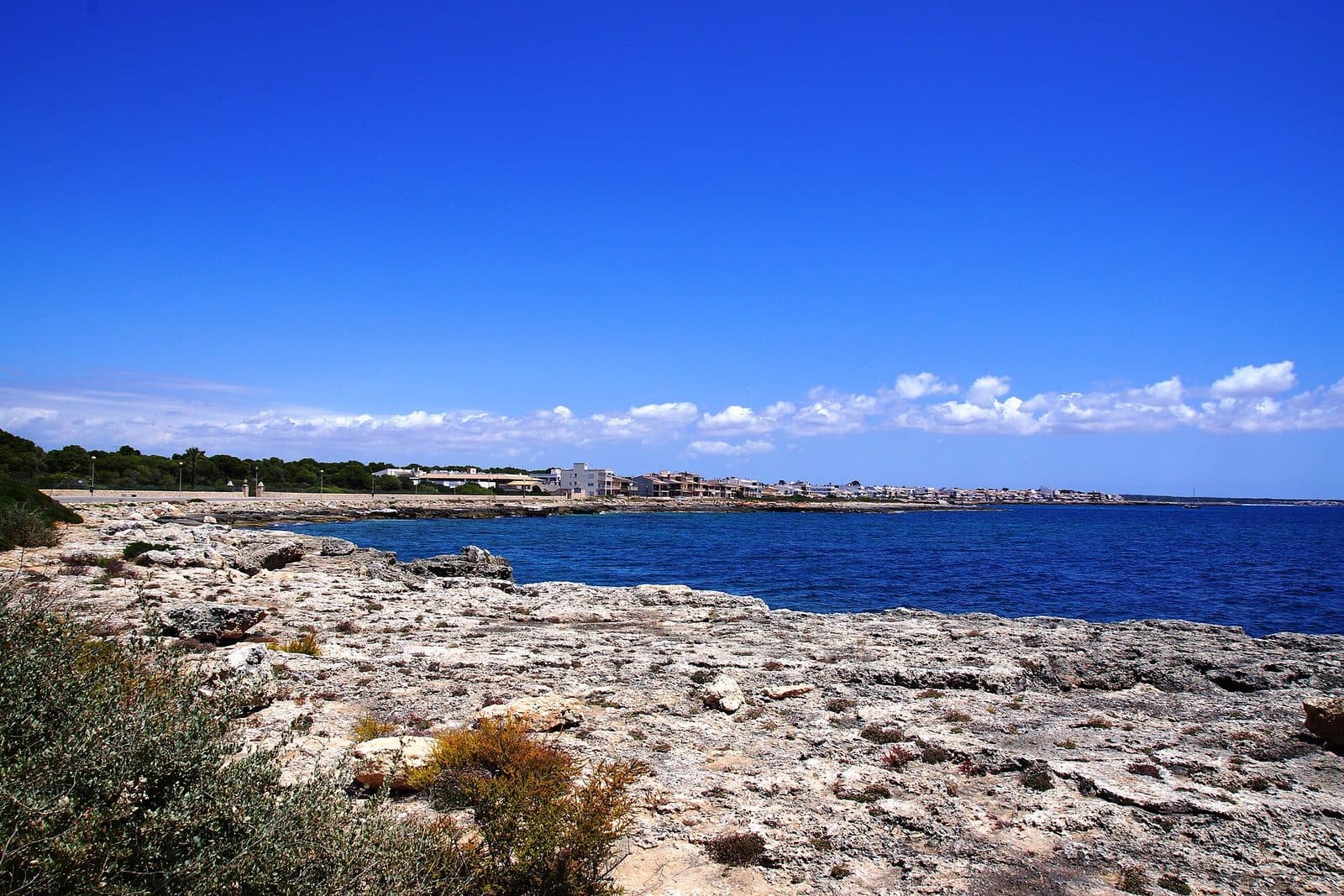
Sa Ràpita lies where Mallorca’s south becomes broad, flat and maritime. The coastal town belongs to the municipality of Campos and is less a classic sightseeing destination than a base for beach days, seaside walks and trips through the landscape around Es Trenc. Its most distinctive landmarks are the harbor, the historic Torre de Son Durí watchtower and the transition to the long sandy beach to the east.
The townscape is shaped by older houses, villas and vacation accommodation. Restaurants and bars line the coast, while the Club Nàutic gives the town a distinctly nautical focal point. This is precisely why Sa Ràpita suits people who value the sea more than a packed sightseeing itinerary. For visitors, the town is particularly worthwhile as an access point to S’Arenal de Sa Ràpita and Es Trenc, for water sports, coastal paths and a quiet restaurant meal with sea views. Families appreciate the gently sloping entry into the water at the sandy beach. Those interested in observing nature will find an unusual coastal landscape in the salt flats and the protected Es Trenc–Salobrar de Campos area, where beach, wetlands and salt production meet.
As a place to live, Sa Ràpita has a different appeal: You live directly by the sea yet remain outside the large vacation resorts. Basic everyday shopping is possible in the town, while Campos remains the main point of reference for larger purchases and many daily errands. A car makes life considerably easier; bus connections are more of a practical alternative for individual journeys than a complete substitute for personal mobility.
History of Sa Ràpita
The development of Sa Ràpita cannot be separated from the coast. Travel guides and local descriptions repeatedly associate the town with fishing, simple fishermen’s houses and a small harbor. The sea was a workplace and transport route, but also an exposed flank that needed protection. The Torre de Son Durí tells this story. The watchtower was built in 1595 and formed part of a system of fortified observation posts along Mallorca’s coast. Such towers were intended to provide early warning of attacks and raids from the sea.
Later, the coastal settlement gradually developed into a residential and vacation destination. Older houses and villas continue to shape parts of the townscape, but vacation rentals and restaurants now play a clearly visible role. The harbor is now primarily associated with leisure boats and the Club Nàutic. Historic fishing remains visible as part of the local identity and in the focus of several seafood restaurants, even though it no longer defines Sa Ràpita on its own.
The location at the western end of the Es Trenc beach landscape was crucial to the town’s more recent development. Sa Ràpita became an access point to one of Mallorca’s best-known natural beaches without itself turning into a densely developed seaside resort. Three historical layers now stand side by side: the defensive tower as evidence of the once-vulnerable coast, older homes from the town’s development as a coastal settlement, and the modern yachting and vacation activity around the harbor.
Things to See in Sa Ràpita
Sa Ràpita does not have a long list of monumental buildings. Instead, its most important places unfold along the coast and together provide a clear picture of the settlement: a historic defensive tower, an active marina, the open seafront and the beginning of a protected beach landscape. A walk around the town therefore involves more than looking at individual buildings; what matters is the transition between the settlement, harbor and natural surroundings.
Torre de Son Durí
The Torre de Son Durí is the town’s most important historic structure. Built in 1595, the coastal watchtower stands in the harbor area and formed part of Mallorca’s network of defenses against pirate attacks. With its massive, plain structure, it looks almost out of place among the boats and modern harbor infrastructure. This contrast makes its original purpose particularly clear: Long before the harbor became a leisure destination, this stretch of coast served as a place of observation and defense.
The tower is five meters wide and ten meters high. It was described by Archduke Ludwig Salvator in his extensive work on the Balearic Islands. Visitors will find it interesting both for its historical significance and its location, which makes it easy to understand why an unobstructed view across the sea was once essential for survival.
Club Nàutic de Sa Ràpita
The yacht club forms the maritime heart of Sa Ràpita. Sailboats, smaller motorboats and the harbor facilities give the town more of the character of an established coastal settlement than a purpose-built beach resort. The area is also a logical starting point for a walk to the Torre de Son Durí and onward to the sandy beach.
The harbor also provides clear spatial orientation: The built-up coastline of Sa Ràpita extends to the west, while the beach opens out to the east. Anyone wishing to understand the town should therefore start here. The transition from the enclosed harbor basin to pale sand and shallow water is one of the town’s most distinctive impressions.
S’Arenal de Sa Ràpita
Sa Ràpita’s sandy beach is accessible through the area by the yacht club and merges into the broad beach landscape toward Es Trenc. Fine sand and a gently sloping entry into the water make this section particularly pleasant for families. At the same time, the view toward the undeveloped coast remains largely unobstructed.
This is not an enclosed urban beach with a dense row of buildings immediately behind it. Its appeal comes from the transition into a more open natural landscape. On windy days, the bay is used by windsurfers and kitesurfers; when the sea is calm, swimming, snorkeling, kayaking and stand-up paddleboarding take center stage. Conditions should always be assessed locally, as the exposed southern coast can change considerably depending on the wind.
Es Trenc and Es Trenc–Salobrar de Campos
East of Sa Ràpita, the sandy beach continues toward Colònia de Sant Jordi. Es Trenc extends for two and a half kilometers and is particularly remarkable because large sections are not lined by a continuous backdrop of hotels. Sand and the wetland and salt-producing area behind it define the scenery.
The protected natural area of Es Trenc–Salobrar de Campos is more than a beautiful backdrop for a day at the beach. The combination of coastline, salt marshes and evaporation ponds creates habitats for numerous bird species. Visitors should therefore respect the paths, avoid entering protected vegetation and not treat the beach like an urban park capable of withstanding unlimited use. Sa Ràpita is one of the most practical starting points for exploring the western part of this landscape on foot.
Coastal Views Toward Cabrera
The seafront and several restaurants offer views across the southern coast; in clear conditions, Cabrera forms part of the panorama. The offshore archipelago is protected as a national park and creates a distinctive landmark on the horizon. Even without a boat trip, this view gives Sa Ràpita a special geographical depth: Beyond the calm bay begins the open sea of southern Mallorca.
The Weekly Market
The weekly market takes place on Plaça Major. It primarily serves local shopping needs and therefore fits the scale of the town. Its stalls sell food, plants and flowers, as well as clothing and shoes. The market is most interesting as a glimpse of everyday life: Sa Ràpita is often perceived through its harbor and beach, while Plaça Major reveals the residential side of the settlement. A visit can be combined with a coffee, a short walk through the surrounding streets and then a stroll to the coast.
During the low season, the selection at Mallorcan weekly markets is generally smaller and more strongly focused on food. This suits Sa Ràpita, where the market is not staged as a major tourist event. Anyone looking for a particular product should arrive early in the morning. A long journey is not necessary solely for the market, but when combined with the beach, harbor or Es Trenc, it makes for a well-rounded half-day outing.
Food and Drink
Sa Ràpita’s dining scene reflects its location by the sea. Fish and seafood play a major role at the better-known establishments, alongside casual bars, breakfast spots and restaurants for a longer evening meal. Many venues are located around the harbor or along the coastal road. Dining therefore often comes with a view, although not every restaurant is a traditional fishing establishment: The choice ranges from simple coastal eateries to more ambitious dinner restaurants.
The town has many vacation rentals, and restaurants now play a clearly visible role. Anyone wishing to visit a particular establishment should check its current opening days and hours.
Ca’n Pep
Ca’n Pep has long been one of the best-known addresses on the seafront. The restaurant specializes in fish and seafood and is particularly noted for its extensive selection and views across the sea toward Cabrera. The menu includes various Mediterranean fish, crustaceans and shellfish, directly reflecting Sa Ràpita’s maritime identity.
It is better suited to a deliberately planned meal by the coast than to a quick snack after swimming. Ca’n Pep’s location also makes it a good example of how Sa Ràpita has changed: Its connection to fishing developed into a dining scene that now appeals to both local residents and vacationers.
Es Molí de Sal
Es Molí de Sal stands out because of its location by the salt fields. The restaurant combines fish and Mallorcan dishes with views of a landscape that defines the south of the island. This makes a visit different from an ordinary meal on a beachfront promenade: Salt production and the flat coastal plain provide the setting rather than harbor basins.
Anyone exploring the natural area of Es Trenc–Salobrar de Campos can view the restaurant as a culinary connection to its surroundings. Here, the salt fields form the scenic backdrop, and their vastness becomes particularly apparent as the day moves toward evening.
S’Oratge
S’Oratge is listed in local guides as one of Sa Ràpita’s recommended restaurant addresses. It is advisable to check current opening arrangements and reservation availability before visiting.
S’Amarador
S’Amarador is recommended for a more refined evening meal. The restaurant thus broadens the town’s culinary range, which is often too quickly reduced to harbor bars and beach food. It is more suitable for a planned restaurant evening than for a spontaneous break in swimwear.
Balcó de Cabrera
Balcó de Cabrera is particularly highlighted as a breakfast spot. Its name already refers to one of the great advantages of the seafront: the view toward Cabrera. Breakfast or an early coffee provides a quieter perspective on Sa Ràpita than the later beach activity and combines well with a morning walk along the coast.
Eating, drinking and staying in Sa Ràpita
The best-rated businesses from our directory, ordered by Google rating — not by advertising.
Restaurants
- Nom Nom Sa Rapita5.0· 43 reviews
- La Oveja Negra Paraíso4.9· 79 reviews
- BarAmelo - Sa Rapita4.8· 66 reviews
- S'Oratge Mar4.6· 1259 reviews
- Restaurant s'Amarador4.5· 836 reviews
- Es Racó de sa Ràpita4.5· 830 reviews
- Arroceria Xaloc4.5· 595 reviews
- Food Truck Son Duri4.1· 32 reviews
- Restaurant Club Nàutic sa Ràpita3.9· 1315 reviews
- Es xibiu de sa Ràpita3.7· 50 reviews
Hotels and fincas
Activities and Excursions
Sa Ràpita is better suited to outdoor activities than to a packed cultural itinerary. The routes are flat, the sea almost always remains a point of reference, and several destinations can be combined into a beach or nature day. The area is not intended for demanding mountain hikes; its strengths lie in long stretches of coastline, open horizons and the transition between sand, salt flats and the rural hinterland.
Walking to Es Trenc
The most obvious excursion leads from the harbor across S’Arenal de Sa Ràpita toward Es Trenc. Depending on the desired length, this can be a short beach walk or a more extensive route along the coast. Established paths and the rules of the protected area should be respected, particularly where sensitive vegetation borders the beach.
The route is most pleasant outside the strongest midday heat because the pale sand intensifies the sunlight. Water, sun protection and suitable footwear for longer sections are therefore advisable even if the route initially appears to be a simple walk along the beach.
Cycling Between the Coast and Campos
The flat landscape around Sa Ràpita offers good conditions for cycling. Possible routes lead through the rural area toward Campos or along the southern coastal region. The appeal lies less in spectacular climbs than in the vastness of the plain, the scattered houses and the transition between farmland and proximity to the sea.
Traffic should be expected on country roads. A carefully chosen route is therefore more important than distance alone. Sportier cyclists can include Sa Ràpita as a coastal stop on a longer circuit through the south; for leisurely rides, a shorter route with a break at the harbor or beach is recommended.
Water Sports off Sa Ràpita
Swimming, snorkeling, kayaking and stand-up paddleboarding are among the most obvious activities when the sea is calm. Windsurfers and kitesurfers use the bay when conditions are suitable. However, Sa Ràpita is not a large water sports complex with a continuous row of rental outlets and organized entertainment. This is precisely what makes the town attractive for independently arranged activities.
Families benefit from the shallow access at the sandy beach but should take wind and waves as seriously as they would on other exposed coastlines. The harbor itself is not a swimming area; the sandy beach east of the Club Nàutic is the more suitable choice for enjoying the water.
Nature Watching in Salobrar de Campos
The wetland and salt-producing areas behind Es Trenc are a worthwhile destination for birdwatchers. Evaporation ponds, shallow waters and salt marshes attract numerous species. Binoculars often reveal more here than a quick photo stop. The contrast between the well-known tourist beach and the ecologically sensitive hinterland is particularly interesting.
Visitors should remain on designated paths and keep their distance from animals and the working areas of the salt flats. The area’s value lies precisely in the fact that it has not been completely reshaped for recreational use. Nature watching here requires calm and consideration rather than getting as close as possible.
Campos and Santanyí
Campos is the nearest town for larger shopping trips and offers a clear contrast to the coast with its sandstone buildings and agricultural surroundings. A detour is particularly suitable when a stay in Sa Ràpita lasts several days or when a beach day is to be combined with a stroll through town.
Santanyí offers a different atmosphere: The town is known for its galleries and market and has more of the feel of an excursion destination. Sa Ràpita, Campos and Santanyí are therefore not interchangeable. Sa Ràpita represents the sea and natural beach, Campos serves as the practical center of the surrounding area, and Santanyí offers a livelier town visit.
Cabrera
The Cabrera archipelago lies off the southern coast and is protected as a national park. Boat trips there are mentioned in connection with the region but must be planned separately.
Beaches in Sa Ràpita
2 beaches and coves with their own page belong to Sa Ràpita.
Festivals and Events
Festes de la Mare de Déu del Carme
Sa Ràpita’s most important recurring festival honors the Mare de Déu del Carme, the patron saint of fishermen. It takes place in July and combines the town’s religious and maritime background with a summer community program. It is therefore far more than a street festival for vacationers: The celebration reflects the population’s historic relationship with the sea.
The program usually includes live music, sports, activities for children, communal meals, traditional dances and evening celebrations. The symbolic highlight is the maritime procession. The veneration of the patron saint is carried out of the town to the coast and onto the water. For a short time, the harbor and sea become the festival’s true stage.
For visitors, this festival week is the best opportunity to experience Sa Ràpita as more than an access point to the beach. The town is livelier than usual, and areas around the harbor and event venues may be busier. The specific program changes from year to year, but the maritime character, family activities and combination of music, sports and local tradition remain recurring elements.
Anyone visiting during the festival should not arrive in Sa Ràpita expecting the usual quiet coastal evening. At the same time, this is precisely when it becomes clear that an active local community exists behind the vacation homes and restaurants. For people considering permanent residence, the festival offers a rare insight into social life beyond beach tourism.
Upcoming dates
Getting There and Getting Around
By Car
From Palma, the route initially follows the Ma-19 south and then continues along country roads toward Sa Ràpita. One published route description gives a distance of 42 kilometers and a journey time of just under 40 minutes; the actual duration may vary depending on the starting point, traffic and chosen access road. The final kilometers pass through the flat landscape of the municipality of Campos.
A car is particularly useful when combining Sa Ràpita with Campos, Santanyí, several beach access points or the salt flats. It also provides the greatest flexibility for shopping and visiting restaurants outside the town center.
By Bus
Sa Ràpita is connected to the regional bus network. Stops are distributed along the built-up coastal settlement and by the Club Nàutic, meaning that the harbor and residential areas are generally accessible without a car. Specific routes and departures should be checked immediately before traveling.
The bus can work well for a clearly planned day trip. It is less practical when visiting several destinations in the rural surroundings in succession, carrying out larger shopping trips or keeping evening restaurant plans flexible. The route from the bus stop to the desired section of beach must also be included in the planning, as “Sa Ràpita” does not refer to just one single point.
By Train
For travel from Palma, the road route via the Ma-19 is specified.
On Foot and by Bicycle Around Town
Within Sa Ràpita, many routes between residential streets, the seafront, harbor and beach are manageable on foot. However, the town’s elongated shape should not be underestimated: Accommodation at the western edge is not automatically right next to the sandy beach. When choosing a location, the specific section of coast that should be accessible on foot is therefore more important than the town name alone.
A bicycle is useful for local journeys and trips into the surrounding area. Outside protected areas, however, routes sometimes follow roads with motorized traffic. For permanent everyday life, a bicycle therefore replaces a car only if the commute, shopping needs and personal routines are particularly well suited to it.
Bus lines to Sa Ràpita at a glance
| Line | Route | Departures/day | First | Last |
|---|---|---|---|---|
| 508 | Sa Ràpita - Palma | 75 | 06:25 | 23:05 |
| 518 | Sa Ràpita - Campos | 28 | 08:55 | 21:03 |
From the official GTFS feeds (TIB/SFM), no real-time data. The figures cover all stops in the town; weekend and holiday services differ — check with the operator before travelling.
Getting there by bus
Club Nàutic sa Ràpita 1 (13006) · 0.2 km as the crow flies
- 508Sa Ràpita - Palma · Daily
- 518Sa Ràpita - Campos · Daily
Club Nàutic sa Ràpita 2 (13005) · 0.2 km as the crow flies
- 508Sa Ràpita - Palma · Daily
- 518Sa Ràpita - Campos · Daily
Escorball (13026) · 1.2 km as the crow flies
- 518Sa Ràpita - Campos · Daily
Av. Miramar 2 (13003) · 1.4 km as the crow flies
- 508Sa Ràpita - Palma · Daily
Timetable data: official GTFS feeds (TIB/EMT), no real-time — check with the operator before travelling.
Living in Sa Ràpita
Everyday Life and Local Amenities
Sa Ràpita has small supermarkets as well as a selection of restaurants and bars. Basic daily needs can therefore be met locally in many situations. Campos is cited as the nearest point of reference for larger shopping trips. This is important for everyday life: Sa Ràpita is not a fully equipped small town but a coastal settlement whose infrastructure is strongly geared toward residential life, restaurants and vacation stays.
Before moving permanently, routes to a doctor, pharmacy, school, post office and bank should be checked according to the specific address and personal needs. The location within the elongated town may be just as important as the available services themselves. Anyone who regularly needs to visit several facilities will be considerably more flexible with a car than someone who works from home and only makes small local purchases.
Commuting to Palma and Campos
Palma is accessible by car via the Ma-19. The stated journey time of just under 40 minutes describes favorable conditions, not necessarily the daily commute. Commuters should therefore consider the entire journey from home to workplace, including the route from Sa Ràpita to the main road and traffic conditions around Palma.
Campos is considerably closer for regular errands and provides many functions that Sa Ràpita, as a small coastal town, cannot offer to the same extent. Those working in the south or independently of location may therefore assess the area differently from someone with daily appointments in Palma. The bus is useful for planned journeys; a car remains more practical for changing working hours and multiple errands.
Summer and Winter
Vacation rentals and restaurants now play a clearly visible role, and water sports are among the most obvious activities. Events honoring the Mare de Déu del Carme strengthen the communal and maritime character in July. The selection at markets is generally smaller in the low season. Anyone who knows Sa Ràpita only from the height of summer should therefore make a point of experiencing the town outside the season before deciding to live here.
Residential Areas and Local Character
Residential development consists of older houses, villas and vacation or permanent homes. Locations on the seafront provide immediate proximity to the coast but are more affected by visitor traffic and restaurants. Farther inland, everyday residential life becomes more prominent, while the walk to the harbor and sandy beach becomes longer. At the edge of town, the surroundings open more fully toward the rural plain.
The strong presence of vacation rentals shows that some homes are used only temporarily. At the same time, the weekly market, patron saint’s festival and basic amenities make it clear that Sa Ràpita is not merely a vacation village without an everyday life of its own. For people wishing to live here permanently, the town is particularly suitable when proximity to the coast, peace and manageable surroundings are more important than urban infrastructure and a dense cultural program.
Practical Information for Your Visit
The Best Time of Day
For a coastal walk and views across the bay, morning and late afternoon are more pleasant than the hot midday hours. Anyone wishing to include the weekly market can start there and then continue to the harbor or beach. For dinner, the seafront is particularly appealing when the light softens and Cabrera appears on the horizon in clear conditions.
Time Needed for the Town and Coast
Half a day is easily sufficient for the Torre de Son Durí, the harbor and a short walk along the coast. Anyone wishing to explore Es Trenc on foot, swim or eat at one of the restaurants should plan a full day. Sa Ràpita itself does not require hours of urban sightseeing; the time is spent on the beach, in nature and taking breaks by the sea.
What to Expect from the Town
A visit is worthwhile not because of numerous individual sights but because of the coastal location, watchtower, harbor and access to Es Trenc. Anyone looking for historic lanes and galleries would do better to combine the day with Campos or Santanyí.
Beach and Nature Conservation
The sandy beach begins east of the harbor. The harbor itself is not a suitable place for swimming. Protected vegetation should not be entered on the way toward Es Trenc. Sun protection and drinking water are advisable for longer walks even when the visit is not primarily a beach day.
Useful Combinations
A particularly well-rounded day combines the market or an early coffee with the Torre de Son Durí, the harbor and a walk along the beach. Nature enthusiasts can focus on Es Trenc and Salobrar de Campos. Those looking for more town life and shopping can add Campos; for galleries and a livelier market atmosphere, Santanyí is suitable as a separate destination.
Local businesses and services
The best-covered sectors in our directory for Sa Ràpita — each with address, contact details and opening hours.
Run a business here? Add it to the directory for free and be found on this page. Add your business
Latest news from Campos
- Cala Major park: Palma takes 1,200m² plot for green space
- 27 Mallorca towns lack Alcover and La Balanguera
- Mallorca TIB stops gain 200 upgrades for better waits
- Mallorca raises 180,000 plants for forests and dunes