
Can Rosselló in Palma: Historic Mansion in the Old Town
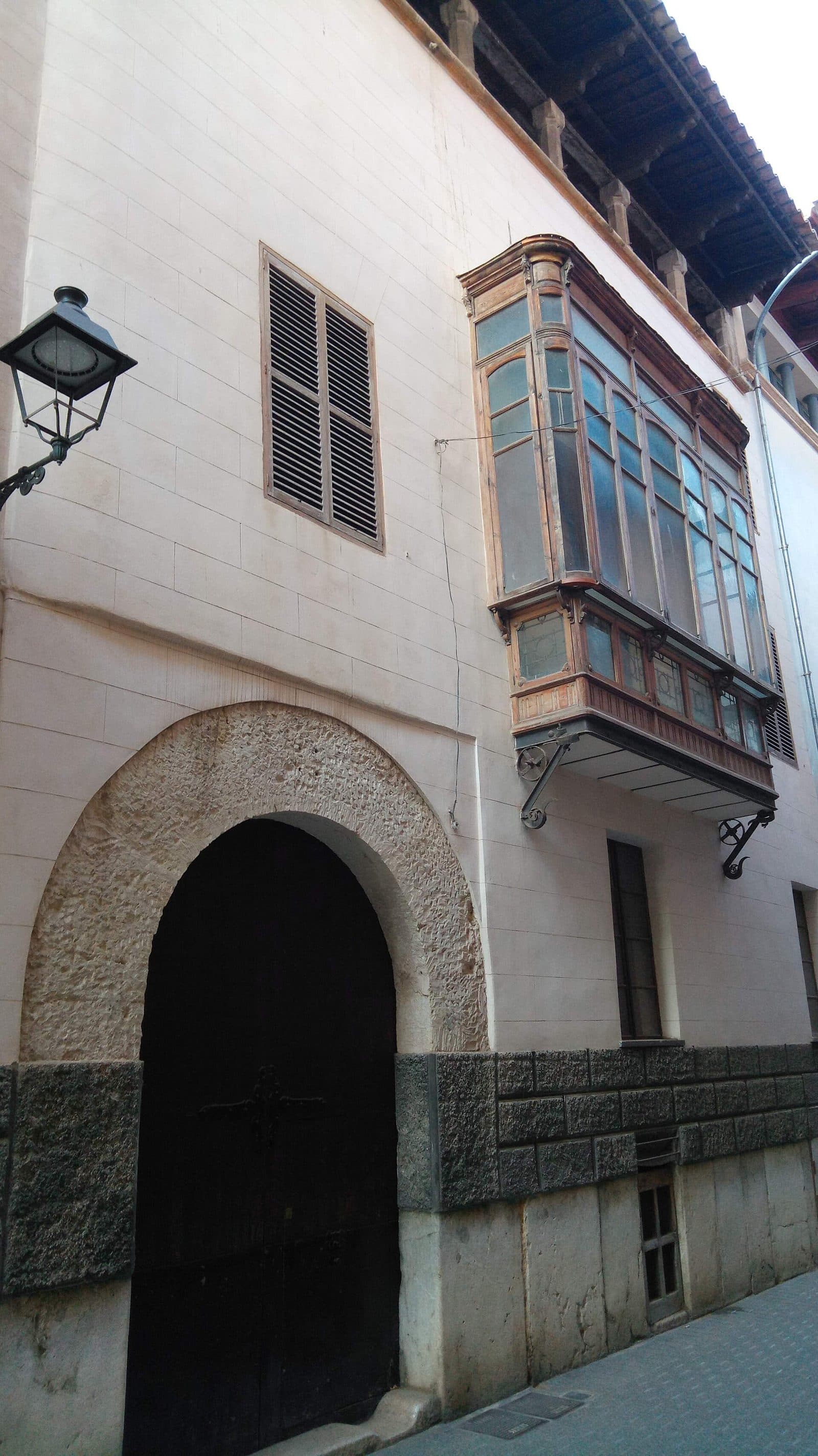

Can Rosselló is one of those historic houses in Palma that are easy to pass by when attention is focused only on the major monuments. The building stands on Carrer de Sant Francesc in the old city center and is classified as a mansion. Its appeal therefore lies less in being a conventional attraction with a tour, exhibition, and visitor facilities than in forming part of an organically developed streetscape. The detour is particularly worthwhile for architecture enthusiasts, as Palma’s old town places famous religious buildings, prestigious city palaces, and more understated historic residences just a few lanes apart. Can Rosselló helps shift attention from the city’s highly visible landmarks to its bourgeois and aristocratic architectural heritage.
The name here refers specifically to the building on Carrer de Sant Francesc in Palma. It is neither a landscape nor a property with the same or a similar name located outside the capital. Anyone looking for the house should therefore use the street name and map location as their guide.
Can Rosselló is best visited as a stop on a walk through the old town. The house is not designated as a museum intended for a dedicated visit; as a historic element among the squares, churches, and lanes of the center, however, it has a distinct appeal. The visit suits travelers who enjoy reading façades, comparing urban spaces, and paying attention to Palma’s subtler traces of history.
History and Significance
Palma’s historic center is the result of many overlapping layers of urban history. The city originated as a Roman settlement, was later shaped by Byzantine and Muslim rule among other influences, and entered a new political and social order after the Christian conquest of Mallorca in 1229. These long developments created a densely built city center whose architecture does not belong to a single period.
Within this setting, Can Rosselló is listed as a mansion. This classification is important because it distinguishes the building from churches, fortifications, or purely public structures: its central purpose was that of a prestigious urban residence. However, no reliable dating of individual construction phases or uninterrupted succession of former owners should be inferred from this. The house can be assessed responsibly primarily through its location, building type, and role within the historic streetscape.
Its significance therefore does not rest on a documented royal episode, a famous siege, or a museum collection. Can Rosselló tells another side of Palma’s story: that of a city whose old town consists not only of a cathedral, palace, and city wall, but also of residences and mansions lining narrow streets. Buildings like these give the center its architectural density and make it clear that the old town served for centuries as a place of residence, commerce, and social representation.
Palma changed dramatically during the past century. While large hotel and development zones emerged elsewhere on Mallorca, a substantial part of the historic cityscape survived in the old center. Can Rosselló belongs to this preserved fabric. The house’s value therefore becomes particularly clear when it is viewed not only as an individual property but as part of the sequence of façades and street spaces along Carrer de Sant Francesc.
The limited sources on the building’s individual history are also a reason to take a measured approach: general events from Palma’s past should not automatically be presented as episodes in the history of the house. Can Rosselló does not represent every period of the island’s history; it is a historic mansion in a specific location at the center of the capital.
What to See
The Mansion
The main sight is the house itself. Can Rosselló is classified as an urban mansion rather than a castle, monastery, or archaeological site. This distinction directs attention toward the street façade and the building’s position within the row of houses. Instead of a freestanding monument, visitors encounter a structure that must be understood as part of the old town’s dense urban fabric.
It is worth viewing the building from some distance, as far as Carrer de Sant Francesc allows. From immediately in front of it, the proportions and relationship to neighboring houses can easily be lost. The eye can then move across the entire frontage. Architectural walks through Palma are most rewarding when visitors look beyond eye level: the composition of historic townhouses often becomes clear only when the upper sections of the façade are included.
Can Rosselló should not be hastily assigned to a particular architectural style or century. A specific chronology for its structural elements has not been reliably established. More meaningful is its confirmed classification as a mansion and the observation that it stands on a historic old-town street. This keeps the assessment close to the building itself without constructing an unsupported architectural history from individual visible features.
Carrer de Sant Francesc
The street is also part of the experience. Can Rosselló does not stand on a broad square offering a monumental view from afar, but on Carrer de Sant Francesc. This shapes the visit: the house appears as part of a continuous urban façade, embedded in routes leading toward Palma’s central squares and monuments.
This context is precisely what makes the location interesting. Rather than an isolated attraction, visitors encounter a piece of the historic everyday city. Pedestrians, neighboring façades, and limited sightlines are all part of the experience. Photographers therefore need to work with perspectives along the street rather than expecting a perfectly frontal view of the entire building from a great distance.
The location also explains why Can Rosselló can easily be overlooked. The old town offers numerous eye-catching sights within a short distance, and not every historic house draws visitors in with large signs or a staged entrance. The exact map location and street name are more useful here than the expectation of a landmark visible from afar.
The Old Town Ensemble
Can Rosselló gains meaning through comparison. Palma’s center combines medieval lanes, historic courtyards, Gothic monuments, and façades from later periods. A walk contrasting several types of buildings makes the distinctive character of a mansion clearer than an isolated snapshot can.
This does not mean attributing features of other palaces or city residences to the building. Instead, visitors can observe how differently prestige is expressed throughout the old town: sometimes monumentally and publicly, elsewhere integrated into an ordinary street frontage. Can Rosselló represents the latter kind of discovery. It requires attention, not a lengthy sightseeing route.
An exhibition or publicly documented sequence of interior rooms is not part of the experience that can be reliably planned. Nor should a courtyard be assumed simply because historic houses in Palma are often associated with such spaces. Visitors come to Can Rosselló primarily for the historic building and its place in the cityscape.
Visiting Can Rosselló
Finding Your Way
The most reliable point of reference is Carrer de Sant Francesc. Since Can Rosselló is not a large freestanding monument, it is advisable to save the map location before walking through the old town. Among the closely packed streets and squares, searching by visible clues alone can waste unnecessary time.
Once at the house, begin by viewing it within the row of buildings. A first look from some distance reveals its relationship to the neighboring properties; closer up, the individual sections of the street frontage can be examined more carefully. Changing perspective is more rewarding than taking a hurried photograph while passing by.
No reliable regular visiting hours or confirmed admission price are available for Can Rosselló. Before traveling, visitors should therefore check whether access to the interior is currently offered and whether special conditions apply. Without such confirmation, plan to view the exterior only. This prevents the entire day’s itinerary from depending on an uncertain interior visit.
Time Required
A short stop is sufficient to view the exterior. Even so, specifying a universal visit length would make little sense because it depends on whether Can Rosselló is approached as a single map location or incorporated into an architectural walk. Anyone comparing and photographing façades will naturally stay longer than someone passing the house on the way to another destination.
As a standalone stop, Can Rosselló will not fill half a day of sightseeing. Its most suitable context is a walk through historic Palma. In this form, there is no time pressure: the house can be viewed attentively before the route continues to the squares, churches, and other historic buildings of the center.
Time of Day and Crowds
No regular visitor crowds specific to the house have been documented. The experience depends instead on activity throughout the old town. Anyone seeking a quieter view or photographs with fewer passersby should avoid the generally busiest periods in the center. No precise time can be responsibly recommended, as events, shopping days, and the season can all affect activity in the street.
When planning the day, also consider the building’s position on a narrow old-town street: light and shadow shift across city façades depending on the time of day. For photography, it may be worthwhile to pass by again later rather than relying on a single shot. This can be arranged without a detour when Can Rosselló remains part of a walking route.
Getting There and Parking
From the Airport to Palma
From Palma Airport, the route initially follows the Ma-19 into the island’s capital. Palma is 11 road kilometers away, and the journey takes around 20 minutes. These details apply only as far as Palma, not directly to the entrance of Can Rosselló. The final section into the historic city center also involves urban traffic, one-way systems, and the old town’s limited parking options.
Anyone arriving by rental car should therefore not try to use Carrer de Sant Francesc as a convenient place to park. It is more practical to leave the car in a public underground garage on the edge of or within the center and continue on foot. Palma operates several public underground garages; locations generally suitable for visiting the old town include Plaça Major, Parc de la Mar, Avingudes, and Plaça de l’Olivar.
The most suitable garage depends on the rest of the route. Combining Can Rosselló with the area around the cathedral calls for a different starting point than a walk via Plaça Major and the shopping streets. The garage should therefore be selected according to the overall itinerary rather than the building alone.
Parking in the Center
Street parking in Palma is regulated. Blue-marked areas belong to the ORA system and require a valid parking ticket; yellow markings indicate parking restrictions. Access to individual streets may also be limited. Local rules and signage always take priority.
An underground garage generally avoids the need to search for a space in narrow streets and prevents a short detour to Can Rosselló from consuming a disproportionate amount of time. The final section continues on foot through the old town. For this destination in particular, the walk is more than a simple transfer: it creates the architectural context in which the mansion is best understood.
By Bus
Several stops within the city center are within walking distance of Can Rosselló. They include 662-pl. de Cort, 663-pl. d’en Coll, 664-pl. de sa Quartera, and 106-pl. del Mercat. The most suitable connection depends on the departure point and current timetable.
After leaving the bus, use not only the name Can Rosselló but also Carrer de Sant Francesc for navigation. This prevents confusion with similarly named streets, squares, or establishments. The final steps lead through the historic city center, where walking is generally more straightforward than making another short journey by car.
Bus lines to Can Rosselló at a glance
| Line | Route | Departures/day | First | Last |
|---|---|---|---|---|
| 1 | Portopí - Sindicat | 6 | 07:15 | 09:15 |
| 3 | Pont d'Inca / Joan Carles I | 6 | 07:37 | 09:46 |
| 25 | s'Arenal - Pl. Reina | Catedral | 6 | 09:35 | 12:41 |
| 46 | la Bonanova - Gènova - Sindicat (dreta) | 6 | 07:20 | 09:15 |
| 47 | Gènova - la Bonanova - Sindicat (esquerra) | 6 | 07:30 | 08:53 |
| 20 | Portopí - Son Espases | 2 | 07:17 | 07:19 |
From the official GTFS feeds (TIB/SFM), no real-time data. The figures cover all stops in the town; weekend and holiday services differ — check with the operator before travelling.
Getting there by bus
662-pl. de Cort · 0.1 km as the crow flies
- CCCircular Centre Ciutat · 08:00–08:00 · Daily
663-pl. d'en Coll · 0.2 km as the crow flies
- CCCircular Centre Ciutat · 08:00–08:00 · Daily
664-pl. de sa Quartera · 0.2 km as the crow flies
- CCCircular Centre Ciutat · 08:00–08:00 · Daily
106-pl. del Mercat · 0.3 km as the crow flies
- 3Pont d'Inca / Joan Carles I · 08:00–08:00 · Daily
- 4Ses Illetes - Pl. Columnes · 08:00–08:00 · Daily
- 7Son Gotleu - Son Serra - Sa Vileta / Son Vida · 08:00–08:00 · Daily
- 20Portopí - Son Espases · 06:06–22:40 · Daily
52-pl. del Mercat · 0.3 km as the crow flies
- 4Ses Illetes - Pl. Columnes · 08:00–08:00 · Daily
- 7Son Gotleu - Son Serra - Sa Vileta / Son Vida · 08:00–08:00 · Daily
- 20Portopí - Son Espases · 06:06–22:40 · Daily
- 35Aquàrium - Pl. Reina | Catedral · 06:21–22:41 · Daily
983-Jutjats Nous · 0.4 km as the crow flies
- CCCircular Centre Ciutat · 08:00–08:00 · Daily
453-pl. de la Reina - Catedral · 0.4 km as the crow flies
- 25s'Arenal - Pl. Reina | Catedral · 06:36–21:01 · Daily
1-Sindicat - Àrea d'intercanvi Sindicat · 0.4 km as the crow flies
- 46la Bonanova - Gènova - Sindicat (dreta) · 08:00–08:00 · Daily
- 47Gènova - la Bonanova - Sindicat (esquerra) · 08:00–08:00 · Daily
457-Escola Graduada · 0.5 km as the crow flies
- 31Sant Jordi - Sindicat · 08:00–08:00 · Daily
- N1Portopí - Porta des Camp · 08:00–08:00 · Daily
6-Sindicat - Àrea d'intercanvi Sindicat · 0.5 km as the crow flies
- 1Portopí - Sindicat · 08:00–08:00 · Daily
105-pl. de Joan Carles I - Catedral · 0.5 km as the crow flies
- 3Pont d'Inca / Joan Carles I · 08:00–08:00 · Daily
- 4Ses Illetes - Pl. Columnes · 08:00–08:00 · Daily
- 7Son Gotleu - Son Serra - Sa Vileta / Son Vida · 08:00–08:00 · Daily
- 20Portopí - Son Espases · 06:06–22:40 · Daily
986-pl. de la Reina - Catedral · 0.5 km as the crow flies
- 35Aquàrium - Pl. Reina | Catedral · 06:21–22:41 · Daily
- CCCircular Centre Ciutat · 08:00–08:00 · Daily
Timetable data: official GTFS feeds (TIB/EMT), no real-time — check with the operator before travelling.
Nearby Sights
Palma’s Old Town
Can Rosselló stands in the middle of the part of Palma where a walking route can unfold without lengthy transfers. The old town is a network of historic streets, squares, and buildings from different periods. The mansion therefore works well as a connecting point between better-known sights rather than as an isolated excursion outside the city.
A route via Plaça de Cort, Plaça d’en Coll, or Plaça Major is an obvious choice. These squares also make it easier to navigate the street network. From there, the walk to Carrer de Sant Francesc can be combined with other façades, courtyards, and churches without devoting a lengthy individual visit to every building.
Cathedral and Historic Center
The cathedral La Seu and the palace area are also logical additions to an old-town walk. Their monumental scale creates a clear contrast with the mansion integrated into the street frontage. This change in scale demonstrates the breadth of Palma’s historic architecture.
Starting the walk there leads gradually from the major landmarks into the center’s narrower streets. In the opposite direction, Can Rosselló can serve as a quieter introduction before the urban space opens toward the cathedral area and the bay. Neither version requires additional transportation as long as the entire visit remains focused on the old town.
Architecture Walk Through Palma
A themed architecture walk is an especially suitable combination. Palma offers Gothic buildings, historic city palaces, and later façades extending into the modern era. Within this selection, Can Rosselló represents the mansion as a building type. The value lies in comparing scale, use, and position within the street.
Selecting just a few destinations carefully is enough. Anyone checking off every marked attraction in succession can easily overlook the houses in between. Can Rosselló is a reminder that Palma’s architectural history is found not only in major standalone monuments but also in the continuous façades of the old center.
The place it belongs to
Palma in the place guidePractical Visitor Information
Set the Right Expectations
Can Rosselló should not be mistaken for a museum. A regularly accessible exhibition, fixed visitor route, or publicly documented interior is not confirmed as a reliable part of the visit. Without current confirmation, visitors should therefore expect to view the exterior only.
This does not diminish the value of the house, but it does change how the visit should be planned. Anyone looking for an extensive interior tour should combine Can Rosselló with an open museum or monument in Palma. Those interested in historic urban architecture will find its setting on Carrer de Sant Francesc reason enough for the detour.
Footwear and Walking Route
The visit leads through Palma’s historic center and is best made on foot. Comfortable, sturdy shoes are more useful for an extended old-town walk than for Can Rosselló alone. Narrow streets, changing surfaces, and numerous brief stops in front of façades make an urban walk more tiring than the distance alone might suggest.
During the warmer season, visitors should also account for moving between sunny squares and shaded lanes. Can Rosselló has no designated visitor facilities that can be relied upon for a break, drinking water, or restrooms. These needs are better planned around the larger squares or museums included in the itinerary.
Visiting with Children
For families, Can Rosselló works best as a short stop within a varied walking route. Since no confirmed exhibition or interactive facility forms part of the regular experience, the house should not be presented to children as an extensive museum. The stop becomes more engaging with a simple observation task: How does a mansion differ from a church, a public palace, or a modern residential building?
The brief nature of an exterior visit is also an advantage. The stop can be adapted at any time to the children’s pace and attention span. The route then quickly continues to more open squares and other old-town sights.
Photography and Consideration for Others
Carrer de Sant Francesc is part of the city’s everyday circulation. When taking photographs, keep the passage clear for residents and pedestrians. A view along the street often shows the urban context better than trying to force the entire façade into a frame from immediately in front of it.
It is helpful to take another look upward before continuing. Historic urban architecture is easily reduced to doors and the ground floor, even though its overall proportions become clear only across the full height of the building. At the same time, visible details may be observed without turning them into unsupported stories about the age, owners, or use of individual rooms.
Local insider tips
Remember to Look Up
Can Rosselló reveals more than what can be seen at eye level. A little distance on Carrer de Sant Francesc helps you take in the entire street frontage and its relationship to the neighboring houses.
Navigate by the Street Name
Combine the name with “Carrer de Sant Francesc” when searching. Can Rosselló is not a freestanding landmark and can easily be overlooked among the historic houses of the old town.
Make It Part of an Architecture Route
The detour is especially worthwhile as part of an old-town walk. Comparing it with churches, public palaces, and other townhouses makes Can Rosselló’s classification as a mansion easier to understand.
Photograph Along the Lane
An angled perspective along Carrer de Sant Francesc often shows the urban context better than a photograph taken directly in front of the façade. Keep the narrow passage clear for pedestrians.
Choose an Old Town Bus Stop
Depending on the route, suitable stops include Plaça de Cort, Plaça d’en Coll, Plaça de sa Quartera, or Plaça del Mercat. From there, the visit becomes a short walk through the historic center.