
Can Moragues in Palma
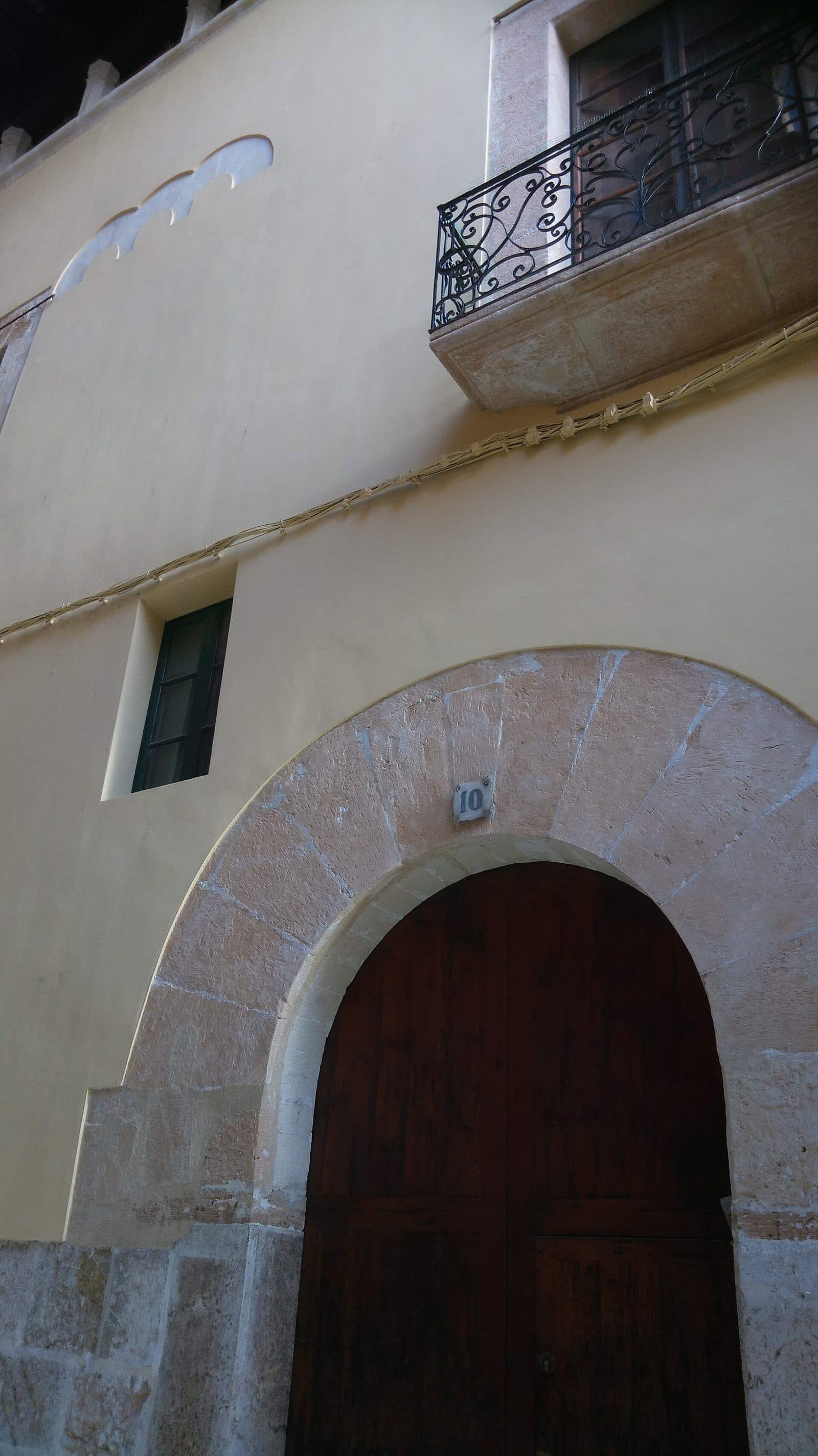

Can Moragues is one of those historic addresses in Palma where understanding the site correctly before visiting is especially important. The name appears several times across Mallorca, but this article is exclusively about the landmark in the island capital—not accommodations or estates with the same name in other places. Its appeal lies less in an extensive tourist program than in encountering a historic place within present-day Palma. Can Moragues therefore fits well into a city walk that visits not only the widely known monuments but also explores the smaller traces of the city’s history.
Can Moragues should not be added to a traditional excursion with an exhibition, tour, and fixed sightseeing itinerary without checking first: visitors should clarify in advance how the site is currently accessible and can be experienced. The most practical option is to combine the visit with a walk through central Palma. Several bus stops at well-known city-center squares are nearby, allowing Can Moragues to be included in a route through the city even without a rental car.
History and significance
When considering Can Moragues, more detailed claims about owners, patrons, or individual construction phases should not be taken from similarly named places on the island. This distinction is crucial because facilities outside Palma also operate under the same name in Mallorca. Each has its own history and must not be confused with the historic landmark in the capital. Anyone researching through maps, image searches, or travel portals should therefore always check whether Palma is actually listed as the location. Images of hotel rooms, gardens, pools, or rural estates may belong to a namesake and would create a misleading impression of the destination.
In Palma, Can Moragues is listed as a historic landmark. Its significance therefore lies in the city’s layers of memory: the site is not an isolated countryside destination but part of the island capital’s evolved urban setting. Here, history is often revealed not through grand presentation but by carefully reading names, streetscapes, and preserved historic addresses.
Can Moragues now stands in a city where everyday life continues directly around its historic places. This distinguishes such a stop from an enclosed museum. Visitors therefore encounter not only a testament to the past but also the question of how Palma preserves its historical traces within a lively city center.
Visiting Can Moragues
The visit is best begun before arriving, with a brief check of current accessibility. No reliable general opening hours are listed for Can Moragues. Nor is there a documented standard admission price. Because the use and accessibility of historic properties can change, anyone planning a dedicated journey should check current information with the relevant authority or local visitor information service beforehand.
As a stop on a city walk
Can Moragues is especially suitable as part of a route through central Palma. This approach provides enough flexibility if the site can only be viewed within its urban setting or if access depends on current conditions. It can then be visited between the squares and streets of the city center without making the entire day’s schedule dependent on a single interior visit.
For this reason, there is no meaningful fixed guideline for the length of a visit. Anyone viewing Can Moragues simply as a historic point in the cityscape will need considerably less time than someone who can use currently available access or wishes to explore the surrounding area in greater depth. When planning the day, the stop should therefore be treated flexibly rather than assigned a rigid time slot.
Timing and crowds
There is no verified time of day when Can Moragues is consistently quiet. Visitor levels in central Palma depend not only on the landmark itself but also on general activity in the neighboring streets and nearby squares. Anyone who wants to get oriented and observe details without being disturbed should choose a time when their city walk is not under time pressure.
Especially when combining the visit with other destinations in Palma, it is worth planning the route by location rather than by any supposed ranking of the sights. Can Moragues is a stop that rewards close attention: a brief stopover may be enough, but visitors interested in the historic urban structure may wish to spend longer in the surrounding area.
What to expect
Can Moragues should not automatically be understood as a conventional museum with a ticket desk, exhibition, designated route, and visitor center. No such facilities are documented for this landmark. Nor should the amenities of hotels or country houses with the same name be interpreted as features of the historic site in Palma.
The visit becomes more rewarding with precisely these realistic expectations. Instead of following a predetermined program, the focus is on understanding a historic address within the urban landscape. This particularly appeals to travelers who want to explore Palma beyond its major standalone monuments while also noticing the less conspicuous traces of the city’s history.
Getting there and parking
From Palma de Mallorca Airport, the route follows the Ma-19 to Palma. The distance to the city is 11 road kilometers, and the drive takes around 20 minutes. These details expressly apply to the route from the airport to Palma, not to a precise journey to the entrance of Can Moragues. For the final section, the exact location shown on the page, current traffic arrangements, and the selected parking facility are the determining factors.
Via the Ma-19 to Palma
The Ma-19 connects the airport directly with the island capital. After reaching the city, the journey continues along urban roads. One-way streets, access restrictions, and heavy traffic may shape the final minutes more than the drive along the Ma-19. Anyone arriving by car should therefore allow not only for the basic driving time to Palma but also for orientation and the walk from the parking facility.
It is sensible to treat finding parking as a separate stage of the journey and continue on foot afterward. This avoids unnecessary loops through the center and is better suited to a visit combined with other stops in Palma.
Plaça de Cort and Plaça d’en Coll
Several bus stops are located nearby, including pl. de Cort and pl. d’en Coll. Both names are useful reference points for a walk through the city center. Which stop offers the most practical walking route depends on the line used and the point of departure.
Plaça de sa Quartera and Jutjats Nous
Other listed stops include pl. de sa Quartera and Jutjats Nous. This provides several ways to incorporate the visit into a trip to Palma without relying on a single drop-off point. Checking the current route before departure is recommended because timetables, stop locations, and diversions do not remain unchanged indefinitely.
The final stretch should generally be planned as a walk. Particularly in the city center, this is usually more straightforward than trying to drive directly to a historic address. At the same time, this approach reveals Can Moragues within its urban context rather than merely as an isolated point on a map.
Bus lines to Can Moragues at a glance
| Line | Route | Departures/day | First | Last |
|---|---|---|---|---|
| 501 | Manacor - Campos - Palma | 103 | 05:38 | 23:58 |
| 504 | Tolleric - Palma | 55 | 06:13 | 23:13 |
| 501e | Campos - Palma, exprés | 33 | 06:50 | 20:50 |
| 1 | Portopí - Sindicat | 6 | 07:15 | 09:15 |
| 46 | la Bonanova - Gènova - Sindicat (dreta) | 6 | 07:20 | 09:15 |
| 47 | Gènova - la Bonanova - Sindicat (esquerra) | 6 | 07:30 | 08:53 |
| 515e | Cala d'Or - Palma | 5 | 11:10 | 19:15 |
| N1 | Portopí - Porta des Camp | 4 | 00:55 | 23:55 |
| 25 | s'Arenal - Pl. Reina | Catedral | 2 | 10:38 | 10:44 |
From the official GTFS feeds (TIB/SFM), no real-time data. The figures cover all stops in the town; weekend and holiday services differ — check with the operator before travelling.
Getting there by bus
662-pl. de Cort · 0.2 km as the crow flies
- CCCircular Centre Ciutat · 08:00–08:00 · Daily
663-pl. d'en Coll · 0.2 km as the crow flies
- CCCircular Centre Ciutat · 08:00–08:00 · Daily
664-pl. de sa Quartera · 0.3 km as the crow flies
- CCCircular Centre Ciutat · 08:00–08:00 · Daily
983-Jutjats Nous · 0.4 km as the crow flies
- CCCircular Centre Ciutat · 08:00–08:00 · Daily
106-pl. del Mercat · 0.4 km as the crow flies
- 3Pont d'Inca / Joan Carles I · 08:00–08:00 · Daily
- 4Ses Illetes - Pl. Columnes · 08:00–08:00 · Daily
- 7Son Gotleu - Son Serra - Sa Vileta / Son Vida · 08:00–08:00 · Daily
- 20Portopí - Son Espases · 06:06–22:40 · Daily
52-pl. del Mercat · 0.4 km as the crow flies
- 4Ses Illetes - Pl. Columnes · 08:00–08:00 · Daily
- 7Son Gotleu - Son Serra - Sa Vileta / Son Vida · 08:00–08:00 · Daily
- 20Portopí - Son Espases · 06:06–22:40 · Daily
- 35Aquàrium - Pl. Reina | Catedral · 06:21–22:41 · Daily
457-Escola Graduada · 0.4 km as the crow flies
- 31Sant Jordi - Sindicat · 08:00–08:00 · Daily
- N1Portopí - Porta des Camp · 08:00–08:00 · Daily
Porta des Camp 2 (40002) · 0.4 km as the crow flies
- 501Manacor - Campos - Palma · Daily
- 501eCampos - Palma, exprés · Mon-Sat
- 504Tolleric - Palma · Daily
- 515eCala d'Or - Palma · Mon-Fri
458-Porta des Camp · 0.5 km as the crow flies
- 23s'Arenal / Parc Aquàtic - Pl. Espanya · 06:27–21:50 · Daily
- 25s'Arenal - Pl. Reina | Catedral · 06:36–21:01 · Daily
- 30Marivent-Palau de Congressos · 08:00–08:00 · Daily
- 31Sant Jordi - Sindicat · 08:00–08:00 · Daily
- 35Aquàrium - Pl. Reina | Catedral · 06:21–22:41 · Daily
- A1Aeroport - Palma Centre · 08:00–08:00 · Daily
- N1Portopí - Porta des Camp · 08:00–08:00 · Daily
451-Escola Graduada · 0.5 km as the crow flies
- 12Sa Garriga - Nou Llevant · 08:00–08:00 · Daily
- 24Antiga Presó - Nou Llevant · 06:33–21:18 · Daily
- 31Sant Jordi - Sindicat · 08:00–08:00 · Daily
- N1Portopí - Porta des Camp · 08:00–08:00 · Daily
1-Sindicat - Àrea d'intercanvi Sindicat · 0.5 km as the crow flies
- 46la Bonanova - Gènova - Sindicat (dreta) · 08:00–08:00 · Daily
- 47Gènova - la Bonanova - Sindicat (esquerra) · 08:00–08:00 · Daily
6-Sindicat - Àrea d'intercanvi Sindicat · 0.5 km as the crow flies
- 1Portopí - Sindicat · 08:00–08:00 · Daily
Timetable data: official GTFS feeds (TIB/EMT), no real-time — check with the operator before travelling.
Nearby attractions and surroundings
Palma is not merely the starting point but the essential setting for the visit. Can Moragues is best understood when the journey there forms part of a walk through the city center. Even the names of the nearby stops—Plaça de Cort, Plaça d’en Coll, and Plaça de sa Quartera—show that several central urban spaces can serve as reference points.
A suitable route does not need to connect as many sights as possible. A walk that pays attention to historic house names, façades, the layout of lanes, and the transitions between busy squares and quieter streets is more rewarding. Can Moragues carries greater weight in such an itinerary than during a hurried trip made solely to take a photograph.
Plaça de Cort is a useful prominent reference point in the center. From there, the route to Can Moragues can be combined with other historic stops in Palma. Plaça d’en Coll and Plaça de sa Quartera are also suitable starting or finishing points for a walk. The most practical order depends on the chosen bus line, parking facility, and the day’s other destinations.
First-time visitors to Palma should allow enough time for the walks between individual places. Distances within the center often appear manageable on a map, but shop windows, squares, and architectural details repeatedly invite visitors to stop. Can Moragues works particularly well at this slower pace: as a historical reference within a city whose past is not concentrated in a single place.
The precise location remains important. Searching only for “Can Moragues” may lead to destinations with the same name in other parts of Mallorca. When combining the visit with other sights, Palma should therefore always be checked as the location. This keeps the route in the capital and prevents it from being mistakenly planned around a distant namesake.
The place it belongs to
Palma in the place guidePractical visitor information
Preparation
Because neither fixed opening hours nor standard admission are listed, visitors planning a specific tour should check what form of access is currently possible. This is especially important if Can Moragues is intended to be the main reason for traveling to Palma. The site can be included far more easily as a flexible stop on an already planned city walk.
An up-to-date map is also helpful. Searches should always include Palma alongside the name. Facilities with the same name in other places in Mallorca are separate destinations and do not provide reliable information about the history, amenities, or accessibility of this landmark.
Clothing and footwear
Comfortable footwear suitable for city streets is advisable when walking through Palma. The visit will likely include at least a short walk from a bus stop or parking facility. No special equipment is documented; more important are shoes that allow several city-center stops to be connected without rushing.
Depending on the season, time outdoors should also be taken into account. Even if access is possible, the route passes through the urban area. Sun protection and drinking water are therefore sensible preparations for a longer walk through Palma on warm days, without assuming that Can Moragues itself provides a shaded place to rest.
Visiting with children
With children, Can Moragues is more suitable as a brief historical discovery within a varied city walk than as the sole activity. No special exhibition, play area, or family-oriented educational program is documented. The stop may become more interesting if older children can look for house names, historical traces, and differences between old and present-day urban spaces.
For younger children, the route should be planned so that breaks are possible independently of Can Moragues. It is not documented whether strollers can reach every area without difficulty. The central location should therefore not automatically be taken as evidence of accessibility or step-free access.
Photography and observation
When taking photographs, visitors should bear in mind that historic addresses in Palma may be part of an actively used urban environment. Entrances and pathways should remain clear, and visible private areas deserve consideration. The most informative photographs show Can Moragues in its Palma context rather than recreating details associated with places of the same name in other parts of the island.
Visitors who take their time should pay particular attention to the site’s relationship with the street and neighborhood. At a historic urban stop, the story is told not only by a single object but also by its position within present-day life. This is precisely what distinguishes it from a freestanding monument or an enclosed museum site.
Local insider tips
Always include Palma in searches
Always enter “Can Moragues Palma” when searching maps and images. Destinations in other places in Mallorca also bear this name; their photographs, amenities, and visitor information do not belong to the historic landmark in the capital.
Choose your bus stop flexibly
In addition to pl. de Cort, pl. d’en Coll, pl. de sa Quartera, and Jutjats Nous are possible stops. The most practical choice depends on the current bus line and which other stops are planned in Palma.
Include it in a city walk
Can Moragues is best visited as a flexible stop in the center. This keeps the day worthwhile even if current accessibility only allows the site to be viewed within its urban context.