
Can Catlar in Palma: Explore a Historic Manor House
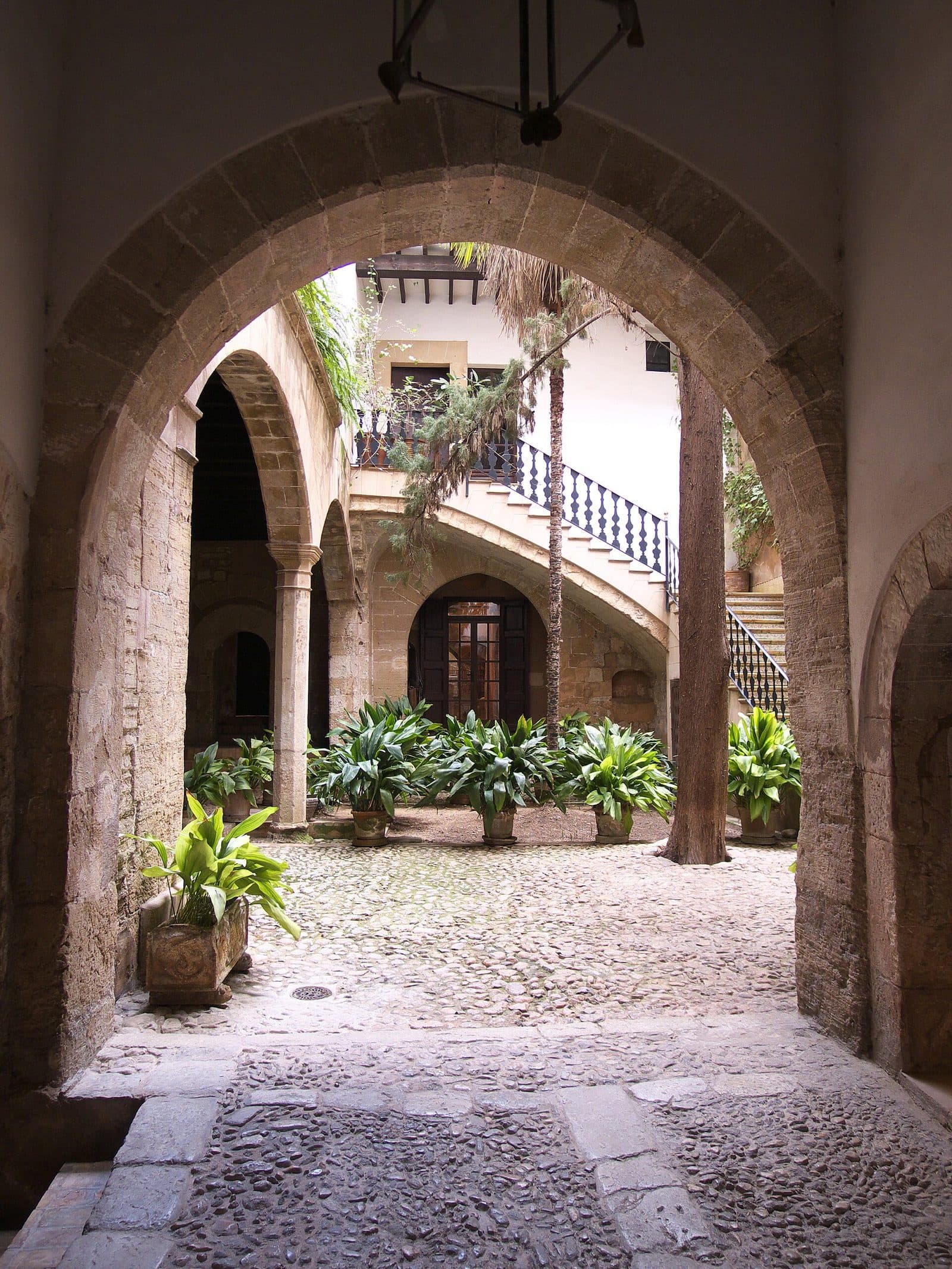

Can Catlar is one of Palma’s historic buildings. Listed as a cultural monument, the manor house is also called Can Catlar del Llorer in travel guides. It is not a monumental attraction outside the city but a historic manor house in the heart of Palma.
Its appeal lies precisely in this scale. While the cathedral, palace, and city walls tell Palma’s political and religious history, Can Catlar is recorded as a historic manor house and cultural monument in Palma. Anyone who appreciates old façades, urban palaces, and the subtle details of the Old Town will find it a worthwhile stop.
Can Catlar is recorded as a historic manor house and cultural monument in Palma. The most rewarding way to experience the building is as a stop on a walk through historic Palma. This leaves time to appreciate its proportions and its effect within the streetscape.
The site is particularly suitable for architecture enthusiasts, photographers, and travelers who want to discover smaller cultural monuments alongside the famous landmarks. The house can sometimes be found more easily on maps and in directories under its longer name, Can Catlar del Llorer.
History and significance
The manor house as a record of history
Can Catlar is listed as a historic manor house and cultural monument in Palma. This classification is essential to understanding the site: the building is neither a fortress nor a religious structure but part of the city’s residential architecture. Its historical significance therefore lies not in military installations, ecclesiastical artworks, or archaeological finds, but in its classification as a manor house.
Residential buildings of this kind tell a different part of the city’s history than its major public monuments. Can Catlar is listed as a manor house and cultural monument in Palma. The house is located in Palma.
Can Catlar is listed as a historic manor house and cultural monument. That is precisely why it deserves a closer look, even though a visit is far quieter than a conventional attraction with exhibition halls.
Can Catlar del Llorer
The longer form Can Catlar del Llorer frequently appears in travel directories. The shortened name Can Catlar refers to the same historic manor house in Palma. This name variation is useful for orientation because digital maps, image archives, and travel guides do not always use the same designation.
The location Palma should therefore always be included. The Can Catlar described here is the manor house listed as a cultural monument in the island’s capital.
The fact that a manor house is regarded as a sight highlights the cultural value of historic residential architecture. Palma’s past consists of more than royal residences and religious monuments. Houses such as Can Catlar also shape the city’s memory—less prominently, but directly within today’s streetscape.
What to see
The historic townhouse
Can Catlar should be understood as a manor house, not as a detached castle or extensive country estate. Attention therefore centers on the historic manor house.
With a monument like this, it is especially worthwhile not to look only for spectacular individual details. Can Catlar is listed as a historic manor house.
Can Catlar is recorded as a historic manor house and cultural monument. The focus is on the structure itself. This makes the visit concentrated: you observe a single historic house and place it within Palma’s architecture.
The façade in the streetscape
A slow approach is the most revealing. First, the historic manor house can be viewed as a whole.
Can Catlar is a historic manor house and cultural monument in Palma.
The historic building
The reliable core of the experience is viewing the historic building. Current access options should be checked before visiting. Can Catlar is recorded as a historic manor house and cultural monument.
This kind of encounter requires a little more personal initiative. Anyone who merely notices the building while passing will quickly leave it behind. Those who pause briefly, change perspective, and compare the house with other historic residences in Palma will recognize its true value more clearly. The experience is less about the quantity of things on display than about carefully observing a cultural monument.
Visiting Can Catlar
A stop on an Old Town walk
Can Catlar is best included in a walking tour through Palma. Once you reach the building, begin by viewing it from a little distance. Then take a second look at the historic manor house.
A fixed visit duration would be of little help because it depends heavily on your interest in architecture. Anyone who simply wants to see and photograph the monument can plan a short stop. Those who compare historic façades, examine details, or visit Can Catlar as part of a themed walk exploring Palma’s manor houses will stay correspondingly longer. The building is not intended as a standalone half-day excursion; combined with other destinations in the center, it gains considerably more context.
Planning your visit
As no reliable opening hours or admission price are recorded, current access options should be checked before visiting. Specific times or a publicly accessible interior should not be assumed. Viewing the exterior, by contrast, can easily be combined with a city walk without making the day’s schedule dependent on a lengthy sightseeing window.
Anyone coming to Palma specifically for Can Catlar should use Can Catlar del Llorer as a search term in addition to the shortened name. The key details are the location Palma and its classification as a historic manor house or cultural monument.
Time to look around
There is no documented pattern of particularly busy or especially quiet hours at Can Catlar. Rather than relying on a supposed secret time, it is more practical to incorporate the site into your personal Old Town walk. When viewing the façade, the most important thing is to arrive without being pressed for time.
Getting there and parking
From the airport to Palma
From Palma Airport, the route initially follows the Ma-19 into the island’s capital. The road distance to Palma is 11 kilometers, and the drive takes around 20 minutes. These figures expressly apply to the route from the airport to Palma, not directly to Can Catlar. The final section runs through the urban road network and should be planned according to traffic and your chosen parking garage.
The Ma-19 takes travelers from the east toward the center. Once in the city, it is generally more pleasant to leave the car in a parking garage and continue on foot rather than searching the narrower streets for a space directly beside the monument. A small historic destination such as Can Catlar is better experienced as part of a walk anyway.
By bus
Nearby stops include 662-pl. de Cort, 664-pl. de sa Quartera, 663-pl. d'en Coll, and 983-Jutjats Nous. Which one is most convenient for a particular journey depends on the chosen route and your starting point in Palma. As timetables and routes can change, the current connection should be checked immediately before traveling.
The names of the stops are also useful orientation points in the center. From there, the final section is covered on foot. For navigation, it is advisable to keep Can Catlar del Llorer available as an alternative search term.
Parking in Palma
Palma’s central parking garages are suitable for a combined city visit. The Plaza Mayor parking garage is conveniently located for walks through the center but is especially busy from midday onward. The parking garages at Mercat de l’Olivar and Plaza d’Espanya can also be reached via the Avenidas. Anyone wishing to include the southern part of the Old Town and other historic destinations can choose the Parc de la Mar parking garage as a starting point.
The choice should not be based solely on Can Catlar but on the entire planned route. A slightly more distant but easily accessible parking garage may be more practical than searching for an on-street space in the center. Local rules must be observed in marked parking areas; blue zones in particular are subject to time limits and parking fees.
Bus lines to Can Catlar at a glance
| Line | Route | Departures/day | First | Last |
|---|---|---|---|---|
| 501 | Manacor - Campos - Palma | 208 | 05:38 | 23:58 |
| 504 | Tolleric - Palma | 109 | 06:13 | 23:13 |
| 501e | Campos - Palma, exprés | 59 | 06:50 | 20:50 |
| 515e | Cala d'Or - Palma | 10 | 10:30 | 19:15 |
| N1 | Portopí - Porta des Camp | 4 | 00:55 | 23:55 |
| 25 | s'Arenal - Pl. Reina | Catedral | 2 | 10:38 | 10:44 |
| 512 | Portocolom - Felanitx | 1 | 08:05 | 08:05 |
From the official GTFS feeds (TIB/SFM), no real-time data. The figures cover all stops in the town; weekend and holiday services differ — check with the operator before travelling.
Getting there by bus
662-pl. de Cort · 0.2 km as the crow flies
- CCCircular Centre Ciutat · 08:00–08:00 · Daily
664-pl. de sa Quartera · 0.3 km as the crow flies
- CCCircular Centre Ciutat · 08:00–08:00 · Daily
663-pl. d'en Coll · 0.3 km as the crow flies
- CCCircular Centre Ciutat · 08:00–08:00 · Daily
983-Jutjats Nous · 0.4 km as the crow flies
- CCCircular Centre Ciutat · 08:00–08:00 · Daily
Porta des Camp 2 (40002) · 0.4 km as the crow flies
- 501Manacor - Campos - Palma · Daily
- 501eCampos - Palma, exprés · Mon-Sat
- 504Tolleric - Palma · Daily
- 515eCala d'Or - Palma · Mon-Fri
457-Escola Graduada · 0.4 km as the crow flies
- 31Sant Jordi - Sindicat · 08:00–08:00 · Daily
- N1Portopí - Porta des Camp · 08:00–08:00 · Daily
458-Porta des Camp · 0.4 km as the crow flies
- 23s'Arenal / Parc Aquàtic - Pl. Espanya · 06:27–21:50 · Daily
- 25s'Arenal - Pl. Reina | Catedral · 06:36–21:01 · Daily
- 30Marivent-Palau de Congressos · 08:00–08:00 · Daily
- 31Sant Jordi - Sindicat · 08:00–08:00 · Daily
- 35Aquàrium - Pl. Reina | Catedral · 06:21–22:41 · Daily
- A1Aeroport - Palma Centre · 08:00–08:00 · Daily
- N1Portopí - Porta des Camp · 08:00–08:00 · Daily
451-Escola Graduada · 0.4 km as the crow flies
- 12Sa Garriga - Nou Llevant · 08:00–08:00 · Daily
- 24Antiga Presó - Nou Llevant · 06:33–21:18 · Daily
- 31Sant Jordi - Sindicat · 08:00–08:00 · Daily
- N1Portopí - Porta des Camp · 08:00–08:00 · Daily
106-pl. del Mercat · 0.4 km as the crow flies
- 3Pont d'Inca / Joan Carles I · 08:00–08:00 · Daily
- 4Ses Illetes - Pl. Columnes · 08:00–08:00 · Daily
- 7Son Gotleu - Son Serra - Sa Vileta / Son Vida · 08:00–08:00 · Daily
- 20Portopí - Son Espases · 06:06–22:40 · Daily
450-Porta des Camp · 0.4 km as the crow flies
- 19UIB i Parc Bit - Porta des Camp · 05:46–22:12 · Daily
- 23s'Arenal / Parc Aquàtic - Pl. Espanya · 06:27–21:50 · Daily
- 31Sant Jordi - Sindicat · 08:00–08:00 · Daily
- 35Aquàrium - Pl. Reina | Catedral · 06:21–22:41 · Daily
- A1Aeroport - Palma Centre · 08:00–08:00 · Daily
- N1Portopí - Porta des Camp · 08:00–08:00 · Daily
Porta des Camp 1 (40108) · 0.4 km as the crow flies
- 501Manacor - Campos - Palma · Daily
- 501eCampos - Palma, exprés · Mon-Sat
- 504Tolleric - Palma · Daily
- 512Portocolom - Felanitx · Daily
- 515eCala d'Or - Palma · Mon-Fri
52-pl. del Mercat · 0.4 km as the crow flies
- 4Ses Illetes - Pl. Columnes · 08:00–08:00 · Daily
- 7Son Gotleu - Son Serra - Sa Vileta / Son Vida · 08:00–08:00 · Daily
- 20Portopí - Son Espases · 06:06–22:40 · Daily
- 35Aquàrium - Pl. Reina | Catedral · 06:21–22:41 · Daily
Timetable data: official GTFS feeds (TIB/EMT), no real-time — check with the operator before travelling.
Nearby attractions
Historic Palma
Can Catlar becomes more meaningful when the house is not viewed in isolation. Palma has a densely packed historic center where major monuments and smaller residential buildings stand close together. A walk makes the difference immediately visible: public grandeur gives way to narrower streets, residential façades, and squares where the city’s history appears on a more everyday scale.
The well-known attractions of the Old Town can easily be combined with Can Catlar without creating an overloaded itinerary. The Cathedral La Seu and Royal Palace La Almudaina represent Palma’s monumental side, while the Arab Baths reveal a different historical layer of the city. As a manor house, Can Catlar provides a deliberately smaller-scale contrast.
Squares and markets
The stops at Plaça de Cort, Plaça de sa Quartera, and Plaça d’en Coll show that the visit can be easily combined with routes through central Palma. Squares provide orientation during a walk and offer occasional space to appreciate the dense development from a greater distance.
Mercat de l’Olivar can also serve as a stop during a longer city visit. Those wishing to continue farther west will find a different atmosphere around Santa Catalina, with its market hall, restaurants, and smaller shops. Can Catlar remains the historic architectural stop, while the other destinations structure the day and turn a brief monument visit into a varied walking tour.
Combining the city and coast
Palma also makes it possible to combine the Old Town with the sea. Routes from the southern part of the center lead to Parc de la Mar and the waterfront. This is particularly convenient if the car has been parked there or if the cathedral and palace are already part of the itinerary.
The advantage does not lie in following a single prescribed route. Can Catlar can come at the beginning, middle, or end of a city walk. Those who place the manor house in context early may look more closely at other residential façades afterward. Those who visit it only after the major monuments will experience the transition from a prestigious landmark to a historic townhouse particularly clearly.
The place it belongs to
Palma in the place guidePractical information for your visit
Setting the right expectations
Can Catlar is a destination for careful observation. Its value lies in the historic manor house itself and its presence in the streetscape. Anyone arriving with this expectation will experience the brief stop as a deliberate encounter with Palma’s residential architecture.
Current information about access, possible interior areas, and visiting conditions should be checked in advance. Without confirmed opening hours, it is not advisable to make the entire day’s schedule dependent on entering the building. The exterior, however, can easily form part of a walking tour.
Clothing and conduct
For walking through Palma, comfortable shoes are more useful than special equipment. The visit involves urban streets and sidewalks; particular attention is required when crossing streets and taking photographs. To view the full façade, stop only where neither pedestrians nor traffic will be obstructed.
In summer, personal sun protection is recommended for a longer city walk. Shade conditions vary between narrow streets and open squares, so Can Catlar should not be planned as a place for an extended break. Cafés, markets, and squares in the center are better suited to pausing during the walk.
Visiting with children
With children, Can Catlar works best as a short stop during a varied day in the city. The visit becomes more engaging when everyone looks together for differences between a manor house, church, palace, and ordinary residence.
Because of the urban setting, normal supervision is required in the street. Continuing afterward to a square, market, or along a route toward Parc de la Mar adds movement to the walk and prevents the day from focusing exclusively on façades.
Finding the right place
For this cultural monument, include Palma and, if necessary, the longer name Can Catlar del Llorer in your search.
This identification is particularly important before setting out. Anyone starting navigation only after parking should verify the result using the location Palma and its description as a historic manor house or monument. This keeps the final walk focused and ensures it leads to the building described here.