
creu d'en Barona near Valldemossa
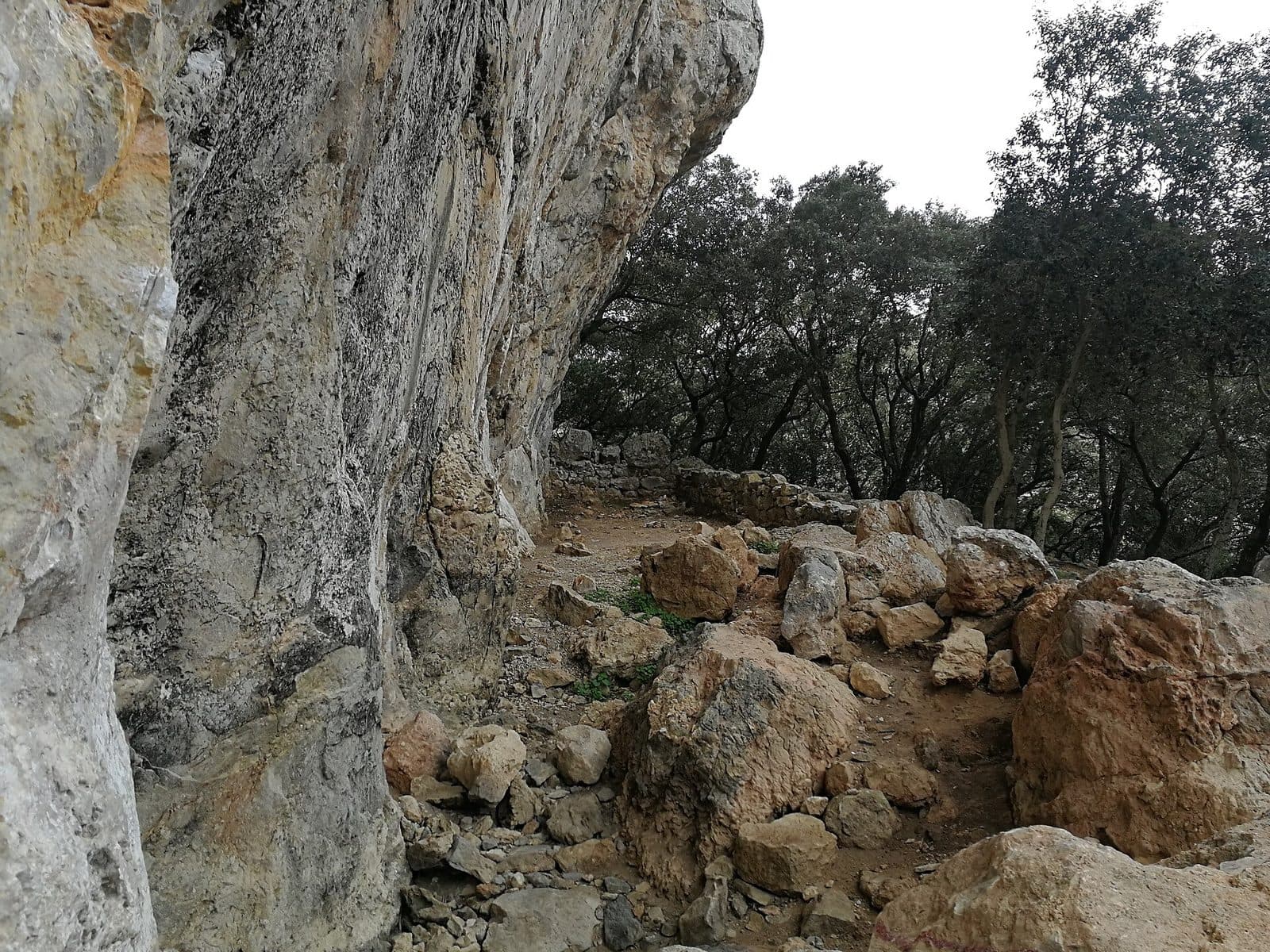

The creu d'en Barona is one of those historic places in Mallorca whose significance cannot be measured by a large museum, an elaborate presentation, or a long sightseeing route. The site near Valldemossa is listed as a Bien de Interés Cultural, expressly linking it to the island's protected cultural heritage.
This distinction is particularly important in Valldemossa. Attention here usually focuses on the Charterhouse, the Palace of King Sancho, and the stay of Frédéric Chopin and George Sand. The creu d'en Barona offers a different perspective: it draws attention to an individual historic monument preserved not because of a famous literary episode but because of its own heritage value.
A visit is particularly suitable for travelers who do not want to experience Valldemossa merely as a succession of familiar photo opportunities. Instead of an extensive exhibition, this is an individual historic site that becomes interesting through careful observation and an understanding of its place within the long-established cultural landscape. It is less suitable as the sole purpose of a long journey than as a deliberately planned detour during a stay in the village.
The precise location is crucial when searching. Several crosses and historic objects in Mallorca have similar names. The creu d'en Barona covered here is located near Valldemossa in the northwest of the island; the Creu del Pont d'en Barona near Sóller is a different monument and must not be confused with it.
Visiting creu d'en Barona
An individual historic site
The creu d'en Barona is experienced differently from Valldemossa's major attractions. There is no documented sequence of rooms through which visitors are guided and no recorded exhibition with a series of stops to complete. The protected historic object itself is the focus. It therefore makes sense to verify the location clearly on a map in advance and allow enough time on site for careful observation.
The designation Bien de Interés Cultural is more than a label. It makes clear that this is not simply any landmark with a historic appearance but a recognized cultural asset. Those aware of this background are more likely to see the creu d'en Barona as part of Valldemossa's historical layers rather than merely as a brief stop between the village's better-known attractions.
Timing and crowds
It is not practical to specify a fixed length of time for visiting the creu d'en Barona. As an individual historic destination, it naturally takes less time than a museum complex; the actual time required, however, depends on where the route starts in Valldemossa and whether the visit is incorporated into a walk through the village. Daily planning should therefore account not only for viewing the monument but also for finding its precise location.
Valldemossa is one of the Serra de Tramuntana's best-known excursion destinations and attracts numerous day visitors. Separate visitor numbers specifically for the creu d'en Barona have not been documented. Anyone hoping for the quietest possible experience should therefore focus less on presumed peak times at the monument and more on general activity in Valldemossa. Outside the busiest excursion periods, it is usually easier to notice smaller historic details that can easily be overlooked beside the main attractions.
Current visiting conditions
Confirmed opening hours and admission prices have not been recorded. It is therefore advisable to check current local information before traveling. This is especially important if the visit is planned as the main destination or if access across adjacent land may be required. Its status as a historic cultural asset does not automatically mean that every approach is possible at all times.
Tourist facilities directly at the site should not be assumed either. The creu d'en Barona is best understood as part of a stay in Valldemossa, where onward orientation, a break, and visits to better-known cultural sites can be combined.
Getting There and Parking
From Palma Airport
The indicated drive from Palma Airport to Valldemossa initially follows the Ma-20 and then the Ma-1110. The road distance is 25 kilometers, and the journey takes around 30 minutes. These details expressly end in Valldemossa rather than directly at the creu d'en Barona. For the final stretch, the precise location of the historic object must therefore be identified using a current map or local signs.
The Ma-1110 is the key access road toward Valldemossa. After arriving in the village, navigation should not rely solely on the monument's name, as similarly named historic crosses in Mallorca can produce incorrect results. Combining the name “creu d'en Barona” with the location Valldemossa is essential for an unambiguous match.
From Central Palma
From central Palma, the route follows the Ma-1110. Valldemossa is 19 kilometers away by road, and around 35 minutes should be allowed for the drive. The fact that the shorter route can take slightly longer than the airport route is due to its starting point within the city. Here too, the distance and journey time refer only to Valldemossa; the remaining route to the attraction is not listed separately.
For planning purposes, it makes sense to view the journey in two stages: first travel to Valldemossa, then navigate locally. Those combining the visit with a walk through the historic village can leave the car in a permitted parking area and choose the onward route to suit their other destinations in the village. Driving directly up to the monument should not be treated as a necessary part of the visit.
Bus and local navigation
No bus stop has been recorded in the immediate vicinity of the creu d'en Barona. This does not mean that Valldemossa is generally inaccessible without a car; however, travelers should not assume there will be a stop directly beside the monument for the final part of the journey. Those using public transport must expect an additional walk within or near Valldemossa and should check both the connection and walking route shortly before departure.
Confirming the location remains particularly important. The similarly named Creu del Pont d'en Barona belongs to Sóller and is not the destination covered on this page. Anyone using a navigation app should therefore check that the selected point is actually near Valldemossa in northwestern Mallorca before starting the route.
Bus lines to creu d'en Barona at a glance
| Line | Route | Departures/day | First | Last |
|---|---|---|---|---|
| 203 | Valldemossa / Deià | 94 | 06:50 | 22:30 |
From the official GTFS feeds (TIB/SFM), no real-time data. The figures cover all stops in the town; weekend and holiday services differ — check with the operator before travelling.
Getting there by bus
Valldemossa 1 (63002) · 2.1 km as the crow flies
- 203Valldemossa / Deià · Daily
Valldemossa 2 (63001) · 2.1 km as the crow flies
- 203Valldemossa / Deià · Daily
Timetable data: official GTFS feeds (TIB/EMT), no real-time — check with the operator before travelling.
Nearby
Valldemossa
The area around the creu d'en Barona is not an anonymous suburb but one of the Serra de Tramuntana's best-known historic and cultural places. Valldemossa lies among the mountains of northwestern Mallorca. Narrow, partly cobbled lanes, stone façades, green shutters, and flower-filled entrances define the appearance of the old village. This long-established setting helps visitors understand an individual protected monument not in isolation but as part of a historic cultural landscape.
Valldemossa is often reduced to its most famous guests. Frédéric Chopin and George Sand stayed here in the winter of 1838/39; Sand's later account brought further attention to their stay. The village's history, however, extends far beyond this episode. King Jaume II. had a residence established here, which was developed further under King Sancho, while Valldemossa's religious tradition is also closely associated with Catalina Thomàs, who is venerated in Mallorca.
Charterhouse and Palace of King Sancho
The Valldemossa Charterhouse and the Palace of King Sancho form the village's main historic focus. They combine well with the creu d'en Barona because they provide a broader framework for Valldemossa's history. While architecture, the monastic past, and memories of Chopin and Sand take center stage there, the creu d'en Barona remains a focused and less staged monument visit.
For planning a day, this combination makes more sense than traveling solely to see the historic object in isolation. The better-known buildings explain Valldemossa's political, religious, and cultural importance; the creu d'en Barona also demonstrates that the village's protected heritage includes smaller individual monuments.
The old village lanes
Between the main attractions, it is worth exploring Valldemossa beyond the shortest possible route. The narrow streets and small squares are an essential part of the experience. Here, the village appears not as a self-contained museum but as an inhabited place where historic buildings, religious symbols, and everyday modern life exist side by side.
Those who include the creu d'en Barona in such a walk will gain more than they would from a quick photo stop. The monument becomes an opportunity to look more closely at the less conspicuous historic features in the village. At the same time, there is enough flexibility to combine the visit with the Charterhouse, the palace, the gardens, or a walk along the historic streets without having to turn every destination into a separate, extensive program.
Local insider tips
Include Valldemossa in your search
When using navigation, always check “creu d'en Barona, Valldemossa.” The similarly named Creu del Pont d'en Barona is near Sóller and is a different historic monument.
Plan it as a village walk
The creu d'en Barona is best appreciated as part of a walk through Valldemossa. The Charterhouse, Palace of King Sancho, and old lanes provide the broader historical context.