
Parc natural de Sa Dragonera – Nature Park near Sant Elm
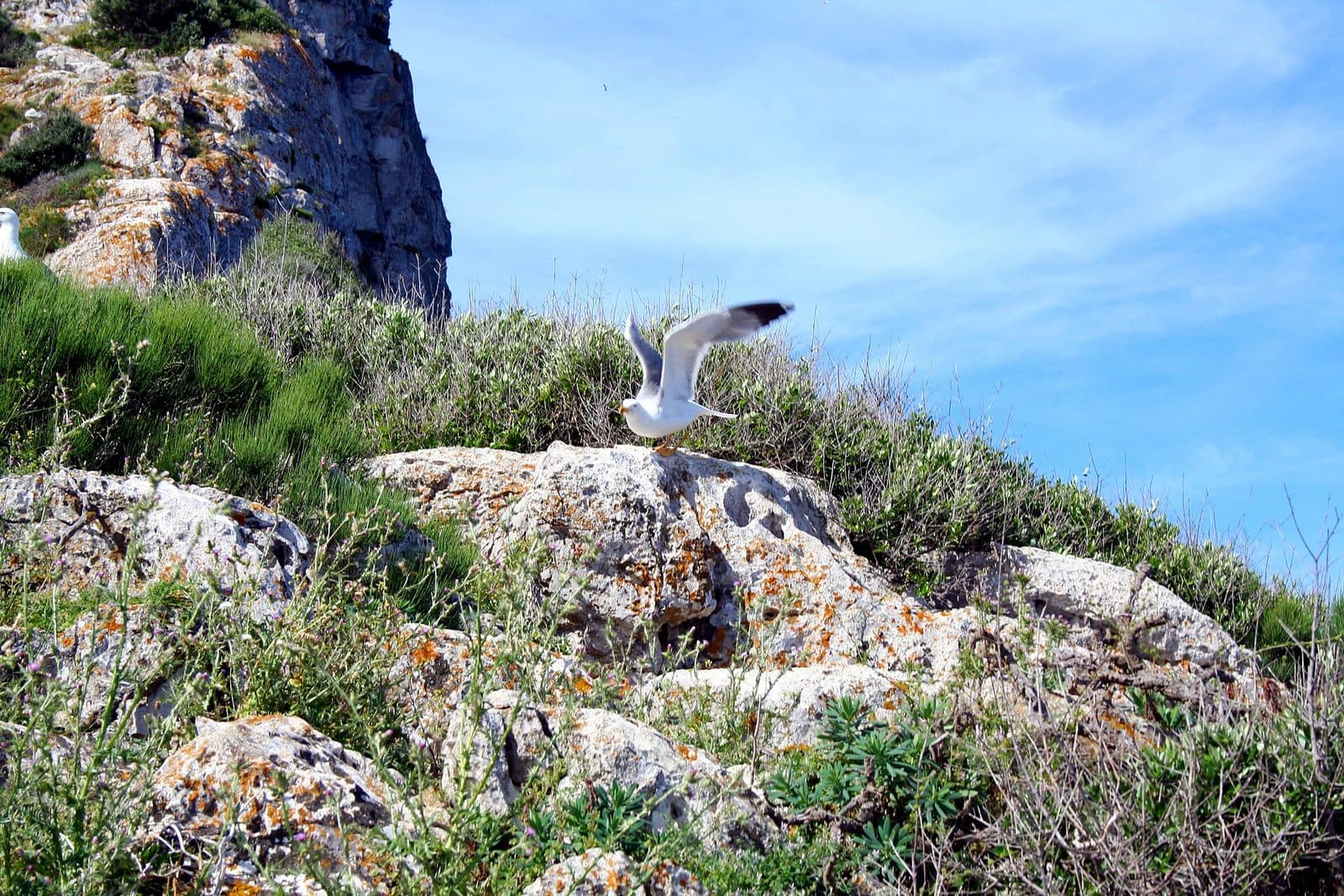

The island lies off the coast of Sant Elm like a long, outstretched ridge. The Parc natural de Sa Dragonera protects this uninhabited rocky island in southwestern Mallorca together with the small islands of es Pantaleu and sa Mitjana. Those who cross over leave a lively coastal resort for an uninhabited rocky island within a short boat trip.
Its appeal does not lie in any single sight. Sa Dragonera is experienced as a whole: at the landing point in Cala Lledó, on the marked trails to lighthouses and viewpoints, among low vegetation and along coasts that provide a habitat for numerous seabirds. Particularly striking are the endemic lizards that regularly cross the paths on the island.
At the same time, the nature park tells an unusual political story. The fact that people now hike and observe nature here instead of building on the island is the result of a long conflict over planned tourist development. Sa Dragonera thus became a symbol of the Balearic environmental movement.
The trip is especially suitable for nature lovers, hikers, families with children comfortable on uneven terrain, and anyone who wants to see Mallorca’s coast from a different perspective. Sa Dragonera is not, however, a conventional beach island with beach services. A visit requires some planning, sufficient provisions, and a return journey by boat.
History and Significance
Nearly fifty young people crossed over to the island in 1977 and remained there for several days. They belonged to the Terra i Llibertat and Talaiot Corcat groups and were protesting against an urban development project intended to open Sa Dragonera to tourism. The occupation became significant far beyond the immediate dispute: today, the park authority describes it as the birth of environmental awareness in the Balearic Islands.
The Development That Was Prevented
In the 1970s and afterward, the Balearic archipelago was under intense pressure from tourism and construction. Sa Dragonera was also earmarked for development. Resistance, however, was not limited to the occupation of 1977. Continuing public protests and the growing environmental movement ensured that the island was not built over. This is precisely why it is now more than a scenic protected area: it serves as a reminder that preserving the coast had to be achieved through political struggle.
The Consell de Mallorca acquired the island in 1987. It was initially granted the status of a natural area of special interest, followed in 1995 by its designation as a nature park. Alongside Sa Dragonera, the protected area includes es Pantaleu and sa Mitjana. Additional European protection categories under the Natura-2000 network acknowledge the area’s importance for birds, plants, and other animal species. The waters around the island are now also under greater protection.
Island of Seafarers
The history of Sa Dragonera reaches far beyond modern nature conservation. Its location along old shipping routes and its caves with accessible fresh water made it important to seafarers. Contrary to a common story, its name is therefore not derived from the silhouette of a sleeping dragon. According to the park authority, it comes from the Latin word traconaria and refers to caves that were used to obtain fresh water along historic routes.
Nevertheless, the image of a dragon is almost inseparable from perceptions of the island. From Sant Elm, the jagged ridge really does resemble a long creature resting in the sea. Piracy, smuggling, and the need for coastal surveillance also shaped local history. The old watchtower on Sa Dragonera is among the visible reminders of a time when the sea was not only a transport route but also a zone of danger.
A Separated Part of the Tramuntana
Geologically, Sa Dragonera extends the Serra de Tramuntana westward. The narrow channel of es Freu lies between the mountains and the island. This separation explains part of its particular natural value: the island setting encouraged distinctive life forms and created a largely isolated refuge. Sa Dragonera therefore has geological, biological, and cultural-historical significance today. The island is not a miniature version of the Tramuntana mountains, but their seaward extension, separated from them by water.
Things to See
The arrival alone makes it clear that Sa Dragonera is not a park with broad promenades and a packed visitor program. The boat reaches Cala Lledó, the starting point for the marked trails. From here, visitors spread out across a stark coastal landscape whose main attractions are not hidden behind doors: lighthouses, a historic watchtower, open horizons, and the island’s wildlife.
Cala Lledó and the Information Center
Cala Lledó is the gateway to the nature park. Visitors are registered at the information center and receive guidance from the park team. A small exhibition introduces the island’s natural and human history. This stop is not merely a formality: before setting out, visitors can determine which route best suits the available time and the group’s fitness level.
Around the arrival area, Sa Dragonera initially reveals its more accessible side. The paths into the island’s interior and toward the lighthouses begin here. Those who do not want to hike far can already gain an impression of the secluded landscape at the harbor and look out for the distinctive lizards. For longer tours, Cala Lledó is also the place to which visitors must return in good time before the boat departs.
Far de Tramuntana
The trail to Far de Tramuntana is regarded as the shortest of the well-known lighthouse hikes. Around one hour is allowed for the round trip. This makes the route particularly appealing when the stay is limited by the boat connection or when visitors want a manageable hike.
At the northern lighthouse, the view opens across the channel toward the Mallorcan coast. From the opposite Torre de Cala en Basset near Sant Elm, Far de Tramuntana is itself clearly visible in the landscape. This mutual line of sight illustrates the setting: although Sa Dragonera lies close to Mallorca, its trails and coastal viewpoints feel distinctly separated from the mainland.
Torre de Llebeig and the Lighthouses
The structures on Sa Dragonera tell of two different purposes. The historic watchtower near Llebeig represents coastal surveillance during periods of pirate and corsair attacks. The lighthouses, by contrast, helped ships navigate. Today, they are destinations along the signposted hiking trails and provide the tours with clear scenic endpoints.
This scattered arrangement is a defining part of the visitor experience. The structures are not viewed one after another in a compact museum district. They must be reached on foot across the island. The trail, the vegetation, and the changing views of the open sea and Mallorca are therefore just as much part of the attraction as the watchtower and lighthouses themselves.
Mirador de na Miranda
Mirador de na Miranda is one of the nature park’s named viewpoints. The park authority had the viewpoint restored, with the work completed in 2025. It provides another reason not simply to walk directly toward a lighthouse, but to pay attention to the perspectives along the route.
Sa Dragonera thrives on these changing views. On the side facing Mallorca, es Freu and the coast near Sant Elm dominate the scene, while elsewhere the unobstructed horizon of the western Mediterranean opens up. The viewpoint brings this scenic experience into focus without overwhelming it with major tourist facilities.
Lizards and Endemic Plants
The island’s best-known residents are the Sa Dragonera lizards, an endemic subspecies of the Balearic lizard. They occur only within this narrowly confined habitat and can often be observed along the trails and around the landing point. Their visibility makes the island’s distinctive biogeography immediately understandable: isolation has preserved not only a dramatic landscape here, but also unique animal forms.
The plant life is also remarkable. A total of 361 plant species have been recorded on Sa Dragonera, including 18 Balearic endemics. Its botanical rarities include a subspecies of sea lavender known as saladina. In many places, the vegetation is low-growing and adapted to wind, sun, and the salty coastal climate.
Seabirds and the Protected Coast
One of the park’s most important areas for wildlife observation extends above the rocks and in front of the cliffs. Sa Dragonera is a habitat for Audouin’s gull and Eleonora’s falcon; the critically endangered Balearic shearwater also uses the coast as a preferred breeding area. Bats are the island’s only naturally occurring group of mammals.
Ecologically, the nature park therefore does not end at the waterline. The surrounding waters and seabeds preserve habitats of the western Mediterranean and have gained additional protection through a marine reserve. Even during a visit confined to land, this connection remains visible: birds move between the cliffs and the sea, and almost every viewpoint shows how closely the island and the water belong together as a habitat.
Visiting the Park
The crossing is part of the excursion. Sa Dragonera has no road connection to Mallorca and can be reached only by sea. Regular tourist boats depart from the landing point in Sant Elm; alternatively, visitors may arrive by private boat. Because park access and boat connections may change, the current conditions should be checked before visiting.
Arrival in Cala Lledó
After docking, the first stop is the information center at Cala Lledó. The number and origin of visitors and the purpose of their visit are recorded there, and the team also explains the park’s rules and conditions. Groups of more than ten people require prior authorization from the park management. Individual travelers and smaller family groups can then choose one of the marked routes.
Time Required and Choosing a Route
At least half a day should be set aside for the nature park. Those who want to hike to more distant destinations, watch birds, or take photographs without time pressure should plan for longer. The route to Far de Tramuntana takes approximately one hour for the round trip, but registration, time spent at the destination, and coordination with the return boat must be added to the walking time itself.
The key is not to check off as many places as possible. Sa Dragonera reveals itself slowly: through the view back toward Sant Elm, the search for lizards beside the trail, and observation of the coast. The return journey by boat should be considered when choosing a route.
Time of Day and Visitor Numbers
It is not possible to identify a universally quietest time independently of the relevant boat connections. It makes more sense to compare departure times and allow sufficient time at the landing point.
The current access and return conditions are always binding.
Getting There
The road journey ends in Sant Elm, not in the nature park. From there, the final stretch crosses es Freu by boat to Cala Lledó. Directions must therefore not give the impression that Sa Dragonera can be reached by car.
From Palma and the Airport
The road distance from central Palma to Sant Elm is 37 kilometers. The journey takes around 44 minutes, initially following Ma-1 and then Ma-1030. From Palma Airport, the road distance to Sant Elm is 47 kilometers; via Ma-20, Ma-1, and Ma-1030, the journey takes around 45 minutes. Both figures expressly apply only as far as the coastal village.
Ma-1030 runs through the Andratx and S’Arracó area to Sant Elm. In the village, continue to the excursion boat landing point. Additional time should be allowed for this transition, as the walk to the pier and arriving in good time before departure are not included in the stated driving times.
No bus stop is recorded in the immediate vicinity of the nature park, not least because there is no land connection between Sant Elm and the island. Anyone using public transport to reach Sant Elm must plan separately for the subsequent walk to the pier and the boat crossing. The return journey remains crucial regardless of how visitors arrive: the length of the stay on the island depends on the booked or available connection back to Mallorca.
Nearby Places
After the return trip, Sant Elm is once again directly in front of you. The former fishing village has developed into a peaceful holiday resort with restaurants, bars, small shops, and beaches. Sa Dragonera remains its defining backdrop: from the waterfront, the island appears not as a distant destination but as a long rocky ridge immediately beyond the channel.
Sant Elm
Sant Elm was formerly known as La Palomera. Before landing at Santa Ponça, the troops of King Jaume I anchored here in 1229. Fishing and fish salting continued to shape the village through much of the 20th century; today, tourism is the main influence on life along the coast.
Sant Elm offers a pleasant contrast to the nature park during a day trip. There are no conventional tourist services on Sa Dragonera, whereas visitors can stop for food after returning to the mainland. The sandy beaches of Sa Gran and Sa Petita are suitable for a swimming break. Cala es Conills, by contrast, shows the coast from its more pebbly side.
La Trapa and Cala en Basset
Hikers can combine their time in the southwest with a visit to the La Trapa area. The former monastery was founded in 1810 by a monastic community and stands in a landscape where Sa Dragonera repeatedly appears as a distinctive point on the horizon. Torre de Cala en Basset is another historic destination in the surrounding area.
From this watchtower, the view extends across the sea toward Far de Tramuntana. This allows visitors to see the island from the opposite perspective after their trip: previously, Mallorca was on the horizon from Sa Dragonera; now, the lighthouse and island ridge lie across the water. Combining both excursions in a single day, however, requires sufficient time and fitness.
Andratx and Port d’Andratx
Andratx and Port d’Andratx are suitable as additional stops in the southwest without unnecessarily overloading a day at the nature park. The harbor town is ideal for a later walk or meal, while Sant Elm remains the more practical base for the direct crossing. Those spending only half a day on Sa Dragonera can easily wind down during the rest of the day along the coast between Sant Elm and Andratx.
The place it belongs to
Sant Elm in the place guidePractical Information for Your Visit
Everything needed later should already be in your bag at the pier in Sant Elm. Sa Dragonera is a protected hiking destination, not a fully equipped leisure park. There are no restaurants or shops on the island. Sufficient drinking water and your own food are therefore essential, even if you are only planning the shorter route.
Orientation
The routes begin and end in Cala Lledó. Before setting out, it is worth discussing the route with the information team and planning the return time with sufficient margin rather than merely keeping it in mind. Anyone observing or photographing animals can easily underestimate how much time passes at individual points.
Visiting with Children
The boat trip and the frequently visible lizards can make the excursion particularly exciting for children. The route should, however, be selected according to their walking ability and the time available. Because of its manageable duration, the hike to Far de Tramuntana is easier to include in a family outing than an attempt to cover as much of the island as possible.
The lizards are part of the protected ecosystem. Quietly observing them beside the trail helps children understand what makes the island special.
What Sa Dragonera Is Not
Sa Dragonera is not a destination for a spontaneous beach day with food service. Swimming in the harbor area can complement the excursion, but the essence of the visit is nature observation, hiking, and the landscape. Those primarily looking for sun loungers, broad sandy beaches, or a selection of restaurants will be better served in Sant Elm after the return trip.
Nor is the island a place for a tight schedule. Access and return depend on the boat, the trails require time reserves, and the information center is part of the regular process. These very limitations protect the character of the nature park. Those who include them in their planning will experience Sa Dragonera not as a list of viewpoints, but as a coherent island world.
Local insider tips
Look Closely Near the Landing Point
The endemic Sa Dragonera lizards can often be observed along the trails and around Cala Lledó. Instead of following them, quietly watch the edges of the paths and warm surfaces—they often appear by themselves.
Short Route to the Lighthouse
If the time between the outward and return boats is limited, Far de Tramuntana is a good choice. Around one hour is allowed for the round trip; breaks and the return walk to the boat must be factored in separately.
View Across es Freu
The side facing Mallorca shows particularly clearly how narrow yet separating es Freu appears. The view brings Sant Elm, the Tramuntana coast, and Sa Dragonera together in a single geological panorama.
A New Perspective the Next Day
From Torre de Cala en Basset near Sant Elm, you can look across toward Far de Tramuntana. Those who have already visited the island will then recognize the lighthouse and rocky ridge from a surprisingly different perspective.
Buy Provisions in Sant Elm
There is neither a restaurant nor a shop on Sa Dragonera. Drinking water and food should therefore be purchased before departure in Sant Elm—not after the boat has already docked in Cala Lledó.