
Mallorca water temperature in October: 22°C & bathing tips
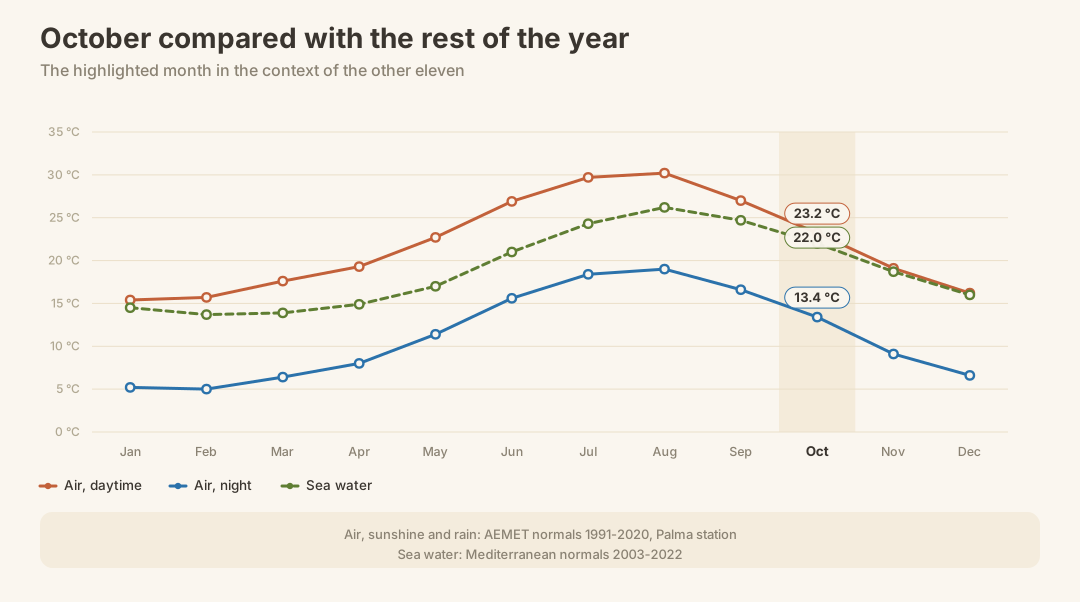
Palma normals as an island-wide approximation: In October, the average daytime high is 23.2 °C and the sea is 22 °C, with 7 rain days and 6.4 hours of sunshine per day.
Anyone standing on Mallorca's coast in October and looking out over the water need not wonder for long whether a dip is worthwhile: the sea has been storing all summer what the air has long since given up again. The month is regarded as the wettest of the year, and yet it remains one of the most reliable months for swimming – a contradiction explained by the sluggishness of water. How warm it actually is, where on the island bathing is more pleasant than elsewhere, and what this means for snorkellers and divers, this overview reveals.
Water temperature in October
The short answer first: yes, you can still swim on Mallorca in October without a second thought. The sea reaches a monthly average of 22.0 °C, clearly above the threshold at which most people find water pleasantly warm – noticeably cooler than in August, but far from cold. Anyone who was swimming in September will barely notice the difference, since the sea releases its warmth only reluctantly.
At the same time, with 67 mm of precipitation and 7 rainy days, October is the wettest month of the year. The first autumn fronts sweep over the island, bringing sharp, mostly brief showers, interspersed with plenty of sunshine, with 6.4 h of sunshine per day. This mixture of warm sea, clearing skies and noticeably fewer crowds on the beaches makes the month one of the most pleasant times to visit for many people – provided you build in some flexibility for a rainy day.
While bathing continues along the coast, the grape harvest begins inland: in many villages the harvest ends with small festivals, and in the almond groves the last fruits of the season are being gathered at the same time. Anyone heading to the sea on a dry day rarely encounters crowded beaches – the main season is over, but the water is still inviting. Sensitive swimmers who stay in the water for hours during high summer will tend to prefer shorter, though no less pleasant, dips in October. Air temperatures already fluctuate considerably more than the sea on some days, so that jumping into the water, especially on cooler, breezy afternoons, feels pleasantly warm.
Why the sea lags behind the air
The reason for this lag lies in a simple physical fact: water has a far higher heat capacity than air. To convert the same amount of solar energy into a rise in temperature, a mass of water takes many times longer than the same amount of air. While the air temperature over the island adjusts to a new weather pattern within a few days, the Mediterranean responds only over weeks and months. It stores the summer's warmth like a sluggish buffer and releases it again only with a considerable delay.
This delay is most evident when comparing when the air and the water reach their respective annual peaks. The air is already warmest at the height of summer, with the daytime high in August reaching 30.2 °C. The sea, by contrast, only catches up several weeks later: it usually reaches its highest value in September, at 24.7 °C. By this point the sun has already lost some of its strength, yet the water has only just absorbed enough energy to reach its annual peak.
The gap between air and water becomes even greater in spring, when the situation reverses. In April, air temperatures already rise noticeably, with daytime highs often reaching 19.3 °C, yet the sea has not yet shaken off winter and measures only 14.9 °C. It is precisely in this season that the gap between the two values is widest, because the air reacts immediately to every hour of sunshine, while the water still holds on to the cold of the preceding months.
For October, this principle works the other way round: the air is already cooling noticeably, while the sea is still living off the warmth stored during summer. This is precisely why a swim in October often feels warmer than the air temperature on that day would suggest – an effect that surprises locals and returning visitors alike.
Where the water is warmest in October
Even though there are no separate measurement series for individual bays and no reliable figures can be given here, experience around the island reveals a clear pattern: shallow, sheltered bays warm up faster and retain their warmth longer than deep, open stretches of coast. In the south of the island, around Colonia de Sant Jordi and the extensive shallow-water zones near Es Trenc, the water often stays more pleasant than in more exposed spots, thanks to the shallow depth and shelter from swell. Much the same applies to the bays of the east coast around Cala Millor or the Bay of Alcúdia in the north, which, although more open, also offers comparatively mild water thanks to its shallow shelving zone.
On the north-west coast, along the steep cliffs of the Serra de Tramuntana near Sóller or Sa Calobra, conditions are different: here the water drops quickly to great depths, is mixed more strongly, and has less opportunity to warm up in a shallow zone. Anyone seeking particularly mild water in October is generally better off on the shallow stretches of coast in the south and east than on the deep north-west coast, which is more exposed to the open sea.
Time of day also plays a role: in sheltered bays, the sun additionally warms the uppermost layer of water during the day, so that an afternoon swim in a shallow bay can feel noticeably milder than a dip in the open sea early in the morning. These small-scale differences cannot be captured in a single figure, but they explain why some corners of the island are regarded as autumn bathing insider tips for longer than others.
October's sea compared with the rest of the year
Looking at the annual course of the water temperature, October clearly falls on the descending side of the curve – after the summer peak, but still well before the winter low. Compared with the warmest month of the year, when the sea measures 24.7 °C, October is already noticeably cooler, yet the gap to the coldest month, when only 13.7 °C is reached, remains considerable. October therefore lies closer to the summer maximum than to the winter minimum, which once again underlines the sea's inertia: even a good month after the peak of warmth, there is no real trace of winter cold.
The comparison becomes especially revealing when set against the month that sits as a mirror image on the other side of the calendar year: April. Both months are roughly equidistant from the solstices and therefore receive a similar amount of solar energy over the course of the year. Nevertheless, the water temperatures are far apart – in April the sea measures 14.9 °C, whereas in October it measures 22.0 °C. This difference arises solely from the water's storage effect: in April the sea is still living off the cold of winter, while in October it is living off the warmth of summer. Nowhere else in the course of the year is the thermal inertia of the Mediterranean so vividly illustrated as in this comparison of two months with similar solar input but opposite thermal signs.
For anyone who prefers autumn to spring, this comparison offers a simple argument: a swim in October is, as a rule, more pleasant than a swim in April, even when air temperatures in both months are similar.
Swimming, snorkelling, diving: what's worthwhile now
At a water temperature of 22.0 °C, an ordinary swimsuit or pair of swimming trunks is quite sufficient for most people, as long as you stick to shorter periods in the water. Anyone wanting to swim, snorkel or dive for longer, however, will already benefit from a thin wetsuit or at least a short shorty version, because even though the temperature itself is still pleasant, the body cools down noticeably over an extended stay in the water – an effect that is further intensified by falling air temperatures on land as soon as you step out of the water.
For snorkellers, October is generally a good month: the summer algal blooms have subsided, and underwater visibility in calm, sheltered bays is often very good. The main limitation comes from the showers typical of the month, since after heavy rainfall, rainwater carries sediment into the sea via streams and rivulets, which can briefly cloud visibility close to the coast – though the water usually clears again within a few days.
Much the same applies to divers: the still-mild water temperature makes longer dives more pleasant than in winter, but a wetsuit of sufficient thickness remains advisable once you dive deeper, since temperature drops faster with depth than the surface readings might suggest. Anyone planning their dive or snorkelling trip for a sunny morning also benefits from the additional warming of the uppermost layer of water, and thus from the most pleasant conditions the month has to offer.
Frequently asked questions
Can you still swim in Mallorca in October?
How does October's sea temperature compare to September?
Is October good for snorkelling in Mallorca?
When does the sea become too cold to swim after October?
What's on in Mallorca in October
Events
- Wednesday FITZPalma
- eDNI and passport processing in CamposCampos
- 5th Manacor Family Theatre Festival: Despierta al Rinoceronte - Sala La FornalManacor
- FITZ ThursdayPalma
- MovicantoDeià
- SECRETS NIGHT 🤫Calvià
Worth doing now
- Fit in a last comfortable swim before the sea cools more noticeably next month.
- Combine a beach morning with an afternoon at an inland winery during harvest season.