
Búger, Mallorca: Village Life Between the Island’s Heart and the Tramuntana
.jpg)
Places to stay in Búger
AdTo load the accommodation map by our partner Stay22, we need your consent for marketing cookies. Your consent applies to all marketing content on mallorca.com.
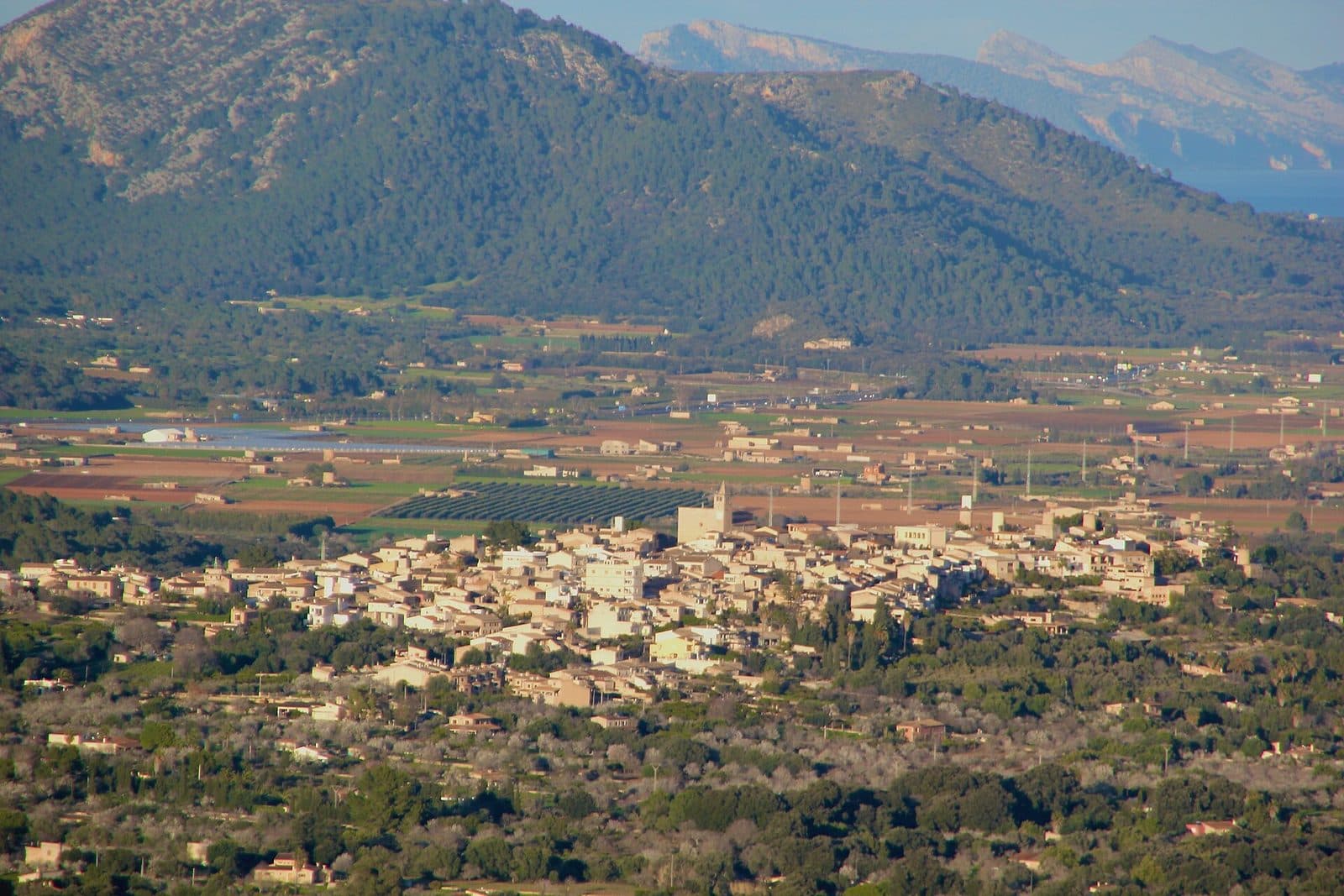
Búger is one of those places in Mallorca that cannot be understood through a long list of spectacular attractions. The village stands on a hill between Campanet and Sa Pobla, where the island’s central plain meets the foothills of the Serra de Tramuntana. Narrow streets, traditional stone houses, cultivated fields, and the compact cluster of buildings around the church define its appearance. As Mallorca’s smallest municipality by area, Búger has an unusually clear and manageable layout.
For visitors, Búger is particularly worthwhile as a peaceful stop, a base for tours in the north, and a place where rural Mallorca still shapes everyday life. A walk does not lead through a staged old town, but through a living village. Archaeological sites, old mills, religious traditions, and the views from the elevated village center reveal more about Búger than any single landmark could.
The municipality also has its own distinct profile as a place to live. Holiday homes and smaller accommodations are clearly represented in the local market, but Búger is not a traditional resort with a promenade or beach scene. It is better suited to people seeking peace and a rural setting who accept that many everyday journeys lead to the larger neighboring towns. Sa Pobla, Campanet, Inca, and the towns on the north coast form the practical surrounding area.
The location allows for various day-trip combinations: a morning walk through the village center, followed by time in the countryside or a trip onward to Pollença, Alcúdia, or the northern beaches. Búger’s appeal lies in its scale, continuity, and a landscape where agriculture and village life still meet directly.
History of Búger
The municipality’s history begins long before the present-day village. On the southern slope of Sa Mata Gorda, traces from the pre-Talayotic period were discovered in the Can Mossènyer cave. Other finds are attributed to the Talayotic era, and the Rafal des Puig site recalls this early settlement. Both locations show that the landscape around Búger was already in use before the compact village developed on its hill.
Cova de Can Mossènyer
The Can Mossènyer cave is significant to local history because the evidence discovered there dates back to the pre-Talayotic period. The finds are classified as belonging to the twentieth through fifteenth centuries BC. For visitors, the important point is less any individual museum-style artifact than the realization that the elevated, sheltered locations around Búger served as living spaces from a very early period.
Rafal des Puig
Rafal des Puig represents the subsequent Talayotic phase, dated from the fifteenth through the second centuries BC. The site expands the historical picture beyond a single cave location: organized settlement structures existed in the surrounding area, and their traces remain part of Mallorca’s archaeological landscape today. Anyone who sees Búger only as a small farming village therefore overlooks its considerably older history of settlement.
Agriculture in Roman Times
During Roman rule, agricultural use of the area intensified. Farmhouses and watermills were built on the hill where Búger now stands, while gardens were also established. At the time, the region belonged to the territory of Inca. This development is important to the village’s later form: Búger did not arise beside a harbor, but in a landscape whose value lay in water, farmland, and the organization of agricultural labor.
The Roman era began in Mallorca with the conquest in 123 BC. In 465, the Vandals took control of the island. These changes of rule do not allow a complete picture of Búger itself to be reconstructed, but its agricultural foundations remained defining. Mills, gardens, farmsteads, and fields are therefore not merely decorative features of the surroundings; they belong to the municipality’s historical core.
From a Rural Settlement to an Independent Municipality
The present-day village is concentrated around its church and follows the shape of the hill. The narrow streets and closely spaced stone houses show how scattered agricultural activity developed into a cohesive village center. Búger’s independence is particularly notable because it is Mallorca’s smallest municipality by area. This explains its close relationship with neighboring towns: politically, Búger has its own center, but in everyday life the municipality was and remains part of the rural area between Inca, Sa Pobla, and Campanet.
Things to See in Búger
Búger’s sights combine to create a sense of place rather than a sequence of monumental highlights. The historic center can be explored on foot. Along the way, the church, squares, rising lanes, traditional houses, and views across the fields alternate with one another. Archaeological sites and mills lie deeper within the cultural landscape and require more preparation than a walk through the center.
The Village Church
The church forms the architectural and spatial heart of Búger. The old village center is grouped around it, and the approaching streets reveal how closely the religious center and residential buildings are connected. Its importance can also be seen in the festival calendar, particularly during Sant Pere, Corpus Christi, and the church traditions surrounding Sant Antoni.
The church should not be viewed in isolation. Only together with the adjoining streets, façades, and public spaces does it become clear how Búger developed. For a walk, it is therefore worth exploring more than the immediate surroundings and crossing the hill along different lanes. The changing views of rooftops, fields, and mountains are part of the experience of the village center.
Plaça de la Constitució
Plaça de la Constitució is an important landmark in the center. Public life, municipal events, and parts of the market activity are concentrated here. The Fira des Jai also uses the square as its main venue. Outside market days and festivals, it feels considerably quieter and conveys the everyday scale of this small municipality.
From the Plaça, Búger can be explored without following a fixed route. Short connections lead into residential streets and toward the rising sections around the church. Precisely because the square is not a grand urban ensemble, it clearly demonstrates how administration, social interaction, and festival culture share the same space in a small Mallorcan village.
Old Stone Houses and Lanes
Traditional stone houses and narrow streets define the historic center. The main attraction is not a series of individual buildings open to the public, but the construction style itself: enclosed façades, small openings, solid walls, and houses fitted closely to the course of the streets and the hillside.
When taking photographs and exploring, visitors should remember that most of these are occupied homes. Búger is not a museum-like old town. That is precisely where its appeal lies: doors, garages, laundry, plants, and everyday traffic are all part of the scene. A discreet walk reveals more than searching for supposedly undiscovered courtyards.
Windmills and Watermills
Mills form part of the historic landscape around Búger. The documented watermills point to the use of water and the intensification of agriculture as early as Roman times, while windmills are recorded as visible features of the rural surroundings. They should therefore be understood primarily as part of the cultural landscape.
On routes outside the compact village center, it is easy to see why mills played a role here. Agricultural land, gentle changes in elevation, and scattered farmsteads form the functional background. The structures therefore tell not only a story of technology, but also of supplying a small, independent village.
Cova de Can Mossènyer and Sa Mata Gorda
On the southern slope of Sa Mata Gorda, Cova de Can Mossènyer provides one of the most important links to Búger’s earliest history. The site documents use during the pre-Talayotic period. It is not a substitute for a large cave attraction with detailed educational displays; its value lies in its archaeological context and location within the historic settlement landscape.
Anyone visiting the area should check access and routes in advance and respect property boundaries. For a spontaneous walk through the village, the site is more useful as historical background. It nevertheless explains why Búger’s history did not begin with its church, stone houses, and development as a modern municipality.
Rafal des Puig
The Talayotic site of Rafal des Puig takes visitors even farther beyond the present-day village scene. It represents a settlement phase that preceded the modern village by many centuries. The site is particularly relevant to visitors interested in cultural history who see Búger as more than a viewpoint or a brief stop on the way to the coast.
The Weekly Market
Búger’s weekly market is small and tailored to the needs of a village. It takes place in the historic center around Plaça de la Constitució, the town hall, and Carrer Mascaró. The stalls are therefore not spread across a large, enclosed market area, but fit into streets and squares used for ordinary village life on other days.
Fresh Produce and Everyday Goods
Fresh agricultural produce is the main focus. It is supplemented by Mallorcan staples, preserved products such as olives and olive oil, everyday goods, and a limited selection of simple handicrafts. The market is not comparable to the major marketplaces in Inca, Alcúdia, or Sineu. Anyone expecting dozens of clothing stalls, tourist souvenirs, or an extensive flea market will misjudge its format.
Its small size is precisely what makes the market interesting to visitors who want to experience shopping as part of village life. Many customers come from Búger itself or the immediate surrounding area. Conversations between neighbors and traders shape the atmosphere more strongly than any tourist entertainment program. For guests staying in holiday homes, the market is a good opportunity to buy regional food without visiting one of the island’s busier markets.
A Market in the Living Village Center
On market mornings, there is more activity in the center than usual. Access roads and parking spaces may be used differently, and delivery vehicles and pedestrians should be expected near the Plaça. It makes sense to park outside the narrowest lanes and walk the final stretch. This also makes it easier to continue with a walk around the church and village center afterward.
The market operates year-round and is therefore also relevant to residents’ everyday lives. It combines supplies and social interaction without completely transforming the village. Once the stalls have been taken down, Búger quickly returns to its quiet rhythm. Anyone traveling solely for the market should combine it with a village walk or an excursion to Campanet, Sa Pobla, or toward the north coast.
Activities and Excursions
Búger is particularly suitable as a base for outdoor activity in the open countryside. Cultivated land with almond, olive, and carob trees, smaller roads, and proximity to the Serra de Tramuntana create varied conditions for walks and cycling tours. For demanding mountain hikes, however, the main destination area begins farther west; the village itself is not located in the high mountains.
Walks Through the Cultural Landscape
Short routes around the village quickly lead from the compact built-up area into the fields. There, the municipality’s agricultural character becomes clear. Mills, stone structures, farmsteads, and tree crops are not isolated photographic subjects, but elements of a working landscape.
Not all routes are public footpaths. Enclosures, driveways, and cultivated properties should be respected. For longer excursions, planning a route in advance is recommended. This is particularly important if archaeological sites or mills are to be included, as their accessibility cannot be assumed to match that of a regular visitor attraction.
Cycling Between Búger, Campanet, and Sa Pobla
Its location between Campanet and Sa Pobla makes Búger a suitable component of cycling loops through northern and central Mallorca. The surrounding area alternates between flatter agricultural stretches and climbs toward the village and the Tramuntana foothills. This allows routes to be adapted to different fitness levels without Búger itself needing to serve as the starting point for a major mountain pass.
Local traffic and agricultural vehicles should be expected on the narrower country roads. Anyone stopping in the village should park their bicycle without obstructing entrances or narrow pedestrian areas.
Serra de Tramuntana
The Serra de Tramuntana lies west of Búger and shapes the horizon in many places. The village therefore offers a peaceful location near the mountains without itself being a traditional Tramuntana mountain village. Reaching the starting points for hikes at higher elevations requires further travel. Its proximity does, however, make it possible to combine a village walk with countryside destinations along the edge of the mountain range.
Campanet is a convenient nearby destination to add to the itinerary. From there and from municipalities farther west, additional routes open into the foothills. In this context, Búger functions less as a final destination than as a quiet base between the flatter center of the island and the mountains.
Pollença, Alcúdia, and the North Coast
To the north lie Pollença, Alcúdia, and the coastal towns around the large bays. This makes it easy to combine Búger with a beach day or a visit to the historic centers. The municipality itself has no coastline and should not be seen as a beach destination. This distance from the sea is precisely what protects it from the rhythm of a holiday resort.
For a varied day trip, Búger works well in the morning or late afternoon, with the middle of the day spent on the coast or in a larger town. During the main travel season, the route to the coast may feel considerably busier than the village itself. Returning to Búger quickly leads back into a more rural setting.
Beaches in Búger
One beach with its own page belongs to Búger.
Festivals and Events
The festival calendar shows that Búger’s community does not depend solely on summer visitors. Religious celebrations, a spring fair shaped by agriculture and crafts, and processions structure the year. Exact programs may change, with streets, squares, and the church becoming stages for community life.
Sant Antoni Abat
Sant Antoni is celebrated on 17 January. Traditional elements include fires and the blessing of animals, known in Mallorca as Beneïdes. In Búger, the festival retains a village scale. It is less oriented toward a large audience than the particularly extensive celebrations in neighboring Sa Pobla, but remains closely connected to rural tradition and the beginning of the year.
For visitors, Sant Antoni is an opportunity to experience Búger outside the holiday season. The winter evening, fires, and religious customs reveal a different side of the village from summer stays in holiday homes.
Fira des Jai
The Fira des Jai is Búger’s most distinctive secular event. It was revived in 1977 and recalls an older custom: grandfathers returning from the markets in Inca and Sineu were welcomed by their grandchildren. Today, the figure of the Jai, the grandfather, travels through the village and hands out sweets to children.
An agricultural, trade, and craft fair has developed around this ritual. Exhibitions, traditional dances, sporting activities, and concerts form part of the changing supporting program. The Fira takes place in spring and is centered on Plaça de la Constitució and the village center. It is particularly interesting for families because its central story explicitly addresses the relationship between generations.
Corpus Christi
For Corpus Christi, processions and floral carpets are created in Búger. The familiar streets are briefly transformed as religious observance, communal preparation, and temporary decoration come together directly. The floral carpets are not merely decorations, but part of a living Catholic festival tradition.
Anyone attending the celebration should respect barriers and prepared areas. In the narrow streets, processions cannot be separated from normal traffic. It is therefore sensible to arrive with extra time and park outside the immediate center.
Sant Pere
Sant Pere is celebrated on 29 June with religious and cultural events. The festival is closely linked to the local church and community life at the beginning of summer. Depending on the annual program, several activities may be grouped around the main feast day.
Sant Pere is suitable for visitors who want to experience Búger during a livelier period without expecting the scale of a major coastal festival. For residents, the celebration marks an important point in the local calendar. It brings long-established residents, families, and temporary inhabitants together in public spaces and demonstrates that the central squares remain actively used.
Upcoming dates
Getting There and Getting Around
Búger lies in the northern part of central Mallorca between Campanet and Sa Pobla. Access is via the regional road network connecting the municipality with Inca, the northern side of the Tramuntana, and the bays of Pollença and Alcúdia. For travelers with varied excursion plans, a car is the most flexible option, especially when beaches, mountain hikes, or rural accommodations outside the village center are on the itinerary.
Arriving by Car
From Palma, the usual route initially follows the island’s main north-south connection toward Inca and then continues north. Búger lies away from immediate big-city traffic but is not isolated. The final sections pass through agricultural surroundings and climb into the village. Drivers should proceed slowly in the narrow streets of the center.
Practical connections to the north coast run via Sa Pobla and the onward roads to Alcúdia and Pollença. Búger can therefore be used as a stop without making a major detour through coastal tourist resorts. During the main travel season, more traffic should be expected on the approaches to the bays than within the municipality itself.
Parking in the Village
For a walk, it is more practical to find a permitted parking space before reaching the narrowest part of the historic center and continue on foot. The streets near the church and Plaça are narrow, partly uphill, and also serve as access routes to homes.
Public spaces are used differently on market and festival days, so additional time should be allowed to find parking. A short walk is usually more pleasant than searching for a space in the center. Driveways and marked areas must remain clear, even if stopping for only a few minutes.
Bus and Train
Public transport connects Búger to the regional network, but does not offer the same flexibility as a private vehicle. Timetables should be checked before every journey, particularly in the evenings, on weekends, and outside the main season. Anyone wishing to combine several rural destinations in a single day must coordinate connections carefully.
Train travelers need to change elsewhere in the surrounding region; trains do not pass through the village center. A combination of train and regional bus can work for a single arrival or departure. For daily commuting or spontaneous excursions, the key question is whether the specific home location has convenient pedestrian access to public transport.
Walking Around the Village
The center is compact and easy to explore on foot. Slopes, uneven road surfaces, and narrow pedestrian areas may, however, make movement more difficult for people with limited mobility. Children should be accompanied along through roads because pedestrian and vehicle traffic are not clearly separated everywhere.
A private vehicle is hardly needed within the village itself. The situation is different for journeys to scattered accommodations, archaeological sites, or destinations outside the municipality. Practical mobility therefore depends heavily on whether the accommodation lies in the center or the rural surroundings.
Bus lines to Búger at a glance
| Line | Route | Departures/day | First | Last |
|---|---|---|---|---|
| T2 | Palma - sa Pobla | 73 | 06:06 | 22:31 |
From the official GTFS feeds (TIB/SFM), no real-time data. The figures cover all stops in the town; weekend and holiday services differ — check with the operator before travelling.
Getting there by bus
Muro Estació (218) · 1.8 km as the crow flies
- T2Palma - sa Pobla · Daily
Timetable data: official GTFS feeds (TIB/EMT), no real-time — check with the operator before travelling.
Living in Búger
As a place to live, Búger offers an everyday life shaped more strongly by the neighborhood, agriculture, and the larger surrounding towns than by tourist infrastructure. The compact center remains the social hub, while fields, farmsteads, and holiday accommodations lie beyond it. Anyone considering a move should therefore assess not only the house, but also its exact location within the municipality.
Everyday Life and Local Amenities
The weekly market plays a small but visible role in supplying fresh food and everyday goods. For comprehensive shopping, the larger neighboring towns are more important. Sa Pobla and Inca in particular offer a much broader urban setting, while Campanet provides another nearby reference point.
This does not mean that Búger functions only as a place to sleep. The town hall, church, festivals, market, and public squares create a center of its own. At the same time, the municipality is too small to gather every specialized service in the village center. Before moving, it is therefore advisable to plan recurring journeys for shopping, healthcare, school, and work based on the specific address rather than relying solely on its position on a map of the island.
Living in the Historic Center
In the center, traditional houses stand close together along narrow streets. This offers short distances and immediate proximity to community life, but also brings typical issues associated with old village centers: access, parking, stairs, hillside locations, and the building’s structure matter more in everyday life than a broad countryside view. The areas around the central squares may temporarily become livelier on market and festival days.
Those who enjoy walking and value regular encounters within the village will find the center the most suitable residential location. Houses here are part of an established street layout; generous outdoor areas and convenient car parking should not be taken for granted. In return, the village walk begins directly outside the front door.
Living Outside the Center
Rural locations offer more space between houses and a direct connection to fields, tree crops, and views of the Tramuntana. Holiday rentals and other accommodations are clearly represented in this area. Everyday life there depends more heavily on a car because even short errands or the journey to public transport may take longer.
When choosing a permanent home, the quality of the access road, accessibility after dark, and distance from the village matter just as much as peace and views. Agricultural land is a working environment; machinery, seasonal activities, and commercial traffic are part of the surroundings. The landscape should therefore not be mistaken for a purely holiday-oriented backdrop.
Commuting to Palma and the North
For commuters, Búger is more conveniently located than remote mountain villages because the connection toward Inca and Palma does not involve a mountain pass. The daily journey still runs from the island’s northern interior into the metropolitan area. It is most flexible by car; public transport also requires feeder services and a change.
Workplaces in Inca, Sa Pobla, Alcúdia, or Pollença are more closely connected to Búger’s regional everyday life. Anyone commuting regularly to Palma should test the route during their actual working hours. The decisive factors include not only the drive along the main connection, but also access from the specific home and parking or onward-connection issues at the destination.
Búger in Winter
In winter, Búger’s character as a residential and agricultural village becomes more apparent. Holiday accommodations are present, but the municipality’s life does not follow the beach season alone. Sant Antoni in January, the year-round market, and local facilities keep the village active outside the travel season.
At the same time, the range of services is smaller and quieter than in the island’s towns and cities. Anyone living here permanently should use winter as the benchmark: less tourist activity, earlier darkness on rural roads, and the greater importance of a car change everyday life. For people seeking peace who accept journeys to neighboring towns, this consistency may be precisely what makes Búger appealing as a place to live.
Long-Established Residents and Newcomers
Through its small size and festivals, Búger retains a strong local community. Sant Antoni, Corpus Christi, Sant Pere, and the Fira des Jai rely on shared preparation and public participation. At the same time, holiday homes, smaller accommodations, and non-local property owners bring new residents and temporary guests into the municipality.
Community life is visible less in a tourist nightlife district than at the market, in the squares, and during festivals. Those wishing to stay longer will find natural points of contact with village life there. Linguistic and cultural openness is more helpful in everyday life than expecting a small village to adapt its customs to international residents.
Practical Information for Visiting Búger
Búger does not require a full day of sightseeing. A relaxed walk is sufficient for the village center with its church, Plaça, and surrounding lanes; additional time is useful if visiting the market, taking photographs, or adding a tour through the countryside. Archaeological sites and mills should not be included as a spontaneous part of a village stroll without a planned route.
The Best Time of Day
In the morning, the village offers a particularly authentic view of everyday life. Market mornings bring additional activity to the center, while other days are quieter. The open farmland should only be explored during hot midday hours with sufficient sun protection and water.
Búger does not follow the schedule of a major visitor center. The walk remains worthwhile even when the main attractions are simply the streets, architecture, and views.
Duration and Useful Combinations
A manageable amount of time is sufficient for a first walk. Adding the market or a stop for food or drinks turns it into half a morning. Búger combines well with Campanet and Sa Pobla; for a longer day trip, Pollença, Alcúdia, the north coast, or a starting point on the edge of the Serra de Tramuntana can also be added.
It makes less sense to approach Búger as a collection of major individual attractions to be checked off. The village reveals its character over short distances and in the transition to the countryside. Anyone who stops only for a single photograph misses the relationship between the hill, church, homes, and fields.
Conduct in the Historic Center
Many photogenic buildings are private homes. Doors, courtyards, and driveways should not be entered or blocked. The same applies to rural properties and archaeological areas. Walls and fences are not merely decorative landscape features, but mark boundaries of ownership and use.
Residents, pedestrians, and vehicles share limited space in the narrow streets. Considerate parking and slow driving are therefore more important than reaching the Plaça by the most direct route. During processions, markets, and festivals, prepared areas and local instructions take priority.
What Búger Does Not Offer
Búger is not a beach resort, has no seafront promenade, and does not offer extensive nightlife. These limitations are important for planning: the village is a quiet counterpoint to the coast and larger towns, not a substitute for them.
Families will find space for a short walk, the market, and especially the Fira des Jai. For children expecting a full day of organized activities, Búger should be combined with another destination. Families interested in cultural history can, however, use the mills, agriculture, and early settlement to explain clearly how Mallorca’s interior developed.
Eating, drinking and staying in Búger
The best-rated businesses from our directory, ordered by Google rating — not by advertising.
Cafés and bakeries
Local businesses and services
The best-covered sectors in our directory for Búger — each with address, contact details and opening hours.
Run a business here? Add it to the directory for free and be found on this page. Add your business