
Muro, Mallorca: Old Town, Countryside and Bay of Alcúdia

Places to stay in Muro
AdTo load the accommodation map by our partner Stay22, we need your consent for marketing cookies. Your consent applies to all marketing content on mallorca.com.
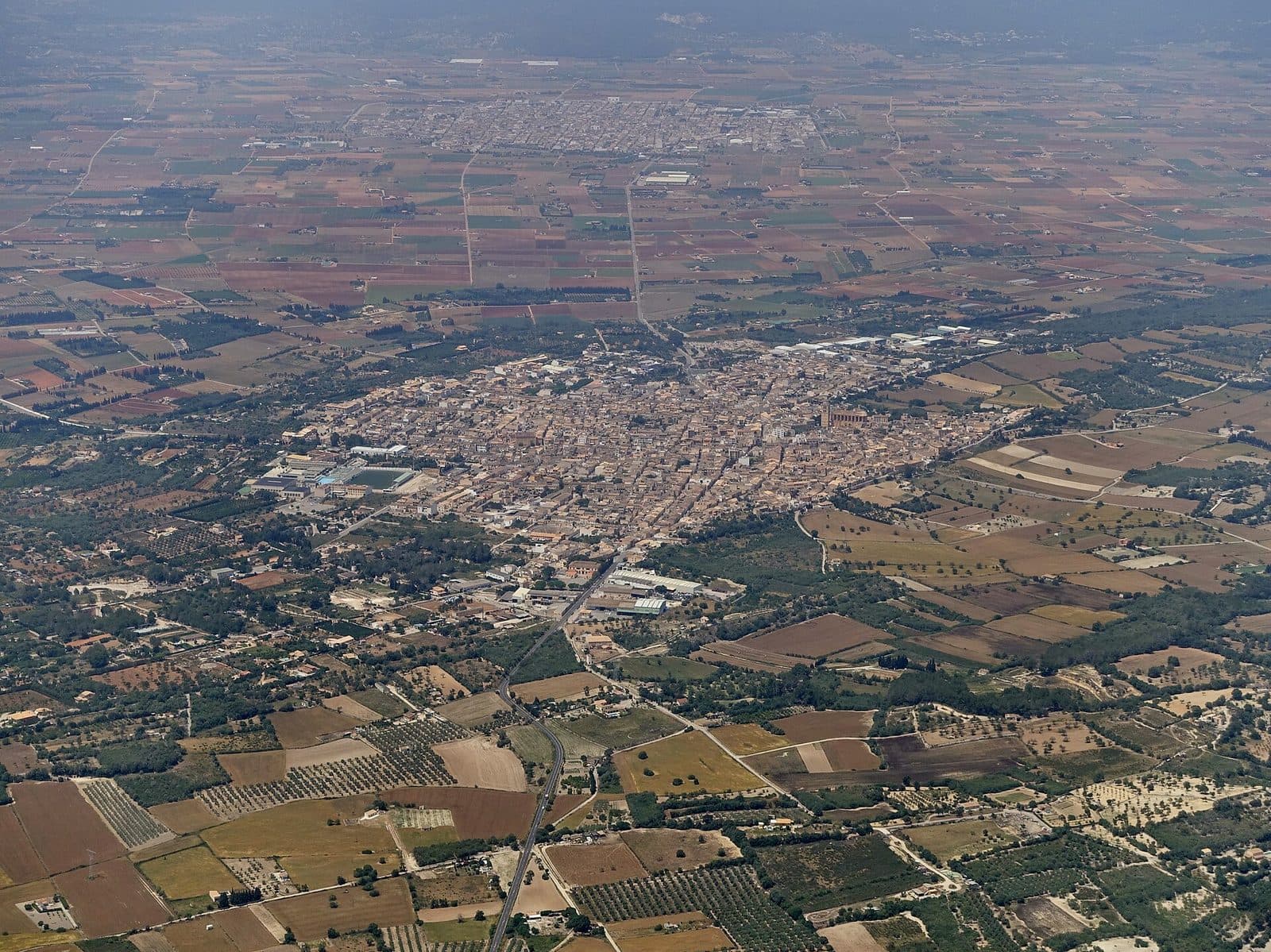
Muro reveals northern Mallorca from two very different perspectives. The main town lies inland in the Pla de Mallorca, surrounded by agricultural land. The municipality also includes a section of the Bay of Alcúdia with Platja de Muro, long stretches of sand, dunes and part of s’Albufera Natural Park. Anyone who knows only the beach has therefore seen just one side of the municipality.
The old town is not an elaborately staged open-air museum. Instead, the parish church, former religious institutions, stone houses, cisterns and traces of earlier agriculture reveal how closely the village, fields and wetlands were connected over the centuries. A walk is particularly worthwhile for visitors who prefer to experience architecture and everyday culture in an inhabited town rather than against a tourist backdrop.
For a day trip, Muro can easily be combined with Platja de Muro, s’Albufera Natural Park or the towns around the Bay of Alcúdia. Cyclists will find favourable conditions in the flat surroundings of the Pla, while water sports, beach days and birdwatching take centre stage on the coast.
Muro also has a distinctive appeal as a place to live. Grocery shops, restaurants, personal services and other everyday businesses do not cater exclusively to holidaymakers. The main town therefore remains more closely shaped by the local year-round rhythm than the tourist-oriented coastal zone. This contrast is especially attractive to people seeking a rural setting while still wanting access to the north coast.
History of Muro
From the Talayotic period to the Islamic settlement
The earliest traces of settlement in the area date back to the Talayotic period. However, the spatial organisation that later became crucial to Muro developed during Islamic rule between the 10th and 13th centuries. During this period, the area evolved as an agricultural settlement landscape. Even the place name is associated with an Arabic term for a wall or defensive structure, although this derivation is not considered conclusively established.
After the Christian conquest of Mallorca by Jaume I. in 1229, the area was divided among nobles and religious communities. This changed ownership structures, ecclesiastical organisation and the social order. The history of Muro therefore cannot be read from a single monument alone: it is also embedded in the layout of the lanes, former religious buildings and traditional estates in the surrounding countryside.
Agriculture and wetlands
For many centuries, Muro lived from grain, winegrowing and vegetable cultivation. The wetlands near the coast were also used. Hay gathered there was sold across the island, while fishing in the waterways and marshland also left its mark on local cuisine. This is particularly evident in the eel-filled Espinagada typical of Muro, which remains associated with Sant Antoni today.
Agriculture shaped more than employment. It determined building styles, food storage, festivals and eating habits. Houses made from Marès stone, large gateways for agricultural use, cisterns and windmills all belong to this context. A walk through the town therefore reveals less a unified monumental city than a working and residential centre of the Pla de Mallorca that developed over a long period.
From farming village to a municipality between countryside and coast
With the growth of tourism on the Bay of Alcúdia, some employment shifted towards services and construction. This gave the municipality a pronounced dual character: inland, Muro remained a rural, year-round town; on the coast, Platja de Muro developed into a holiday resort with hotels, restaurants, beach facilities and holiday accommodation.
This transformation has not displaced the memory of agriculture. Markets, dishes and festivals continue to reflect it, while s’Albufera is now perceived primarily as a protected natural area. This coexistence explains why Muro should be understood neither solely as a historic village nor merely as a beach municipality.
Things to See in Muro
Església de Sant Joan Baptista
The Sant Joan parish church dates from the 16th century and is the most prominent historic building in the main town. Its square bell tower, which stands apart from the church itself, is particularly striking. The church and tower provide a focal point for the centre and make a useful starting point for a walk through the old streets.
The building also reflects the importance of religious institutions after Mallorca’s Christian reorganisation. Even visitors unable to see the interior can gain a good impression from the surrounding area of the proportions of the historic town centre and its traditional architecture in pale island stone.
Convent dels Mínims
The former Minims monastery is one of the most important reminders of Muro’s religious history. Together with the parish church, it is among the town’s surviving ecclesiastical buildings.
Its position within the organically developed townscape is especially interesting during a walk. The former monastery should not be viewed in isolation: only in combination with the church, homes and narrow streets does it become clear how religious and civic life were organised side by side in historic Muro.
Hospital de Sant Joan Baptista
The former Hospital de Sant Joan Baptista is another element of the town’s history. Its surviving structure forms part of Muro’s inherited architecture. The building broadens the perspective beyond representative churches to include the everyday responsibilities of the historic community.
Molí d’en Tenre
Molí d’en Tenre represents the milling tradition of the Pla de Mallorca. Windmills were part of the working landscape of the plain and were closely connected with processing agricultural produce. In Muro, the mill is therefore more than a picturesque photo opportunity: it is an easily understood symbol of the town’s economic foundations.
Anyone who discovers other mills or mill remains in the surrounding countryside should see them as part of a broader cultural landscape. Fields, roads and farmsteads formed an interconnected system whose individual structures still tell its story today.
Marès-stone houses and old gateways
A significant part of Muro’s appeal does not consist of individually signposted monuments. Traditional houses built from Marès stone, which is widespread on Mallorca, along with broad entrances and old gateways, shape many streets. The façades are often understated, and their details are best appreciated on a slow walk.
The large gates frequently had a practical purpose and were not merely representative. They point to houses where living, food storage and agricultural work took place close together. This gives the townscape a distinctly different character from the island’s old towns that were more strongly oriented towards trade or seafaring.
Cisterns, windmills and rural estates
Cisterns and traditional country estates recall the careful management of water and the organisation of larger agricultural properties. Many of these features do not lie along a single sightseeing route. Instead, they reveal themselves as recurring motifs throughout the town and its surroundings.
For visitors, this means that Muro rewards attentiveness more than working through a long list. The most important buildings can be linked by an open-ended walk that also takes in inconspicuous façades, cistern features and the transitions from the dense town centre to the newer residential streets.
Platja de Muro and s’Albufera
The municipality includes more than the main town. Platja de Muro lies on the Bay of Alcúdia, with pale sand and sections of dunes. Behind parts of the beach begins s’Albufera, Mallorca’s most important wetland. The area makes the scenic contrast within the municipality especially clear: fields and the old town on one side, and the coast, reeds, waterways and tourist infrastructure on the other.
The coast is not within walking distance of an old-town tour. Anyone wishing to see both on the same day should include the transfer in their plans. Yet this combination is particularly revealing because it shows how Muro developed from an agricultural municipality into a place with two very different centres.
Sights in Muro
The Weekly Market
The weekly market is one of the best opportunities to experience the main town in motion. While the streets may seem quiet on ordinary mornings, shopping, social encounters and village life come together more closely on market day. The weekly market takes place on Sundays.
The range of goods at Mallorcan village markets usually extends from fruit, vegetables and other foods to clothing, textiles, household goods and smaller everyday items. In Muro, this everyday aspect carries particular weight because the connection between the town and its agricultural surroundings remains visible. The market is therefore not merely a place to buy souvenirs but, above all, a regular shopping occasion for residents.
Early morning is the best time for visitors. The selection is generally larger then, and the activity can be observed before the streets become busier. Anyone looking specifically for a particular product should nevertheless not expect a curated farmers’ or craft market. The selection follows the practical character of a Mallorcan weekly market and may vary according to the season and participating vendors.
On market day, more traffic and greater pressure on parking spaces should be expected in the centre. Rather than searching for a space directly beside the church and market, it is often better to leave the vehicle outside the narrowest old-town streets and walk the final section. This allows the visit to begin with a brief look at the transition between the newer residential area and the old centre.
Markets in Muro
One market with dates, opening hours and what is on sale, in the market calendar.
Food and Drink
Espinagada
The culinary speciality most closely associated with Muro is called Espinagada. It is a savoury, enclosed pastry filled with vegetables and another main ingredient, often pork loin. It belongs to the Sant Antoni festival and therefore to a time of year when hearty dishes that can be prepared in advance traditionally play an important role on Mallorca.
Espinagada is more than a single recipe. It brings together rural ingredients, home baking and the communal rhythm of a festival. Anyone wishing to try it can best understand its local significance around Sant Antoni.
Espinagada de anguila
Espinagada de anguila, filled with eel, is considered a particularly typical Muro variation. Its origins are connected with s’Albufera, where eels were once caught. The dish therefore forms a direct bridge between the inland town and the coastal wetlands.
For present-day visitors, this connection is more revealing than simply labelling the dish a delicacy. The eel filling tells of a time when the marshland was simultaneously a workplace, a source of food and a supplier of agriculturally useful products. Its flavour is considerably more distinctive than that of the more widespread meat version, making it particularly interesting for visitors who want to discover regional cuisine beyond its most immediately accessible forms.
Cuisine from the agricultural surroundings
Grain, vegetables and winegrowing shaped Muro’s economy for centuries. Local cuisine is therefore rooted in products that could be grown, stored and made into filling dishes in the Pla de Mallorca. Bread, pastries and vegetable dishes belong to this tradition, although Muro did not develop a cuisine entirely separate from the rest of the island.
What matters instead is the local emphasis. Proximity to the fields explains why seasonal produce and baked festive dishes provide a more authentic introduction to the town than a meal focused exclusively on beach restaurants. Eating in the main town also offers a different setting from the coast: its restaurants cater more strongly to residents, day visitors and the normal weekly rhythm.
Main town and Platja de Muro
The municipality’s two main settlement areas fulfil different culinary roles. The main town has restaurants and food outlets in a year-round residential setting. At Platja de Muro, the choice is more strongly shaped by beach tourism and holiday accommodation. Location, outdoor dining and the needs of beachgoers take greater priority there.
This distinction is important when planning a visit. An old-town walk should not be judged solely by the restaurant selection on the coast, and a beach day does not require returning to the main town for every meal. Visitors who explore both areas can use the contrast deliberately: lunch or dinner beside the bay, and on another occasion a meal in the established town centre.
Food through the seasons
Festivals also structure Muro’s cuisine. Sant Antoni is closely associated with Espinagades, while markets and agricultural events bring seasonal produce to the fore. Such dishes are often limited to particular times of year. This is precisely what gives them greater significance than meals offered solely to satisfy permanent tourist demand.
When choosing a restaurant, it is worth looking for daily specials, Mallorcan names and seasonal references. An unchanging selection is not a mark of quality in a rural town. Anyone asking for regional cuisine should also remain open to the fact that not every speciality is available every day.
Eating, drinking and staying in Muro
The best-rated businesses from our directory, ordered by Google rating — not by advertising.
Restaurants
- Kebab Sultan4.7· 123 reviews
- Restaurant Can Ribera4.7· 50 reviews
- Restaurant S'Arco-Iris4.6· 1106 reviews
- Fusion19 Restaurant4.6· 793 reviews
- Willy Hamburgueseria4.5· 2875 reviews
- Cap Blau Restaurant4.5· 19 reviews
- Restaurante Boy4.4· 2215 reviews
- Dakota Tex Mex4.4· 1985 reviews
- Bike Point Cafe4.4· 521 reviews
- Bar Cosca Club /Bar/Tapas/Karaoke/4.4· 36 reviews
- 6 Tons4.3· 181 reviews
- Bar Intensiu4.3· 98 reviews
Cafés and bakeries
Bars
Hotels and fincas
- Playa Garden Selection Hotel & Spa4.7· 3526 reviews
- Casal Santa Eulàlia Hotel & Restaurant4.7· 312 reviews
- Can Ribera by Zafiro4.7· 235 reviews
- Agroturisme Sa Talaia Blanca4.7· 91 reviews
- Grupotel Natura Playa4.6· 650 reviews
- Finca Predio Son Serra Hotel Rural4.6· 156 reviews
- Las Gaviotas Suites Hotel4.5· 1271 reviews
- Grupotel Los Príncipes & Spa4.2· 1659 reviews
- Sa Madona de sa Pleta4.2· 38 reviews
Activities and Excursions
Platja de Muro
Platja de Muro is the most obvious destination for a beach day. The long sandy beach lies on the Bay of Alcúdia and, depending on the section, offers both developed tourist areas and quieter zones with dunes. Swimming, walks by the water and family-oriented beach days take centre stage here.
Water sports such as kitesurfing and stand-up paddleboarding are also available on the coast. Conditions and suitable sections depend on the wind, weather and local rules. The main town itself is not a seaside resort, so beach visitors must explicitly plan the transfer to the coast.
s’Albufera Natural Park
S’Albufera is the municipality’s most important nature destination. The freshwater wetland behind the coast provides a habitat for numerous bird species and is particularly suitable for birdwatching and quiet walks through reed beds and waterscapes. Its appeal lies less in major changes of elevation than in close observation of the landscape and wildlife.
For a visit, sun protection, water and respect for the conservation regulations are more important than sports equipment. The beach and natural park can be combined in one day, but they should be treated as very different environments.
Cycling in the Pla de Mallorca
The flat to gently rolling surroundings make Muro a good starting point for cycling tours through the north and centre of the island. Country roads and tracks lead through fields to neighbouring towns such as Sa Pobla, Llubí and Santa Margalida. The open landscape offers broad views but also little shade along many sections.
Muro is also suitable as a transition point between the coast and inland Mallorca. Anyone starting at the bay can leave the tourist-oriented coastal strip and reach a distinctly more rural environment within the same municipality. When choosing a route, major traffic arteries should be avoided, and current connections suitable for bicycles should be checked.
Bay of Alcúdia and northern neighbouring towns
Alcúdia, Port d’Alcúdia and Can Picafort are worthwhile additions to Muro.
Anyone with only one day available should not attempt to explore every destination in equal depth. A thematic combination works better: Muro and Alcúdia for historic townscapes, or Muro, s’Albufera and Platja de Muro for the transition from agriculture to wetlands and sea.
Beaches in Muro
One beach with its own page belongs to Muro.
Festivals and Events
Sant Antoni Abat
Sant Antoni is one of Muro’s most characteristic festivals. On the eve of 17 January, Foguerons burn and Dimonis move through the streets. The traditional blessing of animals follows on the feast day. Music, fire, figures and communal eating make the celebration an event that is far more deeply rooted in local life than a performance staged purely for visitors.
Espinagada is an essential culinary part of the festival, including the eel variation that is especially typical in Muro. Anyone attending should expect closed or heavily congested streets and a significantly livelier centre than on ordinary winter days.
La Rua and Holy Week
In February, costumed groups and floats parade through the town during Carnival, known on Mallorca as La Rua. Adults and children take part, giving the parade a distinctly communal character. Holy Week follows in March or April with processions and religious celebrations.
The two occasions reveal different sides of local life: exuberant costumes during Carnival and church-centred rituals during Holy Week. Exact programmes and routes may be adjusted from year to year.
Pancaritat and Fira de Sant Francesc
Pancaritat is celebrated at the Sant Vicenç Ferrer oratory on Easter Monday. Fira de Sant Francesc takes place on 6 and 7 April. Such spring events combine religious tradition, social encounters and the beginning of a more active season in the town.
Sant Joan Baptista
In June, Muro celebrates Sant Joan Baptista, the patron saint after whom the parish church is named. Religious and secular programme items bring the celebration into the streets and squares of the main town. For visitors, this is a good opportunity to experience the church and town centre not merely as a historic backdrop but as a focal point that remains in active use.
Sant Jaume, Santa Anna and the coastal festivals
The celebrations of Sant Jaume and Santa Anna follow in July. A night market takes place at Platja de Muro on 27 and 28 July. Celebrations are held in Ses Casetes des Capellans in August. The focus therefore shifts more strongly towards the coast, where significantly more holidaymakers are present during the summer season.
Autumn fair and Christmas market
The autumn fair is held on the Sunday before Dijous Bo. Its position in the agricultural calendar is particularly well suited to Muro, whose history is closely connected with fields, harvests and regional trade. The Christmas market follows on the first weekend of December.
So-called Opportunity Fairs are also held in March and September. Anyone travelling for a particular festival should check the current events calendar, as programmes, locations and traffic arrangements may be adjusted.
Getting There and Around
By car
Muro lies between the centre of the island and the Bay of Alcúdia. From Palma, the practical road connection initially leads towards Inca and then continues north via the regional road network. The town is conveniently located for excursions to Alcúdia, Can Picafort, Sa Pobla or Platja de Muro because both the interior and coast can be reached without detouring through Palma.
Some streets in the old centre are narrower than those in the outer residential areas. For a walk, it is usually more pleasant not to drive directly to the central sights. On market days and during festivals, additional time should be allowed for finding parking and dealing with possible traffic changes.
By bus
Muro is served by public buses; stops in the area include Santa Anna, Santa Catalina Thomàs and Muro Estació. For visitors without a car, it is essential to distinguish clearly between the starting point and destination: the main town and Platja de Muro are not the same place. A service whose name indicates that it reaches Muro therefore does not automatically end within walking distance of the beach.
Timetables may vary by season and day of the week. The entire journey should be checked in advance when continuing to the coast or neighbouring towns. Bus services provide local and coastal transport.
Getting around the municipality
Agricultural land lies between the historic main town and the coast. The two areas therefore cannot be connected on foot like neighbouring districts. A car, bicycle or suitable public transport connection is advisable for a combined visit.
A bicycle is a genuine alternative in the flat surrounding countryside. In the main town itself, the principal historic sights can be explored on foot. Along the coast, however, beach sections, tourist facilities and access points to natural areas are spread along an extended strip.
Bus lines to Muro at a glance
| Line | Route | Departures/day | First | Last |
|---|---|---|---|---|
| T2 | Palma - sa Pobla | 73 | 06:06 | 22:31 |
| 312 | Lluc - Inca - Muro | 43 | 06:30 | 22:00 |
| 315 | Sa Pobla - Badia d'Alcúdia | 42 | 00:10 | 23:20 |
From the official GTFS feeds (TIB/SFM), no real-time data. The figures cover all stops in the town; weekend and holiday services differ — check with the operator before travelling.
Getting there by bus
Santa Anna (39042) · 0.1 km as the crow flies
- 312Lluc - Inca - Muro · Daily
Santa Catalina Thomàs (39041) · 0.4 km as the crow flies
- 315Sa Pobla - Badia d'Alcúdia · Daily
Muro Estació (218) · 1.5 km as the crow flies
- T2Palma - sa Pobla · Daily
Timetable data: official GTFS feeds (TIB/EMT), no real-time — check with the operator before travelling.
Living in Muro
Everyday life and local amenities
The main town is a year-round service centre, not merely an appendage to the beach zone. Supermarkets and grocery shops cover regular shopping needs, complemented by restaurants, fashion shops, hairdressers and beauty businesses, as well as courier and logistics services. Many everyday errands can therefore be completed within the town.
The density and range cannot be compared with Palma or a major regional centre. Trips to larger towns remain relevant for specialised shopping and services. In the normal weekly routine, however, Muro has enough life of its own that residents do not need to travel to the coast or the capital for every purchase.
Living in the old centre and on the outskirts
In the historic centre, traditional stone houses, narrower streets and denser development shape the residential atmosphere. Advantages include short distances to the church, market, restaurants and shops. At the same time, access and parking require more attention than in the newer streets outside the centre.
Development becomes more open on the outskirts, and the transition to fields and rural properties is more apparent. Beyond the built-up town, the municipality offers other residential locations closer to agriculture. Dependence on a car increases there, however, because even simple errands can no longer necessarily be completed on foot.
Main town and coastal zone
Muro and Platja de Muro differ considerably in everyday life. The main town follows the rhythm of residents, work, shopping, the weekly market and local festivals. The coastal zone is shaped more strongly by hotels, holiday rentals, restaurants and beach activity.
Anyone wishing to live here permanently should therefore not decide based on the municipality’s name alone. A home in the main town offers a different daily life from accommodation near the beach. Coastal proximity means better direct access to the sea and a more tourist-oriented environment. The inland town retains a more pronounced local, everyday character.
Without a car and for commuters
Many journeys within the compact main town can be made on foot. A car significantly increases flexibility for trips to Platja de Muro, specialised services or other parts of the island. Public transport offers an alternative but requires more coordination with timetables, connections and the location of each stop.
For regular journeys to Palma, the usual road route passes through the Inca area. Muro is therefore more suitable for people who consciously balance rural daily life against a longer commute than for those seeking an immediate suburb of the capital. Anyone who frequently travels to the north coast, Inca or neighbouring municipalities benefits more from the location.
Local community and newcomers
The long agricultural history, active festival culture and weekly market demonstrate a strong local community. At the same time, holiday rentals, coastal tourism and service-sector employment bring people from outside into the municipality. In the main town, the everyday Mallorcan character remains more noticeable than in the tourist-oriented sections of the bay.
Muro is particularly suitable for newcomers interested in an inhabited village and its annual rhythm. Those expecting an international environment, a consistently extensive range of leisure activities or short distances to every specialised service will need to travel to other places more frequently.
Practical Information for Your Visit
Time for exploring the town
For the church, former religious buildings, mill and a walk through the old streets, half a day should not be understood as a packed sightseeing programme. Although the centre can be explored compactly on foot, Muro’s quality lies in slowly observing gateways, stone architecture and transitions to the rural surroundings. Anyone seeking only a single photo opportunity will naturally finish more quickly.
Time of day and market day
Morning is best suited to the market, everyday life and lunch afterwards. Outside market day, the centre is quieter and easier to photograph. However, it then lacks the bustle that reveals the town’s role as a regional service centre.
Parking and orientation
The densest old-town streets are not the best place to spend a long time searching for parking. A space on the edge of the centre makes arrival and departure easier, after which the sights can be connected on foot. During festivals and market events, usual access routes may change or streets may be temporarily occupied.
Useful combinations
Visitors interested in culture can combine Muro with Alcúdia. Nature lovers are better served by pairing the main town with s’Albufera and Platja de Muro. A beach visit should not be planned as though the sea lay directly behind the old town: a separate transfer is required between the town centre and coast.
Muro is also not a destination for a long sequence of spectacular attractions. The town is worthwhile for its historical layers, rural architecture and contrast with the tourist-oriented coast. Anyone expecting shopping boulevards, extensive nightlife or a completely museum-like old town is applying the wrong standard.
Local businesses and services
The best-covered sectors in our directory for Muro — each with address, contact details and opening hours.
- Restaurant / Gastronomy31 listings
- Supermarket24 listings
- Vacation Rental19 listings
- Hairdresser / Beauty17 listings
- Construction & Renovation15 listings
- Fashion & Clothing13 listings
Run a business here? Add it to the directory for free and be found on this page. Add your business
Latest news from Muro
- Mallorca electric cars and fire demo fill Palma
- Palma protest: up to 19,000 demand Sánchez quit
- Mallorca hits 41.9°C in hottest August since 1961
- Mallorca names Pedro Rosselló tourism director