
Cala Bona, Mallorca: Harbor, Beach and East Coast Life

Places to stay in Cala Bona
AdTo load the accommodation map by our partner Stay22, we need your consent for marketing cookies. Your consent applies to all marketing content on mallorca.com.
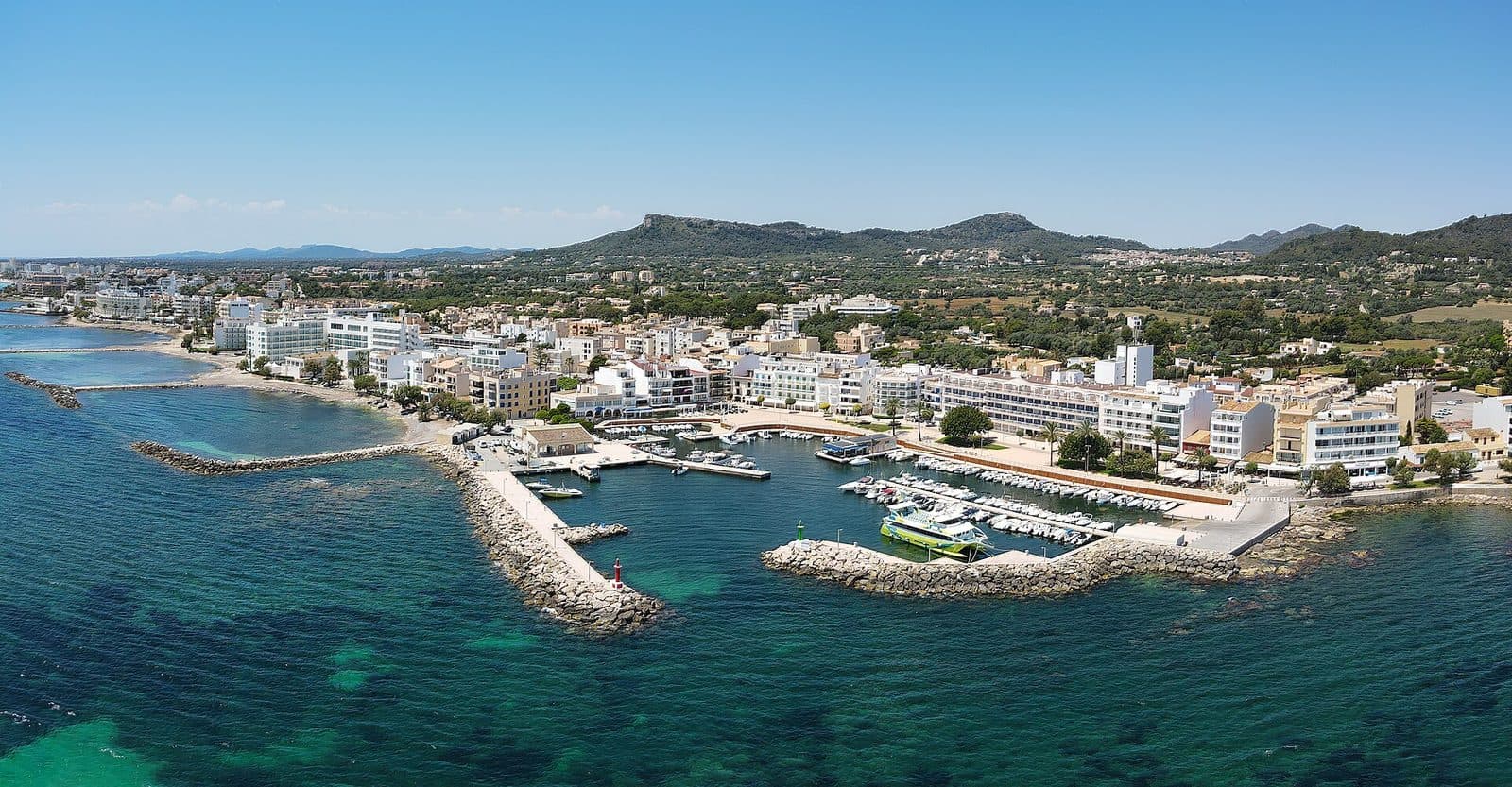
Cala Bona is a small harbor and holiday resort on Mallorca’s east coast whose focal point remains by the water to this day. Around the former fishing harbor, boats lie beside low quays while restaurants and terraces open onto the seafront promenade. Immediately to the south, the resort merges with Cala Millor along the coast. Anyone exploring both places on foot will therefore encounter no abrupt transition, but will notice a clear change: Cala Bona feels more focused on its harbor, small coves and leisurely strolls, while Cala Millor centers on a tourist-oriented beach and holiday area.
The resort is particularly worthwhile for people who appreciate short distances, waterfront dining and easy activities that require little planning. The harbor, promenade and beach can conveniently be combined. Boat trips along the east coast, walks to Cala Millor and cycling tours into the hinterland also make Cala Bona a practical base for several days of a holiday.
Its most important link to the past is the harbor itself: the resort developed from a small natural fishing harbor without its maritime heart disappearing completely. This visible evolution is precisely what distinguishes Cala Bona from places that grew almost exclusively around a large bathing beach.
For residents, the tourist focus has two sides. Restaurants, accommodation, a shopping street and bus connections shape the everyday infrastructure, while the season also changes the pace considerably. Living here does not mean choosing a secluded village, but a continuous coastal settlement with direct access to Cala Millor and a road connection across eastern Mallorca to Palma.
History of Cala Bona
The Natural Harbor and Fishing Families
The resort began to develop around a sheltered natural inlet. A few families made their living by fishing and selling their catch. Lobsters were also reportedly kept in enclosed areas among the rocks. The animals were considered a special delicacy in the surrounding area. The harbor was therefore not merely a mooring place for small boats, but the economic foundation of the early settlement.
These origins are still easier to recognize in present-day Cala Bona than in many holiday resorts that have been completely transformed. The harbor now also serves as a marina, yet its modest size and fishing boats preserve part of its former character. Its development can therefore be read directly beside the water: fishing, local supplies, dining and recreational boating exist side by side within a compact area.
Cap Cupe and the Beginning of Tourism
An important date in this transformation is the year 1924. That was when Cap Cupe, the resort’s first inn, opened. It later became Hotel Cala Bona. The establishment symbolizes the transition from a small fishing settlement to a travel destination: individual guests initially arrived at an existing harbor, and only afterward did tourist development grow around this old core.
The name of the later hotel therefore belongs to the history of the resort, not merely to the history of one accommodation business. It recalls a period when travel to the east coast was not yet defined by large holiday complexes, package excursion programs and a continuous tourist infrastructure.
Growth Beside Cala Millor
Cala Bona received a strong boost from the expansion of neighboring Cala Millor in the 70s and 80s. As visitor numbers increased, so did the number of hotels, restaurants, bars and shops. The small harbor settlement became a holiday resort that has now merged closely with Cala Millor. The continuous promenade makes this connection particularly clear.
Despite this growth, the old harbor remained the visual and atmospheric center. This is the crucial difference from a purely planned holiday development: Cala Bona has an older maritime core around which the tourist areas have grown. In 2006, the harbor facilities and beach received the Blue Flag; the award at that time reflected the importance that well-maintained coastal facilities and water quality had acquired for the resort’s continued development.
Things to See in Cala Bona
Port de Cala Bona
The harbor is the main attraction and the best starting point for getting oriented. It began as a fishing harbor and is now also used as a marina. Small boats, quays and waterfront establishments show within a compact area how a workplace for coastal fishing evolved into the social center of a holiday resort.
What is worth seeing is not so much a single structure as the entire harbor scene. Traditional fishing boats can be observed alongside leisure craft at the quay, with the promenade, restaurants and accommodation behind them. A slow walk around the basin is particularly revealing, as the changing perspectives highlight both the small size of the old harbor and its importance to the resort’s overall layout.
Passeig Marítim
The seafront promenade connects the harbor, bathing areas and the transition to Cala Millor. It serves as a walking route, viewpoint and main axis of public life. Palm trees, terraces and open views across the Mediterranean define the scene, while the largely level route also makes the walk pleasant for families and people not seeking a demanding hike.
A walk south shows how closely Cala Bona and Cala Millor are now connected. The built-up areas merge without having the same character throughout. Starting at the harbor, visitors first experience Cala Bona’s compact maritime center before approaching the more tourist-oriented area of the neighboring resort.
Cala Bona Beach
The natural sandy beach lies south of the harbor facilities and extends for around 550 meters. It is narrow and divided into smaller sections. This is precisely why it suits the resort’s character: swimming here is usually combined with a harbor visit, a walk or a meal rather than determining the entire stay by itself.
The bathing area is considered calm and is also described as suitable for families. Visitors should not come to Cala Bona expecting a single broad sandy beach several kilometers long. Its appeal lies in the sequence of harbor, smaller coastal sections, beach and promenade. Anyone wishing to continue along the coastal route can walk on to Cala Millor.
Coastal Views Between the Harbor and Cala Millor
Cala Bona does not need a dedicated observation tower or monumental mirador to provide an overview of the coast. The open promenade repeatedly offers views back toward the harbor walls and ahead across the developed bay. The sheltered position of the original inlet is particularly apparent from the edge of the harbor basin.
This perspective is also historically interesting. From here, it becomes clear why fishermen settled in this location and why the later holiday resort retained the harbor as its center. The view therefore connects landscape and local history without requiring a museum or staged exhibition.
Sights in Cala Bona
Food and Drink
Fish and Seafood at the Harbor
Cala Bona’s dining scene is visibly concentrated around the harbor and promenade. Fish and seafood fit not only the tourist image but also the documented origins of the resort. The first families lived by catching and selling fish; lobsters were kept in enclosed rocky areas and valued as a specialty. Today’s restaurant selection is much broader, but this history gives the maritime cuisine a clear local foundation.
When choosing a restaurant, the setting forms part of the experience. Directly at the harbor, the focus is on views of boats and quays, while the promenade offers more of the open sea and people strolling past. Anyone primarily interested in regional food should not choose solely based on a front-row terrace, but should look for a menu featuring Mallorcan dishes, fish and seasonal produce.
Cap Cupe and Hotel Cala Bona
Cap Cupe, which opened in 1924, was the resort’s first inn and later became Hotel Cala Bona. It is therefore one of the few establishments known by name that can be linked directly to the beginning of tourism. Its importance lies less in one particular specialty than in its long association with hospitality, the harbor and the resort’s development.
This history also explains why dining and accommodation became closely connected in Cala Bona at an early stage. Visitors arrived in a small coastal settlement whose social life revolved around the harbor. Hotel terraces, restaurants and bars still make up a considerable part of the visible amenities today. Current rankings of individual establishments may change, but the concentration of dining options along the water remains constant.
The Promenade and Dinner
In the early evening, the harbor changes from an excursion destination into a meeting place. Walkers, restaurant guests and returning boats share the same compact space. A meal can therefore be combined especially well with a stroll: first along the promenade, then around the harbor basin and afterward to a terrace.
Cala Bona is geared more toward relaxed dining and drinks than a pronounced nightlife scene. Anyone looking for a livelier selection can extend the walk toward Cala Millor. Those who remain at the harbor choose the more intimate setting and stronger connection to the resort’s maritime history.
Mallorcan Festival Food
During the Festes de la Mare de Déu del Carme, food temporarily becomes part of the public festival program. Communal meals and culinary events beside the water are documented as part of the celebration. The Festes del Turista also combine the harbor with culinary formats, including a wine night. Such occasions reveal a side of the local dining culture that goes beyond normal restaurant service: the harbor and promenade then become a shared dining and event space for visitors and residents.
Eating, drinking and staying in Cala Bona
The best-rated businesses from our directory, ordered by Google rating — not by advertising.
Restaurants
- Kashmir Tandoori indian Restaurant4.9· 373 reviews
- MEDITERRÁNEA4.8· 575 reviews
- Terra Restaurante Italiano Pizzería4.8· 233 reviews
- Indian Tandoori Nights Restaurant cala bona4.8· 221 reviews
- Cafe Norai4.8· 116 reviews
- Restaurant i residència Son Floriana4.7· 882 reviews
- Bar Argos4.6· 219 reviews
- Janet and Johns4.5· 480 reviews
- Bar Jemica4.5· 227 reviews
- Smithy's Bar & Restaurant4.4· 534 reviews
- Tasca des Port4.2· 271 reviews
- Cavall d'or4.2· 65 reviews
Activities and Excursions
Walk to Cala Millor
The easiest activity begins directly at the harbor. The promenade leads south to Cala Millor without requiring any organized transport. The route is largely level and connects several sections of the coast. It is therefore suitable for a short evening walk as well as a longer stroll with breaks for swimming and dining.
The comparison between the two resorts is particularly interesting. Cala Bona is shaped by its small harbor and narrower bathing areas, while Cala Millor has a tourist-oriented beach and holiday district. The walk thus reveals two different sides of the same continuous resort area.
Boat Trips Along the East Coast
Boat trips are among the most obvious activities. Excursions are offered along the east coast, including glass-bottom boat tours and trips departing from Cala Bona or neighboring Cala Millor. From the water, the sequence of coves, coastal settlements and rocky sections is clearer than it is from the road.
When planning, it is worth checking the departure point and actual route carefully. Some excursions use Cala Bona in their name but depart from Cala Millor or call at several harbors. Shorter coastal trips are a straightforward choice for families, while longer tours are better suited as a full-day activity in their own right.
Cycling Between the Coast and Hinterland
Cala Bona is used as a starting point for cycling tours on quieter roads and paths. The flat coastal zone makes it easy to begin, while the Llevant hinterland offers more varied routes. For a relaxed circuit, cyclists can initially follow the coastal connection; more athletic riders can leave the densely developed waterfront and head toward the more rural hinterland.
Consideration is particularly important within the holiday resort because the promenade and harbor area are heavily used by pedestrians. Longer rides should therefore not be planned as fast training sessions directly beside the water. Cala Bona’s real value for cyclists lies in the combination of an easy coastal start and access to less urban routes.
Swimming and Diving
The beach south of the harbor provides an easy opportunity to swim without leaving the resort. The water quality and coastal landscape have also made Cala Bona known among divers.
Anyone wishing to include Cala Millor can combine both resorts on foot in a single day. Those who prefer to combine swimming with the harbor, promenade and dining will find the right sequence in Cala Bona.
Excursion to the Dragon Caves
Trips to the Dragon Caves are among the established excursions from the Cala Bona and Cala Millor resort area. They offer a contrasting program to a day by the sea and are also available with pickup in the coastal area. This is particularly practical for visitors without a rental car, as the excursion does not have to begin in Palma.
Here, Cala Bona serves less as a center of attractions than as a convenient base. Other island tours and trips to Palma are also offered from the eastern resort coast. For short stays, however, it makes sense to explore the harbor, promenade and Cala Millor on foot before setting aside an entire day for a longer bus journey.
Beaches in Cala Bona
2 beaches and coves with their own page belong to Cala Bona.
Festivals and Events
Festes de la Mare de Déu del Carme
A cherished local summer tradition is dedicated to Mare de Déu del Carme, the patron saint of fishermen. It takes place in July and directly reflects Cala Bona’s maritime origins. The harbor and promenade become the main event venues. The program combines local tradition with music, children’s activities, sports, communal dining and a craft market.
The highlight falls on the feast day of 16 July. The Processó Marítima, the procession on the water, is especially distinctive. It presents the harbor not merely as a backdrop but as a bearer of local identity. Fireworks conclude the celebrations. For visitors, this is the best opportunity to experience Cala Bona beyond its usual holiday routine; at the same time, greater activity and temporary restrictions should be expected around the harbor and promenade.
Festes del Turista
In September, Cala Millor and Cala Bona jointly celebrate the Festes del Turista. The festival marks the transition from the main summer season into a quieter period and is explicitly intended for visitors, residents and employees of the holiday resorts. It is organized through cooperation between the participating municipalities and the hotel sector.
The program includes music, parades, Mallorcan dance, culinary events and performances in public squares. In the 2025 program, the harbor of Cala Bona served as the venue for a wine night, a flamenco show and a Mallorcan dance performance. Unlike the religious and maritime roots of the Mare de Déu del Carme festival, this event reflects the resort’s more recent history as a holiday destination.
The Harbor as a Festival Venue
Both major series of events use the same space but tell different chapters of local history. In July, the connection to fishing, the sea and the patron saint takes center stage; in September, the focus is more strongly on the shared Cala Bona–Cala Millor holiday region. The festivals therefore show particularly clearly that local identity is neither exclusively traditional nor exclusively tourist-oriented.
Programs are arranged anew each year. The maritime focus in July and the joint series of events with Cala Millor in September remain dependable features. Anyone traveling specifically for an individual concert, market or fireworks display should therefore consult the current program for the relevant year.
Getting There and Around
By Car from the Airport
From Palma Airport, the road route follows the Ma-15 and then the Ma-4030 to Cala Bona. The distance is 72 kilometers by road, and the journey takes around 63 minutes. In practical terms, this means crossing almost the entire island from the Bay of Palma to the east coast. The Ma-15 covers the long main section before the regional road network leads toward Son Servera and the coast.
The route is manageable for a day trip, but it takes up a noticeable part of the day. Cala Bona is therefore particularly suitable as a base for activities in Llevant and along the east coast. Anyone arriving directly after landing should not try to explore the harbor area by car: after arrival, the resort is best discovered on foot along the promenade and quay.
By Car from Palma
From the center of Palma, the distance is 74 kilometers by road via the Ma-15 and Ma-4030. The journey takes around 69 minutes. This can be planned comfortably for occasional appointments in the capital, but it remains a long route across the island for daily commuting. The advantage lies in the mostly straightforward road route, not in proximity to the capital.
Anyone visiting Cala Bona as part of an island tour should treat the east coast as a destination area in its own right. Combining it with Cala Millor, the Llevant hinterland or another destination on the east coast makes more sense than taking a short detour from Palma and returning immediately.
By Bus
Cala Bona is served by public buses. Stops are located both at the marina and in the northern part of the settlement, meaning that not every journey has to begin at the same point. Specific routes and departures should be checked for the relevant travel day, as seasonal timetables are especially important in a coastal resort with heavy holiday traffic.
For visitors without a car, the continuous development linking Cala Bona with Cala Millor is an advantage. Many journeys within the resort area can be made on foot, and organized excursions sometimes offer pickups in Cala Bona and Cala Millor. Traveling across the island, however, requires more planning than taking a walk, boat trip or excursion along the east coast.
Getting Around on Foot
The harbor, beach, restaurants and transition to Cala Millor lie along an easy-to-follow coastal axis. Anyone staying centrally does not need a car for the resort center. A first visit also works without a complicated circular route: begin at the harbor, walk around the basin, then follow the promenade south and continue to Cala Millor if desired.
The walkable connection is also important for everyday life. Cala Bona does not end in isolation at its southern edge but continues into a larger coastal settlement. This places a wider range of amenities within reach without requiring every errand or meal to involve a car journey.
Bus lines to Cala Bona at a glance
| Line | Route | Departures/day | First | Last |
|---|---|---|---|---|
| A42 | Cala Bona - Aeroport | 168 | 00:31 | 23:40 |
| 425 | Cala Bona - Portocristo | 82 | 07:38 | 22:40 |
| 412 | Costa dels Pins - Manacor | 62 | 05:39 | 22:50 |
From the official GTFS feeds (TIB/SFM), no real-time data. The figures cover all stops in the town; weekend and holiday services differ — check with the operator before travelling.
Getting there by bus
Port esportiu 1 (62010) · 0.3 km as the crow flies
- 412Costa dels Pins - Manacor · Daily
- 425Cala Bona - Portocristo · Daily
- A42Cala Bona - Aeroport · Daily
Port esportiu 2 (62009) · 0.3 km as the crow flies
- 412Costa dels Pins - Manacor · Daily
- 425Cala Bona - Portocristo · Daily
- A42Cala Bona - Aeroport · Daily
Cala Bona nord 2 (62029) · 0.5 km as the crow flies
- 412Costa dels Pins - Manacor · Daily
Cala Bona nord 1 (62028) · 0.6 km as the crow flies
- 412Costa dels Pins - Manacor · Daily
- 425Cala Bona - Portocristo · Daily
- A42Cala Bona - Aeroport · Daily
Timetable data: official GTFS feeds (TIB/EMT), no real-time — check with the operator before travelling.
Living in Cala Bona
Everyday Life Between the Harbor and Holiday Trade
Cala Bona is not solely an excursion destination, but hotels and restaurants strongly shape its economy and streetscape. Everyday life therefore unfolds in an environment where residents, seasonal workers, long-stay visitors and holidaymakers meet. This is most visible at the harbor: it is simultaneously a walking destination, workplace, restaurant location and public meeting place.
For people wishing to live here permanently, this tourist character is neither purely an advantage nor purely a disadvantage. It provides a dense selection of restaurants and a well-maintained coastal route, but also brings more activity during the summer months. Anyone seeking complete seclusion will not find it in central Cala Bona. Those who enjoy handling everyday errands on foot beside the sea and appreciate an international environment are more likely to find the resort suitable.
Local Amenities and Shopping Street
Cala Bona has a documented shopping street with tourist-oriented businesses. Together with restaurants, bars and accommodation, it forms the commercial core beyond the harbor. The selection is designed for a holiday resort and should not be confused with the infrastructure of a larger town.
A major practical advantage is the direct connection to Cala Millor. The promenade continues into the neighboring resort without any spatial separation, making its larger holiday and shopping area accessible on foot. When choosing a place to live, Cala Bona should therefore not be viewed solely within its narrow district boundaries, but as the northern, harbor-oriented part of a continuous coastal area.
Living Without a Car
Many everyday journeys within the resort can be made on foot. The harbor, promenade, beach, restaurants and shops are compactly located, while buses serve the harbor area and the northern district. Anyone who mainly works locally, is retired or structures daily life around Cala Bona and Cala Millor can manage numerous regular journeys without a private vehicle.
A car is considerably more practical for frequent appointments in Palma or flexible trips into the rural hinterland. Central Palma is 74 kilometers away by road; the journey via the Ma-15 and Ma-4030 takes around 69 minutes. Cala Bona is therefore not a typical commuter location for short daily journeys to the capital, but a residential area clearly oriented toward the east coast.
Waterfront Locations and the Northern District
Central locations around the harbor and promenade provide the most immediate access to restaurants, walking routes and sea views. They are also where the rhythm of a holiday resort is most noticeable: more movement during the season, events at the harbor and public spaces used into the evening.
Away from the first waterfront row and in the northern section, the harbor recedes as an everyday backdrop. When assessing an apartment or house, the decisive factor is therefore not merely the label “Cala Bona,” but the actual walking distance to the promenade, bus stop and transition to Cala Millor. Even within this small resort, a location directly on the quay and a residential street behind the coast differ significantly in atmosphere and daily routine.
Cala Bona Outside Summer
The resort remains geographically and logistically connected to Cala Millor and Son Servera, but its structure, strongly shaped by hotels and restaurants, makes the seasonal change noticeable. In summer, beachgoers, terraces, boats and events dominate the public spaces. After the main travel season, the harbor becomes quieter and part of the holiday-oriented activity recedes.
For permanent living, it is therefore important not to rely solely on the impression of a summer day. Those seeking peace by the water may particularly appreciate the less intense season. Anyone expecting a large urban selection and daily cultural events throughout the year, however, will find Cala Bona too small. The resort is better suited to coastal daily life with short local journeys than to an urban lifestyle.
Practical Information for Your Visit
The Best Walking Route
For a first visit, the harbor is the logical starting point. Begin with a circuit of the basin, then follow the promenade south to the beach and onward toward Cala Millor. This presents the fishing history, present-day marina, bathing area and connection between the two holiday resorts in a clear sequence.
A compact walk is sufficient for the harbor and immediate promenade. Anyone continuing to Cala Millor, swimming or dining beside the water should allow half a day. A full day is worthwhile if a boat trip or longer beach stay is added.
Morning, Evening and High Summer
In the morning, the harbor basin can be viewed at a quieter sightseeing pace, with boats and quays taking center stage. In the evening, the promenade becomes more of a social space, making it particularly suitable for combining a walk with a restaurant visit. For photography, the transition between the open sea, harbor walls and illuminated terraces offers a range of subjects.
During the celebrations in July and September, the harbor is not only an attraction but also an event venue. This creates more atmosphere but also means busier walkways and less tranquility. Anyone specifically wishing to experience the maritime tradition should choose the days around 16 July. Those who want to discover Cala Bona at its most relaxed should visit the harbor outside major scheduled events.
What to Expect from the Beach and Resort
Cala Bona’s culturally significant historical reference point is the former fishing harbor and its development into a marina. The harbor basin, quays, fishing boats and adjoining promenade make this maritime local history visible.
The beach also differs from a broad, continuous expanse of sand. Its appeal lies in the combination of a narrower beach, small coastal sections, harbor and promenade. Cala Millor can be added to a visit; for a varied coastal walk, Cala Bona’s compact, divided structure is especially interesting.
Good Combinations
Cala Millor is the easiest addition because no vehicle is required. Both resorts can be explored together via the promenade, where the harbor and smaller bathing areas in the north meet the tourist-oriented area in the south. This creates an excursion that covers both local history and a beach holiday.
A boat trip along the east coast is the second obvious combination. For a full excursion day, the Dragon Caves are another option and can be visited from the resort area as part of organized tours. Anyone arriving from Palma should not plan only a brief look at the harbor, given the 74 kilometers by road and journey of around 69 minutes, but should combine several destinations on the east coast.
Local businesses and services
The best-covered sectors in our directory for Cala Bona — each with address, contact details and opening hours.
Run a business here? Add it to the directory for free and be found on this page. Add your business
Latest news from Son Servera
- 27 Mallorca towns lack Alcover and La Balanguera
- Mallorca storm kills woman amid 173 incidents
- Mallorca cemetery yields two Civil War victims
- 1,440 places: Balearic police training grows