
Talaiot de sa Clova des Xot: Mallorca’s Monumental Stone Tower
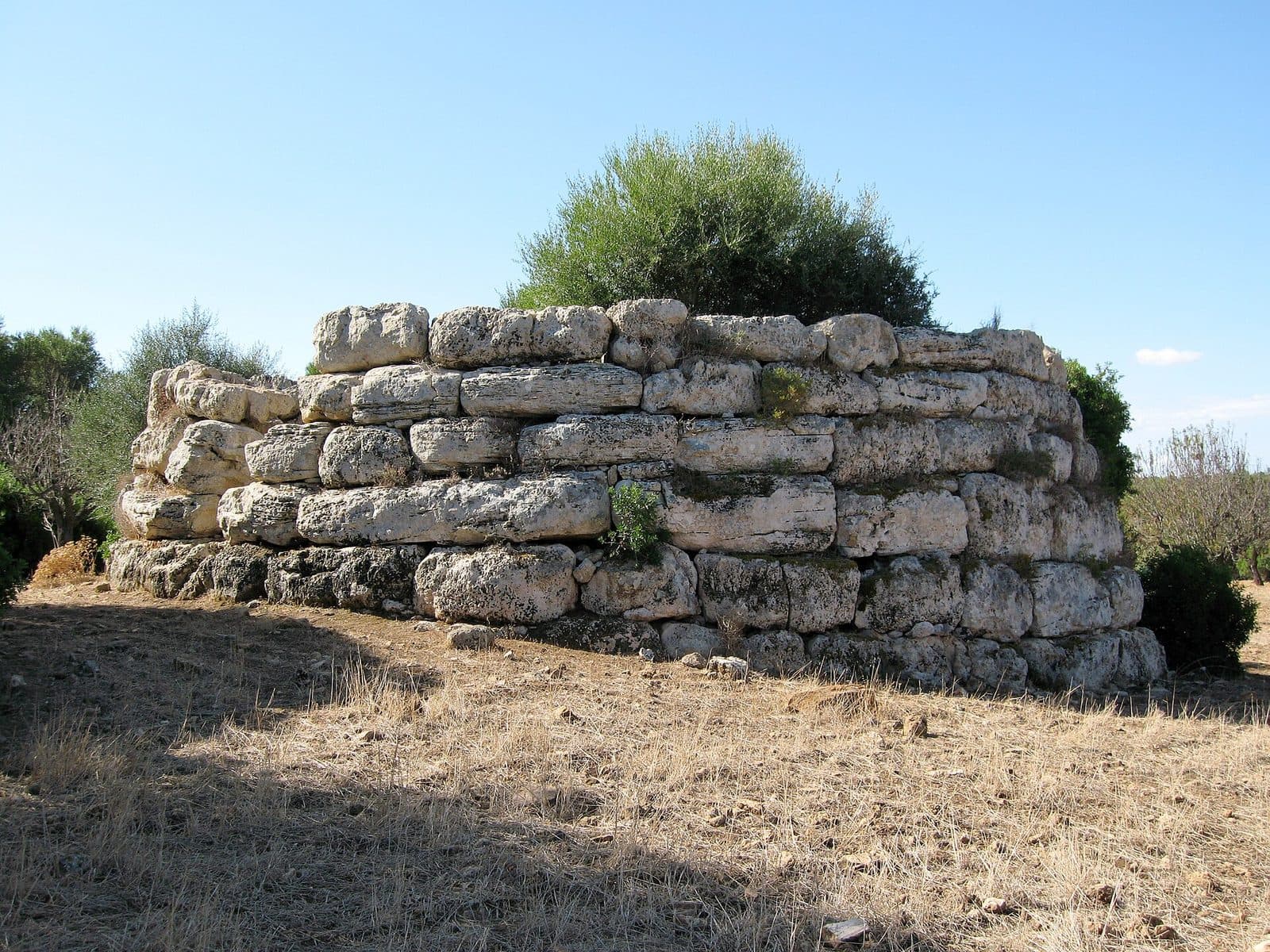

The Talaiot de sa Clova des Xot is one of those places where Mallorca’s prehistory does not lie behind glass. Near Colònia de Sant Pere, a mighty circular stone structure rises on the grounds of Sa Canova de Morell. Even the first visible courses of masonry make it clear why this talaiot is considered especially significant among the island’s prehistoric monuments.
Its impact does not depend on a reconstructed setting. Large dry-stacked stones, a partially collapsed entrance and an unusually tall central pillar reveal the technical achievement behind its construction. At the same time, enough remains incomplete to stir the imagination: the adjoining settlement can now be discerned only in traces, and the precise use of such towers continues to be debated.
The detour is especially worthwhile for travellers who want to discover Mallorca’s history beyond Roman towns, medieval castles and Baroque churches. Even those who have already seen other talaiots will find an exceptional point of comparison here. The dimensions, the few immense courses of stone and the central pillar immediately convey why this type of structure became a hallmark of Talaiotic culture.
However, visitors should not expect a conventional visitor centre with an exhibition, designated route and detailed signage. Sa Clova des Xot is a minimally developed archaeological site. For this very reason, a visit requires close attention, as the details must be discovered in the masonry itself—from the northeastern portal to the barely noticeable remains of the former settlement area.
History and significance
The Talaiotic settlement of Sa Canova
Long before Colònia de Sant Pere was founded, a Talaiotic settlement existed in the area of Sa Canova. Its origins are dated to the period between 1300 and 1000 BC. The circular structure that dominates the site today therefore did not stand in isolation within an uninhabited landscape but belonged to a larger prehistoric living environment.
Traces of pottery around the tower indicate this. Sections of walls have also been observed, some concealed beneath wild olive trees and associated with the boundary of the former settlement area. Two things must therefore be distinguished on site: the monumentally preserved talaiot as the main attraction and the much harder-to-read surroundings where people lived and moved.
This context changes how the structure is perceived. Sa Clova des Xot was not an arbitrary pile of stones placed in the landscape but an architecturally prominent part of a community. How the interior was used in everyday life or on special occasions has not been conclusively established. Proposed functions for talaiots include observation and defence, use as a sanctuary or ritual site, burials and cremations, and accommodation for privileged members; no single, clearly documented function can be assigned with certainty to the tower of Sa Clova des Xot.
Émile Cartailhac and an outside perspective
A remarkable episode in the history of research leads back to 1890. At that time, Émile Cartailhac described the structure as the largest talaiot in the Balearic Islands. His assessment shows how impressive the monument appeared even to early archaeological observers. Although size comparisons depend on measurement methods and boundaries, this historical statement is more than a passing curiosity: it made Sa Clova des Xot an early reference point for the monumental prehistory of the island group.
The mass of the walls, the diameter and the central pillar were enough to distinguish the site. Even today, a visit essentially follows the same logic: first, the overall form can be appreciated from some distance, then the eye moves closer to the individual stones and finally to the interior construction.
Protected cultural heritage
The talaiot has been protected as cultural heritage since 10 September 1966. This protected status applies not only to a photogenic individual structure but to an archaeological testimony whose significance also lies in its surroundings. Pottery, sections of masonry and traces in the terrain can be important even when they appear inconspicuous to untrained eyes.
Today, Sa Clova des Xot is therefore simultaneously a ruin, a subject of research and a protected monument. Its importance is based not on a later history of use or decorative features but on the unusually clear preservation of prehistoric building techniques. Every large stone speaks of selection, transport, lifting and careful placement—stages of work completed without modern machinery.
What to see
The circular tower structure
From the outside, the talaiot appears as a squat, circular stone structure. Its diameter is 16.2 metres, and its greatest surviving height is 5.5 metres. It therefore exceeds the usual dimensions of many Mallorcan talaiots and appears remarkably massive even in its damaged state. The width of the walls and the size of the blocks initially make the interior seem likely to be smaller than the outer silhouette suggests.
The stones were fitted together without mortar. What mattered was not a perfectly regular shape but the precise interaction of weight, bearing surface and angle. Some slabs reach a length of 3.9 metres and a thickness of up to 1.10 metres. In the upper section, only six courses of stone were therefore sufficient in places to reach the surviving height. Anyone standing close to the wall should look less for fine ornamentation than for joints, contact points and changes in size.
This very reduction creates the monumental impression: the material itself forms the architecture. Individual blocks possess a weight and volume that immediately raise questions about their transport and placement.
The northeastern portal
The entrance is located on the northeastern side. It has partially collapsed, and the original lintel is also missing. As a result, the portal’s original form can no longer be experienced in full. Nevertheless, the entrance remains an important point of orientation because it reveals the transition from the outer wall to the inner chamber.
Talaiot entrances were not broad, representative gateways. The route led through the mighty wall into a central interior space. At Sa Clova des Xot, it is worth examining the stones set along the sides and the sequence of the blocks. They show that the opening had to be structurally incorporated into a massive ring wall. Its present damaged condition should not be mistaken for an intentionally asymmetrical design.
The portal also makes the ruin’s vulnerability especially clear. Loose or displaced stones are not seats, and the missing lintel does not turn the area into a passage that may be entered at will. The archaeological remains should be viewed from whatever position is safe and permitted, without shifting or placing weight on the masonry.
The central pillar
Inside, the central pillar draws the eye. It consists of five large stones stacked on top of one another and reaches a total height of 4.2 metres. Unlike a masonry wall, it acts as a vertical axis around which the circular chamber is organised. The individual elements are not decoratively shaped; their impact comes from their size, balance and the astonishing height of the stack.
Such central pillars form part of the basic structural principle of many circular talaiots. At Sa Clova des Xot, the pillar defines the interior. The narrow entrance, thick outer wall and vertical axis created a clearly enclosed internal space. Its precise use remains uncertain, but its architectural separation from the surrounding settlement can still be understood.
Traces of the former settlement area
The talaiot is only the most visible part of the archaeological site. A scattering of pottery indicating the former settlement has been identified in the terrain around the circular structure. There are also wall remains, some of which are concealed by wild olive trees. They are far less spectacular than the tower but just as important for understanding its historical context.
Without archaeological training, natural accumulations of stones can easily be confused with old sections of masonry. It is therefore advisable not to interpret every line in the terrain too quickly as the ground plan of a house. What remains especially clear is the contrast between the monumental, deliberately constructed circular architecture and the fragmentary structures surrounding it.
From higher parts of the site, there are reported views of the Ferrutx mountains, the sea and the plain towards Santa Margalida. These landscape connections help explain the location of the settlement but do not prove that the talaiot served exclusively as a watchtower. Although the name of this architectural form evokes a lookout, the actual functions of Talaiotic towers were probably more complex.
Visiting the site
Approaching without a staged visitor route
Sa Clova des Xot is not announced by a large visitor centre or an elaborately designed access road. The archaeological site is considered poorly signposted and has not been prepared for standardised visitor operations. Careful preparation is therefore more important than at archaeological attractions with a reception area, fixed paths and route markers.
On site, it makes sense to begin by examining the exterior shape. From some distance, the curve and surviving height are easier to appreciate; directly beside the wall, the individual blocks dominate instead. The northeastern portal can then serve as a reference point. From there, the interior construction with its central pillar is easiest to understand.
There is no fixed itinerary. The length of a visit therefore depends on whether visitors view only the talaiot or also look for the less conspicuous traces of the settlement. For those interested in archaeology, the real appeal often lies in this second look: only the pottery evidence and wall remains turn the individual tower into a settlement site.
Peace instead of crowds
Despite its exceptional size, the talaiot is relatively little known. Reliable peak times or dependable figures for daily visitor numbers have not been documented. A steady flow comparable to that at the island’s major excavation sites is therefore unlikely, although complete solitude cannot be guaranteed at any time of day.
Anyone wishing to explore in peace should not combine the visit with a tightly scheduled onward journey. The absence of a staged guided experience means that details must be identified independently. A slow look around the ring wall, portal, pillar and settlement surroundings reveals more than a hurried photo stop.
Current access conditions should be checked before travelling. Binding opening hours and current admission arrangements have not been recorded. Older travel descriptions or map entries should therefore not be taken as evidence of either unrestricted access at all times or a specific price.
A monument, not a reconstructed attraction
The visit is defined by original structural remains. There is no reconstructed roof, no furnished living space and no staged depiction of prehistoric daily life. Nor is the precise function of the talaiot resolved through a simple, definitive explanation. Anyone expecting a completely reconstructed settlement will therefore misread the site.
Its strength lies in the direct encounter with the construction. The five stones of the central pillar, the exceptionally large slabs and the few mighty courses of masonry convey a scale that is easily lost in photographs. At the same time, the damaged condition encourages visitors to distinguish between preserved evidence and imagined reconstruction.
The surroundings are part of this experience. Today, the prehistoric settlement is not a clearly defined group of houses but an archaeological context consisting of the tower, traces of pottery and wall remains. The site therefore rewards visitors who are not merely looking for a single photo opportunity but take time to view it from different directions.
Getting there and parking
From Palma and the airport
The stated road distances and journey times lead to Colònia de Sant Pere, not directly to the talaiot. From Palma Airport, the distance to the town is 72 kilometres by road, and the journey takes around 65 minutes. The route follows the Ma-15, then the Ma-3322 and the Ma-3331.
From central Palma, Colònia de Sant Pere is 75 kilometres by road. Allow around 72 minutes of driving time, again via the Ma-15, Ma-3322 and Ma-3331. These details describe the wider journey to northeast Mallorca. Traffic, roadworks and the actual starting point in Palma can affect the route.
The talaiot itself is located in the area of Sa Canova de Morell outside the town centre. For the final section, the general destination of Colònia de Sant Pere is therefore insufficient. As the archaeological site is described as poorly signposted, it is advisable to check a detailed map in advance rather than wait until reaching the town to look for a clearly marked archaeological attraction.
The final section to the archaeological site
The approach to Sa Clova des Xot differs from travelling to a developed attraction. A continuously signposted visitor route has not been documented, and the site has not been developed as a regular visitor facility. The current route and any access rules should therefore be checked immediately before visiting.
Restraint is also advisable when parking a vehicle. Vehicles should only be left where they do not block entrances or agricultural tracks and where parking is clearly permitted. The archaeological site lies within a cultivated landscape, not on the grounds of an urban museum.
Up-to-date navigation is especially helpful for the final section. The name should be entered in full because Mallorca has several Talaiotic sites with similar-sounding names. The destination is specifically the circular talaiot of Sa Clova des Xot on Sa Canova de Morell near Colònia de Sant Pere.
Travelling without a car
No bus stop has been recorded in the immediate vicinity of the talaiot. Travelling only as far as Colònia de Sant Pere therefore does not resolve the connection to the archaeological site itself. Before travelling by public transport, visitors should check how the final section can be covered under current conditions.
Anyone travelling without their own vehicle should also bear in mind that a poorly signposted archaeological site is harder to find than a destination in the town centre. Reliable map data and a return route planned in advance are more important than spontaneous navigation using signs. Unconfirmed shortcuts across private property should be avoided.
Nearby attractions
Colònia de Sant Pere
After the austere stone monument, Colònia de Sant Pere feels like a leap across many centuries. The coastal town was founded in 1880 as an agricultural colony and belongs to the municipality of Artà. Its small harbour, originally shaped by fishing, is now used more extensively by yachts. A short bathing area protected by a breakwater lies directly beside the town.
Colònia de Sant Pere is a peaceful place to end the archaeological detour. By the water, the landscape that also defines the archaeological site becomes visible: the Bay of Alcúdia, the northeastern coastline and the mountains towards Ferrutx. The town does not explain the talaiot, but it provides a vivid geographical framework for its location.
The combination also works in reverse. Those who first visit the harbour and coast can then turn their attention inland and look for the much older traces of settlement there. This places the relatively recent founding of the town and the prehistoric settlement of Sa Canova in particularly clear contrast.
The coast between Son Serra and Betlem
The surrounding area offers several opportunities to combine the visit with time by the sea. Nearby destinations include Son Serra de Marina, Estanyol, Cala des Camps and Betlem. They should not be understood as part of the excavation but as separate destinations along the bay and at the edge of the Artà mountains.
When planning, combining the visit with just one additional focus generally makes more sense than a long list of brief stops. The talaiot demands attention to inconspicuous details; afterwards, visitors can choose either Colònia de Sant Pere with its harbour and waterfront or a section of the neighbouring coast. This ensures that the archaeological site remains more than a passing stop between beaches.
The landscape of Ferrutx
Views from the talaiot site towards the Ferrutx mountains, the sea and the plain in the direction of Santa Margalida have been described. These three landscapes meet especially strikingly in the northeast: mountains, coast and flatter land. The settlement was therefore not located in an enclosed hollow but in surroundings that could be surveyed across a wide area.
This view is valuable for understanding the site without too hastily inferring a definite watchtower function. The location may have enabled orientation, communication and visibility, but this alone does not reveal what activities took place inside the chamber. It is precisely the combination of an impressive position and an uncertain use that makes Sa Clova des Xot a rewarding monument to Mallorca’s prehistory.
Local insider tips
Count the six courses of stone
In the upper section, parts of the surviving masonry consist of only six courses. A closer look reveals why: individual slabs are up to 3.9 metres long and exceptionally thick.
Look for the portal in the northeast
The partially collapsed entrance is located on the northeastern side. This is the best place to understand how the route led through the mighty ring wall into the central chamber.
Look up at the central pillar
The most important detail stands inside: five stones stacked on top of one another form a 4.2-metre-high pillar. It demonstrates how the roof structure, now missing, was supported.
Look beyond the tower
Around the talaiot, traces of pottery and wall remains partly concealed by wild olive trees indicate the former settlement. The monumental circular structure was only one part of this site.
Combine it with Colònia
After the visit, Colònia de Sant Pere offers a peaceful contrast. Founded in 1880, the coastal town with its small harbour places the prehistoric settlement in a compelling historical context.