
Colònia de Sant Pere – Guide to Coastal Life and Travel

Places to stay in Colònia de Sant Pere
AdTo load the accommodation map by our partner Stay22, we need your consent for marketing cookies. Your consent applies to all marketing content on mallorca.com.
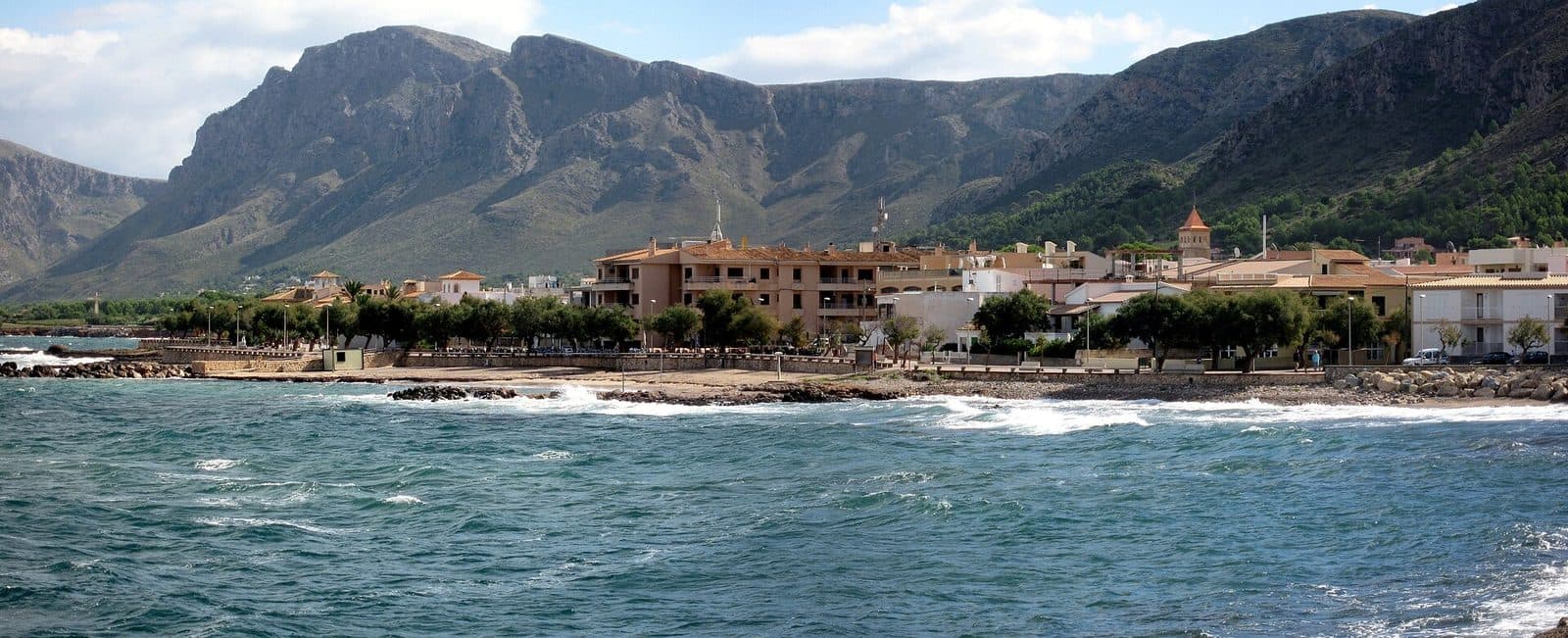
Colònia de Sant Pere is a small coastal town in northeast Mallorca, on the eastern side of the Bay of Alcúdia and at the edge of the Llevant mountains. The town belongs to the municipality of Artà, yet it does not feel like an offshoot of Artà. Its focal point is the sea: the harbor, town beach, and promenade are close together, with the settlement rising behind them in low-rise development.
Major attractions in the classic sense are not the reason to visit. Instead, Colònia de Sant Pere is worthwhile as a compact coastal town where a walk, a meal by the water, and a swim can be combined without long distances. Fishing boats and yachts share the small harbor, benches stand beneath tamarisks along the promenade, and the view extends across the bay to the opposite stretches of coastline. High-rises and large hotel complexes do not define the townscape.
For a longer stay, this restraint is not a minor detail but the town’s real appeal. Vacation rentals, restaurants, and real estate agencies visibly play a role, yet Colònia de Sant Pere remains smaller in scale than many vacation resorts on Mallorca’s coasts. Anyone who needs to travel to Palma frequently should, however, take a realistic view of the remote location, as the drive is long.
Colònia de Sant Pere is best suited to travelers who value the sea, hiking, and quiet evenings more than nightlife or a packed sightseeing itinerary. The town is also interesting for people considering a home in the northeast—provided that proximity to nature matters more than a quick connection to the island capital.
History of Colònia de Sant Pere
The agricultural colony
Colònia de Sant Pere was founded in 1880 as an agricultural colony. Its name should therefore be understood more literally than that of many old Mallorcan villages: this was not a medieval town that grew around a castle or centuries-old market, but a deliberately planned settlement. Agriculture and the use of the surrounding land came first; only later did the coastal location develop into the small harbor and residential town seen today.
This relatively recent origin explains the townscape. Instead of a maze-like historic center with aristocratic palaces and narrow medieval lanes, Colònia de Sant Pere has a compact, functional layout. The church, square, harbor, and residential streets are close together. Visitors arriving from Artà therefore experience a clear change: here, the open bay and the relationship between the settlement and the sea shape the overall impression.
Harbor and maritime character
The harbor is small and is used by fishing boats as well as leisure craft and yachts. Fishing therefore remains visible in the townscape, even though the harbor is no longer solely a place of work. The promenade, restaurants, and vacation accommodation have turned its surroundings into the area where visitors and residents most often come together.
The church’s patron, Sant Pere, Saint Peter, is also regarded as the patron saint of fishermen. This connection is particularly visible during the town festival, as the celebrations explicitly include the harbor, the quay, and the sea. The town’s maritime identity is therefore not merely a backdrop for vacationers but part of the local festival calendar.
Montferrutx, s’Estanyol, and Betlem
Further residential developments were added along the eastern side of the bay in the 1960s. These include Montferrutx, s’Estanyol, and Betlem. They do not form a continuous historic unit with the original town center, but they belong to today’s coastal landscape around Colònia de Sant Pere. Montferrutx is part of this coastal setting, while s’Estanyol and Betlem extend the inhabited shoreline in different directions.
This development has had a lasting impact on the area’s character. Alongside the older houses in the center are apartments, vacation homes, and fincas used by both Spanish and foreign owners. Nevertheless, the buildings have remained predominantly low-rise. This is precisely what distinguishes the coast here from those parts of Mallorca where large hotels dominate the transition between town and beach.
Things to See in Colònia de Sant Pere
Harbor of Colònia de Sant Pere
The small harbor is the best place to understand Colònia de Sant Pere. Fishing boats lie alongside sailing boats and motorboats, and the quay connects the older maritime way of life with its present-day use as a leisure and vacation destination. This is not a large excursion harbor with heavy boat traffic, but a compact harbor integrated into the settlement.
It is the best starting point for a walk. From here, the promenade, town beach, and center can all be reached without covering long distances. At the same time, the view opens across the Badia d’Alcúdia. In clear weather, the northern coastlines of Mallorca appear on the opposite side of the broad bay; inland, the heights of the Llevant form a scenic counterpoint.
Passeig Marítim
The waterfront promenade runs north of the harbor. Benches beneath tamarisks, restaurants, and bars make it the town’s main gathering place. It is less a grand promenade than a quiet link between the harbor, beach, and dining venues. Colònia de Sant Pere shows its sociable side here, especially in the late afternoon and evening.
The route also suits visitors who are not planning a long beach day. The sea remains constantly in view, and the low-rise development allows the bay to make a stronger impression than in more densely built vacation resorts. During the festival honoring Sant Pere, the promenade also becomes an event space for music, food, and community celebrations.
Platja de Colònia de Sant Pere
The town beach lies directly below the promenade and is protected on its northern side by a breakwater. It is around 80 meters long and 20 meters wide. This is therefore not an expansive natural beach but a practical bathing cove in the middle of town. In summer, it is used by locals and vacationers; showers are among the facilities.
Its strength is its location: there is hardly any distance to cover between a meal, a harbor walk, and a swim. Families may appreciate this proximity because the promenade and restaurants are directly adjacent. Those looking instead for a long beach walk, broad dunes, and more distance from development will find a more suitable coastal landscape southwest at s’Arenal de Sa Canova.
Plaça de Sant Pere and Parish Church
The parish church is dedicated to Sant Pere, the patron saint of fishermen. Together with the village square, it marks the civic center beyond the harbor. The church is not a monumental cathedral but reflects the modest scale of the young settlement. This is precisely why the area gives a good impression of everyday life in the town center.
During the Festes de Sant Pere, the square takes on additional importance. The service, processions, and community events connect the church and public space with the activities by the water. Outside the festival period, the square provides a quiet contrast to the busier promenade.
Montferrutx
Montferrutx forms part of the coastal landscape around Colònia de Sant Pere and is therefore an interesting area for a short walk away from the promenade. It should not, however, be understood as a conventional attraction with admission fees or visiting hours. Its appeal lies in the topography and changing viewpoints: below, boats, the beach, and restaurants shape the scene, while higher up it becomes clear how narrow the inhabited coastal strip is between the sea and the Llevant mountains.
Sights in Colònia de Sant Pere
Food and Drink
Restaurants on the promenade
The dining hub of Colònia de Sant Pere lies along the waterfront promenade north of the harbor. Several restaurants and bars make use of their proximity to the water, allowing a meal to be combined easily with a walk or swim. The setting is more than a decorative backdrop: terraces overlook the broad bay, while the changing mix of harbor activity, swimmers, and evening strollers shapes the atmosphere.
The strong presence of restaurants in town shows that dining is not only part of the basic provision for residents but also a key element of the local visitor experience. Nevertheless, this is not a large nightlife district. The venues occupy a compact area, and evenings are defined more by dining beside the sea than by bars, clubs, or late-night street activity.
Harbor and maritime cuisine
The harbor suggests a maritime focus, but Colònia de Sant Pere should not be mistaken for a fishing-village museum. Fishing boats remain part of the scene, while yachts and leisure craft also use the quay. The restaurant selection can therefore be correspondingly varied. Anyone specifically looking for local fish dishes or Mallorcan cuisine should check the current menu of each establishment instead of assuming what is served based solely on its waterfront location.
A meal feels especially fitting after a coastal walk or at the end of a beach day. The distances between the beach, harbor, and restaurants are short, so there is no need to move a vehicle. For visitors staying only a few hours, this combination is the greatest practical advantage: Colònia de Sant Pere requires no complicated itinerary and can be experienced as one continuous visit.
Food during the Festes de Sant Pere
During the patron saint festival, communal dining takes on a more local and community-oriented character. The program includes a sardine meal and culinary events in public spaces. The promenade, harbor, and various squares are then used not merely as scenery but as shared festival venues.
The Raïm Wine Fest has also been held on the promenade as part of the summer festival program. Mallorcan wineries, food, music, and sea views come together at the event. Such dates are not a reliable alternative to an ordinary restaurant visit because programs and event dates may change. They do, however, show how closely food, public space, and maritime identity are connected in the town’s festival calendar.
Quiet evenings instead of a nightlife strip
When choosing a vacation destination, it is important to understand the town’s dining scene correctly. Colònia de Sant Pere is suited to a long evening on a terrace, not a tour through an extensive nightlife district. Restaurants and vacation rentals are among its defining industries, while the low-rise development and small harbor keep the setting manageable.
During the main travel season, more activity can be expected around the promenade than in the residential streets behind it. Year-round residents benefit from having restaurants within walking distance, but should check seasonal opening hours directly. In a small coastal town, the choice outside busy periods may be more limited than on summer evenings.
Eating, drinking and staying in Colònia de Sant Pere
The best-rated businesses from our directory, ordered by Google rating — not by advertising.
Restaurants
Cafés and bakeries
Bars
Hotels and fincas
Activities and Excursions
Coastal path toward Betlem
East of Colònia de Sant Pere, the inhabited coast continues through Montferrutx toward Betlem. The route combines sea views with the backdrop of the Llevant mountains and is suitable for walks and longer coastal outings. Rocky shoreline, small coves, and residential areas alternate along the way.
Ermita de Betlem
The Ermita de Betlem is one of the area’s best-known excursion destinations. It lies in the Llevant mountains and combines a cultural and historical site with a scenic drive or hike. From Colònia de Sant Pere, the hermitage offers a counterpoint to a day on the coast: at the harbor, the bay defines the setting, while above Betlem the mountain landscape and far-reaching views take center stage.
The Ermita should be planned as a separate excursion rather than a casual detour during a short walk through town. Anyone traveling on foot must take the elevation profile into account. For residents, proximity to such trails is one of the location’s clear advantages: on this side of the island, experiences in nature begin much closer to home than in Palma or the large vacation resorts.
S’Estanyol and s’Arenal de Sa Canova
Southwest of Colònia de Sant Pere lies the small beach of s’Estanyol, followed by s’Arenal de Sa Canova, which extends for 1800 meters. This stretch of coast differs considerably from the compact town beach: instead of a promenade and harbor, sand, open shoreline, and the woodland of sa Canova d’Artà behind it shape the scene.
S’Arenal de Sa Canova is therefore the right addition for anyone who finds the small Platja de Colònia de Sant Pere too urban or too short. The excursion can be combined with a walk along the coast.
Parc Natural de la Península de Llevant
The nature park on the Llevant peninsula opens up one of the most striking mountain and coastal landscapes in northeast Mallorca. Hiking trails pass through surroundings that are considerably wilder than the streets and terraces of Colònia de Sant Pere. The town is therefore a peaceful base for people who want to spend several days between the coast and mountains.
Day visitors should avoid overloading a visit to the nature park with a long beach itinerary. A hike, a later walk around the harbor, and dinner on the promenade make for a more coherent day than a succession of many brief stops.
Artà
Artà is the most obvious destination within the municipality. Colònia de Sant Pere belongs to the municipality of Artà; the two places can be meaningfully combined in one day without treating either as merely a stopover. This combination gives visitors a good impression of both Colònia de Sant Pere and Artà.
For people living in Colònia de Sant Pere, Artà is also the municipality’s main point of reference. Traveling inland is therefore more a part of regional everyday life than the considerably longer journey to Palma.
Beaches in Colònia de Sant Pere
6 beaches and coves with their own page belong to Colònia de Sant Pere.
Festivals and Events
Festes de Sant Pere
The patron saint festival honoring Sant Pere is the town’s most important recurring event. The central festival day is June 29; the program usually extends across several days around this date. Music, dancing, sports, children’s activities, communal meals, and religious elements take place across the squares, promenade, beach, and harbor.
The maritime connection is particularly strong. The festival includes a procession on the water or around the harbor, a solemn church service, and events at the quay. Fireworks, concerts, and a parade give the small town a noticeably livelier atmosphere during these days. The celebrations also mark the beginning of the summer season.
For visitors, Sant Pere is the best opportunity to experience Colònia de Sant Pere not merely as a vacation backdrop but as a local community. Many events take place in public spaces, involving the entire town. Arriving early is advisable for particularly popular events; some sporting or family activities may require advance registration.
Anyone seeking peace and quiet should choose the date carefully. During the festival, the promenade, squares, and harbor are busier than on normal days, and music and fireworks are expressly part of the program. Those who want to see how strongly the town identifies with the sea and its patron saint will find few better times to visit.
Upcoming dates
Getting There and Getting Around
By car from the airport
From Palma Airport, the road route follows the Ma-15, then the Ma-3322 and the Ma-3331 to Colònia de Sant Pere. The route covers 72 road kilometers, and the drive takes around 65 minutes. The Ma-3331 provides the final approach to the coastal town; as a result, Colònia de Sant Pere feels more like a destination in its own right than a place encountered by chance on a major through route.
For vacation planning, this means that accommodation here is particularly well suited to stays in northeast and eastern Mallorca. Anyone wishing to visit destinations around Palma every day will, by contrast, spend a great deal of time on the road. On arrival day, shopping and key collection should be planned to avoid making repeated journeys between the coast and the island’s interior.
By car from Palma
From central Palma, the route via the Ma-15, Ma-3322, and Ma-3331 covers a total of 75 road kilometers. The drive takes around 72 minutes. Colònia de Sant Pere is therefore not a conventional commuter suburb of the capital. An occasional trip to Palma is manageable, but daily commuting requires a considerable time commitment in both directions.
The long journey is also one reason why the town has retained its independent rhythm. Major traffic routes do not end at the promenade, and through traffic plays a smaller role than in towns on regional highways. For residents, this means peace and quiet, but also greater dependence on carefully planned journeys.
By bus and train
Colònia de Sant Pere is served by regional buses; boarding options are also available in neighboring Montferrutx. The specific routes and departures are shown in this page’s timetable module and should be checked for the relevant travel day.
A stay without a car is possible but requires more planning than in Palma. Bus travel works best when accommodation, the beach, and local restaurants form the focus and only occasional excursions are planned. For frequently changing hiking destinations, remote coves, or regular trips to the capital, a car offers considerably more flexibility.
Getting around town
The harbor, town beach, promenade, church, and central residential area are all close together. Once visitors arrive, the car can therefore remain parked during a tour of the town, and many restaurants are also within walking distance. However, slopes must be taken into account between the lower waterfront area and the higher residential streets of Montferrutx.
During the Sant Pere festival, more activity can be expected around the harbor, promenade, and squares. Anyone attending a procession, concert, or fireworks display should arrive early and plan to cover the final part of the route on foot. No local transport is needed for an ordinary walk around town.
Bus lines to Colònia de Sant Pere at a glance
| Line | Route | Departures/day | First | Last |
|---|---|---|---|---|
| 421 | Colònia de Sant Pere - Artà | 48 | 07:30 | 19:55 |
From the official GTFS feeds (TIB/SFM), no real-time data. The figures cover all stops in the town; weekend and holiday services differ — check with the operator before travelling.
Getting there by bus
Colònia de Sant Pere (6003) · 0.9 km as the crow flies
- 421Colònia de Sant Pere - Artà · Daily
Montferrutx 2 (6009) · 1.0 km as the crow flies
- 421Colònia de Sant Pere - Artà · Daily
Montferrutx 1 (6004) · 1.0 km as the crow flies
- 421Colònia de Sant Pere - Artà · Daily
Timetable data: official GTFS feeds (TIB/EMT), no real-time — check with the operator before travelling.
Living in Colònia de Sant Pere
Everyday life between the town center and coast
Everyday life is concentrated within a small radius. The promenade, harbor, beach, church, and restaurants are within walking distance of the center. This makes short journeys within town easy and allows residents to leave the car parked for walks, restaurant visits, or trips to the sea. Regular journeys to destinations outside the settlement are different: because of the coastal location, a car remains the most flexible means of transport for many households.
Colònia de Sant Pere is neither a pure hotel resort nor an isolated fishing village. Vacation rentals, restaurants, and real estate agencies are among the strongly represented sectors. Alongside permanently occupied homes are apartments, fincas, and vacation properties used by Spanish and foreign owners. Long-established locals, second-home users, and international newcomers therefore share the same compact coastal area.
Residential areas in the center and Montferrutx
In the original town area, apartments and houses are closer to the harbor, promenade, and town beach. This location is practical for people who appreciate short walks to restaurants and the sea. In return, a larger share of visitor activity is concentrated here in summer and during the Festes de Sant Pere.
Montferrutx belongs to the present-day coastal landscape around Colònia de Sant Pere. S’Estanyol and Betlem offer different residential settings along the coast but lie outside the compact center of Colònia de Sant Pere.
Summer and winter
In summer, the town beach, promenade, and restaurants see greater use by vacationers. The patron saint festival at the end of June visibly marks the start of the livelier season. Vacation rentals and restaurants then shape the town’s rhythm, without creating metropolitan nightlife.
For year-round residence, opening hours and required services should be checked individually. For doctors, pharmacies, schools, banks, and postal services, the town’s name alone is less important than practical accessibility in everyday life—especially for households that do not want to rely constantly on a car.
Planning commuting and essential services
The journey to Palma takes around 72 minutes over 75 road kilometers. This makes for a considerable daily commute. Someone who only occasionally needs to visit the capital or works mainly from home or in the northeast may assess the location differently from someone with fixed on-site working hours in Palma.
Regional buses provide an alternative for individual journeys but do not replace the flexibility of a car in every situation. Before moving, it is therefore advisable to test everyday life outside the vacation season: commuting, shopping, medical appointments, and children’s journeys should be assessed using real timetables and the relevant destination addresses. The peaceful coastal location is a clear asset, but it requires more organization than living near Palma.
Practical Information for Your Visit
Time needed and time of day
Half a day is enough for the harbor, promenade, town beach, and area around the church if a meal or swim is included. A walk alone takes considerably less time, but would miss the town’s real appeal. Colònia de Sant Pere is not a destination improved by fitting in as many sights as possible; breaks beside the water are part of the visit. In the late afternoon, pleasant light over the bay coincides with the transition into evening activity along the promenade.
Good combinations
Artà is the best addition to a culturally focused day trip. Artà and the young coastal settlement show two very different sides of the same municipality. For a day in nature, alternatives include s’Arenal de Sa Canova, Betlem, the Ermita de Betlem, or the Parc Natural de la Península de Llevant.
Too many destinations should not be packed into a single day. A morning hike, a later stay by the harbor, and dinner on the promenade make for a well-paced itinerary. Anyone also wishing to explore Artà in depth should make it a separate focus.
What to expect
Visitors should expect neither a large historic old town nor an extensive shopping district or broad nightlife scene. The main impressions come from the harbor, promenade, small beach, and views across the bay. This compact scale is precisely what makes the town appealing for peaceful stays.
Conditions are different during the Festes de Sant Pere: the squares, beach, promenade, and quay become event venues, and the town is considerably busier and louder. Arriving early is worthwhile for the festival; a date outside the program is better suited to a quiet day on the coast.
Local businesses and services
The best-covered sectors in our directory for Colònia de Sant Pere — each with address, contact details and opening hours.
Run a business here? Add it to the directory for free and be found on this page. Add your business
Latest news from Artà
- 27 Mallorca towns lack Alcover and La Balanguera
- Mallorca electric cars and fire demo fill Palma
- Manacor historic shops: new videos tell their stories
- Mallorca raises 180,000 plants for forests and dunes