
Mallorca water temperature in August: 26°C warm sea
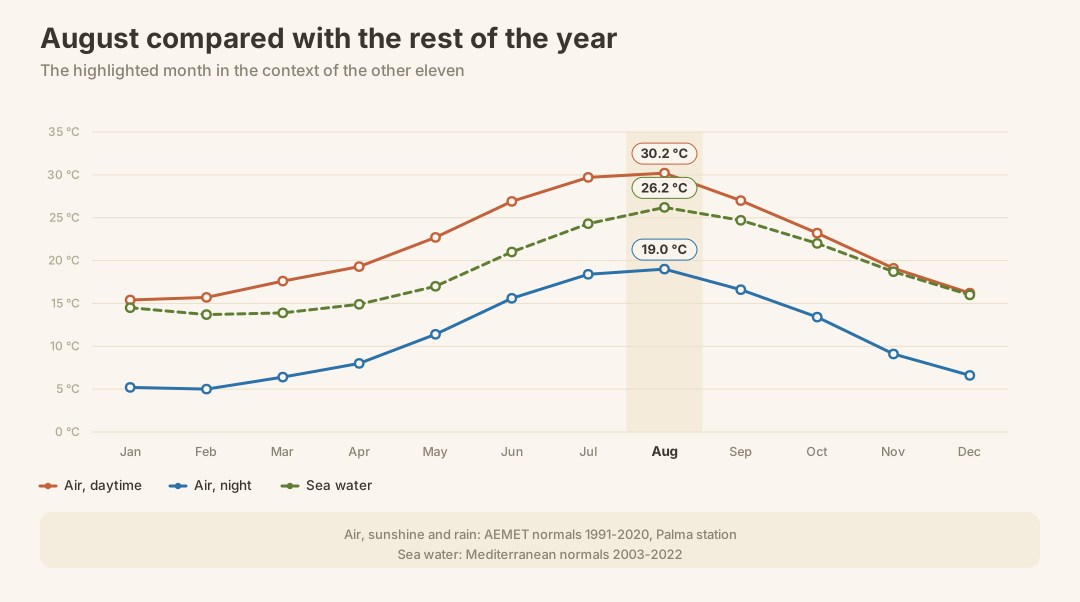
Palma normals as an island-wide approximation: In August, the average daytime high is 30.2 °C and the sea is 26.2 °C, with 2 rain days and 10.3 hours of sunshine per day.
Yes, in August you can swim in Mallorca without a second thought – the sea has reached its warmest phase of the year. The water temperature stands at 26.2 °C, pleasantly warm and requiring no time to get used to. If you're looking for the month in which air and water together reach their peak, August is exactly right.
Water temperature in August
The question can be answered clearly: yes, August is the best month of the year to swim in Mallorca. The sea reaches its annual high of 26.2 °C, well above the threshold at which most people find water pleasantly warm. Anyone who has ever hesitated before stepping into cooler water knows the difference: here there's no shock moment, no hunching of the shoulders on first contact. You walk in, and the temperature immediately matches your own sense of comfort, with no detour through a feeling of cold.
August is therefore the peak of the year not only for the sea but for the air as well. During the day the thermometer climbs to 30.2 °C, and inland – for instance in the plain around Sineu or the countryside near Llucmajor, far from any cooling sea breeze – it often stays hot for even longer than on the coast. There, the sea tempers the extremes somewhat, but it barely cools down at night either: the lows sit at 19.0 °C, and anyone sleeping with the window open notices that the heated air of the bay finds little time to cool before the sun climbs again the next morning.
This combination of warm water and prolonged heat makes August the most straightforward month for beach holidaymakers: there's no weather pattern that puts a brake on swimming, no cold fronts that briefly cool the sea. The only limitation is more of a human one – the larger beaches are at their busiest at this time, simply because everyone else knows too that water and air have now reached their optimum. Those who prefer things quieter head for smaller coves or swim in the early morning hours, when the water is just as inviting but the beach is still empty.
Why the sea lags behind the air
Anyone wondering why the sea only reaches its maximum in late summer, even though the sun has already been at its highest point weeks before, will find the answer in a simple physical property: water has a far higher heat capacity than air. Raising the temperature of a given amount of water requires many times the energy needed to warm the same amount of air by the same degree. The air over the island therefore reacts almost immediately to a single day's sunshine – it heats up within a few hours and cools down again just as quickly at night. The sea, by contrast, stores heat over weeks and months and releases it just as slowly.
This inertia creates a noticeable shift between the warmest months for air and for water. Air temperature reaches its annual peak as early as July, when it climbs to 29.7 °C during the day. The sea takes longer to absorb the same amount of energy and only catches up in August: only then does the water temperature climb to its own annual high of 26.2 °C. A month's delay that repeats year after year, because it doesn't depend on individual weather patterns but on the sheer mass of water around the island that has to warm up.
This effect is most obvious not in summer but in spring. While the air already picks up noticeable pace in April, climbing to 19.3 °C during the day, the sea still lags far behind at this point: at 14.9 °C, the water temperature sits closer to winter than to summer. Anyone heading to Playa de Palma or Alcúdia in spring and jumping into the water on a summery air temperature feels this difference immediately – the air has long since adjusted to summer, while the sea still needs months.
This delay is not a Mallorcan peculiarity but follows the same principle that applies to any large body of water: the bigger and deeper a body of water, the longer the time lag between sunshine and actual warming. For trip planning, this means, conversely: those coming in spring should expect conditions closer to the air temperature than the water temperature, while those travelling in late summer and early autumn benefit from a sea that still carries the warmth of the whole summer within it – even as the air is already turning milder again.
Where the water is warmest in August
Even though the water temperature we quote for August, 26.2 °C, applies to the island as a whole, the sea around Mallorca is not equally warm everywhere. How quickly and how strongly a stretch of coast warms up depends chiefly on two things: water depth and shelter from the open sea.
Shallow, wide bays warm up considerably faster in summer than deep, open water, because the sun can heat the smaller body of water through in less time. This applies above all to the south and east of the island: the Bay of Alcúdia, the extensive shallow-water zones around Es Trenc and Colònia de Sant Jordi, or the sheltered stretches around Cala Millor and Cala Bona. Here, in high summer, the water sits noticeably on the warm side of what is measured for the island as a whole, because sun, shallow depth and often shelter from wind and current all come together.
The northwest, by contrast – the coast of the Serra de Tramuntana between Sóller, Deià and Banyalbufar – drops away quickly and steeply. Here, even in August, you encounter water that feels cooler than in the shallow bays of the east, because the large water masses of the open sea warm more slowly and the wind from this direction freshens more often, causing mixing.
We have no dedicated measurement series for individual bays and beaches – the differences described here reflect a general, well-documented tendency, not exact figures for any particular spot. Anyone wanting to feel the greatest possible contrast on a given day is most likely to find it by comparing a shallow beach in the east with a deep bay in the northwest on the same afternoon.
The sea in August versus the rest of the year
Over the course of the year, August marks the upper end of the curve: it is the month in which the sea reaches its warmest value of the year, 26.2 °C. The coldest water, by contrast, falls on the opposite side of the calendar, in late winter, when the temperature drops to 13.7 °C. Between these two points lies the entire range that the Mediterranean around Mallorca moves through over the course of the year – and this range is noticeably narrower than the swing in air temperature, because water dampens extremes in both directions.
More interesting than the mere gap to the minimum is the comparison with the month that, on the other side of the solstice, sits at the same distance from midsummer as August itself: May. Both months lie roughly the same distance from the point of longest days, so both receive a comparable amount of solar energy. And yet the water temperatures could hardly be more different: in May it stands at 17.0 °C, noticeably cooler than in August. It is precisely with this pair of months that the sea's inertia shows most clearly – the sun alone does not explain the water temperature; what matters more is how long it has already been shining and how much warmth has already accumulated in the water masses.
For swimmers, this means: anyone entering the water in August benefits from an entire summer's worth of stored warmth. The sea has been absorbing energy since spring and only releases it again with a considerable delay – which is why September and a good part of October still offer pleasantly warm bathing water, even though the sun is noticeably lower by then and the days are getting shorter.
Swimming, snorkelling, diving: what's worthwhile now
With a water temperature of 26.2 °C, no wetsuit at all is needed in August to swim for a long time without feeling the chill. An ordinary swimsuit or pair of trunks is entirely sufficient, even for longer stretches or several hours at a time in the water – the temperature is so far above the threshold at which the body starts to feel cold that chilling is practically not an issue.
The same applies to snorkelling trips: anyone staying near the surface and keeping to bays with clear, calm water needs nothing beyond a mask and snorkel. This is especially true of the shallow, well-warmed bays in the south and east of the island, where the sun's warmth reaches right down to the seabed and the whole body of water feels evenly warm.
Things look different once you go deeper. Dives that go beneath the topmost, sun-warmed layer of water often encounter noticeably cooler temperatures – in summer the Mediterranean forms what is known as a thermocline, below which the temperature drops markedly, even while the surface still feels like a warm bath. Anyone diving regularly to greater depths or planning longer dives is usually better off with a thin shorty or a light semi-dry suit than with no neoprene protection at all, even though the sea surface in August is as warm as it ever gets all year.
Underwater visibility in August depends less on temperature than on wave conditions, time of day and location. Calm, sheltered spots and the morning hours, before swimmers stir up the water, offer the clearest conditions. Anyone who values good visibility should therefore plan snorkelling or diving trips for early in the day and seek out bays away from the busiest crowds.
Frequently asked questions
Is August the warmest month for swimming in Mallorca?
Does the warm water in August feel like a bath?
Is August good for watersports with kids in Mallorca?
How long does the sea stay warm after August?
What's on in Mallorca in August
Events
- Weekly Market in MuroMuro
- Weekly Market in CapdeperaCapdepera
- “Via Fora”Alcúdia
- Eclipse Day – Hidroparty. Water Experience.Alcúdia
- Assumption of Mary
- “Nocturns al pati”Alcúdia
Worth doing now
- Cool off in the warmest sea of the year rather than relying on the midday air temperature.
- Let the kids spend hours in the water while the beach clubs run at full swing.